

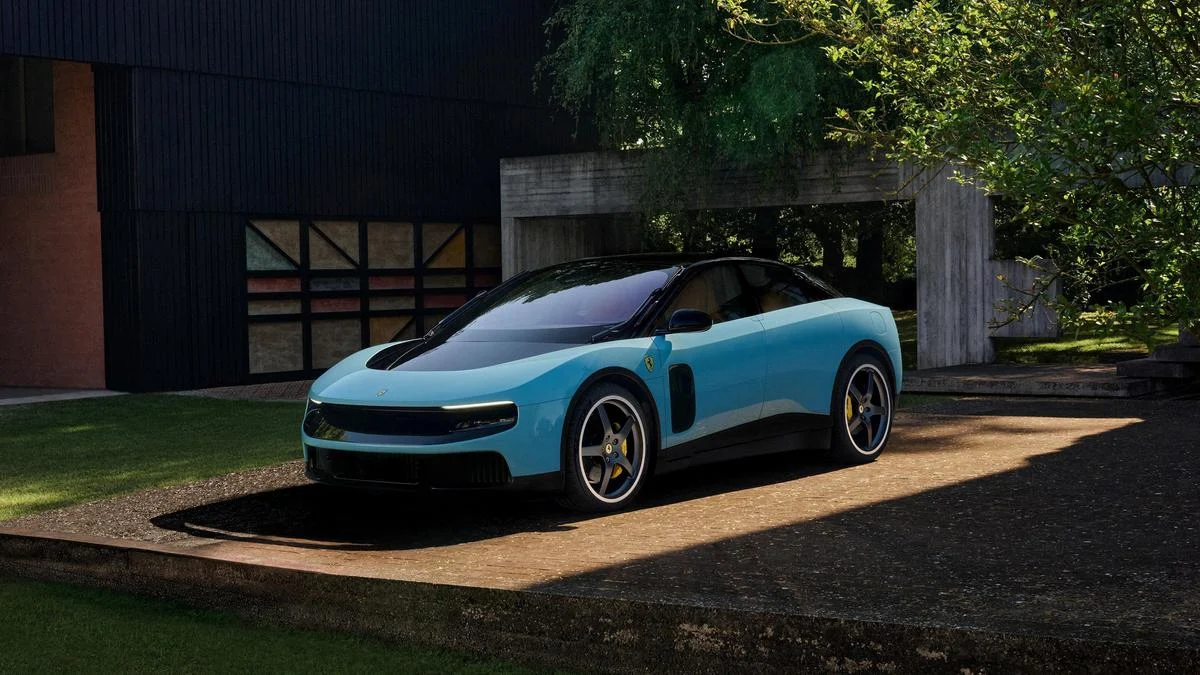
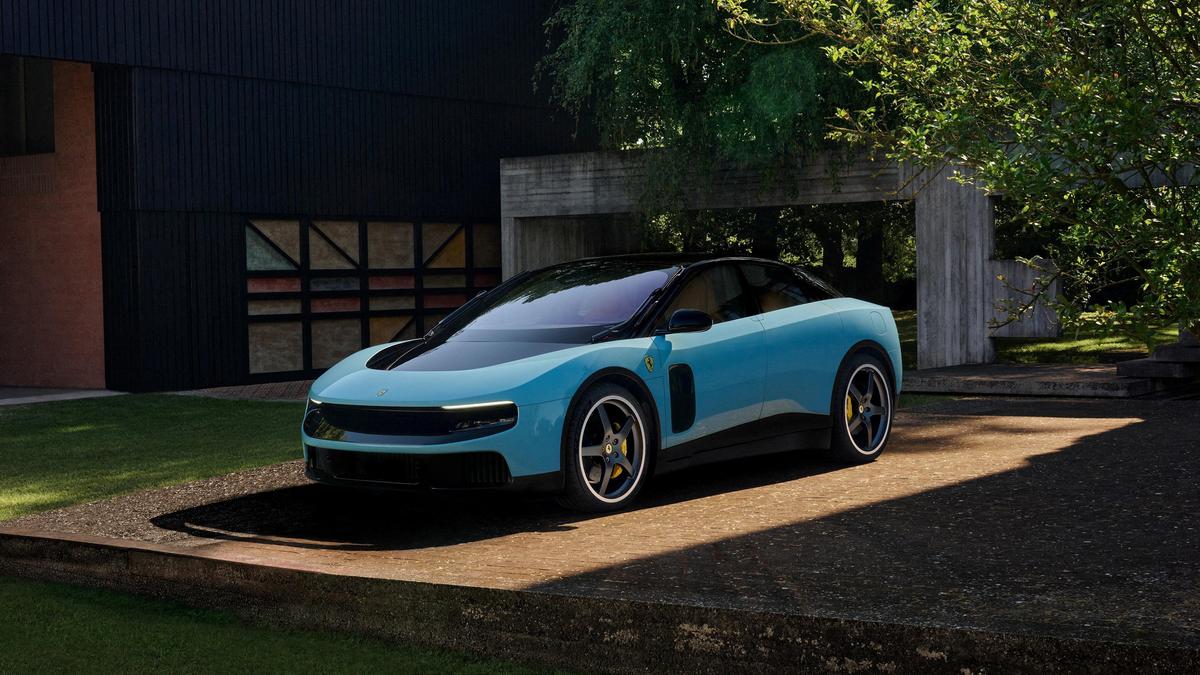
MARANELLO, ITALY — In a move that signals a tectonic shift for the global automotive industry, Ferrari has officially pulled the silk off its first-ever fully electric vehicle (EV), the Luce. Named after the Italian word for "Light," the Luce represents the most radical departure from tradition in the marque’s 79-year history.
The unveiling, which took place late Monday at the company’s historic Maranello headquarters, sees the legendary Italian carmaker finally entering the zero-emissions arena. While rivals such as Porsche and Lamborghini have already established a presence in the high-performance electric segment, Ferrari’s entry is being viewed by analysts as the ultimate litmus test for whether the soul of a supercar can survive the transition from internal combustion to battery power.
Main Facts: A Paradox of Performance and Proportions
The Ferrari Luce is not merely a battery-powered version of an existing model; it is a ground-up reimagining of what a Ferrari can be. The vehicle’s specifications place it at the pinnacle of the current EV market, though they also highlight the engineering compromises inherent in modern battery technology.
Speed and Power
The Luce is engineered to silence skeptics who believe electric motors cannot replicate the visceral thrill of a Maranello-tuned V12. The vehicle boasts a top speed exceeding 310 kilometres per hour (190 mph), placing it in the upper echelon of electric grand tourers. More impressively, the Luce can catapult from a standstill to 100 kph in just 2.5 seconds, a figure that rivals the company’s flagship hybrid hypercars.
Range and Energy
At the heart of the Luce lies a massive 122 kWh battery pack. This high-density energy storage system provides the car with a range of over 530 kilometres (approximately 330 miles) on a single charge. This range is intended to alleviate the "range anxiety" often associated with performance EVs, allowing owners to undertake cross-country grand tours—a staple of the Ferrari lifestyle—without frequent stops at charging stations.
A New Form Factor
Perhaps the most shocking aspect of the Luce is its silhouette. It is only the second four-door model in Ferrari’s history, following the Purosangue, and marks the brand’s first-ever five-seater. By moving away from the cramped two-seater cockpits of the past, Ferrari is positioning the Luce as a "lifestyle" supercar, capable of carrying a family in silent luxury.
The Weight of Innovation
The inclusion of a 122 kWh battery comes with a physical cost. The Luce tips the scales at 2.26 tonnes, making it the heaviest vehicle Ferrari has ever produced. Managing this mass while maintaining the agile, "on-rails" handling characteristics expected of the Prancing Horse has been the primary challenge for Ferrari’s engineering team.
Chronology: The Road to Electrification
The path to the Luce has been a decade-long journey of incremental hybridization and strategic pivoting.
- 2013: The LaFerrari Era: Ferrari first experimented with electric assistance in the LaFerrari hypercar, using a HY-KERS system derived from Formula 1 to provide short bursts of power.
- 2019: The SF90 Stradale: The launch of the SF90 Stradale marked Ferrari’s first Plug-in Hybrid Electric Vehicle (PHEV), proving that a Ferrari could drive on electricity alone, albeit for short distances.
- 2022: The Purosangue Shift: Ferrari broke its "two-door only" rule with the Purosangue, a high-riding four-door vehicle that prepared the market for a more practical Ferrari.
- 2024: The E-Building: Ferrari inaugurated its "e-building" in Maranello, a dedicated facility designed specifically for the production of electric motors, battery packs, and power inverters.
- May 25, 2026: The official debut of the Luce, marking the end of the development cycle for Project F250E (the Luce’s internal codename).
Supporting Data: The High-Stakes Luxury EV Market
Ferrari’s entry into the EV market comes at a time of significant volatility. While the initial rush toward electrification saw manufacturers making bold claims about the end of the internal combustion engine (ICE), the reality of 2026 has proven more complex.
Market Adjustments
In late 2023 and 2024, several luxury manufacturers, including Mercedes-Benz and Aston Martin, delayed their EV rollouts due to cooling demand in the high-end segment. Ferrari has not been immune to this trend. Just last year, the company revised its long-term sales targets.
Originally, Ferrari projected that electric models would account for 40% of its total sales by 2030. In a strategic pivot, the company has now lowered that expectation to 20%. This suggests that while Ferrari is committed to an electric future, it intends to keep its internal combustion and hybrid engines in production for as long as global regulations and enthusiast demand allow.
Competitive Benchmarking
To understand the Luce’s positioning, one must look at its primary competitors:
- Porsche Taycan Turbo GT: While the Porsche is lighter and more track-focused, the Luce offers a larger battery and a more exclusive interior.
- Lamborghini Lanzador: Lamborghini’s high-clearance GT (expected shortly after the Luce) will compete directly for the "ultra-luxury daily driver" crown.
- Lucid Air Sapphire: While lacking the Ferrari heritage, the Lucid currently sets the benchmark for EV range and raw acceleration, a title the Luce aims to challenge.
Official Responses: Visionary Leadership or Necessary Evil?
The rhetoric from Maranello suggests that the Luce is viewed not as a compromise, but as a new frontier for "driving emotion."
John Elkann, President of Ferrari, spoke at the unveiling with a tone of historical reverence. "Today, we are not just launching a car; we are inaugurating a chapter that turns our vision into reality," Elkann stated. "The Luce strengthens Ferrari’s tradition of anticipating and shaping the future. It proves that the thrill of a Ferrari is not defined by the fuel it consumes, but by the innovation it embodies."
Benedetto Vigna, CEO of Ferrari, who was brought in specifically for his background in the technology and semiconductor industries, emphasized the "human-centric" aspect of the EV. "We have worked tirelessly to ensure that the Luce sounds, feels, and reacts like a Ferrari," Vigna said. "The weight has been neutralized by our proprietary active suspension and four-wheel torque vectoring. This is a car that defies physics to deliver the Prancing Horse experience."
However, industry insiders note that the Luce is also a defensive move. With tightening emissions regulations in the European Union and key Chinese metropolitan markets, an all-electric flagship is a regulatory necessity for Ferrari to continue selling its high-emission V12 models elsewhere.
Implications: What the Luce Means for the Future of the Supercar
The arrival of the Luce carries profound implications for the automotive landscape, the Ferrari brand, and the luxury consumer.
1. The Auditory Identity Crisis
One of the most significant challenges for Ferrari is the loss of the "soundtrack." The scream of a Ferrari engine is a core part of the brand’s identity. With the Luce, Ferrari has reportedly developed a "sound signature" that uses the natural frequencies of the electric motors and tires, amplified through the chassis, rather than a fake digital recording. Whether traditional "Ferraristi" will accept this new acoustic profile remains to be seen.
2. The Weight Penalty and Engineering Evolution
At 2.26 tonnes, the Luce is a heavy machine. This weight necessitates massive brakes, reinforced suspension, and specialized tires. The Luce’s success will depend on whether Ferrari’s software—the algorithms controlling the motors and the chassis—can mask that weight. If Ferrari succeeds, it will set a new standard for heavy-vehicle dynamics.
3. Exclusivity in the Age of Software
In the ICE era, Ferrari’s exclusivity was tied to its artisanal engines. In the EV era, where many electric motors offer similar performance characteristics, Ferrari must find new ways to justify its premium pricing (estimated to start well above $500,000). The Luce focuses on interior craftsmanship, bespoke software interfaces, and "charging exclusivity"—rumors suggest Ferrari is building a private network of "Atelier Chargers" at exclusive destinations for its owners.
4. The "Halved" Ambition
By dropping its 2030 EV sales target from 40% to 20%, Ferrari is signaling a "multi-pathway" strategy. This approach mirrors the broader industry’s realization that the transition to electric will be a marathon, not a sprint. The Luce is the flagship of this transition, but the V12 is not dead yet.
5. Social and Environmental Perception
The Luce allows the ultra-wealthy to enjoy supercar performance without the social stigma of high carbon emissions. In an era of "flight shaming" and environmental activism, a silent, zero-emission Ferrari provides a "guilt-free" alternative that could attract a younger, more environmentally conscious demographic of buyers in Silicon Valley, Shanghai, and Dubai.
Conclusion
The Ferrari Luce is a bold gamble. It is a car of contradictions: it is "Light" by name but the heaviest Ferrari ever built; it is a supercar, yet it seats five. By stepping into the electric light, Ferrari is attempting to prove that its "magic" is not tied to a piston, but to a feeling. As the first units begin to reach customers in late 2026, the world will finally know if the silent roar of the Luce is enough to carry the Prancing Horse into a new century.
