

Main Facts: A Biological Improbability Under Siege
New Zealand, known in the Māori language as Aotearoa, represents one of the world’s most unique biological experiments. For roughly 85 million years, following the fragmentation of the ancient supercontinent Gondwana, these islands remained in a state of profound evolutionary isolation. In the absence of terrestrial mammals, birds, insects, and reptiles evolved to fill ecological niches that, elsewhere on Earth, were occupied by predators, grazers, and scavengers.
Today, this fragile heritage survives in a high-stakes battle against the legacy of human intervention. Modern New Zealand has become a global laboratory for "mainland island" conservation—fenced sanctuaries where invasive species are eradicated to allow prehistoric ecosystems to breathe. From the 3,400-hectare fortress of Sanctuary Mountain Maungatautari to the windswept breeding colonies of the Otago Peninsula, the country is attempting to reverse a 700-year wave of extinctions.

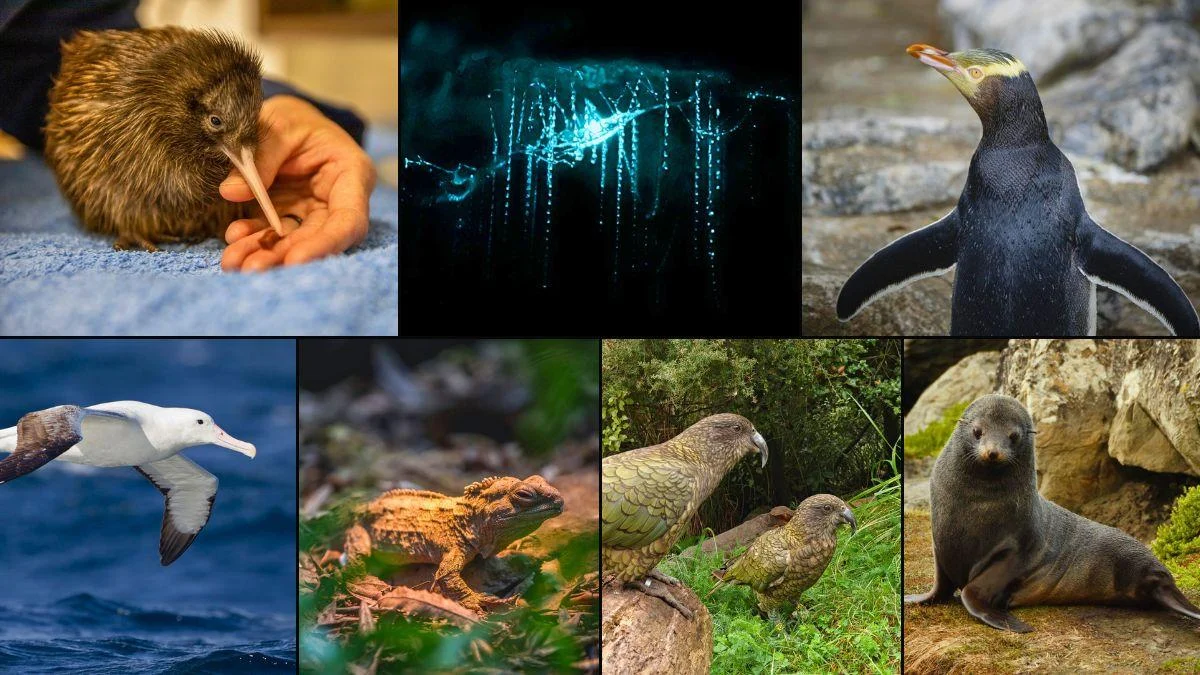
Central to this effort is the concept of kaitiakitanga (guardianship), a Māori principle that frames conservation not merely as a scientific endeavor, but as a cultural duty to the past and future. As tourism merges with restoration, New Zealand’s wildlife industry now serves as the primary funding and educational vehicle for preserving species that exist nowhere else on the planet, including the kiwi, the prehistoric tuatara, and the critically endangered yellow-eyed penguin.
Chronology: From Gondwanan Isolation to Ecological Rupture
The history of New Zealand’s wildlife is defined by three distinct eras: isolation, arrival, and restoration.

The Age of Birds (85 Million Years Ago – 1300 AD)
Following the split from Gondwana, New Zealand’s flora and fauna evolved without the pressure of mammalian predators. This led to "island gigantism" and flightlessness. The moa, a genus of giant flightless birds, became the primary grazers, with the largest species reaching over three meters in height. Their only predator was the Haast’s eagle, the largest eagle ever known to have lived, which boasted a three-meter wingspan and talons the size of a tiger’s claws.
The Era of Rupture (1300 AD – 1900 AD)
The arrival of Polynesian settlers around the 1300s marked the first major ecological shift. Within a century, the moa was hunted to extinction, subsequently causing the collapse of the Haast’s eagle. This was followed by the arrival of European settlers in the late 18th and 19th centuries, who introduced a phalanx of invasive mammals: rats, stoats, weasels, possums, and cats. These predators decimated bird populations that had no evolutionary defense mechanisms against ground-based hunters. Forests were cleared for pasture, and by the signing of the Treaty of Waitangi in 1840, the landscape was being radically transformed into a colonial agricultural hub.

The Restoration Movement (1970s – Present)
In the late 20th century, New Zealand pioneered radical conservation techniques. This began with the clearing of invasive species from offshore islands and evolved into the creation of "mainland islands"—large-scale fenced sanctuaries like Maungatautari. Today, the national goal is "Predator Free 2050," an ambitious government-backed initiative to eradicate the most damaging introduced predators across the entire country.
Supporting Data: The Magnitude of the Challenge
The scale of loss in New Zealand is staggering, and the recovery efforts are equally monumental in scope:

- Sanctuary Mountain Maungatautari: The sanctuary is protected by a 47-kilometer-long pest-exclusion fence, the largest of its kind in the world. It currently supports over 3,000 kiwi and serves as a vital stronghold for the takahē, a large flightless rail once thought to be extinct.
- The Kiwi Crisis: Before human arrival, an estimated 12 million kiwi roamed the islands. Today, despite intensive conservation, the population sits at approximately 70,000. Without active management, 95% of kiwi chicks born in the wild are killed by stoats or cats before they reach adulthood.
- The Royal Albatross: The colony at Taiaroa Head is the only mainland breeding site for the northern royal albatross in the world. These birds spend 85% of their lives at sea and can travel 190,000 kilometers in a single year.
- Yellow-eyed Penguins (Hoiho): These are among the rarest penguins globally. Their numbers are in a precarious state due to a "perfect storm" of threats, including rising ocean temperatures and avian diphtheria, necessitating 24/7 monitoring by groups like The OPERA.
- Ancient Lineages: The tuatara, found at facilities like Willowbank, is the sole survivor of the order Rhynchocephalia, which thrived 200 million years ago. It is not a lizard, but a distinct reptilian lineage that predates many dinosaurs.
Official Responses and Expert Perspectives: Partnership as Policy
Modern conservation in New Zealand is no longer a top-down government mandate; it is a complex partnership between the Department of Conservation (DOC), private trusts, and Māori iwi (tribes).
Bodie Tihoi Taylor, a cultural educator and iwi representative at Maungatautari, emphasizes that conservation is an act of cultural reclamation. "There needs to be a balancing between conservation of our modern day and conservation of our ancestral days," Taylor explains. He references the Māori concept of kaitiakitanga, noting that the responsibility to the land is innate. For Māori, the loss of the moa is not just a biological footnote but a generational warning. Taylor rejects the idea of "complete Māori control," instead advocating for a "destiny of partnership" born from the Treaty of Waitangi.

In the tourism sector, operators are increasingly acting as frontline researchers. At the Spellbound Glowworm Cave in Waitomo, tourism provides the economic incentive to preserve the delicate limestone ecosystems required by Arachnocampa luminosa (the New Zealand glowworm). The operator notes that the surge in international interest—boosted by direct flights and New Zealand’s status as a premier filming location for projects like The Legend of Zelda and Andy Serkis’s The Hunt for Gollum—has created a "virtuous cycle" where tourism dollars directly fund the protection of the land.
On the South Island, Austin Hamilton, a ranger for The OPERA, highlights the grim reality of climate change. "Hoiho are dealing with pressures from every direction now," he says. The official response from such organizations has been to shift toward intensive rehabilitation, providing medical care for penguins during their vulnerable "moulting" periods when they lose their waterproof feathers and are susceptible to predators and starvation.

Implications: The Future of a "Biological Improbability"
The success or failure of New Zealand’s conservation efforts has global implications for biodiversity management.
1. The Model for Invasive Species Eradication
New Zealand is the global leader in "island restoration" techniques. If the country can achieve its "Predator Free 2050" goal on a national scale, it will provide a blueprint for other nations—such as Australia and various Pacific Island nations—struggling with the legacy of colonial species introductions.

2. The Integration of Indigenous Knowledge
The shift toward co-governance of natural resources suggests a future where Western science and Indigenous ecological knowledge (TEK) are no longer viewed as separate. This "partnership model" is increasingly seen as the most sustainable way to manage land that is tied to both cultural identity and economic survival.
3. Climate Change and Marine Vulnerability
While land-based sanctuaries have seen great success, marine-based species like the royal albatross and the yellow-eyed penguin remain at the mercy of global trends. Warming oceans and shifting fish stocks mean that even the most well-guarded mainland colonies may fail if the surrounding Pacific ecosystem collapses. This highlights a shift in conservation focus from local "fencing" to global climate advocacy.

4. Tourism as a Conservation Pillar
New Zealand’s economy is inextricably linked to its "clean, green" image. The evolution of tourism from passive sightseeing to "conservation-centric" travel (where visitors engage with breeding programs and educational tours) suggests a future where the travel industry is a primary stakeholder in ecological health.
In conclusion, Aotearoa New Zealand remains a "biological improbability"—a land of ghosts and survivors. The fight to save the kiwi, the albatross, and the tuatara is a fight to preserve a unique branch of the tree of life. As Bodie Tihoi Taylor suggests, the desire for nature to thrive is innate in those who visit these islands; the challenge for the next generation is ensuring that the "eye of the needle" remains wide enough for both humans and the ancient wild to pass through together.
