

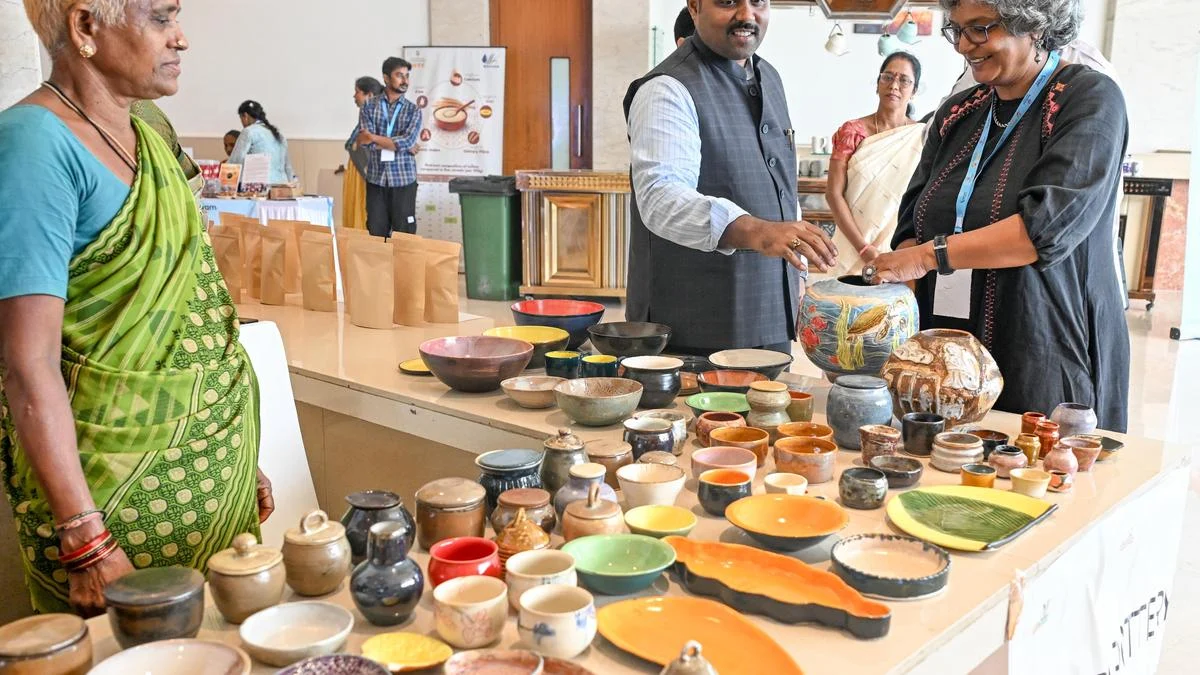
VISAKHAPATNAM – In a significant move to bolster the economic participation of women in Andhra Pradesh, the port city of Visakhapatnam played host to a high-profile conference and exhibition titled "Celebrating Women Entrepreneurs: Urban Ecosystem and Grassroots Leadership." Held on Tuesday, June 16, 2026, the event served as a nexus for dialogue, innovation, and strategic planning, bringing together a diverse cohort of stakeholders ranging from grassroots cooperative leaders to urban tech-enabled entrepreneurs.
The day-long summit, organized by the Global Alliance for Mass Entrepreneurship (GAME) in collaboration with Aspire For Her (AFH) and the Women’s Wing of the Visakhapatnam Chamber of Commerce and Industry (VCCI), underscored a critical shift in the regional economic narrative: the transition of women from subsistence-level self-employment to scalable, market-integrated enterprise leadership.
Main Facts: A Convergence of Policy and Practice
The conference was designed not merely as a celebratory gathering but as a functional laboratory for solving the systemic bottlenecks that hinder women-led businesses. The core objectives centered on three pillars: Market Access, Financial Inclusion, and Digital Transformation.
Key highlights of the event included:
- Institutional Presence: The participation of Member of Parliament (MP) M. Sribharat and Visakhapatnam Metropolitan Region Development Authority (VMRDA) Commissioner N. Tej Bharath, signaling high-level political and administrative backing for the women’s entrepreneurial agenda.
- The "Hamsafal" Initiative: A deep dive into the collaborative program between GAME and AFH aimed at creating a roadmap for women to scale their businesses through mentorship and networking.
- Diverse Representation: The event successfully bridged the gap between "urban" and "grassroots," featuring businesses ranging from high-end handcrafted ceramics to traditional dry fish processing cooperatives.
- Collaborative Ecosystems: The partnership with VCCI’s Women’s Wing highlighted the role of local chambers in providing the necessary "last-mile" support for entrepreneurs seeking to enter formal trade networks.
Chronology of the Event: From Vision to Action
The proceedings commenced with a ceremonial inauguration and a walkthrough of the exhibition zone, where dignitaries interacted directly with vendors. VMRDA Commissioner N. Tej Bharath spent significant time at the Arra Pottery stall, noting the sophisticated blend of traditional craft and modern aesthetic—a prime example of how local artisans are tapping into contemporary urban markets.
Following the exhibition tour, the conference transitioned into a series of Spotlight Sessions. These sessions allowed women entrepreneurs to narrate their "business journeys," moving beyond the statistics to the human stories of resilience. These narratives provided a prelude to the more technical Panel Discussions.
The afternoon sessions were dedicated to the "Missing Middle"—the phenomenon where women-led enterprises often get stuck at the micro-level. Experts from GAME and AFH led deliberations on how to break this glass ceiling. The day concluded with Buyer-Seller Interactions, a structured networking format designed to provide immediate market linkages for the exhibitors, followed by a roadmap presentation for the next phase of the Hamsafal program in the region.
Supporting Data: The Economic Context of Women’s Entrepreneurship
The conference comes at a pivotal time for Andhra Pradesh’s economy. According to recent MSME data, while women-led enterprises are growing in number, they remain disproportionately concentrated in the "micro" category.
Research presented during the deliberations suggested that:
- The Credit Gap: Despite various government schemes, women entrepreneurs still face a significant "collateral hurdle" when seeking expansion capital compared to their male counterparts.
- Digital Literacy: While mobile penetration is high, the use of digital tools for inventory management, GST compliance, and e-commerce remains an area requiring urgent intervention.
- The Power of Cooperatives: The success of the Visakhapatnam Town Fisherwomen Dry Fish Cooperative Society serves as a data point for the efficacy of the "Farmer Producer Organization" (FPO) model. Registered in 1987, the cooperative’s 164 members demonstrate that collective bargaining and processed value-addition can sustain livelihoods for nearly four decades.
The event highlighted that for India to reach its ambitious GDP targets, the contribution of women-led businesses must move from the current estimated 15-20% of the MSME sector to a more equitable 50%.
Official Responses: Voices of Leadership
The presence of top-tier officials provided a platform for the government to reiterate its commitment to the "Pink Economy."
MP M. Sribharat emphasized the need for a supportive infrastructure that recognizes the unique challenges faced by women. He noted that Visakhapatnam, as a burgeoning tech and industrial hub, offers a unique "urban ecosystem" that can serve as a launchpad for products created at the grassroots level.
VMRDA Commissioner N. Tej Bharath lauded the creativity on display, particularly the integration of traditional skills with market-ready branding. He indicated that urban planning and development authorities are increasingly looking at ways to provide dedicated spaces for women entrepreneurs to showcase and sell their wares in the city’s prime zones.

Subhash Kiran, Programme Director at GAME, provided the strategic rationale behind the event. Speaking to The Hindu, he stated:
"Entrepreneurship flourishes when local ecosystems work together. Through collaborations with community organizations, industry, and market partners, we are working to help women entrepreneurs move beyond subsistence livelihoods and build enterprises that can scale and access larger markets. Our goal is ‘mass entrepreneurship’—creating a ripple effect where one successful woman-led business creates jobs for ten others."
Divya Sampath of Aspire For Her highlighted the scale of their mission:
"Aspire For Her is a community of 1.2 million women. In collaboration with GAME, we are implementing the Hamsafal programme to strengthen entrepreneurial journeys. We aren’t just looking at training; we are looking at creating a lifetime of access to opportunities, ensuring that a woman in Visakhapatnam has the same digital and financial reach as someone in a major global metro."
Spotlight on Grassroots Excellence: The Case of the Fisherwomen Cooperative
One of the most compelling aspects of the conference was the presence of the Visakhapatnam Town Fisherwomen Dry Fish Cooperative Society. In an era of rapid startups and venture capital, this cooperative stands as a testament to the longevity of the grassroots model.
Since its registration in 1987, the society has navigated the complexities of a male-dominated trade. By organizing 164 women into a cohesive unit, they have transitioned from being mere laborers in the fish-drying process to becoming owners of a value chain. Their participation in the conference was strategic; they sought to explore modern packaging and digital marketing to move their products from local markets to national e-commerce platforms. Their story served as a grounding reminder that "innovation" is not always about high technology, but often about institutional resilience and collective leadership.
Implications: A New Roadmap for Regional Growth
The "Celebrating Women Entrepreneurs" conference is likely to have several long-term implications for the Visakhapatnam region:
1. Formalization of the Informal Sector
By bringing grassroots cooperatives into the same room as VCCI members, the event facilitated a "formalization" of ideas. Grassroots leaders learned about compliance and branding, while urban business leaders identified new, sustainable supply chains.
2. Strengthening the "Hamsafal" Pipeline
The partnership between GAME and AFH in Visakhapatnam is set to intensify. The "Hamsafal" program is expected to roll out more localized workshops focusing on "Digital Readiness," helping traditional businesses like Sankalpa Art Village or Arra Pottery reach international buyers through optimized digital storefronts.
3. Policy Influence
The discussions held on Tuesday are expected to inform local policy. With the VMRDA Commissioner and a Member of Parliament in attendance, the challenges raised—such as the need for subsidized stalls in urban centers and easier credit access—are now on the legislative radar.
4. Social Empowerment through Economic Agency
Beyond the numbers, the conference highlighted the social transformation inherent in women’s entrepreneurship. As women move from "workers" to "owners," their influence within the family and community structures increases, leading to better outcomes in education and health for the next generation.
Conclusion
The Visakhapatnam conference was more than a one-day event; it was a manifesto for a more inclusive economic future. By bridging the divide between the sophisticated urban entrepreneur and the resilient grassroots leader, organizations like GAME, AFH, and VCCI are building a more robust, diversified economy.
As the "Hamsafal" program takes deeper root in Andhra Pradesh, the success of the 164 fisherwomen and the artisans of Arra Pottery will serve as a blueprint. The message from Visakhapatnam is clear: when women are provided with the right ecosystem—finance, market access, and a supportive community—they do not just survive; they scale, they innovate, and they lead.
