

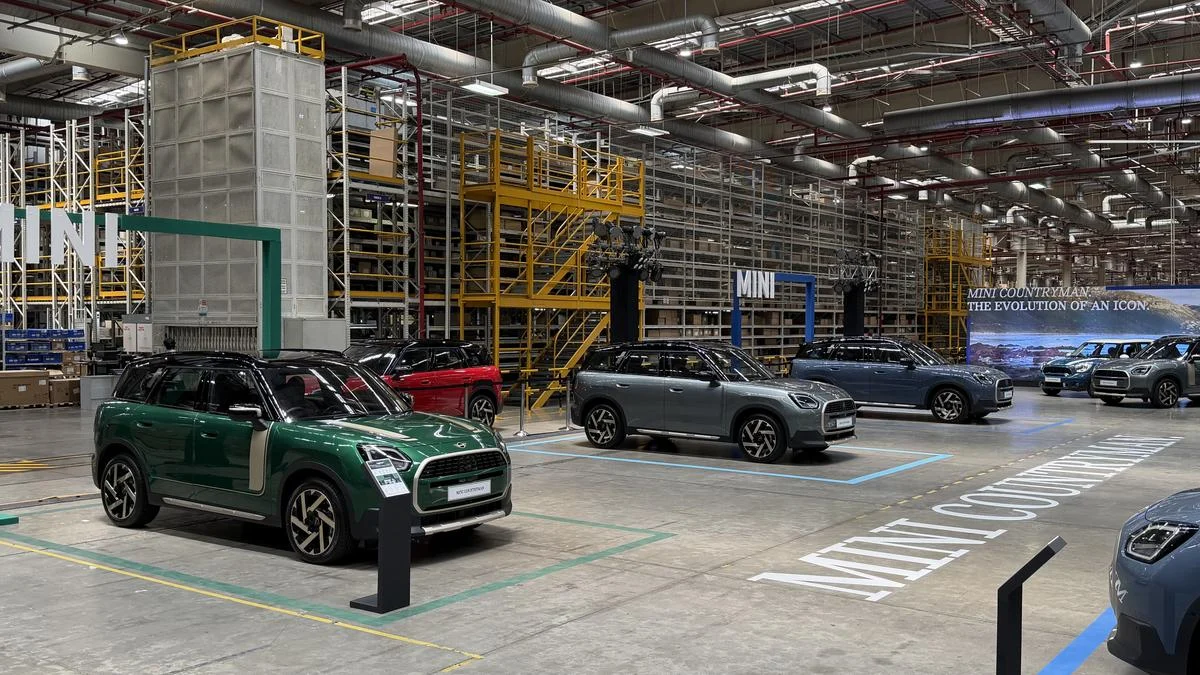
CHENNAI – In a move that signals a profound shift in its South Asian strategy, MINI India has officially launched the all-new MINI Countryman C. This latest iteration of the brand’s most versatile model is not merely a generational update; it represents a landmark moment for the British-born marque as it transitions to local production at the BMW Group Plant Chennai. By becoming the first locally produced petrol variant of the Countryman in India, the vehicle is poised to redefine the premium compact SUV segment through a combination of competitive pricing, enhanced dimensions, and cutting-edge digital integration.
Priced at ₹47.50 lakhs (ex-showroom), the Countryman C is positioned to capture a larger share of the burgeoning Indian luxury car market, catering to a demographic that demands both the prestige of a European badge and the practicality required for Indian road conditions.
I. Main Facts: The Evolution of the "Big" MINI
The launch of the Countryman C (the ‘C’ denoting its core petrol powertrain) introduces a vehicle that is significantly larger than its predecessor. Measuring longer and taller, the new model sheds the "mini" moniker in all but spirit, embracing what the company calls "Charismatic Simplicity."
Key Specifications and Pricing
- Launch Price: ₹47.50 Lakhs (Ex-showroom India).
- Manufacturing: Locally produced at BMW Group Plant Chennai.
- Powertrain: MINI TwinPower Turbo petrol engine.
- Performance: 156 hp and 240 Nm of torque.
- Transmission: 7-speed dual-clutch Steptronic Sport transmission.
- Cargo Capacity: 505 litres, expandable to 1,450 litres.
- Color Palette: Available in five distinct variants, emphasizing personalization.
The vehicle’s exterior design marks a departure from the rounded aesthetics of previous generations. It features a new octagonal grille, wider wheel arches, and a more upright silhouette that commands a stronger road presence. Despite these changes, the "short overhang" philosophy remains, ensuring that the vehicle retains the agile handling characteristics that have defined the brand since 1959.
II. Chronology: From Import Niche to Local Powerhouse
The journey of the MINI Countryman in India is a reflection of the evolving luxury landscape in the country. Understanding the timeline of this model helps contextualize why local production in Chennai is a game-changer.
2012 – The Entry
MINI officially entered the Indian market in 2012, debuting at the Delhi Auto Show. At the time, the Countryman was viewed as a niche lifestyle vehicle, imported as a Completely Built Unit (CBU). It appealed to a small circle of enthusiasts who prioritized style over sheer utility.

2013-2018 – The Testing Grounds
As demand for premium SUVs grew, BMW Group India began exploring the feasibility of local assembly for the Countryman to mitigate high import duties. The second generation (F60) saw limited local assembly, but the focus remained largely on performance-oriented or niche variants.
2021-2023 – The Digital Pivot
Globally, MINI announced its transition toward a more sustainable and digital-first brand. During this period, the Indian market saw a surge in demand for the Countryman as a primary family vehicle, rather than a secondary "fun" car.
June 2026 – The Chennai Milestone
The launch of the new Countryman C at the BMW Group Plant Chennai marks the culmination of years of logistical planning. By localizing the production of the petrol variant, MINI has significantly streamlined its supply chain and optimized the vehicle’s price point for the Indian consumer, ensuring that the "British-born, Indian-made" narrative takes center stage.
III. Supporting Data: A Deep Dive into Engineering and Innovation
The all-new Countryman C is a technological tour de force, blending mechanical efficiency with a revolutionary user interface.
Performance and Driving Dynamics
The heart of the Countryman C is the latest-generation TwinPower Turbo engine. While 156 hp may seem modest on paper, the 240 Nm of torque is delivered early in the rev range, providing the "go-kart" punchiness for which MINI is famous. The seven-speed dual-clutch transmission has been calibrated specifically for Indian stop-and-go traffic, offering smooth shifts at low speeds while remaining responsive during highway overtakes.
The Digital Heart: MINI OS 9
The most striking interior feature is the high-resolution circular OLED display. This 240mm diameter screen is the first of its kind in the automotive industry, developed to mimic the intuitive nature of modern smartphones.

- MINI Operating System 9: Built on an Android Open Source Project (AOSP) software stack, it allows for seamless integration of cloud-based navigation and high-speed connectivity.
- MINI Experience Modes: Drivers can choose between various modes (Core, Green, Go-Kart, etc.) which change not just the throttle response, but the entire ambient lighting, soundscape, and display graphics of the cabin.
- Intelligent Personal Assistant: Activated by the command "Hey MINI," the system uses AI to learn driver preferences and can control everything from climate settings to navigation.
Sustainability and Space
In line with global sustainability trends, the interior utilizes "Vescin" (a high-quality vegan leather alternative) and recycled polyester for the dashboard and door panels. The dimensions have also been optimized:
- Length: Increased by 13 cm compared to the previous model.
- Height: Increased by 6 cm.
- Practicality: The rear bench can slide forward or backward by up to 13 cm, allowing owners to prioritize either rear-seat legroom or boot space.
IV. Official Responses: A "New Kind of BIG"
During the launch event in Chennai, leadership from BMW Group India emphasized that the new Countryman is designed to challenge the traditional definitions of a compact SUV.
Hardeep Singh Brar, President and CEO of BMW Group India, remarked:
"The all-new MINI Countryman C is essentially a new kind of BIG. We have listened to our Indian customers who love the MINI DNA but require more space for their families and more tech for their daily commutes. By producing this petrol variant locally at our Chennai plant, we are not only showcasing our commitment to the ‘Make in India’ initiative but also ensuring that our customers receive a vehicle that is perfectly tailored to their lifestyle and value expectations."
Brar further noted that the local production facility in Chennai adheres to the same rigorous global standards as MINI’s plants in Oxford or Leipzig. The integration of the Countryman into the Chennai production line required significant investment in tooling and training, reflecting BMW Group’s long-term confidence in the Indian economy.
Engineers at the plant highlighted that the Indian-made Countryman C undergoes extensive testing for "hot-weather" durability and dust protection, ensuring that the sophisticated OLED electronics and turbo-charged engine remain reliable in the subcontinent’s varied climates.

V. Implications: Market Impact and the Future of Luxury
The local production of the Countryman C has several far-reaching implications for the Indian automotive sector.
1. Competitive Positioning
At ₹47.50 lakhs, the Countryman C sits in a "sweet spot" of the luxury market. It undercuts several fully imported competitors while offering a more distinctive personality than the more conservative Audi Q3 or Mercedes-Benz GLA. Its primary internal rival will be the BMW X1, though the MINI brand targets a younger, more design-conscious demographic.
2. The "Make in India" Momentum
MINI’s decision to localize production follows a broader trend among luxury carmakers (including Mercedes and Audi) to assemble vehicles in India to avoid the 70-110% import duties on CBUs. This move is expected to increase MINI’s sales volume in India by making the brand accessible to a wider pool of upwardly mobile professionals.
3. Digitalization as a Brand Differentiator
The introduction of the MINI Operating System 9 sets a new benchmark for in-car technology in this price bracket. As younger buyers increasingly prioritize connectivity and "experience" over traditional mechanical specs, the Countryman C’s OLED interface and AI assistant could become its strongest selling points.
4. Paving the Way for Electrification
While the current launch focuses on the petrol variant, the infrastructure established for the Countryman C at the Chennai plant could theoretically be adapted for future electrified models. As India’s EV charging network matures, the "locally produced" blueprint established here will be vital for the eventual introduction of the all-electric MINI Countryman SE.
Conclusion
The launch of the all-new MINI Countryman C in Chennai is more than just the arrival of a new car; it is a statement of intent. By blending its iconic heritage with localized manufacturing and futuristic technology, MINI is no longer content with being a "niche" player. It is now a formidable contender in the mainstream luxury SUV market, offering a vehicle that is as practical for the streets of Chennai as it is stylish for the boulevards of London. For the Indian consumer, the "New Kind of BIG" has officially arrived.
