

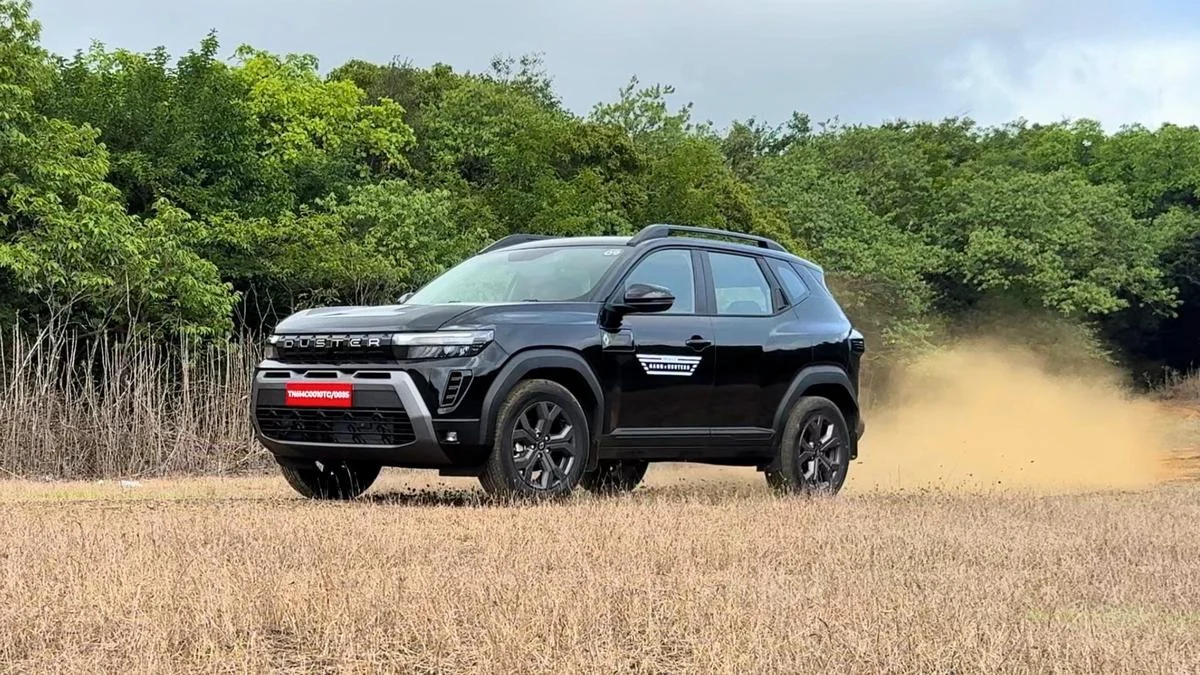
Main Facts: Challenging the "Bigger is Better" Narrative
In the contemporary automotive landscape, a persistent skepticism lingers among prospective car buyers regarding small-capacity engines. The prevailing logic suggests that a larger engine displacement is a prerequisite for effortless performance, particularly within the physically demanding SUV segment. However, the introduction of the Renault Duster TCe 100 serves as a sophisticated rebuttal to this conventional wisdom. On the surface, the Duster’s specifications—a 999cc, three-cylinder turbocharged petrol engine—might seem modest for a vehicle of its stature. Yet, a deeper analysis of its mechanical synergy reveals a machine that punches significantly above its weight class.
The Duster TCe 100 produces 100PS of power and 166Nm of peak torque. While these figures may not immediately capture the attention of those obsessed with "spec-sheet supremacy," the real-world application of this power tells a different story. Renault has engineered a powertrain that prioritizes tractability and responsiveness over raw, intimidating numbers. The result is a vehicle that challenges the "bigger is better" narrative, proving that precision engineering and clever calibration can often outweigh the sheer volume of cylinders.
Chronology: From Rugged Roots to Refined Engineering
The Duster brand has long been synonymous with rugged capability and a "go-anywhere" ethos. Since its inception, the model has garnered a loyal following by offering a level of driver engagement and mechanical honesty that many of its more "sanitized" rivals lacked. The evolution into the TCe 100 variant represents a strategic pivot for Renault—a move toward modern efficiency without sacrificing the vehicle’s foundational DNA.
The Evolution of the Powertrain
The journey of the TCe 100 began with the shared architecture of the Renault-Nissan-Mitsubishi Alliance’s small-displacement engines. While the basic engine block is shared with the Renault Kiger, the Duster’s iteration has undergone a substantial re-engineering process. This was necessitated by the Duster’s larger footprint and its role as a more versatile, family-oriented SUV.

The development focused on optimizing the turbocharger’s spool-up time and refining the torque curve. Renault’s engineers aimed to eliminate the "peaky" nature often associated with small three-cylinder units, where power arrives in a sudden, often unmanageable surge. Instead, they sought a linear delivery that would mimic the behavior of a much larger, naturally aspirated engine.
Calibration of the Six-Speed Manual
Parallel to the engine’s development was the tuning of the six-speed manual gearbox. Unlike many budget-friendly SUVs that utilize five-speed units, the inclusion of a sixth gear allows the Duster to maintain lower RPMs at highway speeds, enhancing both fuel efficiency and cabin refinement. The gear ratios were meticulously judged to ensure the engine remains within its "sweet spot"—the 2,000 to 4,000 RPM range—where the 166Nm of torque is most accessible.
Supporting Data: Performance Metrics and Real-World Dynamics
To understand why the Duster TCe 100 is garnering praise, one must look at the data behind the driving experience. The heart of its capability lies in its torque delivery. With 166Nm available from as low as 2,000rpm, the vehicle offers a robust mid-range that is essential for both urban commuting and high-altitude touring.
Urban and Highway Performance
In metropolitan environments, the TCe 100 exhibits a level of flexibility that is rare for a 1.0-liter unit. It is capable of pulling cleanly from 25-30 km/h in third gear, reducing the need for constant downshifting in stop-and-go traffic. On the open highway, the vehicle maintains triple-digit speeds with surprising composure. Even at 100 km/h, the engine retains enough "breathing room" to allow for clean overtakes without the driver feeling that the powertrain is being pushed to its mechanical limits.

The Mountain Test: Overcoming Incline Resistance
The true litmus test for any small-capacity SUV is its performance on steep gradients. Historically, small turbo engines struggle with "turbo lag" on mountain switchbacks, forcing the driver to hunt for gears. The Duster TCe 100, however, maintains its momentum with confidence. The broad spread of torque ensures that even when the air thins and the incline increases, the vehicle remains composed. The light clutch and precise shift action of the manual transmission further aid the driver in maintaining a fluid rhythm through challenging terrain.
NVH (Noise, Vibration, and Harshness) Levels
Refinement is another area where the data supports the Duster’s premium aspirations. While three-cylinder engines are inherently unbalanced, Renault has employed advanced damping and insulation techniques to mitigate vibrations. At idle, there is a faint mechanical signature characteristic of the three-cylinder layout, but this disappears almost entirely once the vehicle is in motion. The NVH levels are kept commendably low, contributing to a "mature" driving feel that rivals vehicles in a higher price bracket.
Interior Sophistication and Technological Integration
The Duster’s cabin has undergone a transformation, moving away from the utilitarian aesthetic of its predecessors toward a more "European-flavored" sophistication. The interior design philosophy prioritizes tactile quality and ergonomic simplicity over flashy, often distracting, digital gimmicks.
Materiality and Ambience
Renault has utilized a dual-tone finish that effectively lifts the cabin’s mood. The extensive use of fabric trims on the seats, center console, and door panels provides a warmth that plastic-heavy interiors lack. Brown accents are strategically placed to add a sense of premium flair. The seats are designed for long-distance comfort, offering adequate lateral support for spirited driving and enough cushioning for extended family trips.

Connectivity and Convenience Features
The Techno variant of the Duster comes equipped with a suite of modern features designed to meet the expectations of today’s tech-savvy consumer:
- Infotainment: A responsive touchscreen system with seamless Android Auto and Apple CarPlay integration.
- Charging: Wireless charging pads and multiple USB ports strategically placed for front and rear passengers.
- Climate Control: Front and rear air-conditioning vents ensure consistent cooling in harsh tropical climates.
- Safety and Hardware: All-wheel disc brakes and 17-inch alloy wheels come standard, providing both aesthetic appeal and enhanced stopping power.
- Utility: A powered tailgate adds a layer of convenience for grocery runs and luggage loading.
Official Responses and Market Positioning: The Value Proposition
Renault’s positioning of the Duster TCe 100 is a calculated move to capture a segment of the market that values driving dynamics and European engineering but is price-conscious. At a price range of ₹10.49 lakh to ₹13.49 lakh, the Duster sits in a highly competitive bracket, facing off against the likes of the Volkswagen Taigun and the Skoda Kushaq.
Market Strategy
Industry analysts suggest that Renault is leveraging the Duster’s heritage to appeal to "driving enthusiasts on a budget." By offering a highly communicative steering setup—one of the best in its class—and a chassis that remains stable over broken roads, Renault is positioning the Duster as the "honest" alternative to the more feature-bloated but less engaging SUVs in the segment.
Areas for Improvement
Despite the positive reception, critics and early adopters have pointed out a few missed opportunities. In a market where "luxury" features are becoming standard, the absence of ventilated front seats or electrically adjustable driver seats is noted. Given the warm climates of the Indian subcontinent, ventilated seats are often prioritized over features like a sunroof or a powered tailgate. Addressing these omissions in future iterations could further solidify the Duster’s dominance.

Implications: A Shift in Consumer Perception
The success of the Duster TCe 100 has broader implications for the automotive industry, particularly in emerging markets. It signals a shift in consumer behavior where "efficiency" and "engineering" are starting to hold as much weight as "displacement" and "prestige."
The "Downsizing" Trend
The Duster proves that downsizing does not have to mean a reduction in capability. As emission norms become stricter globally, more manufacturers will look toward small-capacity turbocharged engines. The Duster serves as a blueprint for how to execute this transition without alienating the core enthusiast base.
Redefining Value
Furthermore, the Duster TCe 100 redefines what "value" looks like in the SUV segment. It suggests that value is not just about the lowest price or the most features, but about the quality of the connection between the driver, the machine, and the road. By maintaining its rugged DNA while embracing modern powertrain technology, the Renault Duster TCe 100 has emerged as one of the most compelling, well-rounded offerings in the current market.
In conclusion, the Duster TCe 100 is a testament to the fact that the most impressive vehicles are not always those with the largest engines or the longest feature lists. Instead, they are the ones that challenge our expectations and prove that, with the right engineering, a 1.0-liter SUV can indeed conquer the mountains and the highways with equal aplomb.
