

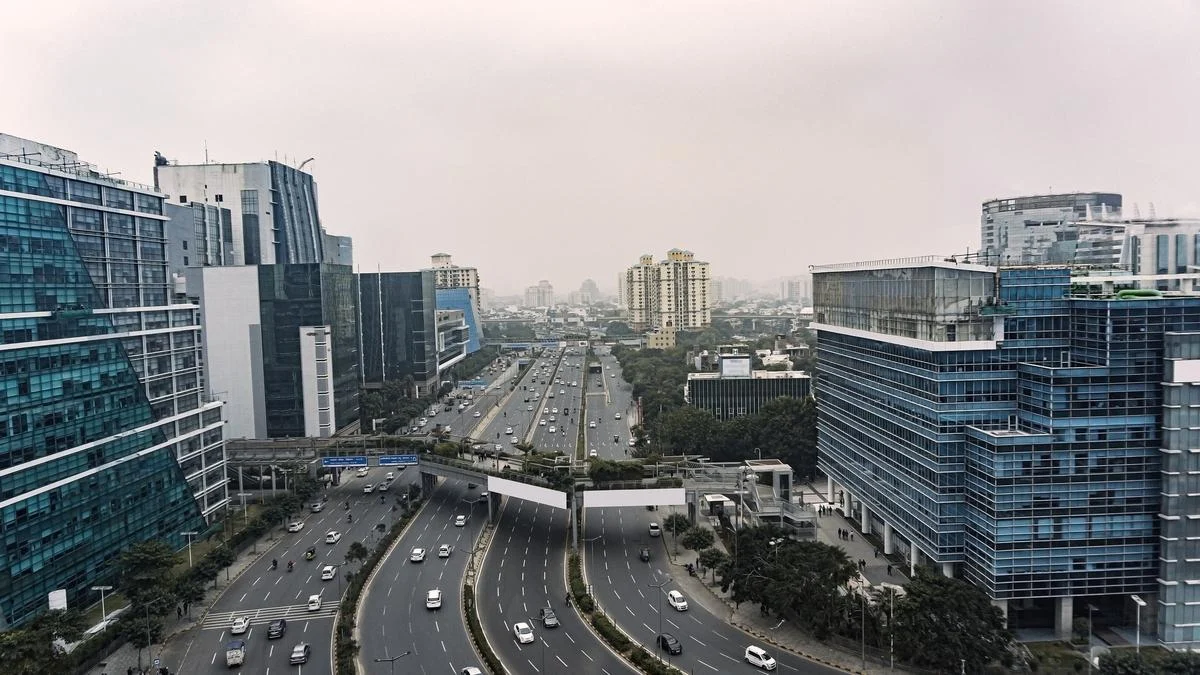
New Delhi, India – India’s dynamic real estate sector is undergoing a profound metamorphosis, shedding its skin of rapid expansion for a more mature, quality-centric growth trajectory. The industry, once driven by sheer volume of launches and inventory creation, is now witnessing a significant recalibration of success metrics. Buyers, investors, and occupiers alike are increasingly prioritizing long-term asset quality, encompassing execution excellence, environmental sustainability, intelligent design, and unwavering operational reliability. This fundamental shift is not merely a superficial trend but a structural transformation that is reshaping the very fabric of the Indian property market.
The scale of India’s real estate market is undeniable, projected to soar from an estimated $585 billion in 2026 to an impressive $926 billion by 2031. This robust growth is fueled by a confluence of factors, including burgeoning institutional investment, the increasing prominence of Real Estate Investment Trusts (REITs), escalating corporate leasing activities, and the sustained expansion of Global Capability Centres (GCCs) across major metropolitan hubs. However, beneath this impressive growth narrative lies a deeper, more significant evolution: a decisive move from prioritizing scale to embracing substance.
The Residential Renaissance: Premiumization and End-User Focus
Nowhere is this paradigm shift more evident than in the residential segment. While overall housing sales may have experienced a dip in 2025, the premium housing segment has defied this trend, exhibiting remarkable resilience and growth. Apartments priced above ₹1 crore have seen their share of total residential sales expand significantly, climbing from 53% in 2024 to a commanding 63% in 2025, according to recent market analyses. This surge in demand for higher-value properties underscores a fundamental change in buyer aspirations. No longer are consumers solely enticed by expansive living spaces or aggressive launch prices. Instead, critical differentiators such as superior construction quality, reduced long-term maintenance costs, thoughtfully designed layouts, and well-integrated community infrastructure are now paramount in their purchasing decisions.
The Indian real estate sector is actively transitioning from a historically supply-driven model to one that is decidedly end-user-centric and value-led. The bygone era was characterized by a relentless focus on scaling operations, absorbing vast inventories, and expediting project launches. Today, however, developers are strategically shifting their attention to product differentiation, the unwavering pursuit of construction excellence, the enhancement of liveability, and the assurance of robust long-term asset performance.
This strategic reorientation is now visibly manifesting even at the initial planning stages of development. Developers are increasingly embracing lower-density developments, dedicating larger expanses to green zones, and investing in advanced façade engineering to create more aesthetically pleasing and energy-efficient buildings. Crucially, amenities are no longer mere marketing ploys; they are being meticulously designed to genuinely enhance the resident experience, fostering a sense of community and well-being.
Commercial Real Estate: The Ascendancy of Green and Smart Spaces
The evolution is equally palpable within the commercial real estate landscape. India has witnessed a remarkable 65% surge in Grade A green-certified office stock across its seven major cities since 2019, a testament to the growing demand for sustainable and efficient workspaces. Occupiers, particularly multinational corporations and GCCs, are no longer content with merely acquiring expansive floor plates. They are actively seeking spaces that harmoniously blend sustainability, operational efficiency, and sophisticated workplace design.
Suvrat Jain, co-founder and chief executive officer of Onward Workspaces, a prominent workspace solutions provider based in New Delhi, articulates this sentiment precisely. "The conversation has fundamentally shifted from ‘how much space’ to ‘what kind of space’," Jain observes. "Enterprises and GCCs are increasingly choosing custom-built, design-led environments over generic square footage, and developers who have not adapted are already feeling it in vacancy numbers."
Jain further emphasizes the potent influence of occupier expectations in reshaping the office market, often outpacing regulatory impetus. "Global parent companies are pushing ESG (Environmental, Social, and Governance) mandates down to their India teams, making green certification a deal requirement and not just a preference," he explains. "Buildings that demonstrate measurable sustainability performance are seeing stronger occupier interest and better long-term positioning." This underscores a clear trend: sustainability is transitioning from a desirable attribute to a non-negotiable prerequisite for commercial spaces.
The Technological Undercurrent: Driving Quality Through Data and Discipline
Technology is emerging as a pivotal enabler of this quality-driven transformation. Historically, quality control mechanisms in construction often operated reactively, with defects surfacing late in the development cycle, leading to costly rectifications and project delays. Today, a growing number of developers and contractors are proactively leveraging digital tools to monitor construction progress and quality in real-time.
Iesh Dixit, Chief Executive Officer and Co-Founder of Powerplay, an end-to-end construction management software platform headquartered in Bengaluru, highlights the practical implications of this technological integration. "At a practical level, the shift comes down to visibility into what is actually happening on site," Dixit states. "Quality is not a single checkpoint. It is the result of hundreds of daily on-site decisions. When teams can track delays, material usage, and defects, and rework while construction is underway, quality becomes measurable instead of abstract."
Dixit observes a discernible movement away from loosely managed execution models towards more disciplined systems driven by data and accountability. "Teams are now documenting workflows, tracking approvals, and monitoring site activity continuously," he notes. "When everything is logged properly, it becomes easier to identify procurement gaps, labor inefficiencies, or supervision issues before they escalate into larger construction problems." This granular level of oversight, facilitated by technology, is instrumental in embedding quality into every stage of the construction process.
Beyond real-time monitoring, developers are also making substantial investments in advanced construction methodologies and superior materials. Building Information Modeling (BIM)-based planning, digital twin modeling, Enterprise Resource Planning (ERP) integrated monitoring systems, and automated quality control measures are steadily becoming more commonplace in large-scale developments. Simultaneously, innovation in material science is playing a crucial role in elevating project execution standards, leading to more durable, sustainable, and efficient structures.
Sustainability Takes Center Stage: A Commitment to the Planet and Future Value
Sustainability has unequivocally moved to the forefront of decision-making processes within the real estate sector. Vishal Vincent Tony, Managing Director of Aratt Developers, a prominent real estate and property development firm based in Bengaluru, elaborates on this trend. "Construction is increasingly adopting ESG-led practices, energy-efficient designs, solar integration, and eco-friendly materials to meet sustainability goals," Tony explains. He further points out that the rising costs of traditional materials have inadvertently accelerated the adoption of smarter procurement strategies, prefabrication techniques, and digital project management solutions, all aimed at minimizing waste and maximizing efficiency.
Tony firmly believes that the sector is undergoing a profound institutionalization, moving beyond the erstwhile focus on rapid project launches to a more enduring commitment to creating long-term value. "The industry is evolving to create long-term value rather than simply launching projects quickly," he asserts. "Developers are focusing on fewer but better projects with stronger compliance, better customer experience, and improved lifecycle value." This strategic consolidation of resources and expertise into fewer, high-quality projects signifies a mature approach to development.
The impact of regulatory reforms cannot be understated in propelling this transition. The Real Estate (Regulation and Development) Act (RERA) has been a transformative force, injecting much-needed transparency and financial discipline into the sector while significantly elevating accountability standards. Today’s buyers are demonstrably more informed and discerning, actively seeking information on sustainability certifications, detailed construction specifications, and the track records of developers. This heightened awareness empowers buyers and incentivizes developers to adhere to higher standards of quality and integrity.
The cumulative effect of these multifaceted shifts – a renewed focus on quality, the pervasive influence of technology, a deep-seated commitment to sustainability, and the guiding hand of regulatory frameworks – is the emergence of a real estate market that is not only more demanding but also demonstrably more resilient. India’s property sector is no longer just about building structures; it’s about crafting enduring assets that contribute positively to the environment, enhance the lives of their occupants, and deliver sustainable value for the future. This evolutionary leap marks a significant milestone in India’s journey towards a more sophisticated and responsible real estate ecosystem.
The writer is managing director of Anand Habitat.
