

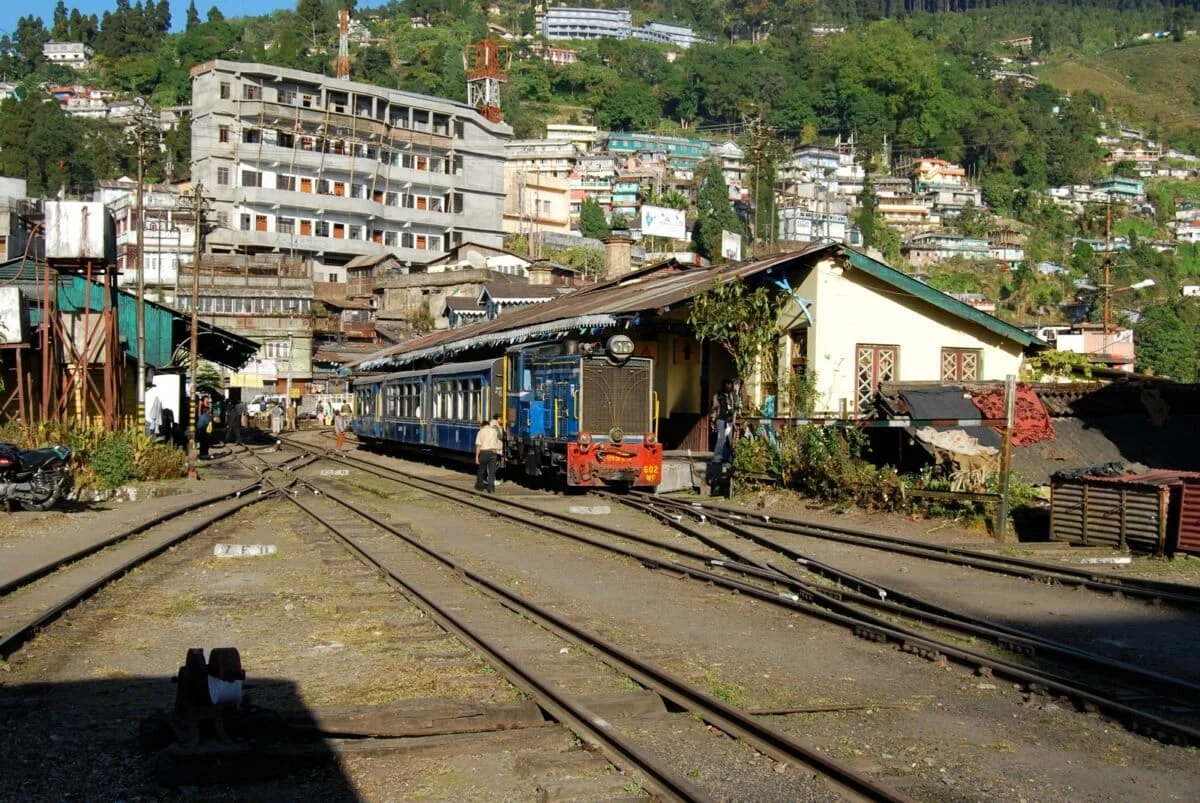
Every day, the rhythmic thrum of over 13,000 passenger trains and thousands of freight wagons pulses through the veins of the Indian subcontinent. For the millions of citizens whose homes abut the 68,000-kilometer rail network, the thunderous roar of locomotives and the bone-deep shudder of ground vibrations are not merely background noise—they are the permanent soundtrack to their lives.
While India’s rapid rail expansion is celebrated as a triumph of connectivity and economic growth, a burgeoning body of scientific evidence suggests a hidden cost. Railway noise, long dismissed as a "transient" inconvenience, is emerging as a significant, yet poorly understood, environmental health risk. Recent studies indicate that in many urban corridors, noise levels consistently shatter the limits set for residential safety, leaving a vulnerable population at risk of chronic sleep deprivation, cardiovascular stress, and psychological distress.
Main Facts: The Acoustic Reality of Urban India
The scale of the issue is rooted in India’s unique urban morphology. Unlike many Western nations where railway corridors are buffered by industrial zones or green belts, Indian cities often feature "organic" growth where high-density residential settlements—both formal and informal—press directly against the tracks.
A Breach of Standards
Under the Noise Pollution (Regulation and Control) Rules, 2000, the Central Pollution Control Board (CPCB) mandates that noise levels in residential areas should not exceed 55 decibels (dB) during the day and 45 dB at night. However, contemporary research shows that communities living near railway lines are frequently exposed to levels exceeding 70 to 80 dB during train pass-bys.
The Cumulative Burden
The primary challenge in addressing railway noise is its intermittent but high-intensity nature. Unlike the steady hum of a distant highway, a train pass-by is an "event" characterized by a sharp rise in sound pressure followed by a tail-off. When these events occur dozens of times a day—and crucially, throughout the night—the human body never truly enters a state of physiological recovery.
The Vibration Factor
Noise does not travel alone. Ground-borne vibration, caused by the mechanical interaction between heavy wheels and steel rails, travels through the soil and into the foundations of buildings. This causes secondary "rattle" noise and a physical sensation of movement that compounds the stress of the audible roar.

Chronology: From Engineering Efficiency to Health Advocacy
The evolution of how India views railway noise has moved through three distinct phases: the era of operational priority, the era of engineering mitigation, and the current, emerging era of environmental health research.
The Operational Era (Post-Independence to 1990s)
For decades, the focus of Indian Railways was purely on capacity and safety. Noise was viewed as a sign of mechanical health or a necessary byproduct of progress. During this period, the proximity of settlements to tracks was rarely regulated from an acoustic standpoint.
The Engineering Era (2000s to 2020)
As the railway modernized, the Research Designs and Standards Organisation (RDSO) began implementing measures to reduce noise, primarily to protect the longevity of the infrastructure and the comfort of passengers. This included the introduction of Long-Welded Rails (LWR), which eliminated the "clickety-clack" of jointed tracks, and the adoption of disc brakes. However, these were engineering solutions to engineering problems, not public health interventions for trackside residents.
The Research Era (2024–Present)
The years 2024 and 2025 have marked a turning point in the scientific discourse. Led by institutions like Delhi Technological University (DTU) and the Indian Institutes of Technology (IIT), researchers have shifted their focus from the "machine" to the "human." These recent studies are the first to systematically document the physiological and psychological perceptions of noise among Delhi’s railway-adjacent communities, highlighting a massive gap between regulatory theory and lived reality.
Supporting Data: Evidence from the Tracks
Recent academic inquiries provide a stark statistical picture of the noise crisis. A landmark 2024 study led by Rajeev Kumar Mishra of Delhi Technological University (DTU) focused on 10 critical sites near railway stations in the national capital.
The DTU Findings
Mishra’s team found that noise levels at all 10 sites consistently exceeded CPCB residential limits. The qualitative data was equally concerning:

- Sleep Disturbance: Over 70% of surveyed residents reported frequent nighttime awakenings.
- Psychological Impact: Respondents noted increased irritability, heightened stress levels, and a "constant state of alertness" even during quiet intervals.
- Physiological Symptoms: Reports of headaches and palpitations were common among long-term residents.
The 2025 Follow-up: Freight and Fuel
A more extensive 2025 study shifted the focus to the source of the noise. By monitoring 1,057 instances of trains passing through 14 informal settlements in Delhi, researchers identified key variables:
- Freight vs. Passenger: Freight trains, which are heavier and often longer, generated significantly higher decibel levels and longer durations of exposure than passenger trains.
- Traction Type: Despite India’s aggressive electrification drive, diesel locomotives were found to be consistently louder, contributing a low-frequency rumble that penetrates walls more effectively than the higher-pitched whine of electric engines.
- Informal Vulnerability: Residents in "jhuggi-jhopri" (slum) clusters were found to be the most at risk, as the thin corrugated metal and plastic materials used in their homes provide zero acoustic insulation.
The Missing "Exposure-Response" Relationship
Despite these findings, experts like Professor Mishra warn that India still lacks a "long-term epidemiological database." While we know the noise is loud, we do not yet have the decades-long data required to prove exactly how many cases of hypertension or heart disease in India are directly attributable to railway noise.
Official Responses and Engineering Perspectives
The institutional response to railway noise has historically been one of cautious technical adjustment rather than a holistic health policy.
The RDSO Position
K.P.S. Verma, the former executive director of the RDSO, notes that for much of his tenure, railway noise was categorized as "transient." The logic was that because a train passes quickly, the exposure is not "continuous" in the way industrial noise is. Under this philosophy, the Railways focused on:
- Rail Grinding: Using specialized machines to smooth out corrugations on the rail surface, which significantly reduces friction-induced noise.
- Brake Material: Moving from cast iron brake blocks to composite materials to prevent the "roughening" of wheel treads.
- Infrastructure Upgrades: The transition to electric locomotives and the elimination of level crossings (which reduces the need for horn honking).
The Scientific Critique
However, independent scientists argue that these measures are insufficient. Mahavir Singh, a former chief scientist at CSIR-National Physical Laboratory (CSIR-NPL), points out that current monitoring frameworks are "engineering-oriented" rather than "community-centric."
"Conventional monitoring often overlooks the cumulative impact," Singh explains. "We need an integrated assessment that looks at noise and vibration together, especially at night when the background city noise drops, making the train noise even more disruptive to the human nervous system."

Implications: The Road Ahead for Policy and Health
The lack of a dedicated protocol for assessing and mitigating railway noise in residential communities represents a significant policy vacuum. As India moves toward high-speed rail and increased freight corridors, the implications are three-fold.
1. The Need for Indian-Specific Models
Brind Kumar of IIT Banaras Hindu University emphasizes that India cannot simply "copy-paste" noise mitigation strategies from Europe or Japan. The density of Indian settlements and the specific "acoustic signature" of Indian rolling stock require localized propagation models. Without these models, urban planners cannot accurately predict how a new track or an increased frequency of trains will affect the health of a neighborhood.
2. Public Health as a Planning Priority
The current evidence, while preliminary, is a "call to action" for public health officials. Manish Purshottam Manohare of IIT Delhi’s Transportation Research and Injury Prevention Centre (TRIP-C) warns against the "absence of evidence" trap. Just because India hasn’t finished its 30-year study on railway-induced heart disease doesn’t mean the risk isn’t real. Preventive measures—such as acoustic barriers in high-density areas and stricter land-use zoning—should be implemented now.
3. Socio-Economic Equity
Railway noise is also an issue of social justice. Wealthier citizens can afford double-glazed windows and homes set back from the tracks. The urban poor, living in informal settlements, bear the brunt of the noise burden. Future policy must address how to protect these vulnerable populations who have neither the political capital nor the financial means to insulate themselves from the roar of progress.
Conclusion
India’s railways are the lifeblood of its economy, but they should not be a drain on its public health. The transition from seeing noise as a "mechanical byproduct" to seeing it as a "chronic pollutant" is essential.
Answering the remaining questions will require a multi-disciplinary approach: epidemiologists to track long-term health outcomes, engineers to design quieter tracks, and policymakers to enforce buffer zones. Until then, for millions of Indians, the sound of the midnight express will remain more than just a passing whistle—it will remain a silent, persistent threat to their well-being.
