

PATNA — In 2020, Bihar made headlines as one of the first states in India to institutionalize "green budgeting," a fiscal strategy designed to weave ecological sensitivity into the fabric of state governance. Fast forward seven years to the presentation of the 2026-27 fiscal roadmap, and the numbers on paper tell a story of massive growth. The green budget has surged from an initial ₹56 billion to approximately ₹158 billion—a nearly threefold increase.
Yet, beneath these escalating figures lies a troubling reality. Data from multiple environmental agencies and independent research bodies suggests that Bihar’s key ecological indicators—ranging from renewable energy adoption and air quality to waste management and biodiversity—have either stagnated or significantly deteriorated. As the state enters its seventh year of green fiscal policy, experts are questioning whether the "green" label is a transformative tool or merely an administrative rebranding of traditional expenditure.
Main Facts: A Widening Gap Between Allocation and Achievement
The Bihar government’s seventh green budget, presented for the 2026-27 cycle, represents roughly 7.5% of the state’s total expenditure. While the sheer volume of funds has increased, the performance across critical sectors remains underwhelming.
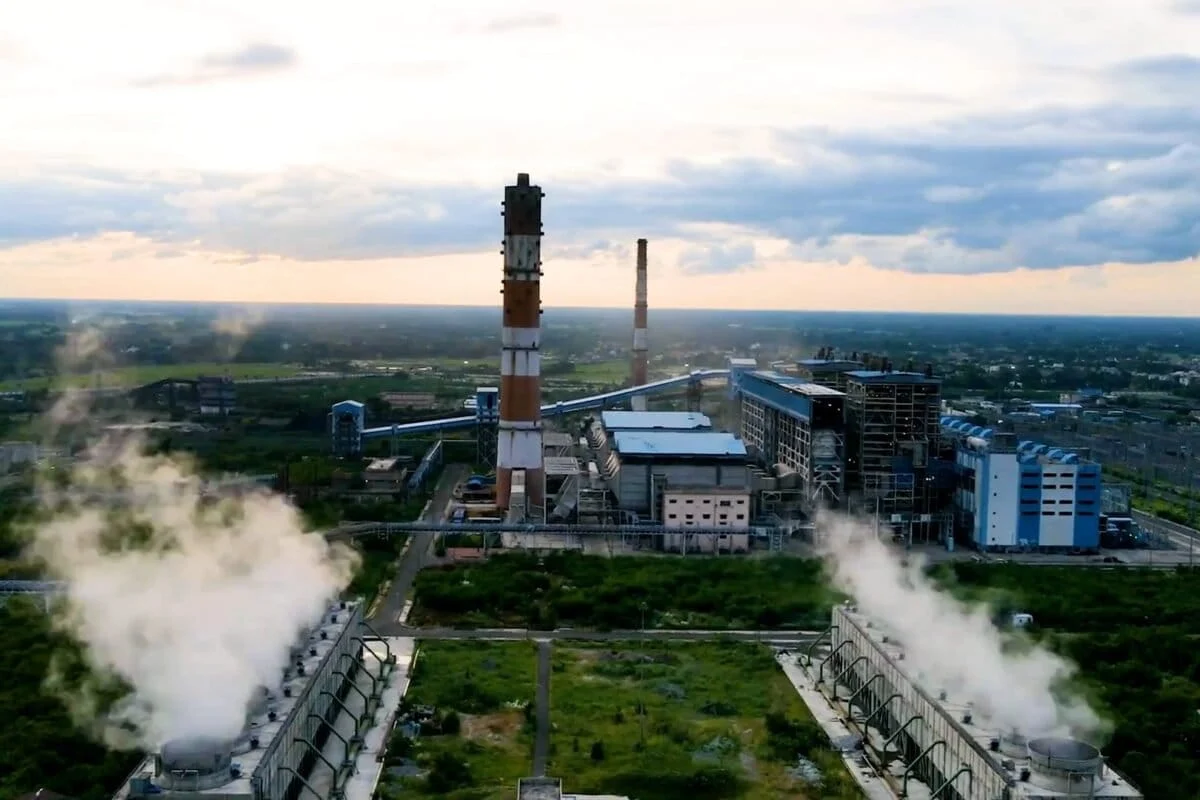
The most glaring discrepancy is found in the energy sector. Despite the energy department accounting for approximately 65% of the state’s greenhouse gas emissions—largely due to a heavy reliance on coal-based power—the transition to renewables has been sluggish. As of 2025-26, Bihar’s renewable energy capacity stood at a meager 651 MW. To put this in perspective, the Bihar State Pollution Control Board (BSPCB) has set a target of 10,000 MW (10 GW) by 2030 to remain on a "net zero" pathway. At the current rate of growth, Bihar will achieve less than 10% of that goal.
Furthermore, biodiversity is in retreat. Since the inception of the green budget, the state has lost 24 major wetlands and over 16,843 hectares of natural water bodies—an area equivalent to 70% of the capital city, Patna. In the realm of waste management, the state has actually regressed; waste processing rates, which peaked at 58% in 2021, have plummeted to approximately 30% in 2025.

Chronology: From Vision to Fiscal Complexity (2020–2027)
The evolution of Bihar’s green budgeting process reflects an increasing administrative complexity that has not yet translated into field-level results.
- 2020-21: Bihar presents its inaugural Green Budget of ₹56 billion, focusing on 96 specific schemes. The state adopts the "Rio Marker" methodology to classify expenditures based on environmental relevance.
- 2021-22: Allocation rises to 9.6% of the total state budget. Waste processing reaches a record high of 58%, offering a brief glimmer of hope for urban sanitation.
- 2023-24: The green budget peaks as a percentage of total state spending, hitting 12.5%. However, reports begin to surface regarding the underutilization of central funds, particularly under the National Clean Air Programme (NCAP).
- 2025-26: Renewable capacity reaches 651 MW, but the state faces criticism as PM2.5 levels exceed safety limits in 20 out of 23 monitored cities.
- 2026-27: The seventh green budget is presented at ₹158 billion. While the number of schemes has grown to 298, the total share of the state budget allocated to green initiatives has retreated to 7.5%, roughly the same level as its inception year.
Supporting Data: Sectoral Failures and the "Greenwashing" Risk
To understand why the increased funding hasn’t yielded results, one must look at the granular data across four key pillars: Energy, Biodiversity, Waste, and Air Quality.
1. The Renewable Energy Deficit
Bihar’s industrial and residential growth continues to be fueled by carbon-intensive sources. While the BSPCB’s 2024 report calls for 28,000 MW of renewable capacity by 2050, the state added only 275 MW between 2020 and 2025. The reliance on coal remains the primary driver of the state’s emissions profile, and the green budget has yet to incentivize a large-scale shift toward solar or wind energy.
2. Shrinking Blue-Green Spaces
Wetlands act as the state’s natural kidneys and flood buffers. The loss of 16,843 hectares of water bodies since 2019 is a catastrophic blow to Bihar’s climate resilience. This shrinkage occurred despite the Environment, Forest, and Climate Change Department receiving 100% of its allocation through the green budget, raising questions about the efficacy of conservation projects on the ground.
3. The Waste Management Slump
Perhaps the most visible failure is in solid waste management. In 2019, Bihar generated 2,272 tonnes of waste daily with a 51% processing rate. By 2025, that processing rate has collapsed to 30%. This suggests that while infrastructure may have been funded, the operational sustainability of waste processing plants is severely lacking.

4. Air Quality and Fund Underutilization
Pollution remains a silent killer in Bihar’s urban centers. A 2025 report by the Centre for Research on Energy and Clean Air (CREA) highlighted that while PM2.5 levels saw a marginal dip, Sulfur Dioxide ($SO_2$) concentrations rose from 8.6 to 11.4 ug/m3. Shockingly, the state failed to use nearly 40% of the ₹3.28 billion allocated by the central government for clean air initiatives, utilizing only ₹1.98 billion.
Official Responses and Expert Analysis: The Need for Independent Audits
The Bihar government maintains that the green budget is a "proactive address of ecological vulnerabilities." By using the Rio Marker methodology, the state categorizes schemes into six slabs, ranging from 1% to 100% "green" relevance. This year, the budget includes 298 schemes, a significant jump from the original 96.
However, economists and environmental policy experts argue that the lack of an independent evaluation framework is the program’s "Achilles’ heel."
Ashmita Gupta, an economist at the Asian Development Research Institute (ADRI)—the organization that helped draft the first green budget—emphasizes that spending does not equal impact. "Merely spending funds is insufficient; the budget should also reflect the outcomes of that expenditure. Currently, that link is missing," Gupta told Mongabay-India. She further warned that without third-party audits, there is a risk that non-green components are being "tagged" as green to meet targets.
Shailly Kedia, Senior Fellow at The Energy and Resources Institute (TERI), noted that while Bihar’s approach is comprehensive because it maps expenditures against Sustainable Development Goals (SDGs), it must transition toward an Output-Outcome Monitoring Framework (OOMF). "The next step is to move beyond expenditure tracking towards measuring implementation effectiveness," Kedia said.

Runa Sarkar, a professor at IIM Calcutta, pointed to the gap between allocation and expenditure as a sign of "limited implementation capacity" and "inadequate planning." In years like 2021-22, the state spent only about two-thirds of what it allocated for green initiatives.
National Scenario: How Bihar Compares
Bihar is not alone in its green budgeting journey, but its methodology is among the most expansive. At least eight Indian states have now adopted some form of climate or green budgeting:
- Odisha: Initiated Climate Budget Tagging (CBT) in 2019-20, focusing specifically on climate mitigation and adaptation.
- Assam: Uses a four-tier classification (Highly Favourable to Less Favourable) to rank schemes based on environmental impact.
- Uttar Pradesh: Aligns its green budget with the State Action Plan on Climate Change (SAPCC), identifying 26% of its total budget as having "green relevance."
- Kerala: Focuses exclusively on schemes with a positive environmental impact, such as biodiversity conservation.
- Meghalaya & Puducherry: Have recently introduced Climate Action Budgets (CAB) with a heavy focus on adaptation in sensitive hilly and coastal ecosystems.
Experts suggest that Bihar’s "Green Budget" is broader than the "Climate Budgets" of other states, as it includes waste management and pollution control. However, being broader has not necessarily made it more effective.
Implications: The High Cost of Inaction
The implications of Bihar’s "paper-heavy, action-light" green budget are profound. As a state highly vulnerable to climate change—facing alternating cycles of devastating floods and prolonged droughts—Bihar cannot afford fiscal symbolic gestures.
The continued shrinkage of wetlands increases the risk of urban flooding, while the failure to meet renewable energy targets leaves the state tethered to a dying and polluting coal industry. Furthermore, the inability to process urban waste and utilize clean air funds suggests an administrative bottleneck that no amount of increased funding can fix without structural reform.

The consensus among experts is clear: the next phase of Bihar’s green budget must move away from "tagging" and toward "targeting." This requires:
- Mandatory Independent Audits: Third-party verification of "green" schemes to prevent greenwashing.
- Outcome-Based Budgeting: Linking department funding to actual improvements in air quality, water levels, or MW of solar power added.
- Capacity Building: Strengthening the technical and administrative ability of local bodies to spend allocated funds effectively.
Without these reforms, Bihar’s Green Budget risks becoming a yearly ritual of rising numbers that fail to change the color of the state’s environment. As the 2026-27 fiscal year begins, the challenge for the state government is to prove that its commitment to the environment is measured in clean air and flowing rivers, not just in billions of rupees.
