

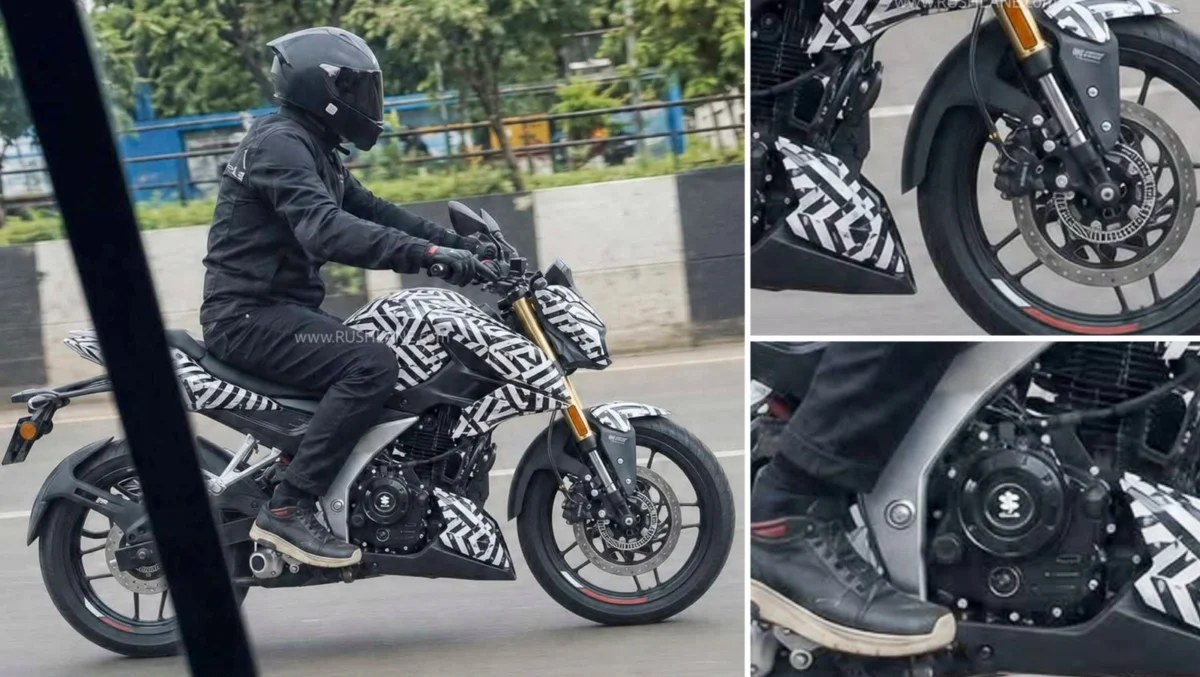
The Indian motorcycling landscape is currently witnessing a significant transformation, led by one of its most storied names: Bajaj Auto. As the company continues to aggressively update its portfolio, the Pulsar brand—a household name for over two decades—is undergoing a comprehensive evolution. Following the recent sightings of the next-generation Pulsar 125 in showrooms, fresh spy images have surfaced of the 2026 Bajaj Pulsar N160. This latest development indicates that Bajaj is not merely tweaking its entry-level offerings but is instead executing a top-to-bottom overhaul of the entire Pulsar family, including the "Classic," "NS," and "N" sub-brands.
The Pulsar N160, since its inception, has been positioned as a modern, street-fighter alternative to the more traditional Pulsar models. It bridges the gap between the budget-friendly 125cc segment and the high-performance NS400Z. The upcoming 2026 iteration, recently spotted testing on public roads, suggests a blend of functional upgrades and subtle aesthetic refinements designed to maintain its dominance in the fiercely competitive 160cc premium commuter segment.
Main Facts: What the Spy Shots Reveal
The recent spy images, which have circulated via social media platforms like mypulsarofficial, show a test mule heavily draped in camouflage. While the overall silhouette remains familiar, a closer inspection reveals several key changes that point toward a more tech-forward and feature-rich motorcycle.
Aesthetic and Lighting Revisions
One of the most immediate takeaways from the high-resolution spy shots is the modification to the lighting assembly. The 2026 Pulsar N160 appears to feature redesigned LED pilot lamps. These "Drls" look sleeker and more aggressive than the current model, potentially indicating a revised main headlight unit as well. Interestingly, the test mule was seen with halogen turn indicators. This has raised eyebrows among enthusiasts, as the current top-spec N160 features LED blinkers. This could suggest either a cost-optimization strategy for specific variants or that the test mule is a mid-spec version of the upcoming lineup.
Ergonomics and Variants
The test mule prominently features a split-seat configuration and Upside-Down (USD) front forks. This strongly suggests that Bajaj is testing the "Dual Channel ABS / Split Seat / USD" variant, which sits at the pinnacle of the N160 range. The inclusion of USD forks, a feature once reserved for much larger displacement bikes, highlights Bajaj’s commitment to offering premium hardware in the 160cc class.

Technological Integration
Perhaps the most significant upgrade is expected in the cockpit. Reports suggest that the 2026 N160 will inherit the new color LCD instrument cluster recently seen on the next-gen Pulsar 125. This unit is substantially larger than the current semi-digital or small LCD screens and will likely include Bluetooth connectivity, call/SMS alerts, and turn-by-turn navigation—a feature that is rapidly becoming a "must-have" for young Indian riders.
Chronology of the Pulsar Evolution (2024–2026)
To understand the significance of the 2026 N160, one must look at the timeline of Bajaj’s recent "Pulsar Offensive."
- Early 2024: Bajaj began updating the existing Pulsar NS range (NS160 and NS200) with LED lighting and digital consoles to keep them relevant against newer competition.
- May 2024: The launch of the Pulsar NS400Z marked a milestone, being the most powerful Pulsar ever made. This set a new design and feature benchmark for the brand.
- Mid-2026: Bajaj Auto reports a massive 30% surge in total sales for July, reaching 4.75 lakh units. This financial momentum provided the backdrop for the current product refresh.
- Late July 2026: The next-generation Pulsar 125 is spotted in dealer stockyards, featuring a complete design overhaul and a mono-shock rear suspension, signaling that the "Classic" Pulsars are moving into a new era.
- August 2026: Spy shots of the N160 emerge, with a rumored formal launch date of August 12th. This suggests a rapid-fire release strategy to capture the festive season demand in the Indian market.
Supporting Data: Technical Specifications and Market Context
While the 2026 update focuses heavily on features and aesthetics, the mechanical core of the Pulsar N160 is expected to remain largely unchanged, given its already high level of refinement and compliance with modern emission standards.
Engine and Performance
The current N160 is powered by a 164.82cc, single-cylinder, oil-cooled, 2-valve engine. It produces 16 PS of power at 8,750 rpm and 14.65 Nm of torque at 6,750 rpm. This engine is praised for its tractable nature and "best-in-class" mid-range grunt, making it ideal for urban commuting. It is mated to a 5-speed constant mesh gearbox. While some enthusiasts hope for a 4-valve head or a 6th gear, the 2026 model is likely to retain this reliable 2-valve setup to keep costs competitive.
Cycle Parts and Dimensions
The N160 is built on a tubular frame that uses the engine as a stressed member. The suspension duties on the spied top-spec model are handled by 33mm USD forks at the front and a Nitrox mono-shock at the rear. Braking is handled by a 300mm disc at the front and a 230mm disc at the rear, supported by Grimeca calipers and a dual-channel ABS system as standard on the higher trims. The 17-inch alloy wheels and 100/80 (front) and 130/70 (rear) tubeless tires are expected to carry over from the current version.

The Competitive Landscape
The 160cc segment is one of the most crowded in India. The Pulsar N160 faces stiff competition from:
- TVS Apache RTR 160 4V: Known for its high-revving 4-valve engine and ride modes.
- Hero Xtreme 160R 4V: Offers a very light chassis and USD forks.
- Suzuki Gixxer 150: Renowned for its handling and Japanese reliability.
By adding a sophisticated LCD screen and navigation, Bajaj is directly addressing the "feature gap" that previously gave TVS and Hero an edge in the showroom.
Official Responses and Manufacturing Outlook
While Bajaj Auto has not officially released a press statement regarding the specific details of the N160 spy shots, company executives have previously hinted at a "complete refresh" of the Pulsar portfolio. During recent earnings calls, the leadership emphasized the importance of "premiumization" within the commuter segments.
The manufacturing strategy appears to be one of modularity. By sharing the new LCD instrument cluster and certain switchgear across the Pulsar 125, N150, and N160, Bajaj can achieve significant economies of scale. This allows them to offer high-end features like turn-by-turn navigation at a price point that remains accessible to the average buyer.
Industry analysts suggest that the "August 12th" date mentioned in rumors could be a media launch or a "soft launch" where bikes start reaching dealerships for test rides. Bajaj’s recent sales success—growing 30% year-on-year—indicates that their production lines are running at high efficiency, ready to support a multi-model rollout.

Implications for the Consumer and the Brand
The 2026 Bajaj Pulsar N160 refresh carries several implications for the market:
1. The Death of the "Basic" Commuter
By bringing high-end tech to the 160cc and even 125cc segments, Bajaj is signaling the end of the basic, no-frills commuter bike. Consumers now expect safety (ABS), performance (USD forks), and connectivity (Navigation) even in sub-200cc motorcycles. This shift will likely force other manufacturers to accelerate their own update cycles.
2. Pricing Strategy
The addition of USD forks and a sophisticated LCD console will inevitably lead to a price hike. Currently, the Pulsar N160 is priced between ₹1.23 lakh and ₹1.40 lakh (ex-showroom). The 2026 model, particularly the top-spec variant, could see a price increase of ₹5,000 to ₹8,000. However, Bajaj has a history of aggressive pricing, often undercutting rivals despite offering similar or superior hardware.
3. Brand Cohesion
For years, the Pulsar brand was fragmented into different "generations" sold simultaneously (e.g., the 220F sold alongside the N250). The 2026 updates seem to be an effort to bring a unified design language and feature set across the entire range. Whether a customer buys a Pulsar 125 or an N160, they will soon be greeted by a similar digital experience and modern aesthetics.
4. Environmental and Regulatory Compliance
The 2026 model will continue to adhere to the latest OBD-2 (On-Board Diagnostics) and BS6 Stage II norms. The refinement in the LED lighting and electrical systems also points toward better energy management, a small but vital part of modern motorcycle engineering.

Conclusion
The 2026 Bajaj Pulsar N160 is more than just a facelift; it is a tactical move by Bajaj Auto to fortify its position as the leader of the Indian sporty-commuter market. While the core mechanicals remain a proven commodity, the addition of sleeker lighting, premium suspension, and "big-bike" technology ensures that the N160 remains the aspirational choice for young riders. As the August 12th launch date approaches, the industry waits to see if Bajaj can once again redefine the value proposition of the 160cc segment. One thing is certain: the "Pulsar" nameplate is not ready to slow down anytime soon.
