

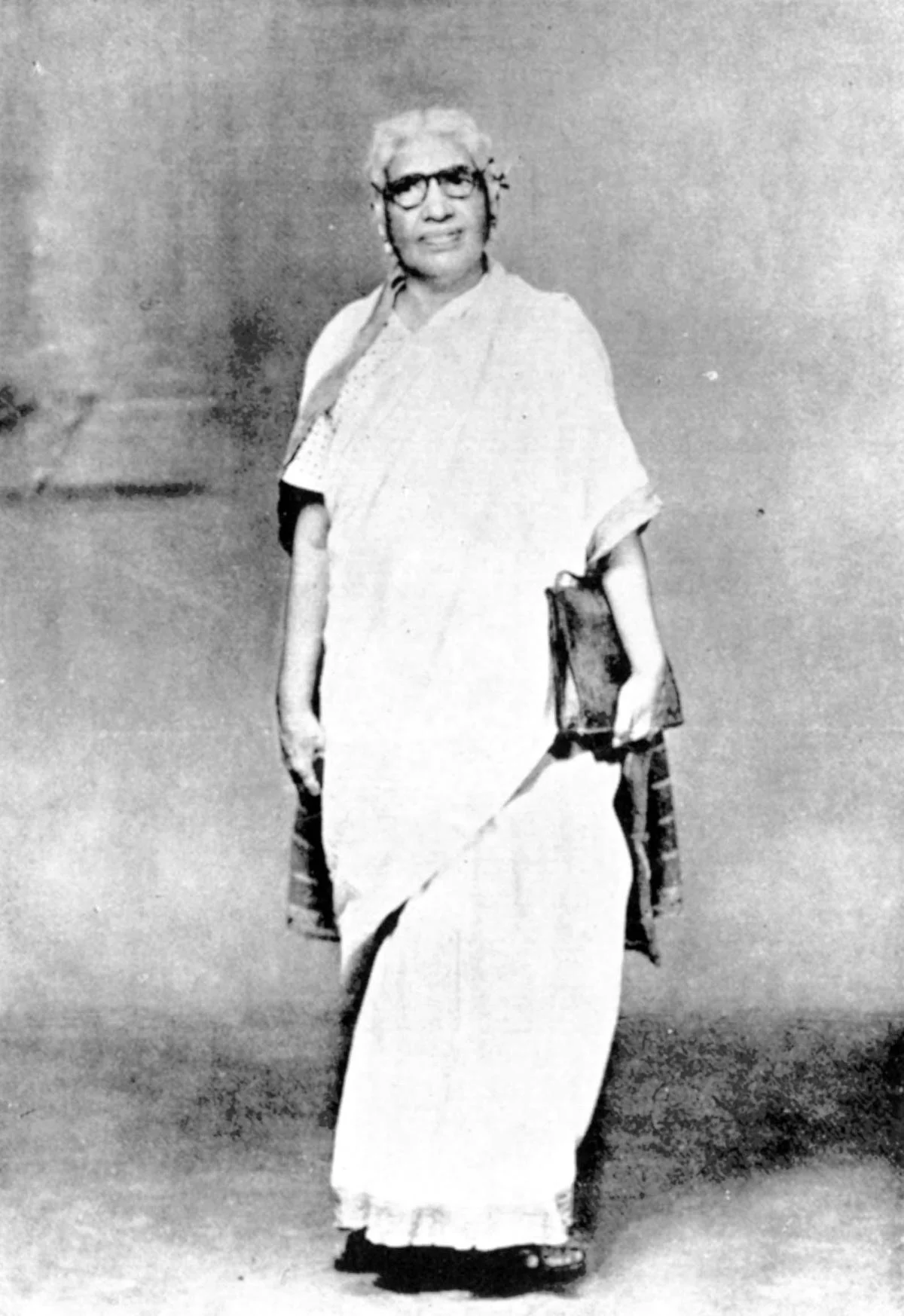
Chennai, India – In an era when societal norms severely restricted women’s lives, Dr. Muthulakshmi Reddy emerged as a beacon of change, dismantling barriers in education, medicine, and public administration. Born in 1886 in the princely state of Pudukkottai, Tamil Nadu, her journey from a determined young girl to a pioneering social reformer and legislator is a testament to her unwavering spirit and profound commitment to gender equality and social justice. Her life and work continue to inspire, underscoring the transformative power of one individual’s vision to reshape society.
The Genesis of a Visionary: Early Life and Education
Muthulakshmi’s early life was marked by an insatiable thirst for knowledge. Her father, S. Narayanaswami Iyer, the esteemed Principal of Maharaja’s College in Pudukkottai, instilled in her a deep appreciation for learning. However, pursuing higher education as a woman in the early 20th century was an uphill battle. Despite her father’s position, Muthulakshmi faced formidable opposition when she sought admission to Maharaja’s College. The prevailing patriarchal mindset viewed co-education with deep suspicion, with students, parents, and even college authorities expressing reservations about a woman’s presence in a male-dominated institution.
It was the progressive Maharaja of Pudukkottai who recognized Muthulakshmi’s potential and granted her admission, along with a much-needed scholarship. Even with this support, her initial three months at the college were a period of intense scrutiny and a trial by fire. Undeterred by the ostracism and the constant pressure, Muthulakshmi excelled academically, proving her mettle and dispelling the prejudices against her. Her success in this challenging environment was not merely a personal triumph; it was a significant crack in the edifice of gender-based educational restrictions.
Driven by an even loftier ambition, Muthulakshmi set her sights on medicine. In 1907, she achieved another historic milestone by becoming the first woman to be admitted to the prestigious Madras Medical College. Her academic brilliance shone through as she not only completed her medical studies but also earned a gold medal, a rare distinction for any student, let alone a woman at that time. This achievement paved the way for her to become a House Surgeon at the Government Hospital for Women and Children in Madras (present-day Chennai). Further breaking ground, she was appointed as the first woman House Surgeon at the Government Maternity and Ophthalmic Hospital, a role that was previously exclusive to men. Her early career in medicine was thus characterized by a series of "firsts," each one a testament to her perseverance and a crucial step towards creating opportunities for future generations of women in the medical field.
Stepping into the Public Arena: A Force for Reform
Dr. Muthulakshmi Reddy’s medical practice provided her with an intimate understanding of the multifaceted challenges faced by women in Indian society. Witnessing firsthand the plight of women, particularly those from marginalized communities, ignited a powerful desire within her to effect systemic change. Her transition from the clinical world to public life was a strategic and impactful move, enabling her to leverage her newfound authority to advocate for widespread reforms.

Her entry into politics was as groundbreaking as her academic achievements. She was appointed the first woman legislator, a role that allowed her to directly influence policy-making. Subsequently, she ascended to the position of the first woman Deputy President of the Legislative Council and also served in the Madras Corporation, further amplifying her voice and impact. In these positions of power, Dr. Reddy championed legislation aimed at securing fundamental rights for women. She was instrumental in introducing laws that granted women property rights, combated child marriage, and enhanced child protection measures. These legislative victories were not abstract policy changes; they were concrete steps towards empowering women and safeguarding their dignity and future.
Perhaps one of her most impactful and personal crusades was against the abhorrent devadasi system. Having witnessed the exploitation and suffering of young girls ensnared in this practice, she dedicated herself to its eradication. Her personal encounters and deep empathy fueled her tireless advocacy, culminating in significant legal reforms that aimed to dismantle this deeply entrenched social evil. Her commitment to equality and justice extended beyond legislative reforms; she recognized the interconnectedness of education, health, and social well-being.
Dr. Reddy was a staunch advocate for a robust educational and healthcare system, with a particular focus on improving access for women. She championed initiatives such as fee exemptions, scholarships, and the establishment of hostels for female students, recognizing that financial and logistical barriers often hindered their educational pursuits. Her efforts also extended to improving public health infrastructure, advocating for better sanitation facilities, especially in economically backward neighborhoods, thereby enhancing the quality of life for countless individuals.
Enduring Legacy: Institutions of Hope and Healing
The profound impact of Dr. Muthulakshmi Reddy’s dedication is vividly evident in the enduring institutions she founded, which continue to serve society with distinction. In Adyar, Chennai, two institutions stand as powerful testaments to her vision and unwavering commitment to a better future for women and children.
The Avvai Home and Orphanage, established by Dr. Reddy, was conceived as a sanctuary for girls and women facing adversity. It provides shelter, protection, and crucially, education, equipping them with the tools to lead independent and dignified lives. This institution embodies her belief in the transformative power of education and care in breaking cycles of poverty and vulnerability.

Equally significant is the Adyar Cancer Institute. Recognizing the devastating impact of cancer, particularly on women, and the lack of specialized care in the region, Dr. Reddy was instrumental in its establishment. This institution has evolved into a premier cancer treatment and research center, providing state-of-the-art medical care and contributing significantly to the understanding and management of cancer. The presence of her statue within the institute serves as a constant reminder of her pioneering spirit and her dedication to alleviating human suffering.
Recognition and Enduring Influence
Dr. Muthulakshmi Reddy’s multifaceted contributions were widely recognized during her lifetime and continue to be celebrated. In 1956, she was honored with the prestigious Padma Bhushan, India’s third-highest civilian award. This award acknowledged not only her pioneering work across various fields but also her remarkable ability to weave together diverse passions—medicine, social reform, and public service—into a cohesive force for positive change.
Her passing in 1968 marked the end of an era, but her legacy continues to resonate powerfully. The community, the reforms she championed, and the institutions she built stand as living proof of her indelible impact. She transformed the landscape of women’s rights, education, and healthcare, making education, health, freedom, and respect an everyday reality for countless individuals. Dr. Muthulakshmi Reddy remains an icon of resilience, a trailblazer who dared to dream of a more equitable society and possessed the courage and determination to make that dream a tangible reality. Her life serves as an enduring inspiration, demonstrating that with unwavering conviction and persistent action, one individual can indeed leave an immeasurable mark on the course of history.
