

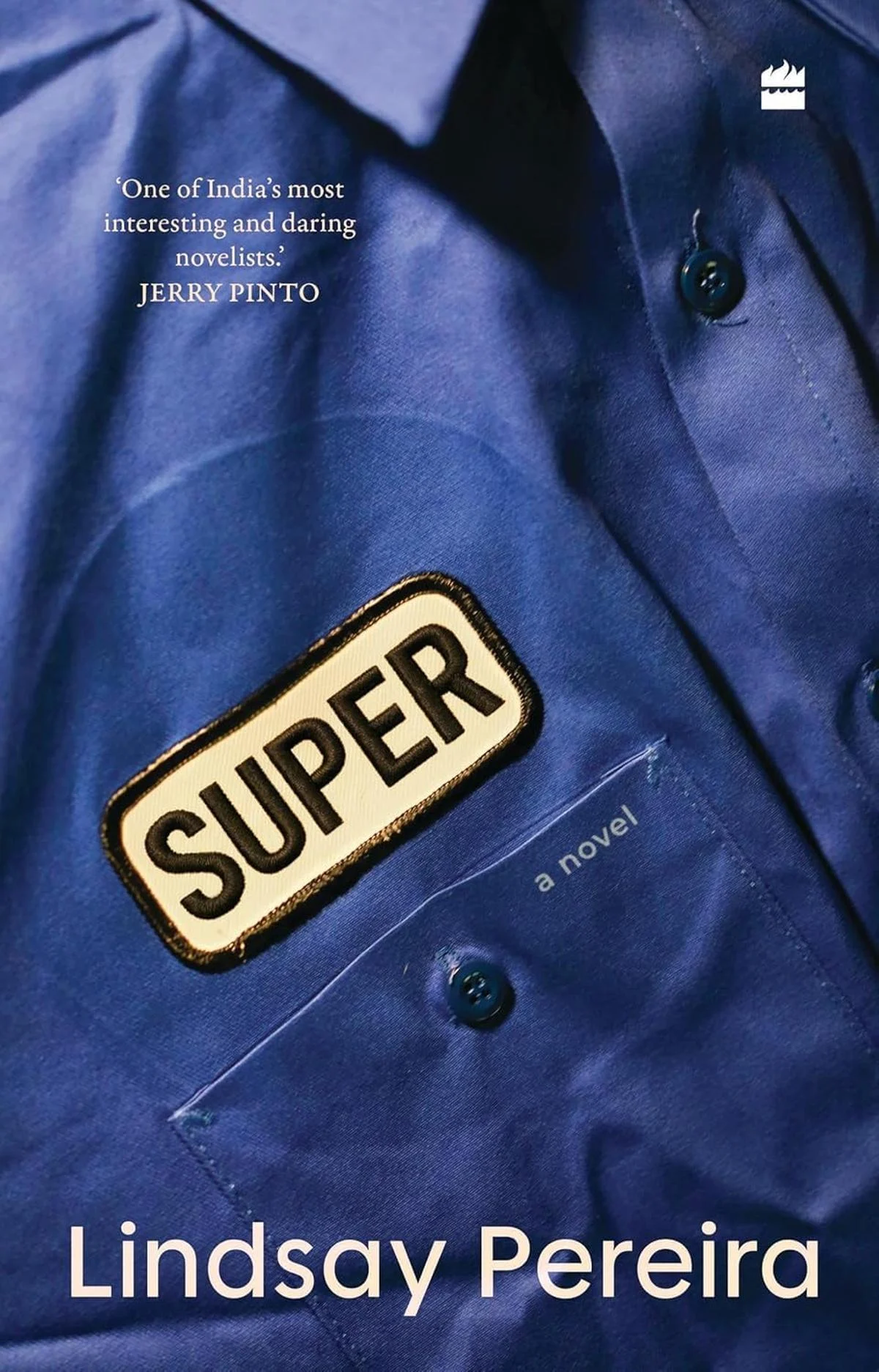
The movement of people across borders is rarely just a physical transition; it is a profound, often desperate, act of reinvention. For the youth of Punjab, the "Canadian Dream" has transcended mere aspiration to become a cultural necessity—a rite of passage fueled by a mix of hope, economic necessity, and a perceived lack of belonging at home. In his latest novel, Super, author Lindsay Pereira delves into this complex socio-political landscape through the eyes of Sukhpreet, a young Sikh man caught in the machinery of the global migration industry.
As diplomatic relations between India and Canada face unprecedented strain and immigration policies become central to domestic politics in both nations, Super arrives as a timely, albeit somber, exploration of the "IELTS conveyor belt" and the harsh realities awaiting those who manage to cross the threshold.
Main Facts: The Narrative Framework of ‘Super’
Lindsay Pereira’s Super, published by Fourth Estate India (₹699), is a character-driven exploration of the Punjabi migration crisis. The story centers on Sukhpreet, a protagonist who embodies the quiet desperation of a generation. Unlike the stereotypical "brash" NRI often depicted in popular media, Sukhpreet is a misfit—a young man who finds no resonance in Punjabi hip-hop and feels alienated from the shifting political climate of his homeland.
The Protagonist’s Burden
Sukhpreet’s motivation for migration is rooted in tragedy and familial duty. With a deceased father and an elder brother lost to the state’s rampant drug epidemic, he is the sole repository of his mother’s hopes. His journey begins in Jalandhar, the epicenter of Punjab’s English-proficiency industry, where he struggles to master the IELTS (International English Language Testing System).

The Architecture of Deception
The novel highlights a systemic issue: the fabrication of credentials. When Sukhpreet fails to achieve the required English scores, he resorts to forging documents. By exaggerating the size of his family’s modest two-acre farm, he secures admission to a "dubious" Canadian college—a phenomenon mirroring the real-world "strip-mall colleges" that have come under intense scrutiny by Canadian authorities in recent years.
A Multi-Perspective Gaze
Pereira attempts to broaden the narrative scope by including:
- Dan (Deepanshu): Sukhpreet’s cousin already in Canada, who serves as a cautionary tale. Instead of the promised land, Dan inhabits a world of grueling competition as a gig-economy food delivery executive in Brampton.
- Harleen: Sukhpreet’s love interest, who shares his existential dread and the repetitive cycle of questioning the necessity of their departure.
- Maynard Wilson: A middle-aged white Canadian facing eviction. His perspective introduces the rising tensions of the Canadian housing crisis and the xenophobia brewing in neighborhoods undergoing rapid demographic shifts.
Chronology: From the Fields of Punjab to the Basements of Brampton
The "Canadian Dream" in Punjab did not emerge in a vacuum. To understand Sukhpreet’s journey, one must look at the chronological evolution of this migratory path.
Phase I: The Historical Roots (Early 20th Century to 1990s)
Migration from Punjab to Canada dates back to the early 1900s, initially driven by labor needs in the lumber and agricultural sectors. Despite systemic racism (exemplified by the Komagata Maru incident of 1914), the diaspora grew steadily. By the late 20th century, Canada was viewed as a sanctuary for those seeking political stability and economic upward mobility.

Phase II: The Student Boom (2010–2023)
The narrative of Super is set against the backdrop of the most recent and most volatile phase of migration. Over the last decade, the focus shifted from skilled worker visas to student visas. This created an entire ecosystem in cities like Jalandhar and Ludhiana, where "study abroad" consultants became more ubiquitous than grocery stores.
Phase III: The Current Crisis (2023–Present)
The novel reflects the contemporary moment where the dream has begun to sour. The chronology of Sukhpreet’s struggle coincides with real-world events:
- The Housing Crunch: The influx of international students led to a severe shortage of affordable housing in Canadian suburbs.
- The Diplomatic Frost: Following allegations regarding the killing of Hardeep Singh Nijjar, relations between New Delhi and Ottawa plummeted, leaving students like Sukhpreet in a state of geopolitical limbo.
- Policy Tightening: In 2024, the Canadian government announced a significant cap on international student permits, aiming to curb the "bad actors" and "diploma mills" mentioned in Pereira’s book.
Supporting Data: The Reality of the ‘IELTS Conveyor Belt’
The struggles depicted in Super are backed by staggering statistics that highlight the scale of the migration industry.
- The Student Influx: As of late 2023, there were over 900,000 international students in Canada, with Indians making up nearly 40% of that demographic. A vast majority of these students hail from Punjab.
- The IELTS Economy: The coaching industry in Punjab is estimated to be worth over ₹1,100 crore (approximately $130 million USD) annually. For many families, the cost of a single attempt at the exam, combined with coaching fees, represents several months of household income.
- The Gig Economy Trap: Like the character Dan in the novel, many international students find themselves restricted to low-wage gig work. Reports indicate that international students contribute significantly to the workforce in Canada’s courier and food delivery sectors, often working hours that exceed legal limits just to cover the exorbitant cost of living.
- The "Ghost College" Phenomenon: Canadian authorities have identified hundreds of "private career colleges" that operate out of office buildings or strip malls, offering degrees with little to no market value. These institutions often partner with recruiters in India to lure students with the promise of a Post-Graduation Work Permit (PGWP).
Official Responses: Navigating the Political Fault Lines
The novel poses a poignant question through Sukhpreet: “When did India become a land where Sikhs were not welcome, and was this an imagined slight or a real fear?” This reflects the deep-seated political anxieties that have resurfaced in recent years.

The Indian Perspective
The Indian government has frequently expressed concern over the "brain drain" and the exploitation of its students abroad. However, there is also a domestic tension regarding the "Khalistan" narrative, which Pereira touches upon. The sense of displacement mentioned in the novel is often a reaction to perceived marginalization in the national political discourse, leading many youth to feel that their future lies only in the "mythical" West.
The Canadian Perspective
Ottawa’s response has shifted from a "warm welcome" to "cautious restriction." Immigration Minister Marc Miller has recently referred to the international student system as "out of control," promising to crack down on the very types of "dubious colleges" Sukhpreet applies to in the novel. The Canadian government is currently balancing the need for young labor with the reality of an infrastructure that cannot sustain the current rate of population growth.
Implications: The Psychological and Social Toll
While the reviewer of Super notes an "emotional monotone" and a lack of narrative tension, the novel’s repetitive nature may inadvertently mirror the actual experience of the migrant—a cycle of waiting, worrying, and reflecting on a choice that feels both inevitable and tragic.
The Erosion of the Dream
The primary implication of the current migration trend is the death of the "Canadian Dream." The lakes may remain "impossibly blue," as Sukhpreet imagines, but the life of dignity he seeks is increasingly replaced by the indignity of overcrowded basement apartments and the relentless grind of the gig economy.

Cultural Flattening
The critique that the novel reduces Punjabi characters to "cultural shorthand" (subsisting on parathas and lassi) points to a broader social issue: the loss of nuance in the migrant identity. As youth leave Punjab en masse, the rich, diverse culture of the region is often distilled into a few portable stereotypes, while the intellectual and creative potential of the youth is sacrificed at the altar of survival in a foreign land.
The Existential Dilemma
The central question of the novel—“Why migrate?”—remains the most pressing issue for Punjab. The answer is a harrowing combination of factors:
- The Agrarian Crisis: Small landholdings (like Sukhpreet’s two acres) are no longer viable.
- The Drug Menace: A sense of "escaping a sinking ship."
- Social Prestige: Migration has become a status symbol, where staying back is often viewed as a failure of ambition.
Conclusion
Lindsay Pereira’s Super serves as a stark, if somewhat flattened, mirror to a society in transition. It captures the desperation of the "IELTS generation" and the systemic failures that drive young men like Sukhpreet to fabricate a life just to stand a chance at a new one. As the "Canadian Dream" continues to collide with the harsh realities of global politics and economic scarcity, the story of the Punjabi migrant remains one of the most significant—and heartbreaking—narratives of the 21st century. Whether the novel succeeds in its prose or not, the reality it describes is a loud, persistent cry for attention in an increasingly fractured world.
