

The Indian automotive sector, once dominated by internal combustion engines (ICE), has undergone a seismic shift as of mid-2026. The transition toward sustainable mobility has moved beyond the "early adopter" phase and into a period of market consolidation and intense corporate rivalry. In July 2026, the electric vehicle (EV) segment demonstrated a unique profile of stability in volume but volatility in brand rankings. While the overall growth trajectory for the top five manufacturers remained nearly flat on a month-on-month (MoM) basis, the underlying data reveals a fierce battle for market share, strategic pivots by domestic giants, and the aggressive expansion of international challengers.
Main Facts: A Market in Equilibrium
In July 2026, India’s top five electric car Original Equipment Manufacturers (OEMs) collectively sold 32,214 units. This figure represents a marginal increase of 0.16% compared to the 32,162 units recorded in June 2026. While the headline growth suggests a plateau, the internal movement within the "Top 5" tells a story of shifting consumer preferences and supply chain efficiencies.
Tata Motors continues to sit comfortably at the apex of the pyramid, commanding nearly half of the market share among the leading players. However, the most significant narrative of the month was the reshuffling of the second and third positions. JSW MG Motor India successfully reclaimed the runner-up spot, surpassing Mahindra, which experienced a double-digit decline. Meanwhile, VinFast, the Vietnamese electric specialist, emerged as the fastest-growing brand in the top tier, largely driven by its dominance in the commercial and fleet sectors. Conversely, Maruti Suzuki, the traditional leader in the ICE market, continues to navigate the complexities of the EV transition, holding the fifth spot as it scales its electric portfolio.
Chronology: The Road to July 2026
To understand the July 2026 performance, one must look at the preceding six months of the year. The first half of 2026 was characterized by a flurry of new launches, particularly in the mid-size SUV and compact crossover segments.
- Q1 2026: The market saw the introduction of several "Electric Origin" platforms, moving away from the "ICE-conversion" models that dominated the early 2020s. This led to a surge in consumer interest as range anxiety began to diminish with the standardization of 400km+ real-world ranges.
- Q2 2026: Competition intensified as JSW MG Motor India and Mahindra launched aggressive pricing strategies to capture the "value-luxury" segment. This period saw Mahindra briefly taking the second spot, fueled by the initial delivery rush of its XEV and BE series.
- June 2026: The market hit a milestone of over 32,000 units for the top five players, setting a high benchmark for the second half of the year.
- July 2026: The current reporting period shows a stabilization of demand. The initial "hype" of new launches has transitioned into steady retail sales, where brand reputation, after-sales service, and charging infrastructure availability have become the primary drivers of purchase decisions.
Supporting Data: A Deep Dive into the Numbers
The performance of the top five OEMs provides a granular look at the health of the Indian EV ecosystem.
1. Tata Motors: The Undisputed Market Leader
Tata Motors remains the "anchor" of the Indian EV industry. Selling 15,055 units in July 2026, the company saw a 2.72% MoM growth.
- Market Share: 46.73% of the Top 5 sales.
- Strategic Edge: Tata’s success is attributed to its multi-layered product strategy. With the Tiago EV catering to the entry-level segment and the Nexon, Punch, and Curvv EVs dominating the mid-range, the company has created a "moat" that competitors find difficult to breach.
2. JSW MG Motor India: The Return to Silver
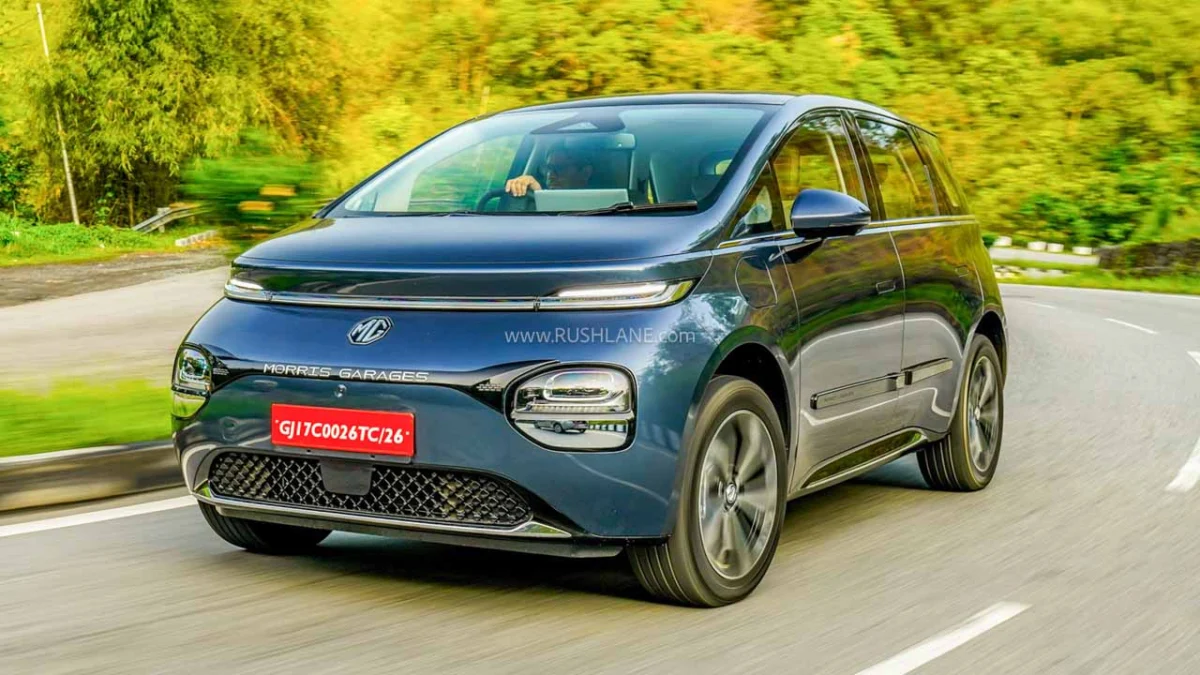
Reclaiming the second position, JSW MG sold 6,585 units, a 10.28% jump from June’s 5,971 units.

- Growth Driver: The Windsor EV has emerged as a volume driver, complemented by the quirky Comet EV for urban mobility and the ZS EV for the premium segment.
- Portfolio Pivot: Notably, EVs now account for over 80% of MG’s total sales in India, signaling a near-complete transition to electric for the brand.
3. Mahindra: Navigating a Seasonal Correction
Mahindra slipped to third place with 6,473 units, representing a 14.86% decline from June’s 7,603 units.
- Market Share: 20.09%.
- Analysis: Despite the decline, demand for Mahindra’s "Electric Origin" SUVs—the BE 6, XEV 9e, and XEV 9S—remains robust. Industry analysts suggest the July dip may be a result of production recalibration and the clearing of backlogs from the previous quarter’s aggressive delivery cycle.
4. VinFast: The Growth Outlier
VinFast recorded the highest MoM growth at 25.83%, moving from 1,928 units in June to 2,426 units in July.
- Market Share: 7.53%.
- Operational Model: A significant portion of VinFast’s volume is attributed to its B2B strategy. Through partnerships with Green SM Limo and other taxi aggregators, VinFast has quickly populated Indian metros with electric cabs, building brand visibility while securing high-volume sales.
5. Maruti Suzuki: The Measured Approach
The country’s largest carmaker sold 1,675 units of its electric offerings, a 16.38% MoM decline.
- Market Share: 5.20%.
- Future Outlook: While currently in fifth place, Maruti is viewed as a "sleeping giant." With the e Vitara leading the charge, the company is expected to launch a series of affordable EVs in 2027, leveraging its massive dealership network to democratize electric mobility.
| Top 5 Electric Car OEMs | July 2026 Sales | June 2026 Sales | MoM Growth (%) | Market Share (%) |
|---|---|---|---|---|
| Tata Motors | 15,055 | 14,657 | +2.72% | 46.73% |
| JSW MG Motor | 6,585 | 5,971 | +10.28% | 20.44% |
| Mahindra | 6,473 | 7,603 | -14.86% | 20.09% |
| VinFast | 2,426 | 1,928 | +25.83% | 7.53% |
| Maruti Suzuki | 1,675 | 2,003 | -16.38% | 5.20% |
| Total | 32,214 | 32,162 | +0.16% | 100.00% |
Official Context and Strategic Responses
The July numbers have prompted various strategic reflections from the industry’s key players. JSW MG Motor India recently celebrated its "highest-ever" monthly sales, highlighting that the synergy between JSW’s industrial prowess and MG’s EV technology is yielding tangible results. Their focus on the "Windsor EV" as a crossover that blends luxury with utility has clearly resonated with the Indian middle class.
Mahindra, despite the monthly dip, remains optimistic. Internal sources indicate that the company is focusing on scaling its "Born Electric" (BE) platform. The temporary decline is viewed as a "breather" after a period of hyper-growth, with the company focusing on improving the charging ecosystem for its SUV owners through its "X-Charging" network.
VinFast’s performance is perhaps the most disruptive. By focusing on the fleet market, VinFast is following a "top-down" visibility strategy. A spokesperson for the company noted that the Indian market is central to their global expansion, and the success of the Green SM Limo partnership serves as a proof-of-concept for their vehicle durability and low cost of ownership.
Implications: The Road Ahead for India’s EV Sector
The July 2026 data serves as a barometer for several emerging trends in the Indian automotive landscape:

1. The End of the Monopoly Era
While Tata Motors remains the leader, its market share is no longer the 70-80% figure seen in the early 2020s. The rise of JSW MG and Mahindra suggests that the market is maturing into a healthy triopoly at the top, which will likely lead to better pricing and more features for the end consumer.
2. Fleet vs. Personal Mobility
The success of VinFast highlights a growing divide. The fleet market is currently a low-hanging fruit for OEMs looking for volume. However, the long-term winner will be the brand that can successfully transition these fleet users into personal car buyers.
3. Infrastructure as the Final Frontier
As sales stabilize at around 32,000 units per month for the top players, the pressure on India’s charging infrastructure is mounting. The second half of 2026 will likely see OEMs shifting their focus from "selling cars" to "selling ecosystems." We expect more partnerships between carmakers and power DISCOMS to provide seamless home and public charging solutions.
4. The Upcoming "Maruti Factor"
Maruti Suzuki’s current fifth-place standing is deceptive. As the company ramps up production of the e Vitara and introduces smaller, more affordable electric hatchbacks, the market dynamics could shift again in 2027. Maruti’s ability to provide "peace of mind" to rural and semi-urban buyers remains its greatest competitive advantage.
5. Consolidation of Global Players
The presence of VinFast in the top five, and the steady growth of MG, indicates that global brands with a "digital-first" and "electric-first" DNA are finding it easier to compete in the EV space than traditional ICE players who are burdened by legacy manufacturing constraints.
Conclusion
July 2026 will be remembered as the month when the Indian EV market found its "cruising altitude." The marginal 0.16% MoM growth is not a sign of stagnation but of a market that has integrated into the broader automotive fabric. With Tata defending its crown, MG and Mahindra locked in a battle for the second spot, and newcomers like VinFast injecting fresh energy, the Indian consumer is the ultimate winner. As we move toward the festive season in the latter half of the year, the competition is expected to intensify, potentially pushing monthly volumes for the top five OEMs past the 40,000-unit mark by the end of 2026.
