

Introduction: The Pragmatic Shift in India’s EV Landscape
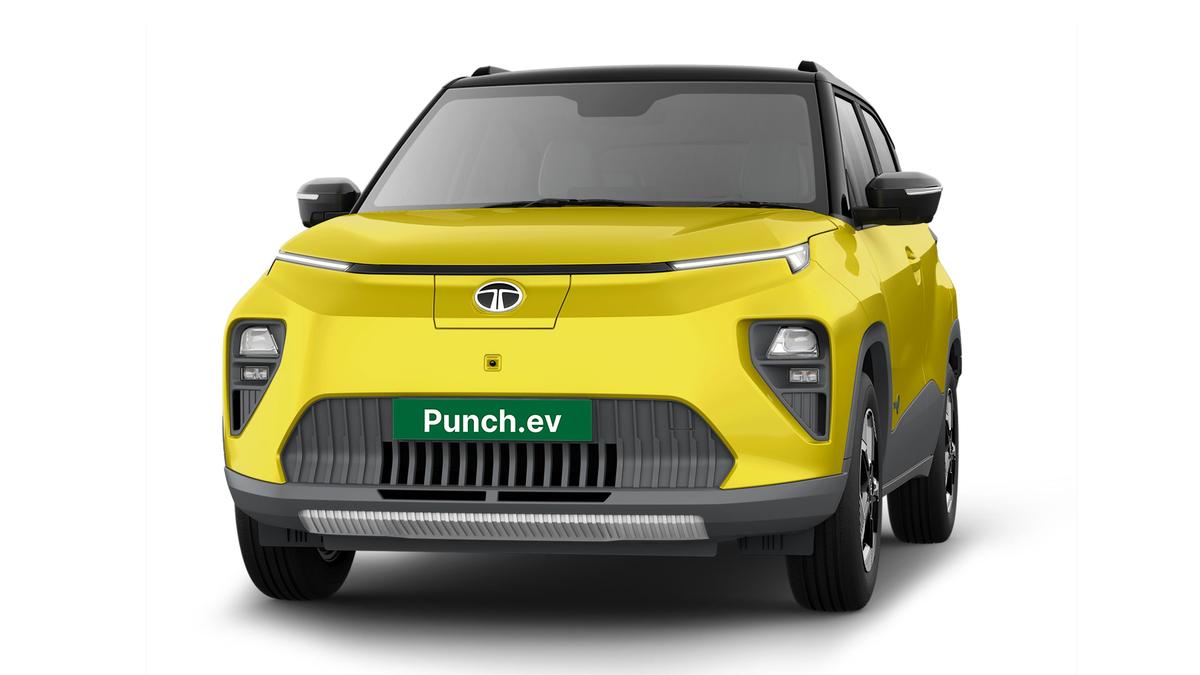
In the rapidly evolving landscape of Indian automotive engineering, the transition from internal combustion engines (ICE) to electric propulsion has often been characterized by two extremes: entry-level hatchbacks with limited range or premium SUVs that remain out of reach for the average middle-class household. The Tata Punch.ev emerges as a calculated, "quietly confident" intervention in this binary market.
Tata Motors is no longer merely experimenting with electrification; it is refining the formula. With the Punch.ev, the company has eschewed the need for flashy gimmicks and overwhelming tech-bloat, focusing instead on a singular, potent objective: delivering a vehicle that fits seamlessly into the rhythm of daily urban life. Priced between ₹9.69 lakh and ₹12.59 lakh (ex-showroom), the Punch.ev is not just a car; it is a strategic bridge designed to accelerate the mass adoption of electric vehicles (EVs) in the subcontinent.
Chronology: From ICE Conversion to the acti.ev Architecture
To understand the significance of the Punch.ev, one must look at the trajectory of Tata Motors’ EV journey. The company’s initial success was built on "converted" platforms—taking existing ICE models like the Nexon and Tiago and retrofitting them with electric powertrains. While successful, these models faced inherent limitations in terms of floor height, battery packaging, and weight distribution.
The Punch.ev marks a pivotal shift as one of the first models to be built on the acti.ev (Advanced Connected Tech-Intelligent Electric Vehicle) platform. This dedicated global EV architecture is a departure from the "conversion" philosophy. By designing the platform from the ground up for electrification, Tata engineers were able to optimize cabin space, improve structural rigidity, and integrate a flat floor—elements that are immediately apparent when one steps inside the vehicle.
This evolution signifies Tata’s transition from an early mover to a dominant specialist. The acti.ev platform allows for different body styles and drivetrain configurations, but in the Punch.ev, it has been tuned specifically for the "Urban SUV" persona—rugged yet nimble, compact yet spacious.
Performance and Engineering: Supporting Data and Driving Dynamics
The Powerhouse Under the Hood
The Punch.ev is offered with two battery pack options, catering to different usage cycles. The Long Range variant, featuring a 40 kWh battery, is the focal point for most buyers seeking versatility. This unit produces approximately 122 PS (90 kW) and 190 Nm of torque (with the larger variant peaking near 130 PS and 154 Nm in specific tunings), providing a level of "immediacy" that ICE vehicles in this segment simply cannot match.
In urban conditions, the car exhibits an eagerness that is both predictable and progressive. It reaches 60 km/h with a linear surge that makes navigating dense metropolitan traffic less of a chore and more of an effortless exercise. Unlike some EVs that suffer from "on-off" throttle responses, the Punch.ev’s calibration feels mature, making it an easy transition for drivers moving away from petrol or diesel engines.
Range and Charging Reality
While the Automotive Research Association of India (ARAI) provides optimistic range figures, real-world testing settles into a more pragmatic window of 300 km to 350 km for the 40 kWh pack. This "usable range" is a critical metric; it represents the threshold where "range anxiety" begins to dissipate for the average commuter.
The charging infrastructure compatibility further bolsters its case. Equipped with DC fast-charging capabilities of up to 65 kW, the Punch.ev can replenish its battery from 20% to 80% in approximately 30 minutes. For those in a hurry, a 15-minute "splash and dash" can add roughly 130 km of range, turning a quick coffee break into a significant logistical gain.
Ride Quality and Handling
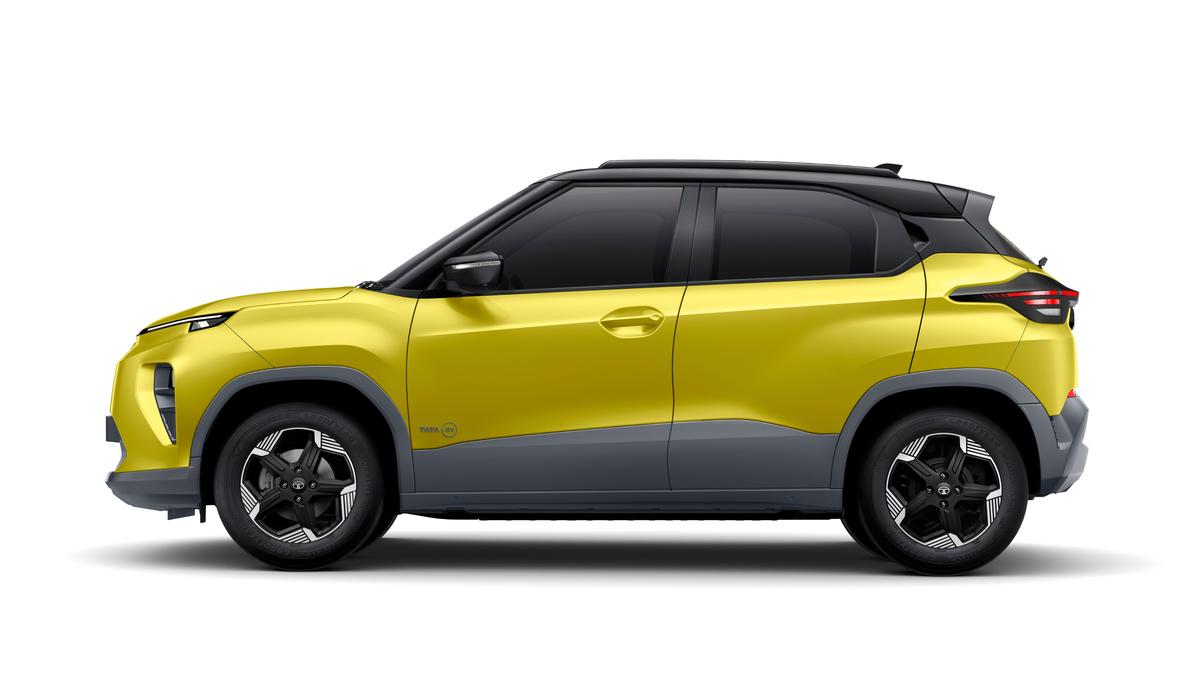
Built with a 195 mm ground clearance, the Punch.ev retains the "go-anywhere" stance of its ICE predecessor. The suspension is tuned to handle the added weight of the battery packs without feeling overly stiff. It absorbs road imperfections with a composed, planted character. While it is not a "corner-carver"—the steering is light and lacks surgical feedback—it excels in its intended environment: the city.
Interior and Technology: A Study in Modern Utility
The Digital Cockpit
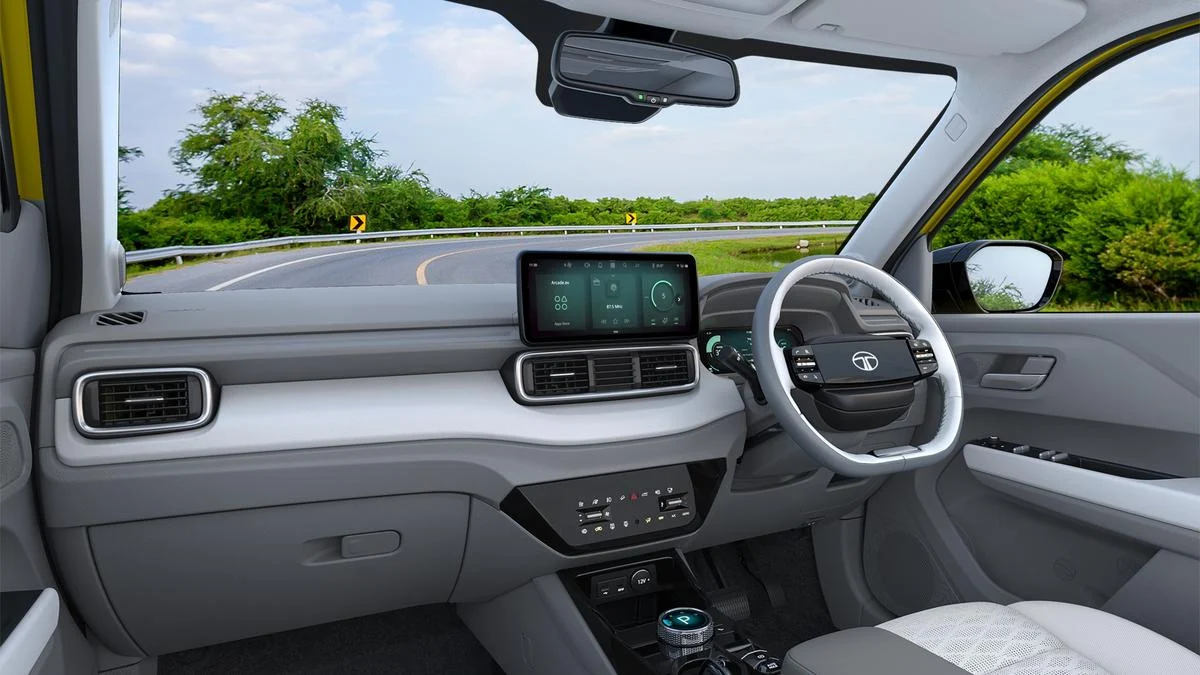
The cabin of the Tata Punch.ev is a reflection of Tata’s recent interior design language, which emphasizes a "layered" aesthetic. The centerpiece is a sharp 10.25-inch high-definition touchscreen infotainment system. It is complemented by a matching 10.25-inch digital instrument cluster that supports navigation projection—a feature typically reserved for much more expensive vehicles.
Integration is seamless, featuring wireless Android Auto and Apple CarPlay. Furthermore, the 360-degree camera system stands out for its high resolution, providing clarity that significantly reduces the stress of parking in tight urban spots.
Comfort and Materiality
In an effort to bring premium features to the mass market, Tata has included ventilated front seats, a godsend in the humid Indian climate. The inclusion of a wireless charging pad, an electronic parking brake with auto-hold, and an air purifier further enhances the "living experience."
However, professional scrutiny reveals where cost-optimization has occurred. While the dashboard features a visually rich "contrasting band," the plastics on the door cards and lower sections of the cabin feel basic. There is a concern that these surfaces may not age as gracefully as the mechanical components. Nevertheless, the overall fit and finish are a marked improvement over previous iterations, suggesting that Tata is listening to consumer feedback regarding build quality.
Spatial Efficiency
Thanks to the acti.ev platform’s flat floor, the rear seat is surprisingly accommodating for a car of this footprint. While three adults in the back might be a squeeze for long journeys, it is perfectly adequate for city commutes. The 366-litre boot is deep and functional, though the high loading lip may pose a challenge for heavier luggage. Interestingly, the dedicated EV platform also allows for a small "frunk" (front trunk) under the hood, ideal for storing charging cables.
Safety and Structural Integrity: An Uncompromised Priority
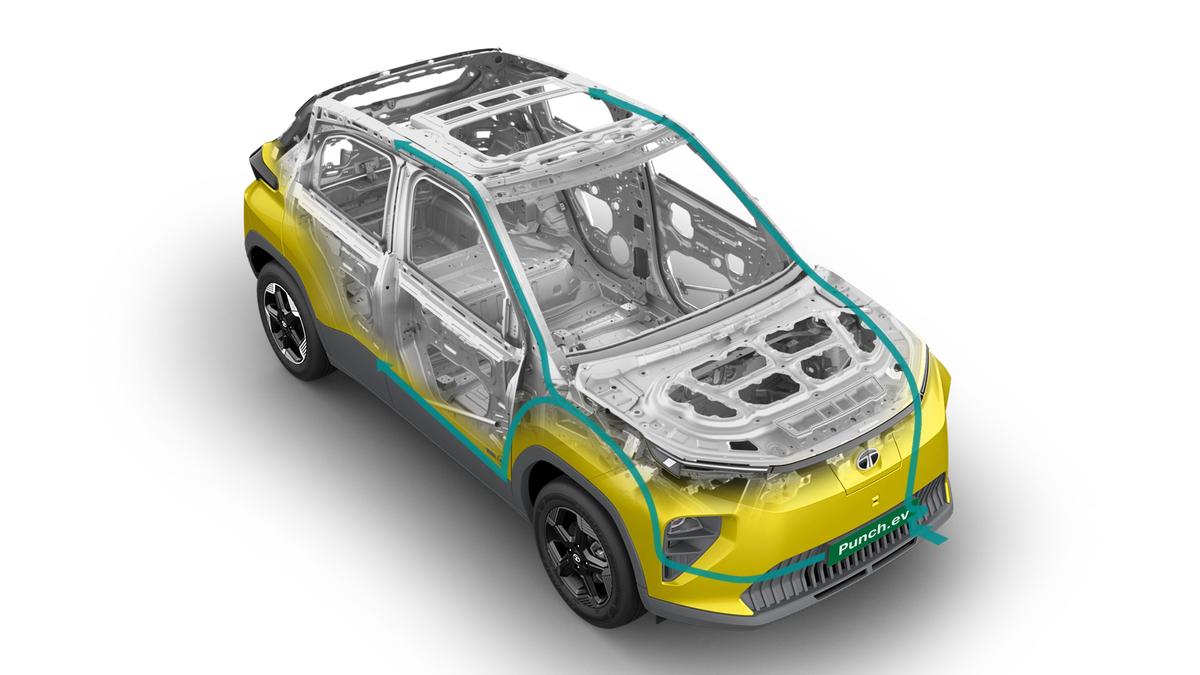
Tata Motors has built its modern reputation on safety, and the Punch.ev is no exception. The vehicle is engineered to meet high crash-test standards, benefiting from a high-strength steel structure designed to protect the battery pack in the event of a lateral or frontal impact.
Standard safety features include:
- Six Airbags: Providing comprehensive occupant protection.
- Electronic Stability Control (ESC): Vital for managing the instant torque of an electric motor on slippery surfaces.
- Traction Control and Hill Hold/Descent Control: Ensuring the vehicle remains stable on inclines.
- Disc Brakes on all four wheels: A significant upgrade for the Long Range variant, ensuring superior stopping power for the heavier EV.
The intervention of these systems is smooth, lacking the jarring sensation found in older safety suites, which adds to the overall sense of refinement.
Market Positioning and Official Strategy
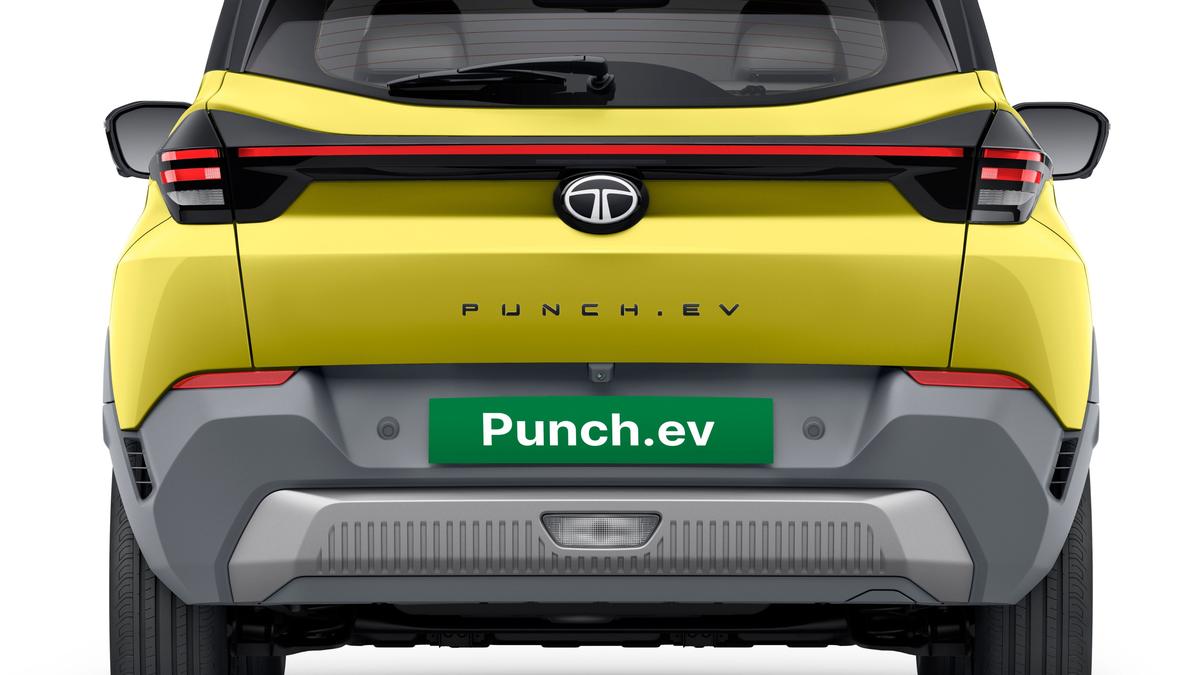
The Tata Punch.ev is positioned with surgical precision within the company’s portfolio. It sits comfortably above the Tiago.ev (the entry-level choice) and below the Nexon.ev (the premium flagship). This "Goldilocks" positioning allows Tata to capture a vast demographic:
- The First-Time Buyer: Who wants a modern, safe SUV but wants to skip the ICE era entirely.
- The Second-Car Household: Looking for an efficient, easy-to-drive city runabout to complement a larger long-distance vehicle.
- The Tech-Conscious Professional: Who values the lower running costs and environmental credentials of an EV without wanting a vehicle that "looks like a science project."
Official responses from Tata Motors indicate a clear focus on "frictionless ownership." By expanding their charging network and offering competitive warranties on the battery and motor (typically 8 years or 1,60,000 km), they are addressing the primary psychological barriers to EV adoption.
Implications: The Future of the Segment
The arrival of the Tata Punch.ev has significant implications for the Indian automotive industry. It proves that a dedicated EV platform can be scaled down to a compact size without sacrificing utility or performance. It sets a new benchmark for what consumers should expect at the ₹10-12 lakh price point—specifically regarding infotainment, safety, and real-world range.
As competitors like MG, Citroen, and eventually Hyundai and Suzuki prepare their own small EVs, the Punch.ev serves as the "incumbent to beat." Its success suggests that the Indian consumer is ready for EVs, provided they are packaged in a familiar, rugged, and practical form factor.
Final Verdict
The Tata Punch.ev does not attempt to reinvent the wheel. Instead, it focuses on eliminating the "friction" of EV ownership. It is a well-judged, mature product that balances the high-tech requirements of tomorrow with the practical realities of today’s infrastructure. While minor improvements in interior plastic quality could be made, they do not detract from the fact that this is arguably the most sensible electric vehicle currently on sale in the Indian market.
For the urban commuter, the Punch.ev isn’t just a choice; it’s a statement that the era of the practical, everyday electric car has finally arrived.
Price: ₹9.69 lakh to ₹12.59 lakh (ex-showroom)
In association with Motorscribes and The Hindu.
