

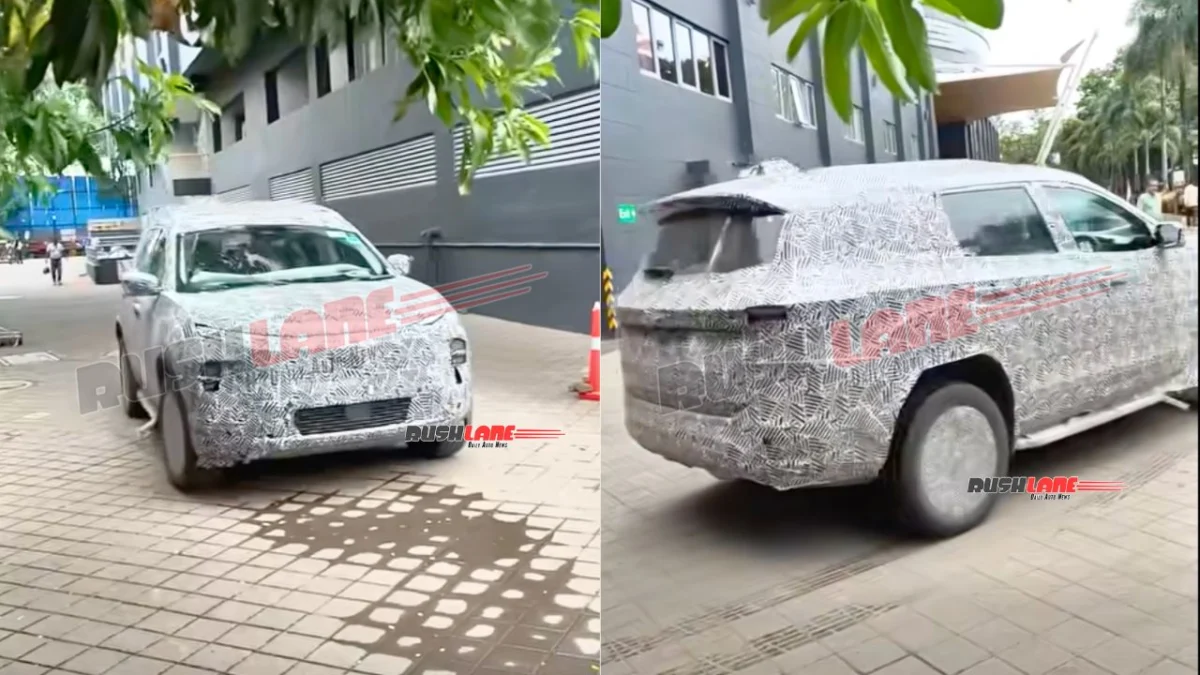
The Indian automotive landscape is currently witnessing a paradigm shift, one where internal combustion engines (ICE) are no longer the sole protagonists of the road. At the forefront of this revolution is Tata Motors, a company that has methodically transformed its portfolio to embrace electrification. With the Tiago, Tigor, Nexon, and Punch already boasting successful electric avatars, and the Harrier EV on the horizon, only two names remained in the ICE-only column: the Altroz and the Safari. However, recent developments and a flurry of spy shots suggest that the wait for a three-row electric flagship is nearly over.
The upcoming Tata Safari EV is not just another product launch; it is a statement of intent. As the brand’s first-ever three-row electric SUV, it aims to bridge the gap between rugged utility and sustainable luxury. Recent sightings of test mules have sent ripples through the industry, particularly regarding a potential interior overhaul that could see the Safari EV leapfrog its siblings in terms of technology and cabin experience.
Main Facts: A Triple-Screen Revolution and Flagship Positioning
The most significant revelation from the latest spy shots, captured by automotive enthusiast Nikint Kshirsagar, is the potential inclusion of a triple-screen dashboard layout. This setup, previously showcased in the concept versions of the Tata Sierra and Sierra EV, marks a departure from the dual-screen configuration currently found in Tata’s premium offerings like the Nexon EV and the ICE Safari facelift.
The Triple-Screen Strategy
The move to a triple-screen layout is widely seen as a strategic response to the Mahindra XEV 9S. Mahindra’s upcoming electric flagship offers a triple-screen setup as standard across various trims, a feature that has garnered significant consumer interest. For Tata Motors, incorporating a dedicated screen for the front passenger, alongside the digital instrument cluster and the central infotainment unit, would elevate the Safari EV into the "luxury-tech" bracket.
While the Harrier EV and Safari EV have traditionally shared most of their DNA, this new development suggests that Tata might be looking to further differentiate the two. By giving the Safari EV a more sophisticated cockpit, Tata is positioning the three-row SUV as the ultimate tech-laden flagship, catering to families who prioritize both space and cutting-edge entertainment.
Design and Aesthetics
On the exterior, the Safari EV is expected to maintain the "Empowered" design language seen in the recent facelift of the ICE Safari. However, it will feature EV-specific flourishes, such as a closed-off grille for better aerodynamics, unique alloy wheel designs (potentially aero-inserts), and signature ".ev" branding. The lighting signature is expected to remain a highlight, featuring the connected LED DRLs with welcome and goodbye sequences.

Chronology: The Evolution of an Icon
To understand the significance of the Safari EV, one must look at the trajectory of the Safari brand itself.
- The Rebirth (2021): Tata Motors revived the "Safari" nameplate by launching a three-row version of the Harrier, based on the OMEGARC platform (derived from Land Rover’s D8 architecture).
- The Feature Push (2022-2023): Over two years, Tata added several "Red Dark" editions and functional upgrades like Ventilated Seats and a larger infotainment system to keep the model competitive against the Mahindra XUV700.
- The Major Facelift (Late 2023): The Safari received a massive aesthetic and technological overhaul, introducing a more futuristic front fascia, a touch-based HVAC panel, and a 4-spoke steering wheel with an illuminated logo.
- The Turbo Petrol Addition (2024): Recognizing the need for engine diversity beyond the 2.0L Kryotec Diesel, Tata introduced the 1.5L GDI Turbo Petrol engine, broadening the SUV’s appeal.
- The EV Transition (Late 2024/Early 2025): The Safari EV is scheduled for a launch around the Diwali festive season. This move completes the "Power of Choice" strategy, offering Diesel, Petrol, and Electric powertrains on the same flagship platform.
Supporting Data: Technical Specifications and Performance
The Safari EV will be built upon Tata’s new acti.ev (Advanced Connected Tech-Intelligent Electric Vehicle) architecture. Unlike earlier conversions that were restricted by ICE platforms, the acti.ev platform is a "born-electric" evolution that allows for better battery packaging and flat floors.
Battery and Range
Industry insiders suggest that Tata will offer two battery pack options to cater to different range requirements:
- 65 kWh Pack: Aimed at urban-centric users, offering a balance between weight and range.
- 75 kWh Pack: The long-range variant, designed for highway cruising and inter-city travel.
While the Harrier EV is touted to have a claimed range of approximately 627 km (under ARAI testing), the Safari EV’s range might be slightly lower—estimated between 580 km and 600 km—due to the additional weight of the third-row seating and the vehicle’s larger dimensions.
Drivetrain and Performance
Perhaps the most exciting technical detail is the confirmation of a Dual-Motor All-Wheel Drive (AWD) setup. This will be the first time a modern Tata Safari features 4WD/AWD capabilities since the discontinuation of the Safari Storme.
- Torque: The dual-motor setup is expected to produce up to 500 Nm of peak torque, ensuring that the heavy SUV can sprint from 0-100 km/h in under 8 seconds.
- Suspension: The EV version will feature a multi-link independent rear suspension, a significant upgrade over the torsion beam setup found in the ICE version. This change is necessary to accommodate the rear motor and to provide the ride quality expected of a premium EV.
Advanced Features
The Safari EV will be a showcase of Tata’s technological prowess. Expected features include:

- 14.5-inch Samsung OLED Infotainment: A high-definition, ultra-responsive screen.
- Level 2+ ADAS: Including Adaptive Cruise Control with Stop & Go, Lane Keep Assist, and Autonomous Emergency Braking.
- V2L and V2V: Vehicle-to-Load and Vehicle-to-Vehicle charging capabilities, allowing the car to power external appliances or even charge another EV.
- Digital IRVM and 540-degree Camera: Enhancing visibility for the driver in tight spots.
Official Responses and Market Context
While Tata Motors has been tight-lipped about the specific "triple-screen" rumors, senior executives have consistently emphasized that the "Safari" nameplate represents the pinnacle of their "New Forever" philosophy. During recent investor meets, the company highlighted its commitment to maintaining a 70%+ market share in the Indian EV segment by launching products that "set new benchmarks in tech and comfort."
The market context is equally vital. The D-segment SUV market in India is currently dominated by the Mahindra XUV700 and the Scorpio-N. In the EV space, the Mahindra XEV 9S has already begun making waves. By launching the Safari EV around Diwali, Tata Motors is looking to capitalize on the festive buying sentiment, positioning the vehicle as a "green" alternative to luxury SUVs from European brands.
Implications: What This Means for the Industry
The launch of the Safari EV carries several long-term implications for the Indian automotive industry:
1. The End of "Diesel-Only" Dominance
For years, large SUVs were synonymous with diesel engines. The Safari EV, with its high torque and AWD, proves that electricity can replace diesel even in heavy, seven-seater applications. This will likely accelerate the decline of diesel engines in the private car segment.
2. Standardization of High-Tech Interiors
By potentially introducing a triple-screen layout, Tata is forcing other manufacturers to rethink their interior design. What was once reserved for high-end luxury cars like the Mercedes-Benz EQS (with its Hyperscreen) is now trickling down to the mass-premium segment in India.
3. Strengthening the Charging Infrastructure
As Tata launches larger battery EVs like the Safari and Harrier, the demand for high-speed DC chargers (60kW and above) will skyrocket. This will likely push Tata Power and other CPOs (Charge Point Operators) to expand their highway charging networks, benefiting the entire EV ecosystem.

4. Competitive Pressure on Mahindra
The rivalry between Tata and Mahindra is moving from the "off-road/rugged" space to the "tech/electric" space. The Safari EV vs. Mahindra XEV 9S battle will be the defining competition of 2025, determining which Indian giant leads the premium electric transition.
Conclusion
The Tata Safari EV is more than just a car; it is the culmination of Tata Motors’ journey from a commercial vehicle giant to a leader in sustainable mobility. By combining the legendary Safari brand with the cutting-edge acti.ev platform and a cabin that rivals luxury segments, Tata is not just following the market—it is leading it.
As the festive season approaches, all eyes will be on the final production version. If the triple-screen rumors hold true, the Safari EV will not only be the most advanced Tata car ever made but a formidable contender that could redefine what Indian buyers expect from a flagship SUV. The "King of the Road" is going electric, and the transition looks to be nothing short of spectacular.
