

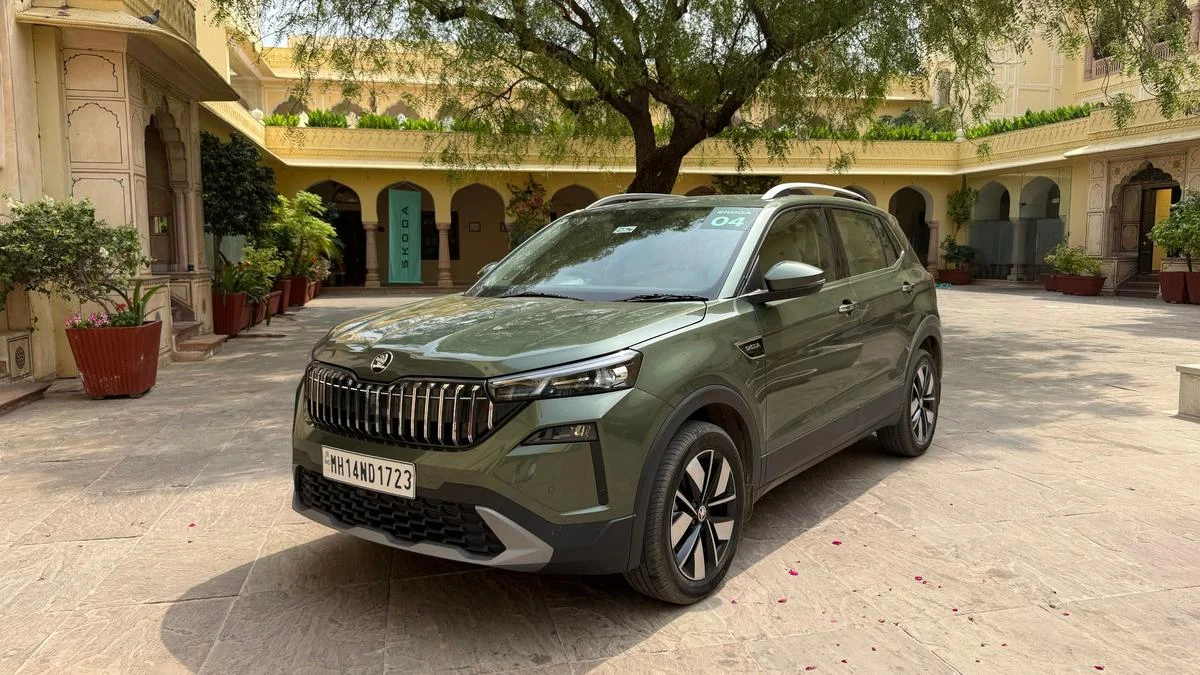
JAIPUR — In the heart of Rajasthan, where the architectural grandeur of the Pink City meets the unforgiving chaos of modern urban sprawl, the automotive landscape demands a unique set of virtues. It is a city defined by its contrasts: smooth, high-speed arterial roads that suddenly constrict into the narrow, frantic arteries of the old walled city. To navigate this environment effectively, a vehicle requires more than just horsepower; it requires poise, adaptability, and a high degree of mechanical sophistication.
It is against this backdrop that the updated Skoda Kushaq 1.0 TSI Automatic makes its debut. While the industry often favors "headline-grabbing" overhauls—complete with radical sheet-metal changes and gimmick-heavy interiors—Skoda has opted for a more intellectual approach. The latest iteration of the Kushaq is not a reinvention, but a meticulous refinement of a fundamentally strong product. By addressing the subtle nuances of the ownership experience, Skoda has produced a vehicle that feels less like a mid-cycle facelift and more like a matured expression of European engineering tailored for Indian sensibilities.
Main Facts: The Core of the Evolution
The updated Skoda Kushaq maintains its position in the highly competitive C-SUV segment, but it does so with a significantly enhanced toolkit. The most pivotal change lies beneath the surface, yet its impact is felt from the moment the gear lever is slotted into ‘Drive.’
The 8-Speed Torque Converter
The headline technical update is the introduction of a new 8-speed torque converter automatic transmission, paired exclusively with the 1.0-litre, three-cylinder TSI engine. This replaces the previous 6-speed unit, offering a broader spread of ratios designed to optimize both low-speed urban crawling and high-speed highway cruising.
Visual and Material Upgrades
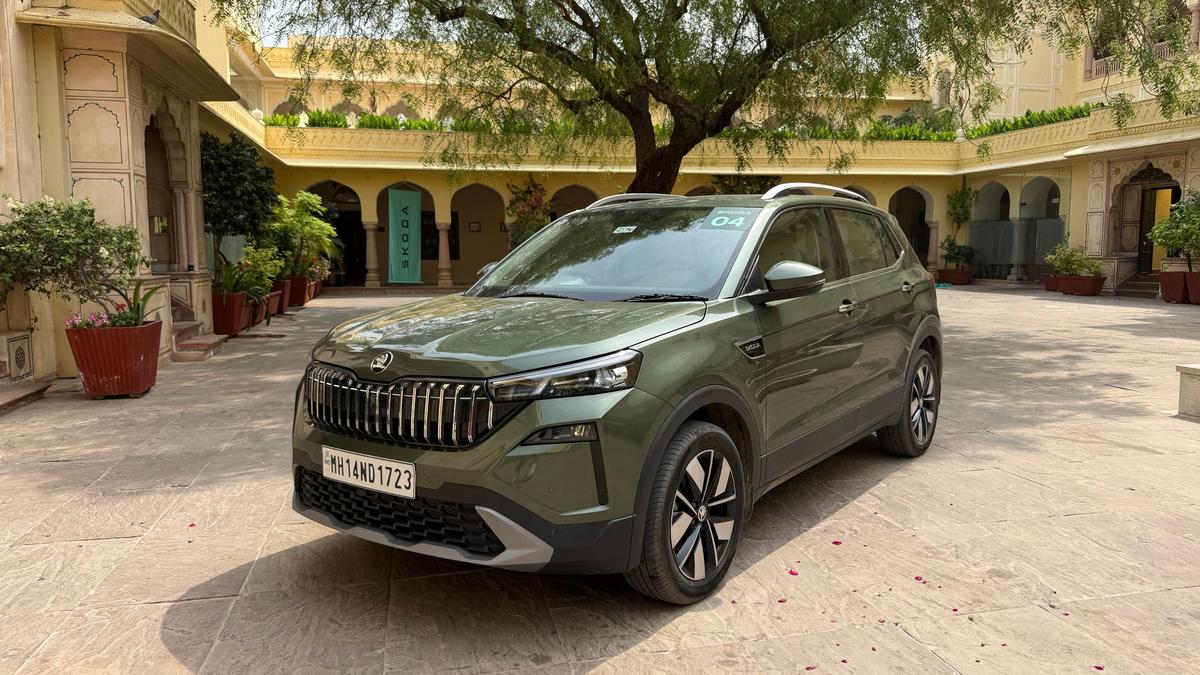
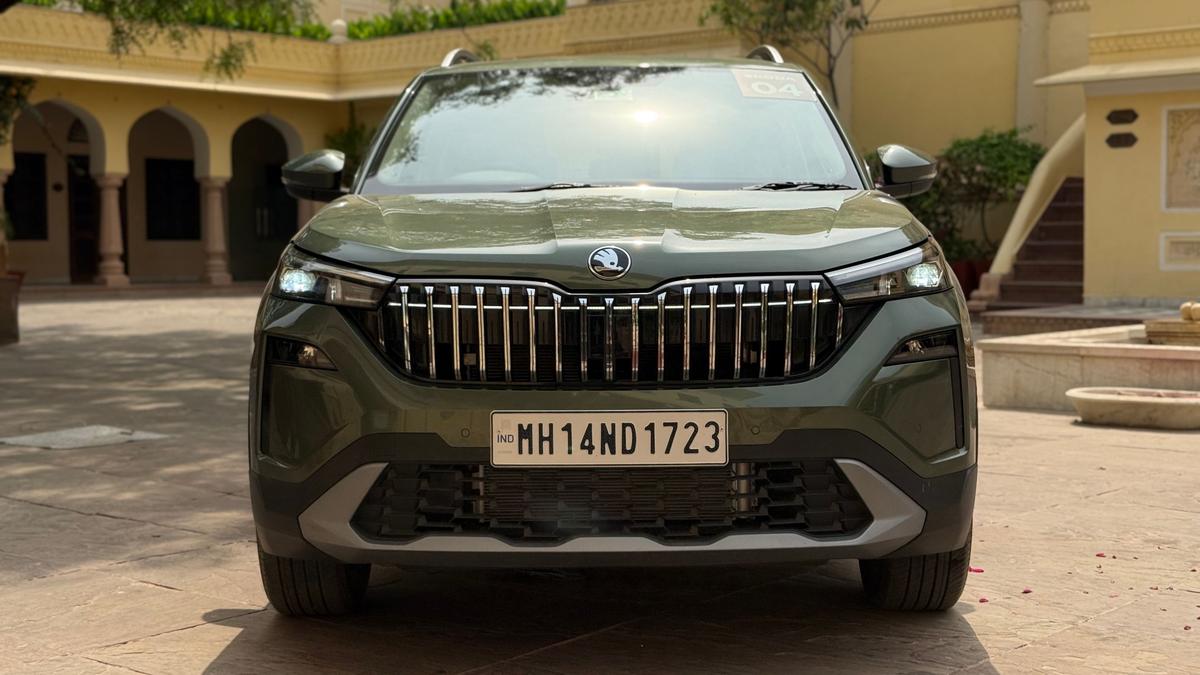
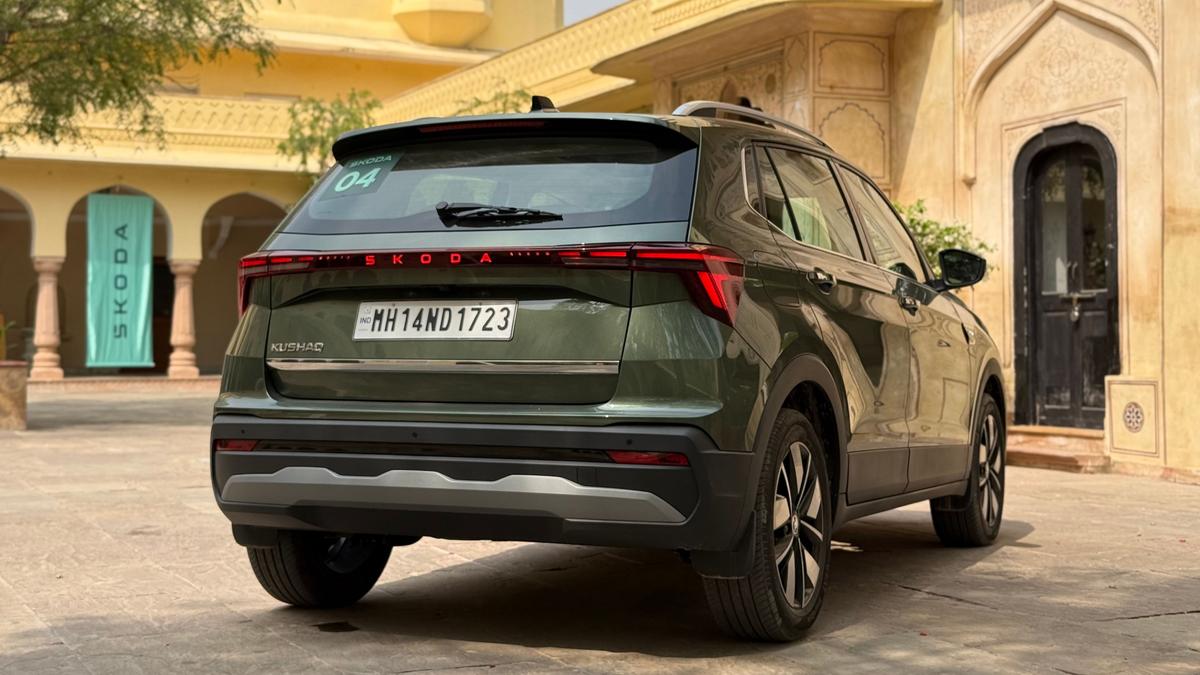
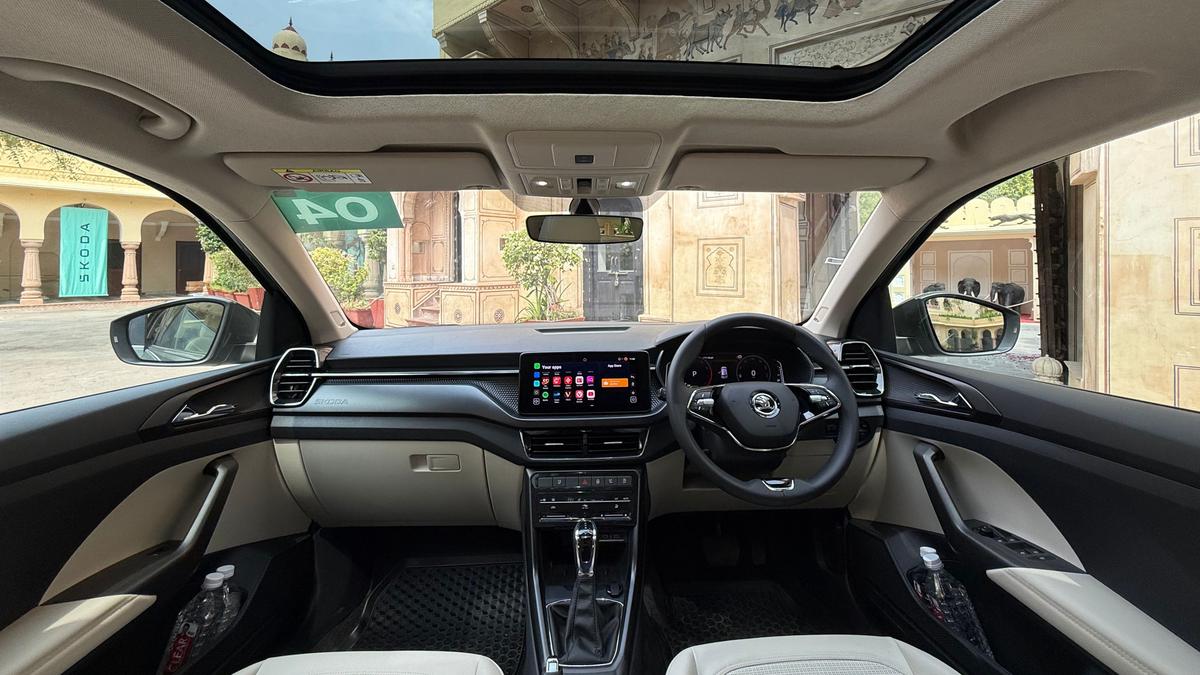
While the silhouette remains familiar, the detailing has been sharpened. Skoda has also "democratized" the aesthetic appeal of the vehicle by making alloy wheels standard across the entire range. Inside, the cabin sees a lift in material quality, focusing on tactile consistency and the introduction of segment-first comfort features, such as rear-seat massage functionality.
Safety and Pricing
The Kushaq continues to leverage its 5-star Global NCAP safety rating as a primary differentiator. Structurally, the car remains a benchmark for solidity in its class. The updated range is priced between INR 10.69 lakh and INR 18.99 lakh (ex-showroom), positioning it strategically against both domestic and international rivals.
Chronology: The Journey of the MQB-A0-IN Platform
To understand the significance of this update, one must look back at the "India 2.0" project. Launched in 2021, the Kushaq was the first vehicle to emerge from the heavily localized MQB-A0-IN platform. It was a high-stakes gamble for the Volkswagen Group, intended to prove that European driving dynamics could be delivered at a price point and durability level suitable for the Indian market.
- 2021 (The Launch): The Kushaq arrived with a focus on driving pleasure and safety, though early adopters noted that the 1.0 TSI’s 6-speed automatic could occasionally feel busy in heavy traffic, and the interior plastics in lower trims felt somewhat utilitarian.
- 2022-2023 (Incremental Updates): Skoda introduced various special editions (Monte Carlo, Matte Edition) and adjusted feature lists to include items like ventilated seats and a larger infotainment screen, responding to the "feature-war" initiated by Korean competitors.
- 2024 (The Refinement Phase): The current update represents the "maturity" phase of the product cycle. Skoda’s engineers have spent the last three years gathering telemetry and customer feedback. The result is the transition to the 8-speed gearbox and a recalibrated suspension—changes that prioritize long-term "liveability" over showroom flashiness.
Supporting Data: Technical Specifications and Performance
The heart of the Kushaq remains the 1.0-litre Turbocharged Stratified Injection (TSI) engine. Despite its relatively small displacement, the engine’s output remains a respectable 115 horsepower and 178 Nm of torque. However, the way this power is delivered has been fundamentally altered by the new transmission.
The Transmission Advantage
The shift from six to eight gears allows for smaller steps between ratios. This serves two purposes:
- Urban Efficiency: In stop-start Jaipur traffic, the transmission finds the right gear more quickly, reducing the "hunting" sensation often associated with small-displacement turbocharged engines.
- Highway Refinement: At 100 km/h, the engine now sits at lower RPMs than its predecessor, significantly reducing NVH (Noise, Vibration, and Harshness) levels inside the cabin.
Suspension and Ride Quality
Data from road testing indicates a shift in the damping philosophy. The original Kushaq was praised for its "planted" feel but criticized for a brittle ride over sharp urban bumps. The updated model features a revised bushing setup and recalibrated dampers. The result is a ride that is notably more "rounded"—it absorbs the initial impact of a pothole without transmitting the shock through the steering column, yet it retains the high-speed stability that is a hallmark of the MQB platform.
Safety Metrics
The Kushaq’s 5-star Global NCAP rating is not merely a marketing badge. The vehicle utilizes high-strength steel in critical load-bearing areas, including the A-pillars and door sills. The inclusion of Electronic Stability Control (ESC) as standard across all variants reinforces Skoda’s commitment to active safety, a move that is increasingly influencing buyer behavior in the premium SUV segment.
Official Responses and Market Positioning
Skoda’s strategy with the updated Kushaq appears to be a pivot toward "Value-Driven Premiumization." While officials from Skoda Auto India have often emphasized that they do not wish to compete solely on a "feature-per-rupee" basis, they have acknowledged the need to make the premium experience more accessible.
The decision to standardize alloy wheels across the range is a direct response to consumer feedback regarding the visual "gap" between entry-level and top-tier variants. By ensuring that even the base models possess a strong road presence, Skoda is protecting the brand’s aspirational value.
Furthermore, the introduction of the 8-speed automatic is a calculated move to bridge the gap between the 1.0 TSI and the more expensive 1.5 TSI. Previously, enthusiasts felt compelled to stretch their budget to the 1.5-litre engine for a truly "premium" drive. Now, the 1.0 TSI Automatic offers a level of sophistication that satisfies a broader demographic of urban professionals who prioritize smoothness over outright 0-100 km/h times.
Implications: A New Benchmark for the "Considered" Buyer
The implications of this update for the Indian automotive market are significant. It signals a move away from the "gimmick era" toward an era of mechanical refinement.
1. The Death of the "Compromise" Entry-Level Engine
For years, the smaller engine in an SUV range was seen as the "budget" choice—something one settled for. The Kushaq 1.0 TSI with the 8-speed AT challenges this notion. It provides a driving experience that feels complete. This may force other manufacturers to look beyond their spec sheets and invest more in the calibration of their powertrains.
2. Comfort as a Functional Attribute
The addition of rear-seat massage functions and improved material quality suggests that Skoda is targeting the chauffeur-driven market as much as the self-driving enthusiast. In cities like Jaipur, Delhi, or Mumbai, where owners spend hours in the back seat during commutes, these "indulgent" features become functional tools for stress reduction.
3. Sustainability of the Internal Combustion Engine (ICE)
By optimizing the 1.0 TSI engine with a more efficient gearbox, Skoda is squeezing more life and relevance out of its internal combustion lineup. This level of refinement makes the transition to EVs feel less urgent for the average consumer, as the smoothness of the 8-speed torque converter mimics some of the linear power delivery characteristics of an electric motor.
Conclusion: The Verdict from Jaipur
As the sun sets over the Aravalli hills, casting long shadows across the Jaipur-Agra highway, the Kushaq 1.0 TSI settles into a quiet, effortless cruise. It is in these moments that the cumulative effect of Skoda’s "intelligent" updates becomes clear.
The car does not shout for attention. It does not rely on oversized screens or aggressive styling to make its point. Instead, it relies on the integrity of its build, the precision of its gearbox, and the comfort of its cabin. The updated Kushaq is a reminder that in a world of constant noise, there is immense value in silence and refinement.
For the buyer who looks beyond the brochure—who cares about the weight of the steering, the thud of the door, and the seamlessness of a gear shift—the updated Kushaq 1.0 TSI Automatic is no longer just a contender. It is, perhaps, the most considered choice in its segment.
Price: INR 10.69 – 18.99 lakh (depending on the variant)
In association with Motorscribes and The Hindu.
