

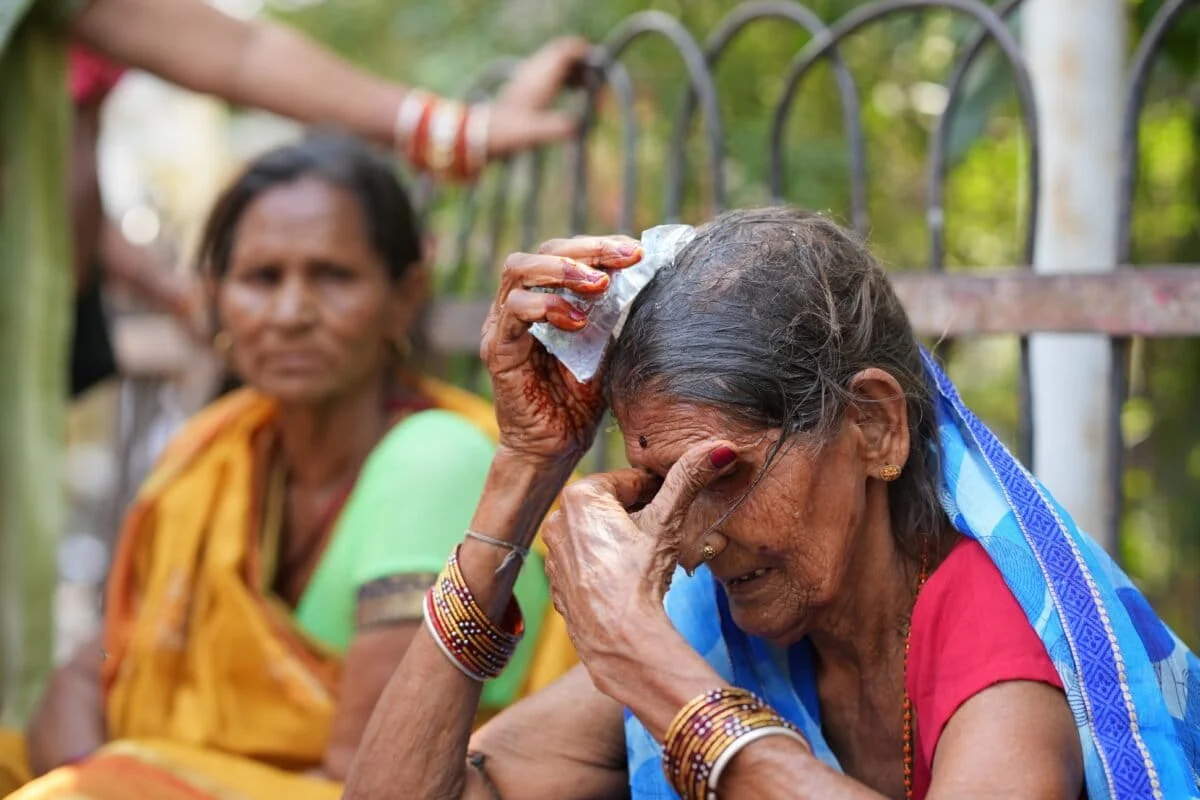
In a significant legislative and administrative move, the Government of India has officially recognized heatwaves and lightning strikes as natural calamities eligible for financial relief under the State Disaster Response Fund (SDRF) and the National Disaster Response Fund (NDRF). This announcement, made by Union Minister of State for Home Affairs, Nityanand Rai, in Parliament on August 4, 2024, marks a pivotal shift in how the world’s most populous nation addresses the escalating threats posed by a warming planet.
The decision is not merely a bureaucratic update; it is a response to decades of advocacy by climate scientists, public health experts, and state governments who have witnessed the devastating human and economic toll of these once-overlooked phenomena. By integrating these events into the national disaster framework, the Union Government has unlocked critical funding mechanisms that will allow for systematic relief, recovery, and reconstruction for millions of vulnerable citizens.
Main Facts: Redefining the Disaster Landscape
The inclusion of heatwaves and lightning strikes into the list of notified disasters brings them on par with high-profile calamities such as cyclones, earthquakes, and floods. Under the new guidelines, the SDRF—which is the primary fund available with State Governments for responding to notified disasters—and the NDRF—which supplements the SDRF in cases of disasters of "severe nature"—can now be utilized to provide immediate assistance to victims and their families.
According to Minister Rai, the decision stems from the recommendations of the 16th Finance Commission. The Commission emphasized that the increasing frequency, duration, and intensity of extreme weather events, driven by global climate change, necessitated an expansion of the disaster criteria. Previously, the list of notified disasters included 12 categories: cyclones, droughts, earthquakes, fires, floods, tsunamis, hailstorms, landslides, avalanches, cloudbursts, pest attacks, and frost/cold waves. Heatwaves and lightning now become the 13th and 14th additions to this critical list.
The financial implications are substantial. Typically, the Central Government contributes 75% of the SDRF allocation for general category states and 90% for special category states (including Himalayan and Northeastern states). This formal recognition ensures that states no longer have to rely solely on their own limited budgets or ad-hoc central grants to manage the fallout from record-breaking summers or deadly monsoon thunderstorms.
Chronology: The Path to Recognition
The journey toward this policy change has been long and fraught with challenges. For years, India’s disaster management framework was criticized for being reactive rather than proactive, and for focusing heavily on "visible" disasters like floods while ignoring "silent killers" like extreme heat.
- 1975–Present: Data from the National Crime Records Bureau (NCRB) began showing a steady and alarming rise in deaths caused by lightning. Despite being the leading cause of accidental death by natural forces in India, it remained outside the NDRF purview for decades.
- 2015: A catastrophic heatwave swept across India, claiming over 2,500 lives. This event served as a wake-up call, leading to the development of the first Heat Action Plans (HAPs) at the municipal level, starting with Ahmedabad.
- 2020–2023: Several states, realizing the inadequacy of the national list, began notifying heatwaves as "local disasters" within their own jurisdictions. Haryana, Odisha, Kerala, Telangana, and Tamil Nadu led the way, using their own state funds to provide relief.
- 2024 (Early): The 16th Finance Commission conducted extensive consultations, noting that climate change had fundamentally altered the risk profile of the Indian subcontinent.
- August 4, 2024: Minister Nityanand Rai officially informs Parliament of the notification, citing the Finance Commission’s recommendations as the catalyst for the policy shift.
Supporting Data: The Rising Toll of Heat and Electricity
The data presented by the Ministry of Home Affairs paints a sobering picture of the current crisis. Between March 1, 2024, and the mid-summer period, India recorded a staggering 4,853 cases of heatstroke. These figures are derived from a network of 51,000 reporting units under the National Heat-Related Illness and Death Surveillance (NHRIDS).
Heatwave Statistics by State:
The geographical distribution of heat-related illnesses shows that no region is truly immune, though some are hit significantly harder:
- Telangana: 915 cases (The highest in the country, likely due to its semi-arid climate and high urbanization).
- West Bengal: 733 cases.
- Chhattisgarh: 660 cases.
- Andhra Pradesh: 540 cases.
Despite the high number of illnesses, the official death toll for the period was recorded at 20, with Maharashtra reporting the highest number of fatalities (11). However, experts often argue that heat-related deaths are significantly underreported in India, as heat exposure often exacerbates pre-existing conditions like cardiovascular or respiratory diseases, which are then listed as the primary cause of death.
The Lightning Menace:
While heatwaves affect productivity and health, lightning is the most lethal natural disaster in India in terms of immediate mortality. Unlike cyclones, which now have sophisticated early warning systems that have reduced death tolls to single digits, lightning remains unpredictable and strikes predominantly in rural areas.

- Lightning accounts for approximately 33% of all accidental deaths caused by natural forces in India.
- Annual fatalities from lightning often exceed 2,500 people, mostly farmers, laborers, and cattle herders working in open fields.
- The NCRB data highlights that lightning deaths have consistently increased since 1975, a trend scientists attribute to increased atmospheric instability and moisture—both consequences of global warming.
Official Responses and Financial Framework
Minister Nityanand Rai’s address to Parliament clarified the division of financial responsibilities. While the SDRF and NDRF are now open for "response, relief, recovery, and reconstruction," there is a clear distinction regarding long-term strategies.
"Long-term preparedness and capacity-building activities will have to be funded from state and national disaster mitigation funds," Rai explained. This means that while the NDRF will pay for immediate medical bills, ex-gratia payments to families of the deceased, and temporary shelters, the construction of "cool roofs," the planting of urban forests, or the installation of lightning arresters must be funded through separate Mitigation Funds.
The government’s response also emphasizes the role of the National Disaster Management Authority (NDMA). The NDMA has already issued comprehensive guidelines for states to prepare Heat Action Plans (HAPs). With the new notification, these plans now have the financial "teeth" required for implementation. The Ministry of Health and Family Welfare has also been directed to upgrade primary health centers to handle heat-related emergencies, ensuring that cooling wards and intravenous fluids are readily available during peak summer months.
Implications: What This Means for India’s Future
The formal notification of heatwaves and lightning as disasters has far-reaching implications for governance, the economy, and social justice.
1. Social Justice and the Vulnerable
Heatwaves are often described as "inequality multipliers." The wealthy can retreat into air-conditioned spaces, while the poor—construction workers, street vendors, and farmers—must work in the sun to survive. By recognizing heatwaves as disasters, the government can now provide "loss of wages" compensation to daily wagers during "Red Alert" days when outdoor work is prohibited. This provides a safety net that was previously non-existent.
2. Strengthening State Finances
States like Odisha and Bihar, which are frequently battered by lightning and extreme heat, have long argued that these events drain their treasuries. With the Central Government now picking up a significant portion of the tab through the NDRF, states can reallocate their own "local disaster" budgets toward other pressing needs, such as education or infrastructure.
3. Data-Driven Governance
The inclusion of these calamities will likely lead to better data collection. To claim funds from the NDRF, states must provide rigorous proof of impact. This will mandate better tracking of heatstroke cases and lightning strikes, leading to more accurate maps of "hotspots." This data, in turn, will allow for more targeted interventions.
4. The Climate Adaptation Challenge
While the move is a major victory, it also highlights the scale of the challenge. India is one of the countries most vulnerable to climate change. The World Bank has warned that India could become one of the first places in the world where "heatwaves exceed the survivability limit" of humans. Recognition is the first step, but the second step—mitigation—remains a monumental task. The reliance on mitigation funds for long-term prep means that India must now find massive investments to "climate-proof" its cities and agriculture.
Conclusion
The recognition of heatwaves and lightning as notified disasters is a landmark moment in India’s legislative history. It acknowledges the reality that the "climate of the past" is gone, and the "disasters of the future" are already here. By providing a structured financial framework for relief, the Union Government has offered a lifeline to the millions of citizens who stand on the front lines of the climate crisis. However, as temperatures continue to rise and atmospheric patterns become more volatile, the true test will lie in how effectively these funds are utilized to move beyond mere relief and toward true, long-term resilience.
