


Magnetoreception—the ability of living organisms to perceive and navigate using the Earth’s magnetic field—remains one of the most captivating enigmas in modern biology. For decades, scientists have marveled at the precision with which migratory birds, sea turtles, and even certain insects traverse thousands of miles of featureless ocean or sky. While the "what" of this ability is well-documented, the "how" and "when" of its evolution are currently being rewritten.
New research is challenging the long-held assumption that magnetoreception followed a linear evolutionary path from simple bacteria to complex animals. Instead, a growing body of evidence suggests that nature may have "invented" the biological compass multiple times, utilizing different genetic blueprints to achieve the same extraordinary result.
Main Facts: A Disconnect in the Genetic Code
At its core, magnetoreception relies on biomineralization—the process by which living organisms produce minerals to harden or stiffen existing tissues. In the context of navigation, this involves the creation of magnetite (an iron oxide mineral) which acts as a microscopic needle.
The prevailing scientific narrative once suggested a single origin for this trait. It was believed that the genetic "instructions" for building these internal magnets were passed down from ancient bacteria to the more complex eukaryotic cells that eventually formed animals. However, recent genomic sequencing has thrown a wrench in this theory.
While magnetotactic bacteria (MTB) possess a specific "magnetosome gene cluster" responsible for building their internal compasses, this genetic signature is conspicuously absent in the higher animals that display the strongest navigational skills. This suggests that the internal compasses of a bar-headed goose and a bacterium may be examples of convergent evolution—independent solutions to the same environmental challenge—rather than a shared ancestral gift.
Chronology: From Toxicity Defense to Navigational Tool
To understand the origins of magnetoreception, one must look back three billion years to an era when the Earth was a vastly different place.

The Archaean Era: Survival through Mineralization
Three billion years ago, the Earth’s atmosphere was anoxic, containing less than 0.001% of the oxygen we breathe today. The oceans were a chemical soup rich in dissolved metal ions, particularly iron. For the dominant life forms of the time—single-celled microorganisms known as archaea—this abundance of iron was a double-edged sword.
Iron is essential for life, but in high concentrations, it stimulates the production of free radicals, which can tear apart cellular membranes and DNA. To survive, archaea evolved a clever detoxification strategy: they sequestered excess iron and converted it into stable, inert crystals of magnetite inside their cell structures. This process, known as magnetite biomineralization, was originally a waste-management system, not a sensory one.
The Proterozoic Era: The Rise of the Bacterial Compass
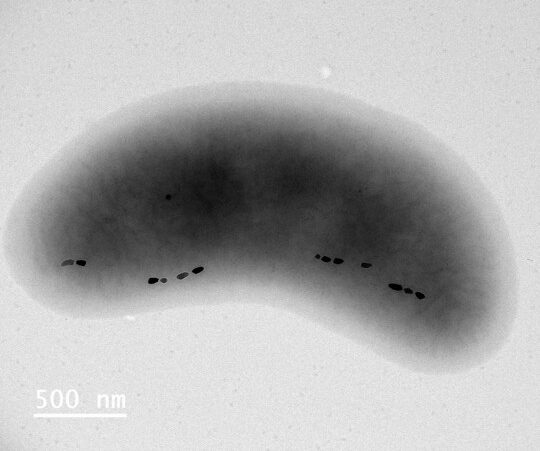
As life evolved, bacteria adapted the biomineralization techniques of their archaean ancestors. Roughly 1.9 billion years ago, certain lineages of bacteria began to repurpose these magnetite crystals. By arranging the crystals in a linear chain, these "magnetotactic bacteria" created a permanent magnetic dipole. This allowed them to align themselves with the Earth’s magnetic field lines, helping them navigate vertically through water columns to find optimal nutrient and oxygen levels. These early efforts are preserved in the geological record as "magnetofossils"—nanoscale crystals that serve as the oldest evidence of biological magnetism.
The Paleogene Pulse: The Appearance of "Giant" Fossils
The timeline takes a dramatic turn approximately 56 million years ago. Recent analysis of sediments from this period has uncovered "giant" magnetofossils that are significantly larger and more complex than those produced by bacteria.
Professor Richard J. Harrison of the University of Cambridge, a leading authority on these fossils, suggests these were produced by unknown, more complex organisms. "We’re not talking about simple bacteria here," Harrison notes. "Something benefited from being able to navigate over large distances and was common enough to leave a substantial fossil record." This discovery suggests that by the time mammals and birds were diversifying, the biological machinery for large-scale navigation was already well-advanced, potentially operating on a different mechanical scale than the bacterial version.
Supporting Data: The Case for Independent Evolution
The strongest evidence for the independent evolution of magnetoreception comes from comparing the methods used by different species to handle iron.
The Bacterial Blueprint vs. The Animal Mystery
In bacteria, the process is highly regulated by the magnetosome gene cluster. This cluster handles everything from the uptake of iron to the precise shaping of the magnetite crystal. If magnetoreception in animals were a direct inheritance, we would expect to see remnants of these genes in the genomes of birds or fish.
"When searching for a genetic relationship, we don’t find the same genetic signature," says Arash Komeili, Professor at UC Berkeley. The only eukaryotes that show a clear link to bacterial magnetoreception are simple, single-celled protists, which gain the ability by either eating magnetotactic bacteria or living in a symbiotic relationship with them. In higher animals, the trail of this specific gene cluster disappears entirely.
The Chiton: A Different Way to Build a Magnet
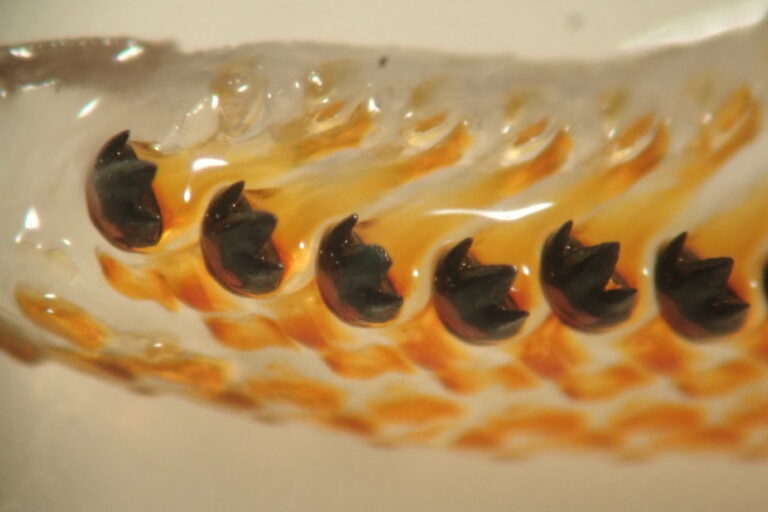
The marine mollusk known as the chiton (specifically Cryptochiton stelleri) provides a "smoking gun" for the theory of independent evolution. Chitons use magnetite to harden their teeth, allowing them to graze on algae-covered rocks.
Research led by Associate Professor Michiko Nemoto at Okayama University revealed that chitons use a unique protein to biomineralize iron. This protein bears no resemblance to the proteins used by bacteria. Furthermore, while bacteria synthesize magnetite inside intracellular vesicles (inside the cell), chitons form it in an extracellular matrix (outside the cell), much like how vertebrates grow bones or teeth. This suggests that the chiton—and potentially other animals—repurposed existing iron-management systems to create magnetite, rather than inheriting a bacterial toolkit.
Official Responses and Expert Insights: The "Needle in a Haystack"
The scientific community remains divided on how to locate the actual "sensor" in higher animals. Unlike eyes or ears, which must be exposed to the environment to function, a magnetic sensor could be located anywhere inside the body because magnetic fields pass through flesh and bone unimpeded.
Dr. Swastik Mondal, Scientist at CSIR-CGCRI, emphasizes the universality of the building blocks: "Iron metabolism is universal. Every living cell deals with iron. The chemistry of controlled iron oxidation that produces magnetite is not all that different from the chemistry that handles everyday iron storage in animals." This implies that the capacity to make the "needle" is present in almost all life; the difficulty lies in finding the "dial" that connects it to the brain.
Professor Kenneth Lohmann of the University of North Carolina, a veteran of magnetoreception research, highlights the sheer difficulty of the search. "So far, no one has been able to identify with certainty a magnetic receptor in any animal," Lohmann states. Because the magnetite crystals are nanoscopic and could be tucked away in any tissue—from the beak of a bird to the snout of a trout—identifying the specific cells that transmit magnetic data to the nervous system is a monumental task.
Arash Komeili adds that while the hypothesis of a bacterial-eukaryotic link was attractive, the data is forcing a pivot. "It’s a good hypothesis, but the lack of genetic signatures suggests we need to look at how animals might have ‘bootstrapped’ this ability using their own unique biological pathways."
Implications: From Evolutionary Biology to Future Tech
The realization that magnetoreception may have evolved independently across the tree of life has profound implications for several fields.
1. Evolutionary Biology and Convergence
The study of magnetoreception is becoming a premier example of convergent evolution. It demonstrates that certain environmental constants—like the Earth’s magnetic field—are so useful for survival that nature will find multiple ways to exploit them. This challenges the "monophyletic" view of complex traits and suggests that the biological "toolbox" is more flexible than previously thought.
2. Conservation and Ecology
Understanding the mechanisms of the internal compass is vital for the conservation of migratory species. If we can identify the specific proteins or cells involved, we can better understand how human-made electromagnetic interference (from power lines, radio towers, or urban infrastructure) might be disrupting the ancient pathways of birds and sea turtles.
3. Bio-Inspired Technology
Humanity’s current navigation systems rely heavily on satellites (GPS), which are vulnerable to solar flares or atmospheric interference. If scientists can decode the "protein-based" biomineralization used by chitons or the unknown receptors in migratory birds, it could lead to the development of a new generation of solid-state, bio-inspired navigational sensors that do not require external signals.

4. The Search for the Receptor
The current frontier of research is focused on "the cell." Scientists are moving away from looking for large chunks of metal and instead looking for specialized neurons that contain nanoscopic magnetite crystals coupled with ion channels. Finding these cells would be the "Holy Grail" of sensory biology, finally bridging the gap between the ancient history of iron detoxification and the modern miracle of trans-continental migration.
While the origins of the internal compass remain shrouded in mystery, the recent shift toward an "independent evolution" model marks a significant step forward. It portrays life not as a simple recipient of ancient traits, but as an innovative force, repeatedly turning the fundamental elements of the Earth—like iron—into a sophisticated guide for the journey of life.
