

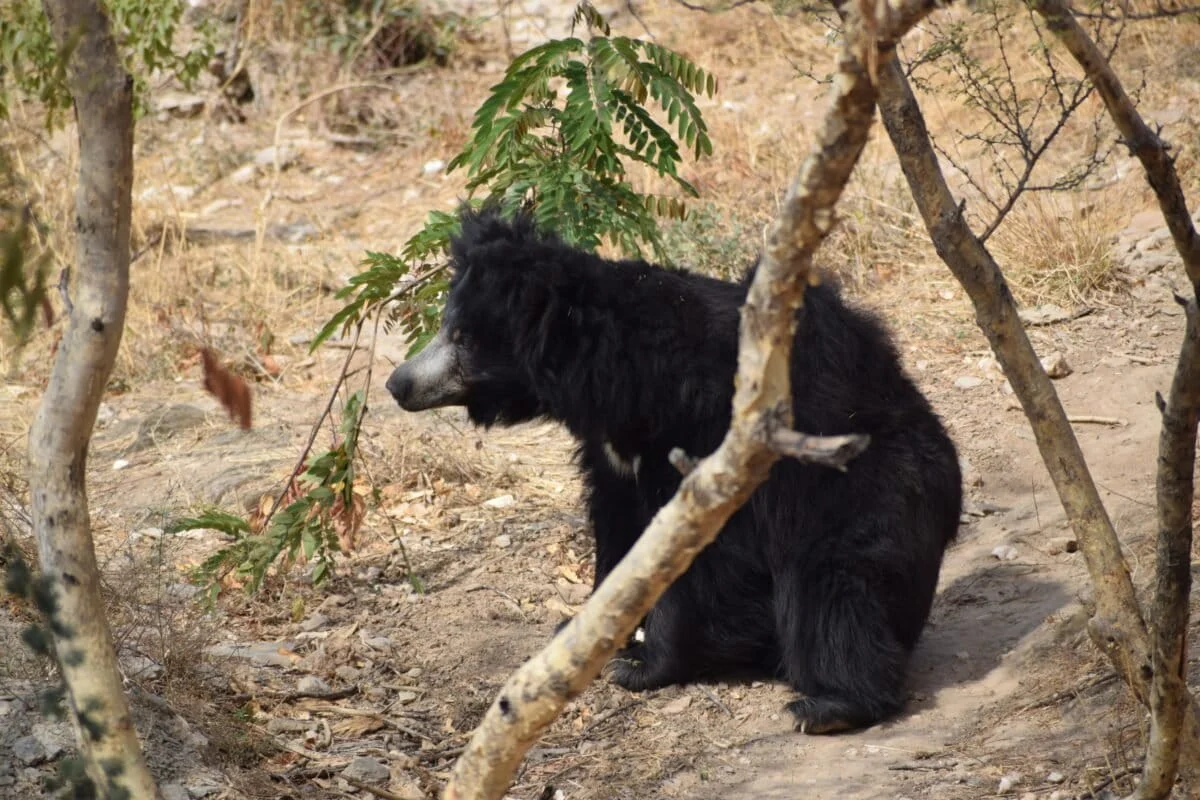
In the rugged, sun-scorched terrain of Rajasthan’s Aravalli hills, a silent architect is at work. While the sloth bear (Melursus ursinus) is often characterized by its shaggy coat, formidable claws, and penchant for termites, new research reveals that this iconic omnivore plays a far more profound role in its ecosystem than previously understood. Beyond merely foraging for survival, sloth bears are actively shaping the botanical composition of India’s semi-arid deciduous forests through a complex process of seed dispersal and germination enhancement.
A landmark study conducted in the south-central Aravalli range suggests that the sloth bear acts as a vital "forest gardener." By consuming a wide variety of fruits and traversing vast distances, these bears ensure the survival and spread of numerous plant species—sometimes providing the only mechanism by which certain seeds can successfully germinate.
Main Facts: The Sloth Bear as an Ecological Keystone
The research, led by a collaborative team from the Wildlife Institute of India (WII) and the Department of Zoology at Mohanlal Sukhadia University (MLSU), Udaipur, provides the first comprehensive look at the dual relationship between sloth bear diet and seed dispersal in the Aravalli landscape.
The study’s findings challenge the traditional "predator-prey" focus of Indian conservation, which often prioritizes tigers and leopards. Instead, it highlights the "omnivore advantage." Because sloth bears consume both animal matter (insects) and plant matter (fruits), they possess a unique "dexterity" that allows them to thrive in harsh, seasonal environments while simultaneously performing critical "ecosystem services."
Key Findings at a Glance:
- Dietary Adaptability: Sloth bears are highly opportunistic, shifting their diet drastically between seasons based on moisture levels and fruit availability.
- Germination Catalysts: Seeds of at least six major plant species remain viable after passing through a bear’s digestive tract.
- Accelerated Growth: Certain species, such as Ziziphus nummularia, germinate twice as fast after being processed by a bear’s gut compared to those that fall naturally from trees.
- The Invasive Paradox: In a startling discovery, the study found that the seeds of the invasive Lantana camara germinated only after being consumed and excreted by sloth bears, suggesting the animals may inadvertently aid the spread of non-native species.
Chronology of the Research: Tracking a Seasonal Shift
The investigation was conducted between November 2021 and July 2022, a period that allowed researchers to capture the stark transitions between the winter and summer seasons in Rajasthan.

Phase I: Field Surveys and Scat Collection (Winter 2021 – Summer 2022)
The research team focused on a 1,100-square-kilometer area comprising the Kumbhalgarh and Todgarh-Raoli wildlife sanctuaries. This region is a unique "ecotone"—a transition zone between the arid western slopes of the Aravallis and the greener eastern slopes.
The landscape was divided into 5×5 km grids. Researchers spent months monitoring forest tracks, collecting a total of 180 scat samples (90 in winter and 90 in summer). The monsoon season was excluded from the study, as heavy rains typically wash away scat samples and render the rugged terrain inaccessible.
Phase II: Laboratory Analysis (Mid-2022)
In the laboratory at MLSU, the samples underwent a rigorous cleaning process. They were washed, dried, and meticulously sorted to identify undigested remains. Researchers identified 38 distinct dietary items, ranging from specific insect taxa to various forest fruits. Simultaneously, the team conducted "availability surveys" along the bears’ routes to determine if the bears were eating what was most common or if they were selecting specific high-energy foods.
Phase III: The Germination Experiment (Late 2022)
To test the "dispersal" hypothesis, researchers selected the eight most prevalent plant species found in the bear scats. They set up a controlled experiment: 25 seeds recovered from bear scat and 25 seeds collected directly from the parent trees were planted for each species. These were monitored for 180 days to track germination rates and seedling survival.
Supporting Data: Diet, Digestion, and the La Niña Factor
The study revealed a fascinating dietary pivot. While sloth bears are known to be myrmecophagous (ant and termite-eating), their reliance on fruit is seasonal.

Seasonal Diet Breakdown:
- Winter: Plant material dominated the diet. Grewia flavescens and Ziziphus nummularia were the primary staples. However, ants remained a constant, appearing in over 80% of winter scats.
- Summer: Traditionally, summer is a high-fruit season for bears in semi-arid regions. However, the study period coincided with a La Niña event, which brought unseasonably high rainfall. This increased soil moisture made termites and ants easier to excavate. Consequently, the bears shifted toward an animal-heavy diet in the summer, with termites appearing in more than 50% of the samples.
The Power of the Gut:
The germination data provided the most compelling evidence of the bear’s role as a forest engineer.
- Ziziphus nummularia (Ber): Seeds from bear scats germinated in approximately 50 days. In contrast, seeds taken directly from the fruit took 100 days to sprout. This suggests that the bear’s digestive enzymes help break down the seed’s tough outer coat (scarification), giving the plant a significant head start.
- Diospyros melanoxylon (Tendu): Not only did these seeds germinate successfully, but the seedlings grown from bear-dispersed seeds showed a higher survival rate than those from tree-collected seeds.
The Lantana Discovery:
The most controversial data point involved Lantana camara, a notorious invasive shrub that chokes out native vegetation across India. In the experiment, none of the seeds collected directly from Lantana bushes germinated. However, seeds recovered from sloth bear scat did germinate. While the germination rate was low (3 out of 25), it confirmed that sloth bears are a viable vector for this invasive species, likely spreading it across their large home ranges.
Official Responses and Expert Commentary
The researchers emphasize that these findings should change how we view forest management in India.
K.S. Gopi Sundar, an independent scientist and co-author of the study, notes that the bear’s influence is foundational to the forest’s structure. "Clearly, dry deciduous forests’ plant compositions are a function of sloth bear presence, movement, and dietary habits," Sundar stated. He pointed out that while birds and smaller mammals like civets also disperse seeds, the sheer volume and range of the sloth bear make it a heavy-hitter in forest regeneration.
Utkarsh Prajapati, a senior project associate at the Wildlife Institute of India, expressed surprise at the adaptability of the bears. "The two sanctuaries formed a unique ecotone… This zone of transition, we thought, likely holds a greater diversity of resources for omnivores," he said. Prajapati noted that the bear’s ability to switch from fruit to insects depending on micro-climatic shifts (like La Niña) is key to their survival in the Aravallis.

Vijay Kumar Koli, head of the Department of Zoology at MLSU, highlighted the behavioral changes required for this adaptability. "This would require bears to change their behaviors—dig more for ants and termites in summer, and seek fruits more during the winter," Koli explained. He argued that this flexibility is what makes the sloth bear a resilient "generalist" in an increasingly unpredictable climate.
Implications for Conservation and Forest Policy
The study, published in the context of growing concern over habitat loss in the Aravallis, has several long-term implications for environmental policy in India.
1. Beyond the "Charismatic Megafauna"
For decades, Indian conservation has been "tiger-centric." This study argues for a shift toward "functional diversity." While tigers are apex predators, they do not "build" the forest in the way sloth bears do. Protecting sloth bear corridors is not just about saving a species; it is about ensuring the natural replanting of the forest itself.
2. Management of Invasive Species
The revelation that sloth bears aid Lantana germination presents a management dilemma. Forest departments must now consider how native wildlife might be unintentionally working against weed-clearing efforts. This necessitates a more nuanced approach to invasive species management that accounts for the dietary habits of local fauna.
3. Climate Resilience
As climate change leads to more erratic weather patterns—such as the unseasonal rains seen during this study—the sloth bear’s dietary flexibility will be crucial. By maintaining a diverse "menu," bears can survive years when fruit crops fail, ensuring that they remain in the landscape to disperse seeds when conditions improve.

4. The Need for Long-Term Monitoring
The researchers concluded by calling for more "omnivore-centric" sanctuaries. Currently, very few protected areas in India are managed specifically for sloth bears. Understanding whether the patterns observed in the Aravallis—such as the preference for Grewia flavescens—hold true in other regions like the Western Ghats or Central India is the next frontier for wildlife biology.
In summary, the sloth bear is far more than a "reclusive insectivore." It is a mobile, biological engine of forest growth. As Rajasthan seeks to preserve its thinning green cover in the Aravalli range, the shaggy, often-overlooked sloth bear may well be its most important ally.
