

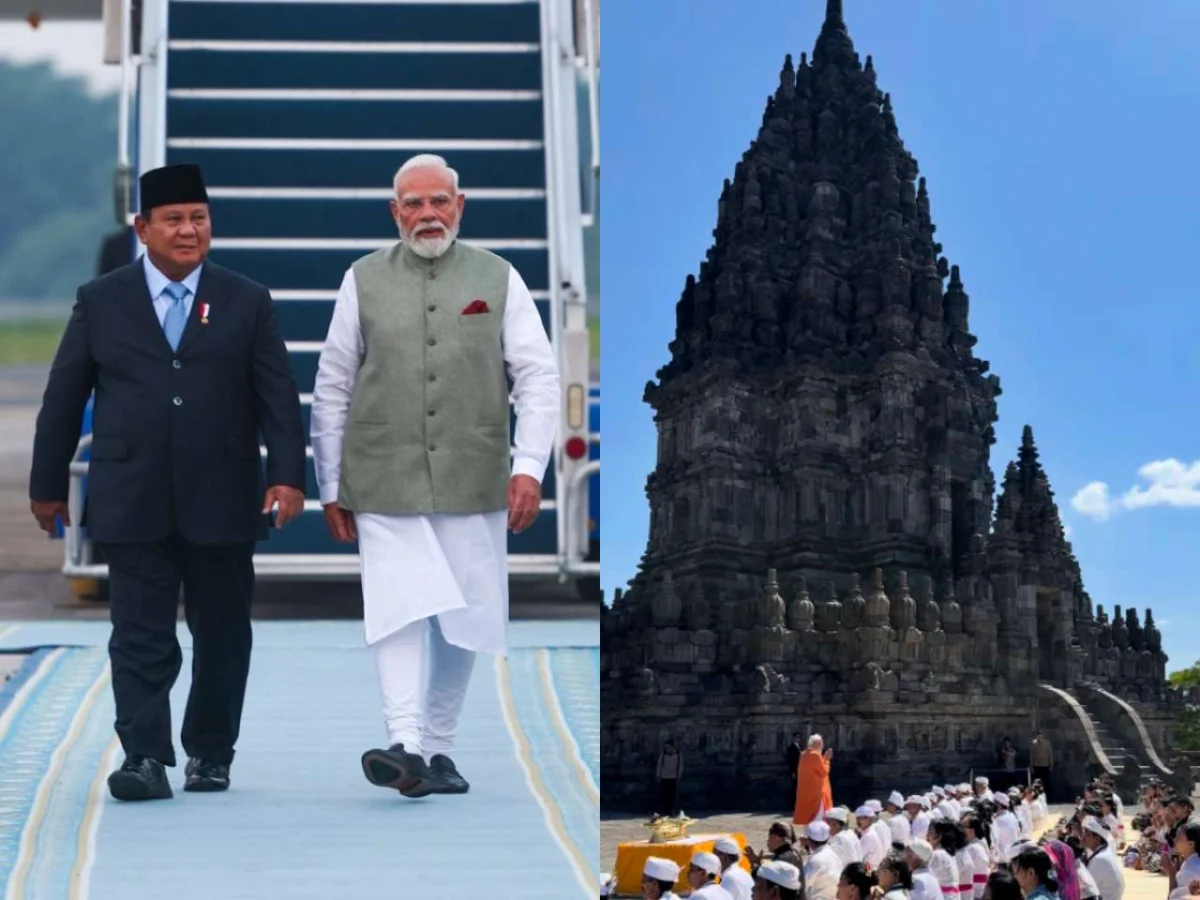
Yogyakarta, Indonesia – In a powerful testament to the enduring cultural and historical tapestry connecting India and Indonesia, Prime Minister Narendra Modi embarked on a significant visit to the majestic Prambanan Temple complex in Yogyakarta. This UNESCO World Heritage Site, a jewel of ancient Javanese architecture, served as a poignant backdrop for reinforcing the centuries-old civilizational bonds between the two nations. The visit underscored not only the shared heritage but also a commitment to collaborative efforts in preserving this invaluable monument for future generations.
Bridging Continents Through Sacred Stones: The Core Significance
Prime Minister Modi’s presence at Prambanan transcended a mere diplomatic courtesy. It was a symbolic act that illuminated the deep-rooted cultural exchange that has shaped both India and Indonesia for millennia. Despite Indonesia being the world’s most populous Muslim-majority nation, Prambanan stands as a proud sentinel of its rich Hindu past, a narrative often overlooked but profoundly significant. The visit amplified this narrative, highlighting how religious and cultural influences have coexisted and evolved across Southeast Asia, leaving an indelible mark on regional identity.
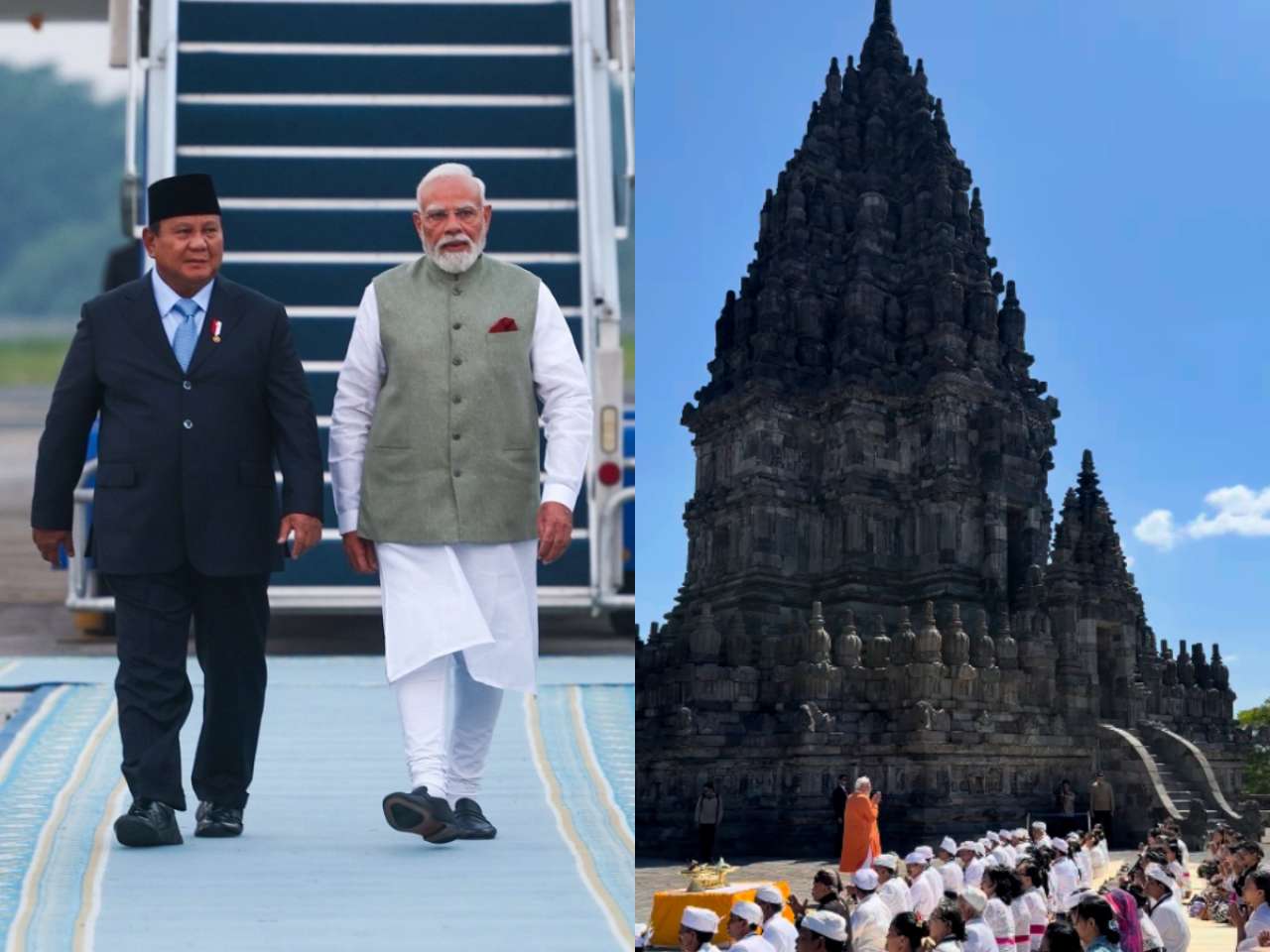
The complex, a sprawling testament to Hindu artistry and devotion, served as a physical manifestation of India’s historical influence in the region. Its intricate carvings, towering spires, and sacred deities whisper tales of a time when trade routes were also conduits of culture, philosophy, and religious thought. Prime Minister Modi’s pilgrimage to this sacred site served as a powerful reminder of these shared roots, fostering a sense of kinship and mutual respect. Furthermore, the anticipated collaboration on the conservation of Prambanan signals a shared responsibility in safeguarding not just a physical structure, but a living testament to shared human history and artistic achievement.
A Journey Through Time: The Chronology of Prambanan
The story of Prambanan is a narrative etched in stone, spanning centuries of artistic endeavor, spiritual devotion, and historical shifts. Its construction and subsequent evolution offer a fascinating glimpse into the ancient Mataram Kingdom and the pervasive influence of Hinduism in the region.
-
9th-10th Centuries CE: The Golden Age of Construction: The Prambanan Temple Compound, a magnificent architectural feat, was primarily constructed during the Sanjaya dynasty of the ancient Mataram Kingdom. This period marked a zenith of Hindu religious and artistic expression in Central Java. The complex was dedicated to the Hindu Trimurti: Lord Shiva, the preserver; Lord Vishnu, the sustainer; and Lord Brahma, the creator. The central and most imposing structure, the Shiva temple, stands as a testament to the architectural prowess of the era, reaching an impressive height of approximately 47 meters. Within its sacred chambers, statues of Lord Shiva, Goddess Durga, Lord Ganesha, and the sage Agastya were enshrined, embodying the core tenets of Hindu philosophy. The intricate layout of the temples, arranged in a square pattern, is deeply rooted in Hindu cosmology, reflecting the belief in the universe as an ordered and harmonious entity.
)
-
Original Scale and Original Intent: The initial vision for Prambanan was grand in scale, encompassing an estimated 240 temples spread across an area of nearly 40 hectares. While many of these smaller structures have succumbed to the ravages of time, the principal shrines have been meticulously restored, preserving their sanctity and architectural grandeur. The surrounding landscape was designed to complement the sacred structures, creating a holistic environment for worship and contemplation.
-
Comparison with Borobudur: A Tale of Two Faiths: Prambanan is often discussed in conjunction with the nearby Borobudur Temple, a monumental Buddhist complex. Together, these two UNESCO World Heritage Sites offer a profound insight into the rich and diverse religious landscape of ancient Java, showcasing the coexistence and interplay of Hinduism and Buddhism. This duality highlights the syncretic nature of Javanese culture, where different spiritual traditions often blended and enriched one another.
-
1991: Recognition as a UNESCO World Heritage Site: The profound historical, cultural, and architectural significance of the Prambanan Temple Compound was formally recognized by UNESCO in 1991. This designation underscored its universal value and the global imperative to protect and preserve it for posterity. The inscription acknowledged Prambanan not just as a religious site, but as a critical marker of human civilization and artistic achievement.
)
-
10th Century Onwards: Decline and Neglect: Following a period of political upheaval and potential shifts in religious patronage in the 10th century, Prambanan began a slow decline. Natural disasters, including volcanic eruptions and earthquakes, coupled with prolonged periods of neglect, led to significant damage. Many structures were buried under volcanic ash and overgrown by vegetation, transforming the once-vibrant complex into a series of enigmatic ruins.
-
19th Century: Rediscovery and the Dawn of Restoration: The 19th century marked a pivotal moment in the history of Prambanan with its rediscovery by European explorers. This reawakening spurred initial restoration efforts, aiming to salvage and reconstruct the damaged structures. The process was arduous and complex, requiring meticulous archaeological work and architectural reconstruction.
-
2006 Yogyakarta Earthquake: A Setback and Resilience: The devastating earthquake that struck Yogyakarta in 2006 inflicted further damage on the already fragile temple complex. However, this setback also galvanized renewed efforts towards its preservation. International and local initiatives were launched to repair and reinforce the structures, demonstrating the enduring commitment to safeguarding this historical treasure.

-
Present Day: A Symbol of Resilience and Cultural Revival: Today, Prambanan stands as a testament to resilience and ongoing preservation efforts. While the restoration of some smaller temples continues, the main shrines have been beautifully revitalized, attracting visitors from across the globe. It remains not only a significant religious site but also one of Indonesia’s most iconic tourist destinations, drawing people to marvel at its architectural splendor and historical narratives.
The Grandeur of Prambanan: Architectural Marvels and Spiritual Depictions
Prambanan is not merely a collection of ancient stones; it is a symphony of architectural genius and a canvas for profound spiritual narratives. Its towering spires and intricate carvings offer a captivating window into the beliefs and artistic sensibilities of its creators.
H2: The Majestic Architecture: Reaching for the Heavens
The immediate impression upon encountering Prambanan is its sheer verticality. The temple complex is characterized by its remarkably tall and slender towers, designed to draw the gaze upwards, symbolizing a connection to the divine. The central cluster of the complex features three monumental temples, each dedicated to one of the principal deities of the Hindu Trimurti:
)
-
The Shiva Temple: Standing as the tallest and most prominent, the Shiva temple reaches approximately 47 meters into the sky. Its grandeur reflects the supreme position of Lord Shiva as the destroyer and transformer in the Hindu pantheon. The interior of this temple is adorned with exquisite statues, including a majestic depiction of Lord Shiva in his cosmic dance form (Nataraja), Goddess Durga, the elephant-headed Lord Ganesha, and the revered sage Agastya. These sculptures are not merely decorative; they are potent representations of divine power, wisdom, and asceticism, central to Hindu worship.
-
The Vishnu Temple: Dedicated to Lord Vishnu, the preserver and protector of the universe, this temple stands with its own distinct aura. Lord Vishnu, often depicted reclining on the serpent Shesha or holding his divine attributes like the conch, discus, mace, and lotus, represents cosmic order and benevolence.
-
The Brahma Temple: The third major temple honors Lord Brahma, the creator god. While often depicted in a less prominent role compared to Shiva and Vishnu in popular worship, Brahma’s fundamental role in the cosmic cycle of creation is acknowledged and celebrated here.
)
The architectural layout of the entire complex is meticulously planned on a square grid, a design deeply embedded in Hindu philosophy. This geometric precision is believed to mirror the structure of the cosmos, with the central temples representing the sacred Mount Meru, the abode of the gods, and the surrounding smaller temples symbolizing the earthly realms.
H3: The Intricate Bas-Reliefs: A Stone Chronicle of the Ramayana
Beyond its imposing structures, Prambanan is renowned for its breathtakingly detailed stone carvings, or bas-reliefs, that adorn the temple walls. These exquisite artworks serve as a visual narrative, meticulously recounting the epic tale of the Ramayana, one of Hinduism’s most cherished and influential scriptures. As visitors circumambulate the temples in a clockwise direction, they are guided through a chronological unfolding of Prince Rama’s quest to rescue his wife, Sita, from the clutches of the demon king Ravana.
The Ramayana panels at Prambanan are not merely copies of Indian artistic traditions; they exhibit a unique Javanese aesthetic, blending Indian iconography with local artistic sensibilities and interpretations. This fusion creates a distinct visual language that is both familiar and uniquely Indonesian. The carvings depict key episodes from the epic, including Rama’s exile, his alliance with the monkey general Hanuman, the construction of the bridge to Lanka, and the climactic battle against Ravana. The detail and craftsmanship are extraordinary, capturing the dynamism of the characters, the intensity of the battles, and the emotional nuances of the narrative.
)
These stone chronicles are more than just historical records; they are a testament to the profound impact of Indian epics on the cultural consciousness of Southeast Asia. The Ramayana has been a source of moral guidance, ethical reflection, and artistic inspiration for centuries, shaping the worldview and artistic expressions of numerous cultures.
H3: The Ramayana Ballet: A Living Legacy Performed Under the Stars
The enduring legacy of the Ramayana at Prambanan extends beyond its stone walls. Even today, the temple complex serves as a magnificent open-air stage for spectacular Ramayana ballet performances. Against the backdrop of the illuminated ancient temples, dancers, musicians, and actors bring the epic to life through a mesmerizing fusion of traditional Javanese dance, music, and theatre. These performances are not merely entertainment; they are a vibrant continuation of the cultural traditions that have been nurtured by the temple for centuries. The dramatic interplay of light and shadow, the evocative music, and the graceful movements of the dancers create an unforgettable experience, immersing the audience in the timeless saga of love, duty, and heroism.
The Legend of Princess Roro Jonggrang: A Tale Woven into the Temple’s Identity
Every great monument carries with it a tapestry of legends and folklore, and Prambanan is no exception. The temple is deeply intertwined with the popular Javanese legend of Princess Roro Jonggrang, a tale that adds a layer of mystique and romance to its historical significance.
)
According to the legend, the beautiful Princess Roro Jonggrang was sought in marriage by the formidable warrior Bandung Bondowoso. Reluctant to accept his advances, the princess devised a seemingly impossible task: she challenged him to build 1,000 temples in a single night. Driven by his desire for the princess, Bandung Bondowoso, possessing supernatural powers, enlisted the aid of legions of spirits and genies to fulfill the daunting request.
As the night wore on, the spirits toiled relentlessly, and the thousandth temple was nearing completion. Sensing the imminent success of the prince, Princess Roro Jonggrang, in a desperate act of cleverness, hatched a plan to thwart him. She instructed the villagers to light bonfires and begin pounding rice, mimicking the sounds and activities of dawn. The spirits, mistaking these signs for the arrival of morning, were startled and vanished before the final temple could be erected.
Enraged by the princess’s deception, Bandung Bondowoso, in his fury, cursed Roro Jonggrang, transforming her into a stone statue. Local tradition holds that the statue of Goddess Durga within the Shiva temple is, in fact, the petrified form of Princess Roro Jonggrang, a poignant embodiment of the legend. While historians consider this narrative to be folklore, it remains an integral part of the cultural fabric surrounding Prambanan, adding a human dimension to its monumental presence.
)
From Ancient Ruins to a Global Heritage: The Enduring Journey of Prambanan
The history of Prambanan is a narrative of both decline and remarkable revival, a testament to its enduring significance and the human desire to preserve the vestiges of its past.
H2: The Long Shadow of Neglect and Natural Disasters
Following a period of flourishing, the 10th century witnessed significant political shifts in the region, leading to a gradual decline in the prominence and upkeep of the Prambanan complex. The once-vibrant temples began to fall into disrepair. This period of neglect was compounded by the destructive forces of nature. Volcanic eruptions, characteristic of Indonesia’s geological landscape, buried parts of the complex under ash, while earthquakes shook its foundations. Over centuries, vegetation reclaimed the structures, and many of the smaller temples crumbled, their stones scattered and lost. The grand vision of the Sanjaya dynasty slowly faded into a memory, leaving behind a hauntingly beautiful ruin.
H3: Rediscovery and the Dawn of Restoration
The 19th century marked a turning point. European explorers and scholars, venturing into the interior of Java, stumbled upon the forgotten grandeur of Prambanan. The rediscovery ignited a spark of interest in its preservation. The early 20th century saw the commencement of systematic archaeological investigations and restoration efforts. This was a painstaking process, involving the careful clearing of debris, the identification and reassembly of fallen stones, and the reconstruction of damaged sections. The goal was to meticulously restore the temples to their former glory while respecting their historical integrity.
)
H3: Resilience in the Face of Modern Challenges
Even in the modern era, Prambanan has faced its share of challenges. The devastating earthquake that struck Yogyakarta in 2006 caused significant damage to the temple complex, further testing the resilience of its ancient structures. However, this event also spurred renewed international and local commitment to its conservation. Global heritage organizations and the Indonesian government joined forces to undertake extensive repair and reinforcement projects. These efforts have not only focused on structural stabilization but also on ensuring the long-term preservation of the intricate carvings and the overall architectural integrity of the site.
H2: Prambanan Today: A Beacon of Cultural Tourism and a Symbol of National Pride
Today, Prambanan stands as a remarkable success story of cultural heritage preservation. While the restoration of some of the smaller, more dilapidated temples continues to be an ongoing project, the main shrines have been meticulously brought back to life. They now stand as majestic monuments, drawing hundreds of thousands of visitors annually, both domestic and international.
Prambanan has transcended its religious origins to become a significant cultural and tourist attraction. It offers a unique educational experience, allowing visitors to immerse themselves in the history, art, and spirituality of ancient Java. The site serves as a powerful symbol of Indonesia’s rich and diverse cultural heritage, a heritage that encompasses various religious influences and artistic traditions. Its UNESCO World Heritage status further solidifies its importance on the global stage, attracting scholarly interest and international collaboration for its ongoing preservation. The temple complex is a source of national pride, a tangible link to a glorious past that continues to inspire and awe.
)
A Tapestry of Faiths: Prambanan as a Symbol of Indonesia’s Hindu Heritage
While Indonesia is predominantly an Islamic nation today, its historical landscape is deeply interwoven with the threads of Hindu and Buddhist traditions. Prambanan stands as a powerful and undeniable testament to this rich Hindu past, a heritage that continues to resonate within the archipelago.
The influence of Hinduism reached the Indonesian islands over 1,500 years ago, primarily through vibrant trade routes and extensive cultural exchanges with India. These interactions were not merely economic; they were conduits for the transmission of religious ideas, philosophical concepts, artistic styles, and social customs. As these influences took root, they began to shape the cultural and political landscape of the region.
H2: The Golden Era of Hindu-Buddhist Kingdoms
For centuries, various Hindu and Hindu-Buddhist kingdoms flourished across the Indonesian archipelago, leaving behind a remarkable legacy of monumental architecture, intricate inscriptions, and enduring cultural practices. Kingdoms such as the Srivijaya Empire (a Buddhist maritime empire) and the Majapahit Empire (a vast Hindu-Javanese empire) exerted considerable influence across Southeast Asia, shaping trade, politics, and culture. These empires were patrons of both Hindu and Buddhist art and architecture, commissioning magnificent temples and stupas that continue to stand as testaments to their power and spiritual devotion.
)
The construction of temples like Prambanan and Borobudur during this era reflects the significant role that Hinduism and Buddhism played in the socio-political and religious life of ancient Java. These monuments were not just places of worship; they were centers of learning, political power, and cultural expression, reflecting a sophisticated and syncretic society.
H3: Bali: The Contemporary Bastion of Hinduism
Today, the island of Bali remains the most prominent center of Hinduism in Indonesia. With its unique cultural identity deeply rooted in Hindu traditions, Bali attracts a significant number of pilgrims and tourists who come to experience its vibrant religious festivals, its intricate temple ceremonies, and its deeply spiritual way of life. The Balinese Hindu traditions, while distinct from those in India, share fundamental philosophical underpinnings and deities, showcasing the enduring nature of Hindu influence.
H3: Prambanan: A Timeless Echo of a Shared Past
Monuments like Prambanan, despite the demographic shifts in religious adherence over centuries, serve as crucial anchors to Indonesia’s multifaceted past. They are not relics of a bygone era but living testaments to the historical depth and cultural diversity of the nation. The existence and preservation of such sites underscore the fact that Indonesia’s cultural identity is not monolithic but a rich mosaic formed by the interplay of various religious and cultural influences. Prime Minister Modi’s visit to Prambanan not only celebrated this shared Hindu heritage but also acknowledged the broader tapestry of cultural exchange that has bound India and Indonesia together, a connection that continues to evolve and strengthen in the present day. The collaborative efforts towards the conservation of Prambanan symbolize a shared commitment to preserving this invaluable heritage for the enrichment of both nations and the world.
