

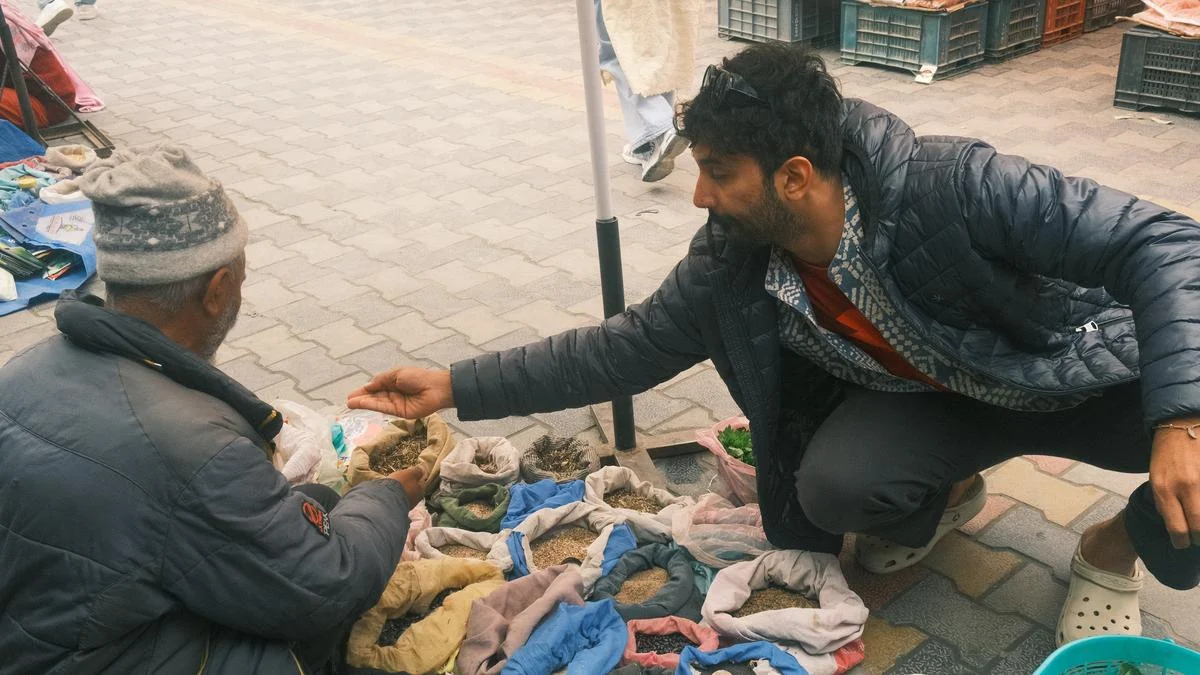
Chennai, India – August 8, 2026 – In a world increasingly homogenized, the unique flavors and traditions of a region can often be overlooked, or worse, forgotten. Author and mountaineer Yash Saxena’s recent book, Stories from a Kargili Kitchen, published by Penguin Books earlier this year, is a profound exploration of this very phenomenon, delving into the rich culinary heritage of Kargil and the subtle, yet significant, shifts it is undergoing. This week, Saxena will bring these compelling narratives to Chennai as part of The Hindu Lit for Life Unplugged, engaging in a thoughtful conversation with restaurateur and entrepreneur Sandesh Reddy, promising an evening that transcends mere recipes to explore the very essence of place, memory, and identity through the lens of food.
The Seeds of Discovery: An Encounter on the Road to Kargil
Saxena’s journey into the heart of Kargil’s cuisine began not in a bustling kitchen, but on the scenic, winding road from Srinagar. A casual conversation with a group of young individuals from Kargil offered the first, striking insight into the evolving culinary landscape. When asked about their favorite local dishes, Saxena anticipated an array of traditional Kargili specialties. Instead, he was met with a chorus of Kashmiri names. The revelation came when these youngsters confessed, with a surprising frankness, that they rarely, if ever, consumed Kargili food. Their reasoning was stark: "It’s only for old people, and we’re not able to digest it."
This anecdote, seemingly small, served as a powerful catalyst for Saxena. It underscored a profound shift occurring within Kargil itself – a growing disconnect between the younger generation and their ancestral foodways. This realization became the bedrock upon which Stories from a Kargili Kitchen was built, a testament to Saxena’s commitment to understanding a community by immersing himself within it. For over three years, Saxena and his team lived, cooked, and listened intently to the local communities, piecing together a narrative far richer and more complex than a simple collection of recipes.
A Microcosm of Culinary Diversity: India’s Palate and Kargil’s Place
Sandesh Reddy, a prominent figure in India’s culinary scene, views Saxena’s book as a vital contribution to a larger, ongoing discourse about how India perceives and celebrates its food. "I think India itself is a nano-cuisine. Not even a micro," Reddy observes, emphasizing the sheer granularity of culinary diversity across the subcontinent. He points out that recipes, ingredients, and even everyday dishes can exhibit remarkable variations between communities, often within the same geographical region.
"If you think about Ladakhi cooking or Kargili cooking," Reddy elaborates, "we are often referencing some vibrant dish or some meat preparation. But Kargil’s most famous contribution to the culinary world is an apricot chutney," he says, a touch of awe in his voice. This highlights a common misconception, where the most celebrated or readily recognized dishes overshadow the more nuanced, everyday culinary practices that truly define a region’s identity. Saxena’s work aims to bridge this gap, bringing to light the often-unseen elements that form the core of Kargil’s unique gastronomic heritage.
The Landscape, History, and Shifting Habits: Unpacking Kargili Cuisine
Beneath the surface of recognizable dishes, Saxena discovered a food culture profoundly shaped by its environment, its historical trajectory, and the evolving habits of its people. The most insightful discoveries often emerged not from elaborate feasts, but from the simplicity of everyday food and drink. Even a seemingly mundane cup of tea offered a revealing glimpse into the transformation of Kargil’s culinary traditions.
During their initial days in Kargil, Saxena and his team observed the widespread practice of drinking salt butter tea, often accompanied by dipping local bread. However, after experiencing stomach issues, they began to scrutinize the tea itself. "I discovered that the version of the tea I was drinking was different from what was traditionally consumed 20 to 20 years ago," Saxena explains. The traditional ingredient, sapul (a natural form of sodium bicarbonate found locally), had been replaced. The modern iteration of the tea, Saxena found, often contained commercial bicarbonate, which imparted a distinctive magenta hue. This was then typically softened to pink with the addition of milk.
"This was another moment when I felt in real time how food can reflect the changes happening in the community," Saxena reflects. This observation underscores the central theme of his book: the intricate relationship between food and societal evolution. The growing distance from traditional food practices, Saxena hopes, is something his book will bring to the forefront, prompting reflection and potentially, preservation efforts.
A Cuisine Rooted in Austerity and Resilience
Saxena argues that Kargili cuisine offers a distinct perspective on what constitutes "Indian food." Unlike many culinary traditions across the country where spices are the primary architects of flavor, Kargili food has historically relied on a more restrained palette of ingredients, often with little to no spice. This culinary philosophy is a direct consequence of the region’s challenging climate and the necessity of utilizing what could be cultivated and sustained locally.

The stark beauty of the Kargil landscape, with its high-altitude deserts and limited growing seasons, has forged a cuisine characterized by resourcefulness and resilience. Traditional dishes often feature hardy grains, locally grown vegetables, and preserved meats, reflecting a deep understanding of the environment and a commitment to minimizing waste. The emphasis is on the inherent flavors of the ingredients themselves, enhanced by simple preparation methods that highlight their natural qualities.
This approach stands in contrast to the more flamboyant and spice-laden cuisines often associated with other parts of India. Kargili food, in its essence, is about sustenance, about utilizing every available resource, and about creating nourishment from the land in a way that is both practical and deeply connected to the community’s survival.
Beyond the Plate: Food as a Vehicle for Identity and Belonging
At The Hindu Lit for Life Unplugged, Saxena aims to expand the conversation beyond the pages of his book, delving into the broader questions it raises about food, identity, and authenticity. He hopes to explore what it truly means to belong to a place, and how our culinary heritage shapes our sense of self and our connection to our roots.
The event promises to be an immersive experience. Following Saxena’s conversation with Sandesh Reddy, audiences will have the opportunity to engage with the flavors that inspired the book. Chef Nilza Wangmo will curate a special food experience, offering attendees a tangible taste of Kargil’s unique culinary landscape. This culinary interlude is not merely an accompaniment to the discussion; it is an integral part of the narrative, allowing the audience to connect with the stories on a sensory level.
The event serves as a poignant reminder that food is far more than mere sustenance. It is a repository of history, a carrier of cultural memory, and a powerful symbol of identity. As communities evolve and traditions shift, the preservation of culinary heritage becomes increasingly crucial, not just for safeguarding the past, but for understanding the present and shaping a more culturally rich future.
Event Details:
Yash Saxena will be in Conversation with Sandesh Reddy for The Hindu Lit for Life Unplugged at Zhouyu on August 14, at 6 pm.
To register for the talk, contact: 9363096446.
