

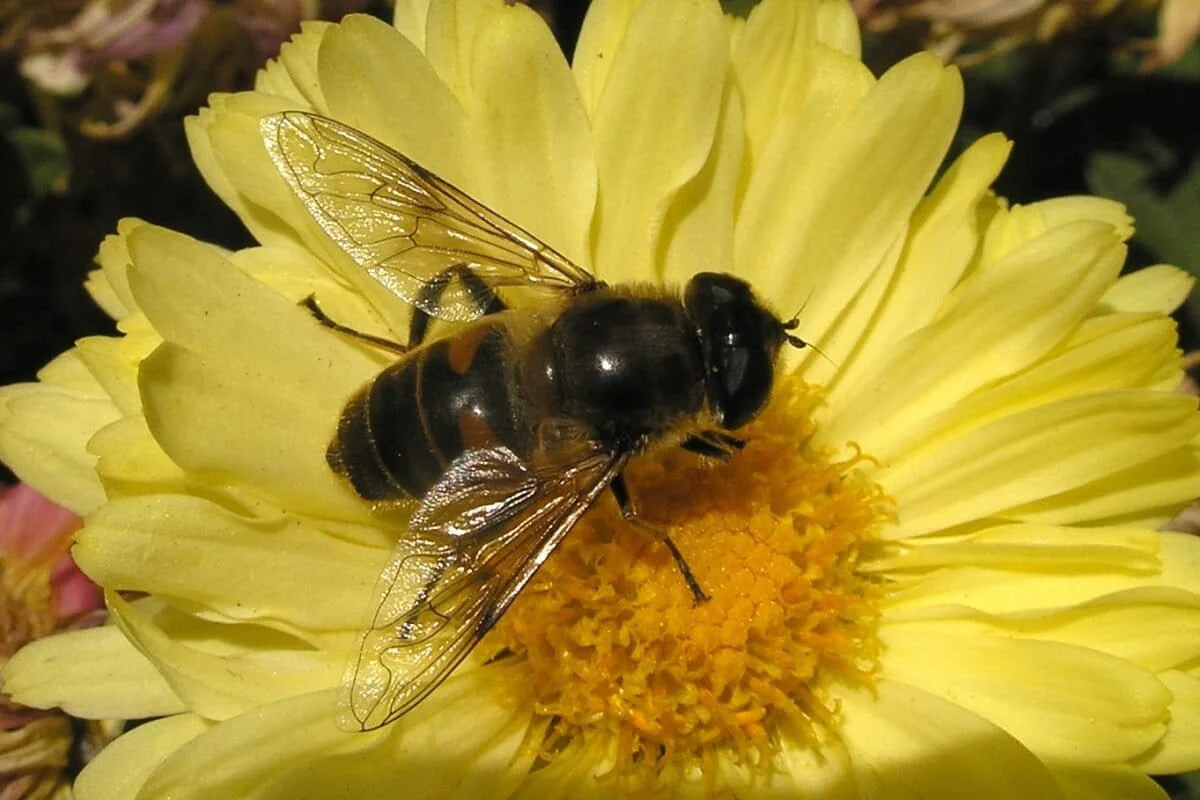
For most of humanity, the word "fly" evokes an immediate, visceral reaction: a swatting hand, a sense of annoyance, or a concern regarding hygiene and disease. We view them as unwelcome guests at picnics and harbingers of filth in our homes. However, this narrow perception overlooks one of the most sophisticated and essential groups of organisms on Earth. Far from being mere pests, the "true flies" are among the cleanest, most efficient, and most ecologically vital insects in existence.
From driving global food security through pollination to aiding in high-stakes criminal investigations and even venturing into the vacuum of space, the order Diptera—the true flies—represents a pinnacle of evolutionary engineering. As bee populations face unprecedented declines, the scientific community is turning its gaze toward these misunderstood insects, recognizing them as the unsung architects of our natural world.
Main Facts: Defining the "True Fly"
The term "fly" is often used loosely in common parlance to describe any small winged insect, including butterflies, dragonflies, mayflies, and fireflies. However, in the world of entomology, none of these are considered true flies. The distinction lies in their biological classification and their unique physical architecture.
The Power of Two
True flies belong to the order Diptera, a name derived from the Greek words di (two) and ptera (wings). While most winged insects possess four wings (two pairs), true flies have evolved to function with only one pair of functional wings. Their hind wings have been radically modified over millions of years into tiny, club-shaped structures known as halteres.
These halteres act as sophisticated biological gyroscopes. During flight, they vibrate at high frequencies, providing the fly with an extraordinary sense of balance and spatial orientation. This is why a common housefly is so difficult to swat; its halteres allow it to perform complex aerial maneuvers, rapid turns, and instant take-offs that outclass almost any human-made aircraft. To maintain their position in the air, some species must beat their single pair of wings up to 200 times per second.
A Global Powerhouse
In the vast catalog of life, Diptera is a titan. Of the 27 orders of insects, it ranks second in terms of sheer abundance and species richness. As of recent records from the Catalogue of Life, there are over 160,591 documented species of flies distributed across 160 families. They are found on every continent, including Antarctica, and inhabit nearly every conceivable niche, from the depths of caves to the highest mountain peaks.

Chronology: From Earth’s Soil to the Final Frontier
The human relationship with flies has evolved from one of pure domestic annoyance to profound scientific partnership. The timeline of Dipteran contributions to science and ecology reveals a history of hidden utility.
1947: The First Astronauts
While the "Space Race" of the 1960s is well-remembered, the first living creatures to ever reach space were not humans or dogs, but fruit flies (Drosophila melanogaster). In 1947, a V-2 rocket launched from New Mexico carried fruit flies to an altitude of 68 miles to study the effects of cosmic radiation on living tissue. Today, NASA continues this legacy with the Fruit Fly Lab aboard the International Space Station (ISS), using these insects to understand how spaceflight affects human health, as flies share approximately 75% of the genes that cause diseases in humans.
2019–2024: The Great Re-evaluation
In the last five years, a surge of research has highlighted the critical role of flies in global agriculture. A landmark 2019 review published in the Annual Review of Entomology analyzed 105 different crops and found that flies were the most significant pollinators after bees, responsible for visiting over 70% of the reviewed crops.
In India, the Zoological Society of India (ZSI) has recently spearheaded efforts to document fly diversity. In 2024, researchers discovered two new species of hoverflies in the genus Eristalinus within the Gangetic plains. Simultaneously, in Kerala, entomologists rediscovered Eristalinus multifarious, a species that had not been seen for 45 years, signaling a renewed focus on documenting the Dipteran wealth of the subcontinent.
Supporting Data: The Economic and Ecological Engines
The "services" provided by flies are not merely anecdotal; they are quantifiable drivers of the global economy and environmental health.
The Pollination Powerhouse
While bees are often credited with the bulk of pollination, flies are in many ways superior "generalist" pollinators. Unlike bees, which are tethered to a hive or nest to feed their larvae, flies are free agents. They are not restricted by the need to return to a central base, allowing them to travel vast distances. Hoverflies, for instance, have been recorded migrating between 50 and 110 kilometers.

Key data points regarding fly pollination include:
- Crop Range: Flies are essential for the production of chocolate (midges pollinate the cacao tree), mangoes, onions, carrots, peppers, apples, and strawberries.
- Resilience: Unlike bees, which are sensitive to temperature and often refuse to forage in the cold or under glass, many fly species (such as blowflies and hoverflies) begin foraging earlier in the day and remain active in cooler, overcast conditions.
- Anatomy: Many fly species are covered in fine hairs that are remarkably efficient at trapping and transferring pollen grains between flowers.
Waste Management and Circular Economy
The Black Soldier Fly (Hermetia illucens) has emerged as a revolutionary tool in waste management. Its larvae are voracious decomposers, capable of reducing organic waste—from kitchen scraps to animal manure—by up to 50–60% in a matter of days.
Recent data published in 2023 has even suggested a breakthrough in plastic pollution: researchers found that the gut microorganisms in Black Soldier Fly larvae can break down polyurethane, a notoriously difficult-to-recycle plastic. In controlled studies, larvae fed on a diet of polyurethane not only survived but gained weight, pointing toward a future where insects could help solve the global plastic crisis.
Official Responses and Expert Insights: The Scientific Perspective
Entomologists and environmental organizations are increasingly vocal about the need to protect fly diversity as a safeguard against the "pollinator crisis."
The "Bee-Mimic" Strategy
Dr. Geetha Iyer and researchers from the ZSI note that many flies, particularly the family Syrphidae (hoverflies), have evolved to look and sound exactly like bees. This "Batesian mimicry" protects them from predators who fear a sting. "They are not just mimics in appearance," experts note, "but in function. Farmers are beginning to realize that having a healthy population of hoverflies is like having a second, sting-free workforce in the field."
Forensic Entomology
Official forensic investigators have long relied on the family Calliphoridae (blowflies). Because these flies are attracted to the scent of decomposition within minutes of death, their developmental stages provide a "biological clock" for criminal investigators. By analyzing the age of the larvae found on a corpse, forensic entomologists can determine the post-mortem interval (PMI) with startling accuracy, providing critical evidence in legal proceedings.

Agricultural Guardians
In India, entomologists like Sankararaman from Amruta College of Agricultural Sciences have been documenting the predatory nature of fly larvae. While adult hoverflies drink nectar, their larvae are "voracious eaters" of aphids and other soft-bodied pests. This dual-action—pollination as adults and pest control as larvae—makes them a "friend of the farmer" that requires no chemical pesticides.
Implications: A Future Dependent on the Diptera
The implications of our shifting understanding of flies are profound, particularly in the context of climate change and food security.
1. Food Security Buffer
As honeybee populations decline due to Colony Collapse Disorder (CCD) and pesticide use, flies offer a critical "insurance policy" for the global food supply. Their ability to thrive in diverse environments and pollinate a wide array of crops means that protecting fly habitats—such as hedgerows and moist soils—is no longer an aesthetic choice but a requirement for agricultural stability.
2. Sustainable Protein Sources
The rearing of Black Soldier Flies is becoming a multi-million dollar industry. Because the larvae are rich in protein and fats, they are being harvested as a sustainable alternative to soy and fishmeal for livestock and aquaculture feed. This creates a circular economy where "waste" is turned into "protein" via the fly.
3. Medical and Technological Innovation
The study of fly biomechanics is influencing the next generation of micro-drones. Engineers are looking at the haltere-wing coordination of Diptera to create stable, highly maneuverable robotic flyers for search-and-rescue missions. Furthermore, the "cleanliness" of flies—their constant grooming behavior—is being studied for antimicrobial properties that could lead to new types of antibiotics.
Conclusion
The narrative of the fly is undergoing a necessary transformation. We are moving away from the image of the "filthy housefly" and toward a recognition of the Diptera as a sophisticated, diverse, and indispensable order of life. Whether they are balancing the ecosystems of the Gangetic plains, solving crimes in our cities, or potentially digesting our plastic waste, true flies have proven themselves to be much more than a nuisance. They are, in every sense, the quiet engines of a functioning planet. To protect them is to protect the very systems that sustain human life.
