

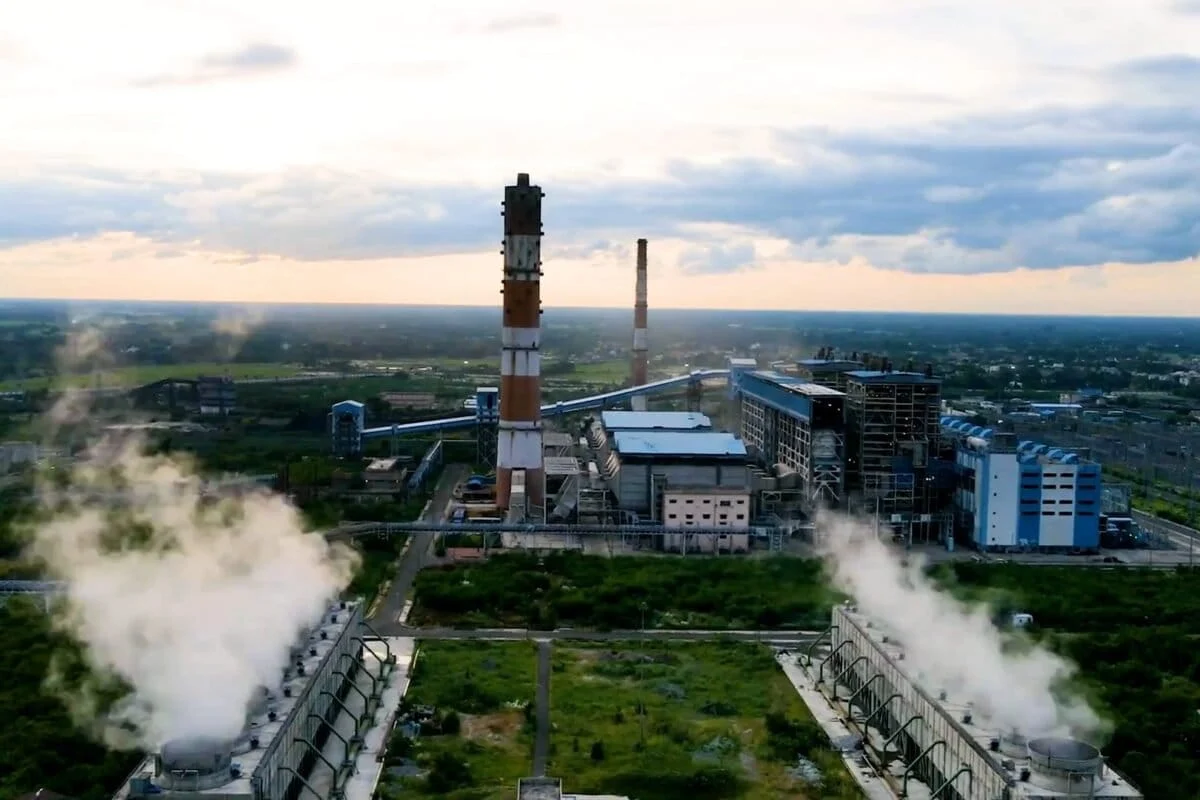
PATNA — Seven years ago, Bihar embarked on an ambitious fiscal journey, becoming one of the first Indian states to institutionalize a "Green Budget." The initiative was designed to weave environmental consciousness into the fabric of state governance, signaling a proactive stance against climate vulnerability. However, as the state presents its seventh consecutive Green Budget in 2026, a stark disconnect has emerged between fiscal allocation and environmental outcomes.
Despite a three-fold increase in funding—rising from an initial ₹56 billion in 2020-21 to approximately ₹158 billion for the 2026-27 fiscal year—key environmental indicators including renewable energy transition, air quality, waste management, and biodiversity conservation show little to no improvement. In several critical sectors, the state has actually regressed, raising urgent questions about the efficacy of "green tagging" without robust impact assessment.
A Chronology of Green Fiscal Policy in Bihar (2020–2026)
The genesis of Bihar’s green accounting began in the 2020-21 fiscal year. Influenced by international frameworks and supported by technical partners like the Asian Development Research Institute (ADRI), the state government sought to segregate and track expenditures that contributed to climate mitigation and adaptation.
The Evolution of Allocation
- 2020-21: The inaugural Green Budget was launched with an allocation of ₹56.5 billion, representing roughly 7% of the total state budget. At this stage, 96 schemes were identified as having "green" components.
- 2021-23: The share of green spending rose significantly, peaking at 9.6% and later 12.5% in 2023-24. The number of schemes included in the budget began to swell as more departments "tagged" their projects.
- 2024-25: The state began aligning its green budget more closely with the National Clean Air Programme (NCAP) and the State Action Plan on Climate Change (SAPCC).
- 2026-27: The seventh Green Budget reached ₹158 billion. While the absolute number is at an all-time high, its share of the total state budget has corrected back to approximately 7.5%, mirroring the proportions seen at its inception six years ago.
Despite this chronological expansion in the number of schemes—which grew from 96 to 298—the "greenness" of the expenditure remains a subject of intense academic and environmental debate.
Supporting Data: The Widening Gap in Environmental Performance
To understand the "Green Paradox," one must look at the specific sectors where funding has increased but results have faltered.

1. The Energy Crisis and the Renewable Lag
The energy sector is the primary driver of Bihar’s carbon footprint, accounting for roughly 65% of the state’s total greenhouse gas emissions. This is largely due to a heavy reliance on aging coal-based power plants.
The Bihar State Pollution Control Board (BSPCB) set a roadmap in 2024 calling for 10,000 MW (10 GW) of renewable capacity by 2030 to achieve a "net zero" pathway. However, the data reveals a sluggish transition. In 2020, renewable capacity stood at 376 MW. By 2025-26, it had only crawled to 651 MW. At the current rate of growth, Bihar is projected to reach only 900 MW by 2030—a mere 9% of its stated target.
2. The Vanishing Wetlands
Biodiversity data offers perhaps the most visible evidence of ecological decline. In 2019, prior to the Green Budget’s implementation, Bihar boasted 4,550 wetlands covering 389,713 hectares. By 2025, the number of wetlands had dropped to 4,526.
More alarmingly, the total area of natural water bodies shrunk by 16,843 hectares in that six-year window. To put this in perspective, the lost area is equivalent to approximately 70% of the total landmass of Patna, the state capital. This loss is particularly devastating for a state that grapples with annual cycles of extreme drought and catastrophic flooding.
3. The Regression in Waste Management
Waste processing is another area where early gains have been lost. In 2019, Bihar processed 51% of its 2,272 tonnes of daily municipal waste. Following the introduction of the Green Budget, this rate initially climbed to 58% in 2021. However, the momentum was not sustained. By 2025, the processing rate plummeted to approximately 30%, indicating that infrastructure development and operational maintenance have failed to keep pace with urban growth.

4. Air Quality and Fund Underutilization
Air pollution remains a public health emergency in Bihar. A 2025 report by the Centre for Research on Energy and Clean Air (CREA) noted that PM2.5 levels exceeded permissible limits in 20 out of 23 monitored cities. While concentrations of PM2.5 and PM10 showed a slight marginal decrease compared to 2020, Sulphur Dioxide (SO2) levels rose from 8.6 to 11.4 ug/m3.
Furthermore, Bihar has struggled with fiscal execution. Under the National Clean Air Programme (NCAP), the state utilized only 60% (₹1.98 billion) of the ₹3.28 billion allocated by the central government, leaving critical funds for air quality improvement unspent.
Official Methodology: The "Rio Marker" System
Bihar’s Green Budget is not a separate fund but a "tagging" exercise. The state utilizes the Rio Marker methodology, an international standard used to identify and classify development projects based on their environmental relevance.
The Six-Slab Classification
Under this system, departmental schemes are categorized into six slabs based on the percentage of their activities that are considered "green." These range from 100% (where the entire project is environmental, such as afforestation) down to 1% (where only a minor component is green).
For example, the Department of Environment, Forest, and Climate Change has 100% of its budget tagged as green. In contrast, a rural road project might only have a 1% or 5% green tag, representing the cost of planting trees along the roadside or using fly-ash bricks in construction.

The shift from 96 schemes in 2020 to 298 schemes in 2026 suggests that more departments are identifying green components in their work. However, critics argue this may be "budgetary window dressing" rather than a shift in actual policy priority.
Official Responses and Expert Critiques
Government officials often point to the increasing complexity and scale of the Green Budget as a sign of success. However, independent experts argue that "expenditure" is a poor proxy for "impact."
Ashmita Gupta, an economist and member-secretary at the Asian Development Research Institute (ADRI), emphasizes the need for a shift in focus. "It is important to conduct an impact evaluation to assess the actual effect of the green budget and the associated annual expenditure," Gupta told Mongabay-India. "Merely spending funds is insufficient; the budget should also reflect the outcomes of that expenditure, yet this is currently missing."
Shailly Kedia, a Senior Fellow at The Energy and Resources Institute (TERI), notes that while Bihar’s approach is comprehensive compared to other states, the link between spending and the Output-Outcome Monitoring Framework (OOMF) must be strengthened. This would allow the government to measure implementation effectiveness rather than just tracking the flow of money.
Addressing the gap between allocation and spending, Runa Sarkar, a professor at the Indian Institute of Management (IIM) Calcutta, suggests that the persistent underutilization of funds signals a deeper structural issue. "The gap probably signals both a limitation in implementation capacity—both administrative and technical—and inadequate planning in the allocation of resources to begin with," Sarkar noted.

Implications: The National Context and the Path Forward
Bihar is not alone in its green budgeting efforts. It is part of a growing cohort of Indian states—including Odisha, Assam, Meghalaya, Uttar Pradesh, Kerala, and Rajasthan—that have adopted various forms of climate or green budgeting.
- Odisha: The pioneer of "Climate Budget Tagging" (CBT) since 2019-20, focusing on systematic tracking of mitigation and adaptation.
- Uttar Pradesh: Recently identified 26% of its total budget as having "green relevance," aligning its spending with Nationally Determined Contributions (NDCs).
- Assam: Categorizes schemes from "highly favourable" to "less favourable" regarding environmental impact.
However, Bihar’s experience serves as a cautionary tale for the rest of the country. The state’s struggle suggests that without third-party audits and independent evaluations, green budgets risk becoming an exercise in accounting rather than an engine for ecological restoration.
The Road Ahead
The implications of Bihar’s current trajectory are significant. If the state continues to lose wetlands at the current rate and fails to meet its renewable energy targets, its vulnerability to climate change will intensify, potentially negating the economic gains funded by the rest of the budget.
To bridge the gap, experts suggest three immediate steps:
- Independent Impact Audits: Moving beyond internal government reports to third-party evaluations of green projects.
- Capacity Building: Strengthening the technical expertise within state departments to ensure that "green" schemes are implemented effectively.
- Outcome-Based Budgeting: Reforming the Green Budget to ensure that future allocations are contingent on the environmental outcomes of previous years.
As Bihar moves deeper into its seventh year of green budgeting, the challenge is no longer about finding the money—it is about ensuring that the money actually finds its way into the soil, the air, and the water. Without a radical shift toward accountability, the Green Budget may remain a high-value document with a low-value impact on the ground.
