

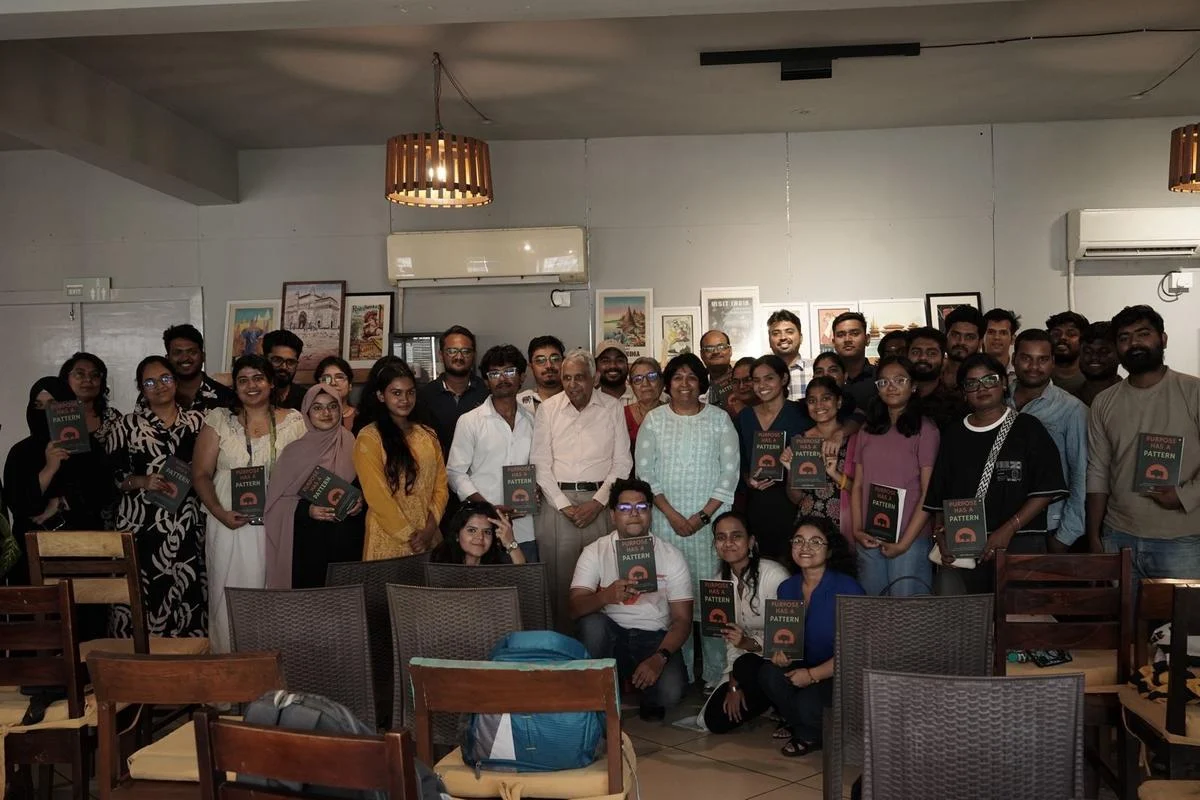
HYDERABAD – In an era where digital algorithms often dictate literary success, a grassroots movement in Hyderabad is reclaiming the physical space for the written word. The Authorbanter Club, an initiative born from the city’s burgeoning "silent reading" culture, has emerged as a vital sanctuary for independent, emerging, and self-published authors. By facilitating direct, face-to-face engagement between creators and their audience, the club is addressing a systemic gap in the traditional publishing industry, transforming how local narratives are consumed and celebrated.
The initiative, founded by bibliophiles Biswarupa Barik and Nusrath Ali Quadri, has quickly moved beyond the status of a simple hobbyist group to become a curated platform for literary exchange. As of August 2026, the club has successfully hosted dozens of authors, ranging from retired high-ranking officials to virtual participants based in the United States, proving that the hunger for authentic author-reader connection transcends both professional backgrounds and geographical borders.
Main Facts: A New Ecosystem for the ‘Unseen’ Author
The primary mission of the Authorbanter Club is to democratize the book launch experience. Historically, the prestige of a formal book launch—complete with venue hire, media invites, and curated audiences—has been the exclusive domain of authors backed by "Big Five" publishing houses. For the independent or self-published writer, the journey often ends at the digital storefront of Amazon or Kindle, with little to no opportunity for the tactile, emotional experience of a physical signing or a moderated discussion.
Founded in September 2025, Authorbanter focuses on four specific categories of writers:
- Independent Authors: Those who manage their own production and marketing.
- Emerging Voices: First-time writers seeking their initial foothold.
- Self-Published Authors: Writers utilizing platforms like KDP or Notion Press.
- Semi-Published/Niche Authors: Those with smaller press backing who lack large-scale promotional budgets.
The club operates on a curated model, selecting authors across genres and languages—primarily English and Hindi—and providing them with a professional stage. By utilizing popular local venues like the Gallery Cafe in Banjara Hills and the House of Gourmet in Jubilee Hills, the club ensures that literary events are held in spaces that are already social hubs, thereby lowering the barrier for casual readers to participate.
Chronology: From Silent Reading to Active Dialogue
The genesis of Authorbanter Club is deeply rooted in the "silent reading" movement that swept through Indian metros over the last few years.
The Influence of ‘Hyderabad Reads’ (2023–2025)
Before the inception of Authorbanter, founders Biswarupa Barik and Nusrath Ali Quadri were active participants and organizers within Hyderabad Reads. This movement, inspired by Bengaluru’s famous Cubbon Reads, encouraged citizens to gather in public parks to read in silence, fostering a sense of community without the pressure of forced social interaction.

During these sessions, which the duo participated in for three years, a recurring theme emerged. Readers were curious about local talent, and local authors—often sitting right next to them in the park—had no structured way to introduce their work. The "silent" nature of the movement, while peaceful, highlighted a loud need for a different kind of space: one where conversation was the primary objective.
The Launch (September 2025)
Recognizing that the leap from a public park to a prestigious bookstore launch was too wide for most indie authors, Barik and Quadri launched Authorbanter Club in September 2025. Nusrath Ali Quadri, a former IT professional, brought organizational structure to the venture, while Barik’s deep ties to the reading community provided the initial audience base.
Expansion and Digital Integration (Late 2025 – August 2026)
Over its first year, the club expanded its reach. While the focus remained on physical meetups in Hyderabad, the organizers recognized the global nature of the Indian diaspora. By mid-2026, they began integrating virtual sessions, allowing authors like Alamkrutha Gamini and Chaitanya to join from the United States, bridging the gap between Hyderabad’s local scene and the global literary stage.
Supporting Data: The Anatomy of a Curated Session
The success of the Authorbanter Club lies in its structured approach to engagement. Unlike traditional readings, which can often feel academic or exclusionary, Authorbanter sessions are designed to be "experiences."
Session Logistics:
- Duration: Each session lasts precisely two and a half hours.
- Format:
- First Half: Dedicated to "browsing and discovery," where readers can flip through the author’s work, enjoy the cafe atmosphere, and engage in informal chatter.
- Second Half: A moderated Q&A session where the author discusses their craft, the challenges of publishing, and the themes of their book.
- Conclusion: A traditional book signing session, providing the "prestige" element that indie authors often miss.
Diversity of Voices:
To date, the club has featured over 40 authors. The diversity of the roster is a point of pride for the organizers. Notable participants include:
- B. Maria Kumar: A retired Director General of Police (DGP), proving that the club attracts serious intellectual heavyweights.
- Anu Bulusu & Preeti Jha: Representing the contemporary fiction and non-fiction segments.
- Ashwinikumar Aiyangar, Rahul Patil, and Varun Anantha: Highlighting the range of male voices in the local circuit.
- Reshma Bangarimath: Contributing to the growing pool of regional talent.
While authors contribute toward the logistical costs of the event, the club manages the marketing, venue coordination, and audience curation, providing a service that would otherwise cost an independent author significantly more if sought through a private PR agency.

Official Responses: Insights from the Founders
In discussing the club’s philosophy, the founders emphasize that the digital world, while useful, is insufficient for building a lasting literary culture.
"Authors can easily interact with book lovers online," says Biswarupa Barik. "They have Instagram, X (formerly Twitter), and personal blogs. But they have to depend on book launch events or meetup sessions to connect with readers offline and discuss their book in depth. The problem is that only a few people know these events are even happening, or they feel they aren’t ‘important’ enough to attend a formal launch."
Nusrath Ali Quadri highlights the difficulty of the traditional publishing route as a motivator for the club’s existence. "Getting through reputed publishing houses is not easy for all. Even if some of them manage to do that, they are not able to engage with readers directly because the marketing focus is usually on the top 1% of bestsellers. We wanted to create a space for authors to have a face-to-face interaction regardless of their ‘bestseller’ status."
The founders maintain that the club is not just about selling books; it is about "creating an experience for the author." For many of these writers, the Authorbanter session is the first time they see their work being discussed by a room full of strangers, a psychological milestone that is crucial for the continuation of their creative journey.
Implications: The Future of Hyderabad’s Cultural Identity
The rise of the Authorbanter Club carries several significant implications for the future of literature in urban India.
1. The Democratization of Authorship
By providing a platform for self-published writers, the club is challenging the "gatekeeper" model of literature. As the quality of self-published work continues to rise, platforms like Authorbanter ensure that merit, rather than just a publishing contract, determines an author’s local reach.
2. The Role of ‘Third Spaces’
The use of cafes like Gallery Cafe and House of Gourmet underscores the importance of "Third Spaces"—places that are neither home nor work—in fostering culture. As traditional bookstores face economic pressures, the transition of literary events to hospitality spaces may be the key to keeping reading culture alive in the 21st century.

3. Strengthening the Local Economy
By hosting these events, local cafes benefit from increased footfall and a reputation as cultural hubs. This creates a symbiotic relationship between local businesses and the arts, a model that could be replicated in other Indian cities like Pune, Kochi, or Chandigarh.
4. Overcoming the ‘Digital Fatigue’
The success of Authorbanter suggests a growing "digital fatigue" among readers. While e-books are convenient, the physical act of meeting an author and getting a signed copy remains a powerful draw. This movement suggests that the future of book promotion is hybrid: digital for reach, but physical for deep connection.
As Authorbanter Club moves into its second year, the organizers remain committed to their original vision. For the authors of Hyderabad, the club represents more than just a promotional opportunity; it is a validation of their voice in a crowded, often noisy world.
Contact Information for Prospective Authors and Readers:
- Phone: +91 78424 78734 / +91 98661 47767
- Email: [email protected]
