

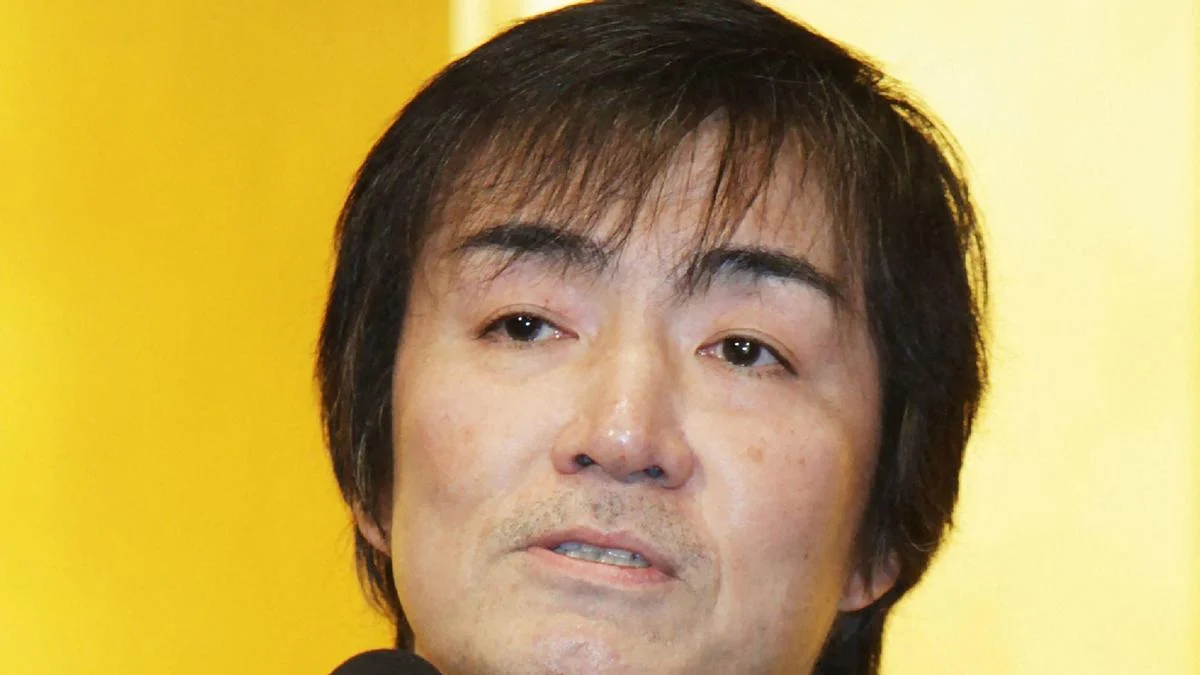
The literary world is in a state of profound mourning following the news that Keigo Higashino, the titan of Japanese fiction, passed away last month at the age of 68. According to official statements from his representatives, the author succumbed to a private battle with colorectal cancer. In a manner strikingly reminiscent of the atmospheric, understated openings of his own novels, Higashino’s passing was marked by a quiet family funeral, followed by a tidal wave of public grief that surged across social media platforms from Tokyo to London.
To many, Higashino was the "King of Japanese Mystery," but to categorize him solely as a genre writer is to overlook the tectonic impact he had on contemporary literature. He was a meticulous chronicler of the human condition, a social critic who used the framework of the police procedural to dissect the complexities of the Japanese psyche. His death marks the end of an era for global letters, leaving behind a void that few—if any—can fill.
Main Facts: The Passing of a Master
Keigo Higashino’s death was confirmed in early August 2026, though the private ceremony had taken place weeks prior in accordance with his wishes for privacy. Born in Osaka in 1958, Higashino spent over four decades redefining the boundaries of the "whodunit." While he was often grouped with the Shin-Honkaku (New Orthodox) movement of mystery writing, which emphasizes complex logic and fair-play puzzles, Higashino’s work eventually transcended these constraints.
His bibliography, comprising over 100 titles, has sold an estimated 150 million copies worldwide. In Japan, he was a cultural institution; in the West, he became the face of "Japanese Noir" after the 2011 English translation of The Devotion of Suspect X. His ability to weave scientific principles—drawn from his background as an engineer—with deep emotional resonance made him a unique figure in the literary landscape.
The reports of his death triggered a global digital vigil. On platforms like X (formerly Twitter) and Weibo, fans shared passages from his books, particularly those from the Detective Galileo and Detective Kaga series. For many, the imagery of his passing felt like a final, unwritten chapter of his work: a somber memorial, the scent of incense, and a lingering sense of a mystery that can never truly be solved—the mystery of the human heart.
Chronology: The Architect of Modern Japanese Fiction
To understand Higashino’s impact, one must trace the trajectory of a career that began in the rigid world of engineering and ended in the pantheon of global literature.
The Early Years and the Edogawa Rampo Prize (1958–1985)
Higashino was born in Osaka and studied Electrical Engineering at Osaka Prefecture University. This technical background would later become his "secret weapon," allowing him to craft mysteries involving complex physics, chemistry, and forensics that felt grounded in reality. In 1985, while working as an engineer at Nippon Denso, he won the prestigious Edogawa Rampo Prize for his novel Hōkago (After School). The win provided him with the momentum to quit his job and pursue writing full-time in Tokyo.
The "Wilderness" Period and the Shift to Social Realism (1986–1998)
The late 80s and early 90s were a period of experimentation and moderate success. While he was a finalist for several major awards, he didn’t reach "superstar" status immediately. However, this period was crucial for his evolution. He began to move away from the "closed-room" puzzles of his early work toward "social mysteries" (shakai-ha), focusing on the motivations behind the crimes rather than just the mechanics.
In 1998, he published Naoko (The Secret), a story about a woman whose spirit inhabits her daughter’s body after a fatal accident. The book won the Mystery Writers of Japan Award and signaled Higashino’s mastery of the "emotional mystery," blending supernatural elements with domestic tragedy.
Global Stardom and The Devotion of Suspect X (2005–2011)
The year 2005 marked the publication of Yōgyosha X no Kenshin (The Devotion of Suspect X). The novel was a cultural phenomenon, winning the 134th Naoki Prize and the Honkaku Mystery Award. When it was translated into English in 2011, it was nominated for both the Edgar Award and the Barry Award. This book introduced the world to Manabu Yukawa, the "Detective Galileo," a physicist who solves crimes through logic that borders on the poetic.
The Final Decade: A Legacy of Versatility (2015–2026)
In his later years, Higashino continued to churn out bestsellers at an astonishing rate. He also explored more optimistic, fable-like territory with The Miracles of the Namiya General Store, which became a massive hit across Asia, proving he could move readers to tears without a single drop of blood being spilled. Until his illness forced a slowdown in late 2025, he remained a fixture on the bestseller lists, consistently bridging the gap between high-brow literature and mass-market appeal.

Supporting Data: A Global Phenomenon in Numbers
Higashino’s influence is quantifiable through staggering statistics that reflect his dominance in the publishing industry.
- Sales Volume: With over 100 books published, his total sales in Japan alone exceed 100 million copies. Internationally, his popularity in China, South Korea, and Southeast Asia is unparalleled, with an additional 50 million copies sold in these regions.
- Translations: His work has been translated into more than 35 languages. In the last decade, the "Higashino Effect" led to a surge in the translation of other Japanese authors, as Western publishers sought to find "the next Higashino."
- Screen Adaptations: Higashino is one of the most adapted authors in history. More than 40 of his works have been turned into films or television series. Notably, The Devotion of Suspect X has been adapted into feature films in Japan, China, South Korea, and India (as Jaane Jaan), highlighting the universal appeal of his narratives.
- Literary Honors: He was a perennial favorite for the Naoki Prize (winning once and being nominated multiple times) and received the Purple Ribbon Medal from the Japanese government for his contributions to the arts.
Official Responses and Cultural Tributes
The announcement of his passing led to a chorus of tributes from the highest levels of Japanese society and the global literary community.
The Japanese Ministry of Education, Culture, Sports, Science and Technology released a statement praising Higashino for "modernizing the Japanese mystery genre and bringing the nuances of Japanese society to a global audience." The statement noted that his work encouraged a generation of young readers to engage with both literature and science.
Bungeishunju, one of his primary publishers, expressed "immeasurable grief" at the loss. "Keigo Higashino was a writer who never stopped evolving," a spokesperson said. "He had an uncanny ability to find the extraordinary within the ordinary, and his dedication to his craft was an inspiration to everyone in the industry."
Fellow authors also weighed in. Natsuo Kirino, author of Out, remarked, "Higashino-san understood that a crime is never just about the victim and the perpetrator; it is about the ripples of pain that move through a community. He was our most compassionate observer." In the West, authors like Anthony Horowitz and Ian Rankin have previously cited Higashino as a master of the "logical twist," with many taking to social media to acknowledge his influence on the global crime fiction landscape.
Implications: The Future of the "Higashino School"
The passing of Keigo Higashino leaves several questions regarding the future of his unfinished works and the genre he helped define.
The Fate of the Manabu Yukawa and Kyoichiro Kaga Series
Higashino’s two most famous protagonists, the physicist Manabu Yukawa and the empathetic detective Kyoichiro Kaga, have become cultural icons. While Higashino was known for completing his manuscripts well in advance, it remains to be seen if any posthumous works will be released. Publishers have hinted at "at least two completed manuscripts" that may see the light of day in 2027.
The Translation "Gold Rush"
Higashino’s success was a catalyst for the "Japanese Noir" boom in the West. His death is expected to trigger a renewed interest in his backlist, many titles of which have yet to be translated into English. Literary agencies are already seeing an uptick in demand for Japanese crime fiction, as publishers look to fill the void left by the master.
Bridging the Genre Divide
Higashino’s greatest legacy may be his role in erasing the line between "genre fiction" and "serious literature." By focusing on the why rather than the how, he forced readers to confront uncomfortable truths about poverty, social isolation, and the failings of the justice system. Future generations of writers will likely look to his work as a blueprint for how to use the "mystery" as a scalpel to examine society.
As the incense smoke clears and the world adjusts to a landscape without new Higashino mysteries, his existing body of work stands as a testament to a mind that was as analytical as it was empathetic. He proved that while logic can solve a crime, only human understanding can heal the wounds it leaves behind. Keigo Higashino did not just write mysteries; he wrote the human story, one meticulously plotted chapter at a time.
