

The Indian automotive landscape continues to serve as a reliable barometer for the nation’s broader economic health. In July 2026, the Commercial Vehicle (CV) segment—often regarded as the backbone of the country’s industrial and logistical framework—reported a significant surge in retail sales. According to the latest data released by the Federation of Automobile Dealers Associations (FADA), the sector is witnessing a period of robust expansion, driven by a confluence of rural recovery, sustained infrastructure spending, and an accelerating transition toward sustainable fuel alternatives.
With total retail volumes approaching the psychologically significant 100,000-unit mark for the month, the CV industry has signaled that the momentum seen in the first quarter of the 2026-27 fiscal year is not merely a seasonal blip but a sustained trend.
Main Facts: A Month of Double-Digit Growth
In July 2026, India’s commercial vehicle retail sales reached 99,666 units. This figure represents a formidable 24.04% Year-on-Year (YoY) increase compared to the 80,348 units sold in July 2025. The growth was not limited to yearly comparisons; the industry also recorded a healthy Month-on-Month (MoM) increase of 9.56% over the 90,972 units retailed in June 2026.
This upward trajectory is further highlighted by the cumulative performance for the current fiscal year. During the April–July 2026 period, total CV retail sales reached 3,84,254 units, marking a 17.44% growth over the 3,27,205 units sold during the same period in the previous year.
The Rural-Urban Divide: A Shift in Momentum
One of the most striking revelations in the July data is the resurgence of the rural economy. While urban markets have traditionally been the primary drivers of automotive demand, the rural sector outpaced its urban counterpart significantly in July. Rural CV sales grew by 29.37% YoY, while urban regions saw a respectable, yet lower, growth of 19.36%.
This disparity suggests that government initiatives focused on rural infrastructure, coupled with a favorable monsoon cycle and improved agricultural realization, are finally translating into capital expenditure by rural entrepreneurs and transporters.

Chronology of Performance: Building on Quarterly Strength
To understand the July 2026 numbers, one must look at the sequence of events leading up to this peak. The CV sector began the 2026-27 fiscal year with a cautious but positive outlook.
- April–May 2026: The industry saw steady growth, largely supported by the execution of carry-over infrastructure projects from the previous budget cycle.
- June 2026: Sales hovered around the 91,000-unit mark as the monsoon began its progression across the subcontinent. While rain typically slows down construction, the demand for Light Commercial Vehicles (LCVs) for agricultural transport remained high.
- July 2026: The current reporting month saw a "breakout" performance. Despite the peak of the monsoon season in many parts of the country, the demand for freight movement and last-mile delivery reached new heights, propelling the industry to nearly 1 lakh units.
Supporting Data: Segmental and Fuel-Wise Analysis
The growth in July was broad-based, though different sub-segments of the CV market reacted to different economic stimuli.
1. Segment-Wise Breakdown
The LCV segment continues to be the "volume king," while Heavy Commercial Vehicles (HCVs) reflect the health of the industrial core.
- Light Commercial Vehicles (LCVs): This segment recorded 61,634 units in July 2026, a 27.65% YoY growth. The rise of e-commerce and the "quick commerce" (10-minute delivery) phenomenon in Tier 1 and Tier 2 cities has necessitated a massive expansion of last-mile delivery fleets.
- Medium Commercial Vehicles (MCVs): With 9,925 units sold, this segment grew 25% YoY. However, it was the only segment to see a sequential decline, dropping 5.76% from June 2026, likely due to a temporary recalibration in inter-city distribution logistics.
- Heavy Commercial Vehicles (HCVs): The "heavyweights" of the industry saw 28,070 units retailed, a 16.72% YoY increase and a 12% MoM jump. The growth in HCVs is a direct indicator of increased mining activity, cement and steel movement, and the government’s unwavering focus on highway construction.
2. The Energy Transition: Diesel’s Decline and the EV Rise
The fuel-wise data for July 2026 provides a clear window into the future of Indian transport. While Diesel remains the dominant fuel, its iron grip on the market is slowly loosening.
- Diesel: Market share stood at 80.40% in July 2026, down from 81.94% in July 2025.
- CNG/LPG: These cleaner internal combustion alternatives saw their share rise to 12.75% (up from 11.84% YoY), favored by small-scale operators in regions with robust gas infrastructure.
- Electric Vehicles (EVs): Perhaps the most significant trend is the doubling of the EV market share. EVs accounted for 3.57% of total CV sales in July 2026, a massive leap from the 1.65% recorded in July 2025. This indicates that fleet operators are increasingly finding the Total Cost of Ownership (TCO) of electric trucks and vans viable for short-haul operations.
- Petrol/Ethanol & Hybrids: These categories accounted for 3.25% and 0.03%, respectively, remaining niche but relevant for specific lightweight applications.
Official Responses and Manufacturer Performance
The competitive landscape of the CV industry remains dominated by a few key players, though the hierarchy saw some interesting shifts in July 2026.
Tata Motors: Maintaining the Crown
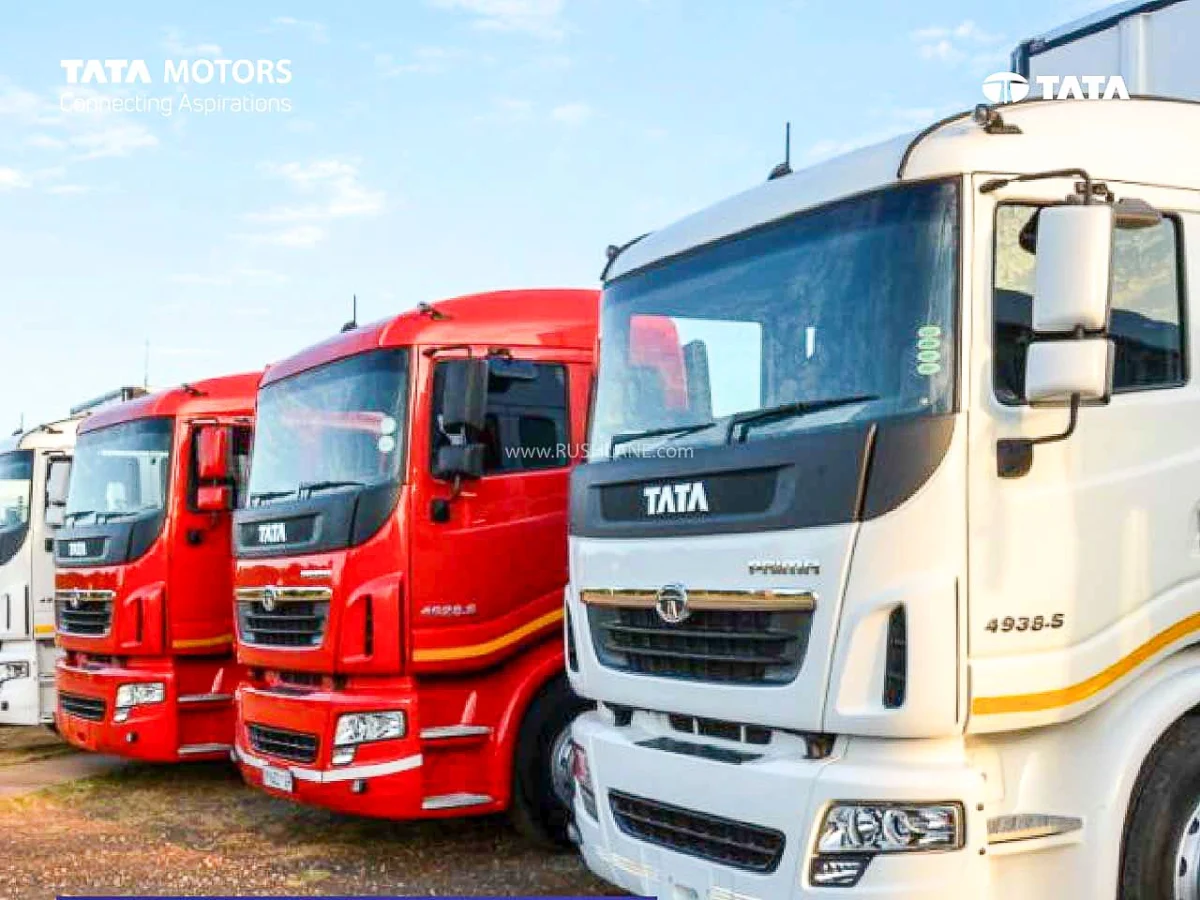
Tata Motors re-established its dominance with 34,733 units sold, commanding a 34.85% market share. The company’s 32.76% YoY growth was significantly higher than the industry average, suggesting that its recent product refreshes and focus on "Smart" trucks are resonating with buyers.

Mahindra & Mahindra: The Rural Specialist
Mahindra retained the second spot with 26,055 units. Given Mahindra’s traditional strength in the rural and semi-urban markets, the 22.35% YoY growth aligns with the broader trend of rural recovery. Mahindra continues to lead the small commercial vehicle (SCV) sub-segment, which is vital for agricultural logistics.
Ashok Leyland and VECV: The Heavy Hitters
Ashok Leyland posted 17,691 units, showing a 16.19% YoY growth and a very strong 15.35% sequential (MoM) growth. This suggests a late-month surge in fleet orders for their heavy-duty modular platforms. VE Commercial Vehicles (a Volvo-Eicher joint venture) also performed well with 8,724 units, up 15.21% YoY.
Notable Mentions
- Force Motors: Recorded the highest MoM growth among major manufacturers at 28.83% (2,610 units), likely driven by increased demand for ambulances and school buses as the academic year and healthcare projects ramped up.
- SML Isuzu: The only major manufacturer to see a decline, with sales easing 3.30% to 1,845 units, reflecting perhaps a localized supply chain issue or a shift in competitive preference in the bus segment.
Implications: What This Means for the Indian Economy
The July 2026 retail data carries implications that extend far beyond the automotive sector.
1. Logistics and Inflation
The 24% growth in CV sales suggests that transport capacity is expanding rapidly. While this is necessary to support a growing GDP, it also reflects higher demand for freight. If the supply of vehicles keeps pace with demand, it could help stabilize logistics costs, which is a critical factor in controlling wholesale inflation.
2. Infrastructure as an Engine
The 16.7% growth in HCVs is a testament to the "multiplier effect" of government infrastructure spending. As more highways, bridges, and dedicated freight corridors (DFCs) are completed, the demand for high-tonnage, high-efficiency trucks increases. This creates a virtuous cycle where better roads lead to better vehicles, which in turn leads to more efficient trade.
3. The Green Mandate
The rise in EV and CNG adoption is a positive sign for India’s COP commitments. The jump in EV share to 3.57% suggests that the "early adopter" phase is ending and the "early majority" phase is beginning for electric CVs. This will likely lead to further investments in charging infrastructure specifically designed for heavy vehicles.

4. Rural Empowerment
The fact that rural growth (29.37%) is outstripping urban growth (19.36%) indicates a fundamental strengthening of the bottom-of-the-pyramid economy. When rural entrepreneurs invest in commercial vehicles, it signifies confidence in long-term income stability and better connectivity between farms and markets.
Conclusion
July 2026 has set a high benchmark for the Indian commercial vehicle industry. The convergence of technological innovation (EVs), infrastructure-led demand (HCVs), and a vibrant rural economy has created a "perfect storm" for growth.
However, challenges remain. The industry must navigate fluctuating fuel prices, potential interest rate adjustments by the RBI, and the ongoing global supply chain sensitivities. Nevertheless, if the July numbers are any indication, the Indian CV sector is not just moving; it is accelerating toward a future defined by higher volumes, cleaner fuels, and deeper penetration into the heart of the country. For investors, policymakers, and industry stakeholders, the message is clear: the wheels of the Indian economy are turning faster than ever.
