

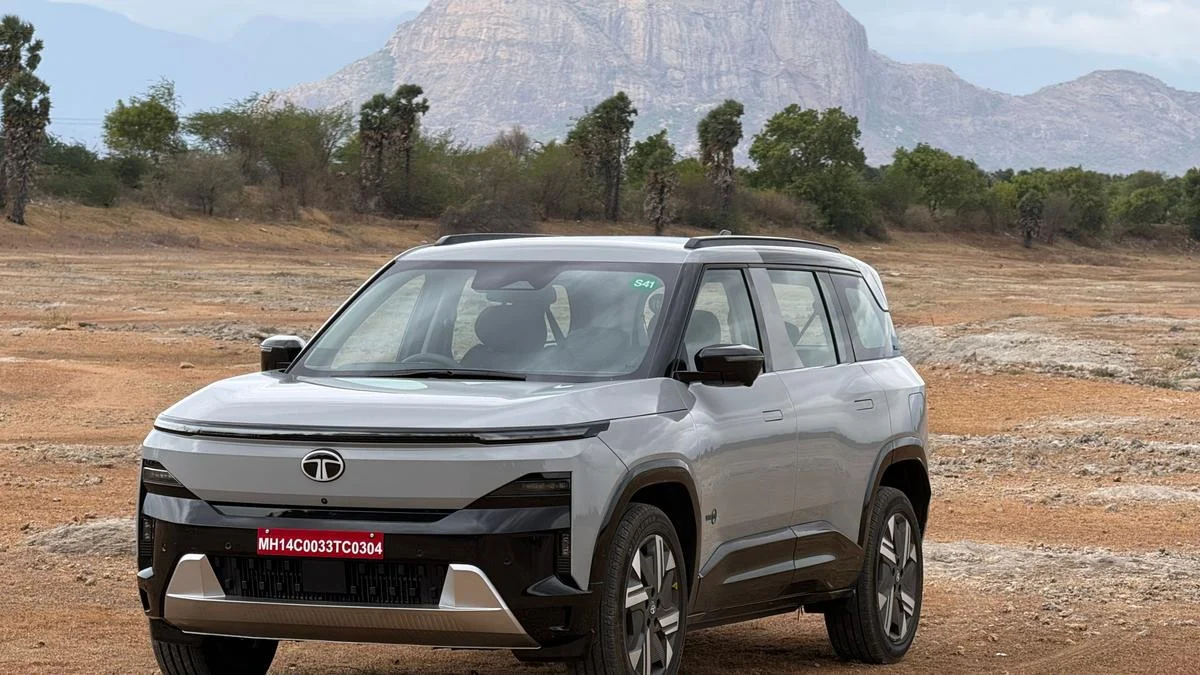
The automotive industry is often defined by cycles of nostalgia and innovation. Occasionally, a manufacturer manages to strike a perfect chord between the two. With the unveiling and subsequent test-driving of the Tata Sierra.ev, Tata Motors appears to have done more than just revive a storied nameplate; they have arguably set a new benchmark for what a homegrown electric vehicle can achieve.
After an exhaustive day of testing across the diverse terrains surrounding Coimbatore—spanning congested city arteries, high-speed expressways, a controlled test track, and a punishing off-road circuit—the verdict is clear: the Sierra.ev is a sophisticated, multi-dimensional powerhouse that signals Tata’s transition from an EV pioneer to a dominant master of the craft.
1. Main Facts: Specifications and Market Positioning
The Tata Sierra.ev is positioned as a premium mid-size electric SUV, designed to bridge the gap between mass-market commuters and luxury electric offerings. It is built on Tata’s dedicated ‘Acti.ev’ architecture, which allows for greater spatial efficiency and superior driving dynamics compared to internal combustion engine (ICE) conversions.
The Power Unit
The flagship variant tested features a robust 75 kWh battery pack. This unit powers a sophisticated dual-motor Quad Wheel Drive (QWD) system. The rear axle is driven by a 234 bhp motor, while the front is supported by a 138 bhp unit, resulting in a combined torque output of 504 Nm. For those prioritizing efficiency over all-weather traction, Tata also offers a 63 kWh variant featuring a single rear-mounted motor.
Performance and Range
On paper, the Sierra.ev is a titan. It boasts a claimed MIDC (Modified Indian Driving Cycle) range of 665 km for the 75 kWh version. In terms of raw speed, the dual-motor setup propels the SUV from 0 to 100 km/h in just 5.8 seconds, placing it among the fastest vehicles currently manufactured in India.

Pricing
The Sierra.ev enters the market with a competitive pricing strategy:
- Base Range: Starting at INR 18.79 Lakh
- Flagship Range: Topping out at INR 24.79 Lakh (ex-showroom)
2. Chronology of the Drive: From Urban Chaos to Off-Road Silence
To truly understand the Sierra.ev, one must experience it across the spectrum of Indian driving conditions. Our test day was structured to push the vehicle through every conceivable scenario.
Phase 1: The Urban Commute
The morning began in the heart of Coimbatore. In stop-and-go traffic, the Sierra.ev immediately distinguishes itself through its Frequency Dependent Damping (FDD) suspension. Unlike traditional setups that can feel brittle over sharp edges, the FDD system adapts in real-time. Potholes and expansion joints were neutralized with a "rounded-off" feel, preventing the jarring thuds usually associated with heavy battery-laden SUVs. The steering, calibrated for ease of use, remained light and effortless, making the vehicle’s footprint feel much smaller than it actually is.
Phase 2: Highway Stability and Refinement
As we transitioned to the open highway, the Sierra.ev’s character shifted. The steering gained a reassuring weight, and the low center of gravity—a natural benefit of the floor-mounted battery pack—kept the chassis exceptionally flat through long, sweeping curves. At cruising speeds, the cabin remained a sanctuary of silence, largely free from tire roar and mechanical hum. However, it was here that we noted a minor blemish: wind noise around the A-pillars became audible above 100 km/h, a contrast to the otherwise impeccable refinement.
Phase 3: The Test Track (Performance Testing)
At the track, the "5.8-second" claim was put to the test. What is most impressive is not the violence of the acceleration, but its linearity. Tata’s engineers have avoided the "head-snap" jerky start common in many EVs, opting instead for a progressive surge that feels more akin to a high-displacement naturally aspirated engine. During high-speed braking exercises, the SUV remained "arrow straight," with the progressive brake pedal feel allowing for precise modulation without any nervous pitching.

Phase 4: The Off-Road Challenge
The day concluded with a demanding off-road course. The Quad Wheel Drive system proved its worth here. Unlike many "soft-roaders," the Sierra.ev managed rocky inclines and loose silt with electronic precision. The instant torque delivery of the electric motors allowed for low-speed crawling that would be difficult in a manual diesel 4×4, proving that the Sierra name still carries its original "adventure" DNA.
3. Supporting Data: Technology and Interior Ergonomics
The Sierra.ev is not merely a mechanical achievement; it is a digital one. The interior marks a significant step up in material quality for Tata Motors.
The "Triple Screen" Cockpit
The dashboard is dominated by three high-resolution displays. While the primary screens handle instrumentation and navigation, the third display introduces AirConsole technology. This allows passengers to use their smartphones as controllers for multiplayer gaming—a thoughtful inclusion designed to pass the time during DC fast-charging sessions.
Immersive Audio
One of the standout features is the Dolby Atmos-enabled JBL Black audio system. The soundstage is expansive, providing a level of clarity and bass depth that rivals premium European luxury brands. It transforms the cabin from a mode of transport into a mobile listening room.
Charging Infrastructure Data
Tata has addressed "range anxiety" with a two-pronged approach:

- Real-world Range: While the MIDC claim is 665 km, our testing suggests a realistic 450–500 km range in mixed driving conditions.
- Fast Charging: The vehicle is compatible with high-capacity DC chargers. Tata claims that 263 km of range can be added in just 15 minutes, effectively making interstate travel a viable reality for the average owner.
4. Official Philosophy: Tata’s "No Compromise" Approach
While official quotes from the boardroom were not the focus of this drive, the vehicle’s design philosophy speaks volumes about Tata Motors’ current strategy. The Sierra.ev represents the "New Paradigm" of the company—one where the product is no longer judged simply as a "good Indian car," but as a "globally competitive vehicle."
The inclusion of features like Auto Park Assist, Summon Mode, and Reverse Assist indicates that Tata is targeting a tech-savvy demographic that expects Level 2 ADAS (Advanced Driver Assistance Systems) as standard. The company’s decision to maintain a physical presence for critical controls while digitizing the rest of the experience shows a maturity in UI/UX design that was missing in earlier EV iterations like the initial Nexon EV.
Furthermore, the focus on Frequency Dependent Damping suggests an official acknowledgement that Indian road conditions require specialized engineering that global platforms often overlook. By tuning the suspension specifically for the "broken tarmac" reality of the subcontinent, Tata has created a unique selling proposition (USP) that competitors may struggle to match.
5. Implications: The Competitive Landscape and Future Outlook
The arrival of the Sierra.ev sends a clear signal to the rest of the industry. The mid-size EV SUV segment is about to become the primary battleground for Indian automotive supremacy.
Competition
The Sierra.ev faces stiff competition from:

- Hyundai Creta Electric: Expected to leverage Hyundai’s vast service network and brand loyalty.
- MG ZS EV: The current incumbent, known for its balanced performance and tech.
- Mahindra BE 6: The upcoming challenger from Tata’s primary domestic rival, focusing on "sporty" EV dynamics.
Why the Sierra.ev Holds the Edge
The Sierra.ev’s advantage lies in its completeness. While some rivals focus on range and others on features, the Sierra.ev excels in all-round versatility. It offers the performance of a sports sedan, the comfort of a luxury barge, and the utility of a 4×4.
The Legacy Factor
The "Sierra" brand name carries immense weight in India. By successfully marrying the iconic silhouette (including the signature wrap-around rear glass look) with futuristic electric propulsion, Tata has tapped into a multi-generational appeal. It appeals to the 40-year-old who remembers the original 1991 Sierra, and the 25-year-old looking for a sustainable, high-tech status symbol.
Conclusion: The Final Verdict
The Tata Sierra.ev is a landmark achievement. It is arguably the most "complete" vehicle Tata Motors has ever produced. It does not ask the buyer to sacrifice performance for range, or comfort for off-road capability.
While there are minor areas for improvement—specifically the refinement of wind noise at high speeds and the consistency of the one-touch window electronics—these are small shadows on an otherwise brilliant sun. For the buyer looking to transition to electric mobility without losing the soul of a "proper" SUV, the Sierra.ev is not just a choice; it is currently the definitive answer in its segment. If this is the future of Indian motoring, the future looks exceptionally bright.
Tata Sierra.ev Price Range: INR 18.79 – 24.79 Lakh (ex-showroom)
In association with Motorscribes and The Hindu.
