

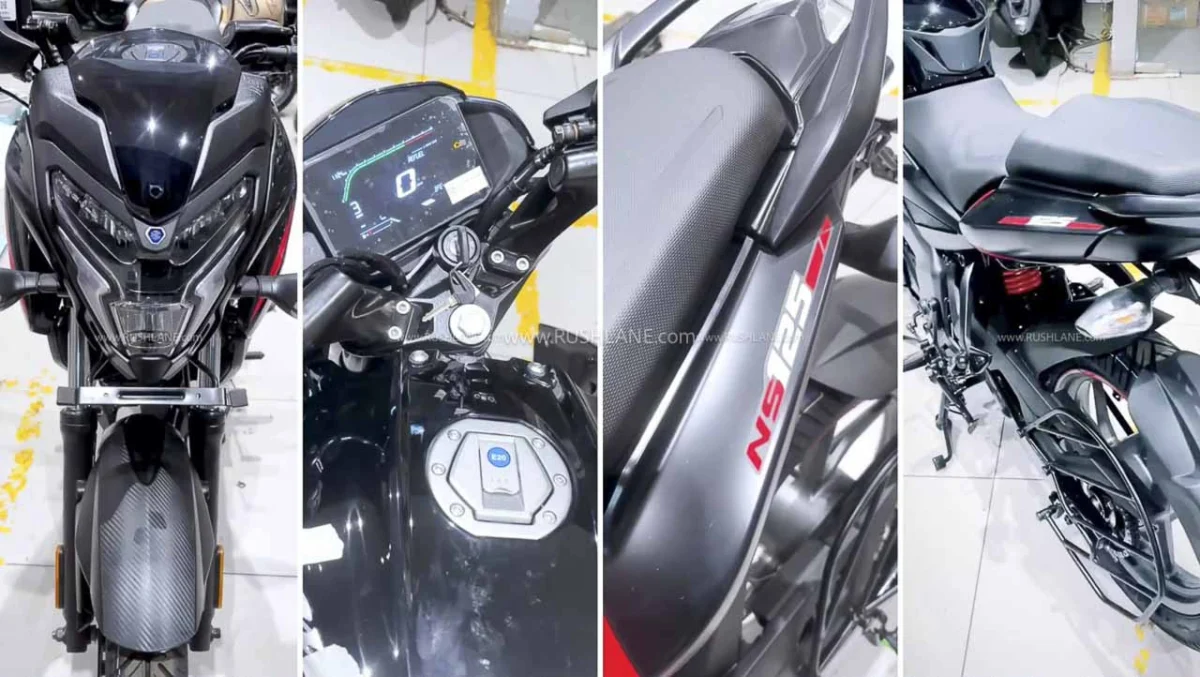
The Indian motorcycling landscape is currently witnessing a significant shift in the 125cc segment. Once a category defined solely by fuel economy and utilitarian design, it has evolved into a battleground for "premium-commuters"—motorcycles that offer the aesthetics of larger sportbikes with the running costs of an entry-level machine. At the forefront of this evolution is Bajaj Auto, a manufacturer currently engaged in an aggressive product refresh cycle. The latest development in this "Pulsar update spree" is the appearance of the 2026 Bajaj Pulsar NS125 at dealer showrooms, signaling an imminent launch and a strategic move to consolidate market share against increasingly sophisticated rivals.
Main Facts: The Evolution of the NS125
The Pulsar NS (Naked Sport) series has long been the flagbearer for performance-oriented styling in Bajaj’s portfolio. The NS125, the entry point to this sub-brand, is now receiving a series of updates aimed at modernizing its appeal without inflating its price point beyond the reach of its core demographic.
1. Technological Overhaul: The New LCD Console
The most striking update revealed by the recent spy shots (credited to the Bajaj Expert channel) is the transition to a fully digital instrument cluster. For years, the NS range was criticized for its aging semi-digital unit. The 2026 model addresses this with a revised LCD screen featuring:
- Centralized Speed Readout: A large, clear digital speedometer.
- Horizontal Tachometer: A digital bar running across the upper section of the screen, featuring colored markings to provide visual contrast and better readability at high RPMs.
- Gear Position Indicator: A feature previously reserved for higher-displacement motorcycles, now becoming standard in the premium 125cc class.
- Fuel Management Data: Including a fuel gauge, refuel warning, and instantaneous fuel economy (IFE) readout, catering to the mileage-conscious Indian rider.
- Clock and Trip Meters: Standard digital fare for modern commuting.
While the version spotted at the dealership utilizes an LCD screen, industry analysts speculate that Bajaj may introduce a higher-spec variant featuring a TFT display and Bluetooth connectivity, similar to what has been seen on the NS200 and the upcoming NS400Z.

2. Aesthetic Refinement and New Colorways
The 2026 NS125 retains the aggressive "Perimeter Frame" silhouette that has made the NS series iconic. However, Bajaj has introduced a new black-red color scheme that enhances the bike’s muscularity. Glossy black bodywork is now contrasted with sharp red graphics on the tank extensions, belly cowl, and rear panels.
Additionally, a second colorway featuring fluorescent yellow accents was spotted, suggesting that Bajaj is leaning into high-visibility, "street-style" aesthetics to attract younger buyers. The split-seat setup, underbelly exhaust, and the signature wolf-eyed headlamp assembly remain, though the latter continues to house a halogen bulb in the base variants.
3. Mechanical Continuity and Compliance
Under the skin, the NS125 remains a familiar beast. It is powered by the 124.45cc, air-cooled, single-cylinder engine. A crucial update visible in the spy shots is the E20 sticker on the fuel tank cap, confirming that the motorcycle is fully compliant with India’s latest ethanol-blended fuel requirements.
Chronology: A Season of Updates
The emergence of the NS125 at dealerships is not an isolated event; it is part of a calculated, multi-month rollout strategy by Bajaj Auto.

- August 2025: Bajaj kicked off its refresh cycle by updating the "Classic" Pulsar 125, the Pulsar 150, and the N160. These updates focused on digital consoles and new graphics.
- September 2025 (Early): Rumors began circulating regarding the updates for the "N" and "NS" sub-families. The N125 was identified as a key target for modernization to compete with the TVS Raider 125 and the Hero Xtreme 125R.
- September 2025 (Mid): Spy shots emerged of the NS200 and N250 testing with USD (Upside Down) forks and new TFT screens.
- Late September 2025: The NS200 and the highly anticipated NS400Z were spotted arriving at dealership yards.
- Current Status: The 2026 Pulsar NS125 has been photographed in production-ready form at a dealer showroom, suggesting that the official price announcement and deliveries are likely to commence before the peak of the Indian festive season (Diwali).
Supporting Data: Specifications and Competitive Positioning
To understand where the new NS125 fits, one must look at the current Bajaj 125cc hierarchy. Bajaj currently offers three distinct flavors of the 125cc Pulsar, each catering to a different rider profile.
Technical Specification Comparison
| Feature | Pulsar 125 (Classic) | Pulsar N125 | Pulsar NS125 (2026) |
|---|---|---|---|
| Engine Displacement | 124.38cc | 124.59cc | 124.45cc |
| Peak Power | 11.8 PS @ 8,500 rpm | 12.0 PS @ 8,500 rpm | 12.0 PS @ 8,500 rpm |
| Peak Torque | 10.8 Nm @ 6,500 rpm | 11.0 Nm @ 6,000 rpm | 11.0 Nm @ 7,000 rpm |
| Chassis Type | Double Cradle | Diamond Frame | Perimeter Frame |
| Rear Suspension | Twin Shock | Monoshock | Monoshock (Nitrox) |
| Instrument Cluster | Digital (Updated) | LCD with Connectivity | New LCD (Spied) |
Pricing Dynamics
While official prices for the 2026 NS125 update are yet to be released, the current price list provides a baseline:
- Pulsar N125: ~Rs. 92,270 (Ex-showroom)
- Pulsar NS125 (Outgoing): ~Rs. 99,622 (Ex-showroom)
- Pulsar 125 (Classic Updated): ~Rs. 1,04,318 (Ex-showroom)
Industry experts anticipate a marginal price hike of Rs. 2,000 to Rs. 4,000 for the 2026 NS125, given the addition of the digital console and updated graphics.
Official Responses and Industry Analysis
While Bajaj Auto has not released a formal press statement regarding the specific units spotted at dealerships, the company’s leadership has been vocal about their "Premiumization" strategy. During recent investor calls, Bajaj management emphasized the need to "future-proof" the Pulsar brand by integrating technologies that were previously the domain of the 200cc+ segment.

The "Raider" Factor
Market analysts point out that Bajaj’s urgency is driven by the success of the TVS Raider 125. The Raider disrupted the segment by offering a TFT screen, riding modes, and a futuristic design. By updating the NS125 with a digital cockpit and refreshed styling, Bajaj is directly responding to the market’s demand for "gadgetry" alongside performance.
Dealer Insights
Dealers who have received the initial batches of the updated NS125 report high levels of inquiry. "The NS125 has always been a favorite for college students. With the new digital meter and the red-black color, it looks much closer to the NS200, which is exactly what the younger crowd wants," noted a Mumbai-based Bajaj dealer principal.
Implications: What This Means for the Market
The launch of the updated NS125 carries several implications for both Bajaj Auto and the wider Indian motorcycle industry.
1. Consolidation of the 125cc Segment
By offering three different 125cc models, Bajaj is effectively "bracketing" the competition. The Classic 125 appeals to traditionalists, the N125 offers a modern urban commuter feel, and the NS125 targets the aspirational performance seeker. This multi-pronged approach makes it difficult for competitors to find a gap in Bajaj’s lineup.

2. The Death of the Analog Needle
The appearance of the LCD cluster on the NS125 marks the beginning of the end for analog instrumentation in the 125cc premium segment. As manufacturing costs for digital displays decrease, they are becoming the standard "entry stakes" for any manufacturer wishing to be taken seriously in the Indian market.
3. Preparation for the NS400Z Era
The NS125 update ensures visual consistency across the entire NS family. With the NS400Z set to become the new flagship of the range, it is vital that the entry-level models (NS125 and NS160/200) share a similar design language and feature set to maintain brand equity.
4. Focus on Fuel Efficiency (E20)
As India moves toward stricter emission norms and higher ethanol blending, the visible E20 compliance on the new NS125 highlights Bajaj’s commitment to sustainable engineering. This is a crucial selling point for long-term ownership, ensuring the bike remains relevant as fuel standards evolve.
Conclusion
The 2026 Bajaj Pulsar NS125 is more than just a cosmetic refresh; it is a tactical update designed to keep one of India’s most popular nameplates at the top of the sales charts. By blending the proven performance of the perimeter frame and the 12 PS engine with a modern digital interface and striking new colors, Bajaj is ensuring that the NS125 remains the default choice for the "young and restless" of India. As these bikes begin to fill showroom floors, the competition—Hero, TVS, and Honda—will undoubtedly be watching closely, as the battle for 125cc supremacy enters its most high-tech chapter yet.
