

The landscape of the Indian luxury automotive market is undergoing a seismic shift. While the era of the flagship sedan and the high-performance SUV remains robust, a new contender has emerged at the summit of executive travel: the ultra-luxury Multi-Purpose Vehicle (MPV). At the forefront of this movement is the 2026 Mercedes-Benz V-Class. No longer merely a "well-appointed van," the latest iteration of the V-Class has been reimagined as a bespoke mobile sanctuary, combining the engineering prowess of the Stuttgart-based automaker with a level of interior refinement previously reserved for the S-Class.
Main Facts: A Paradigm Shift in Luxury Mobility
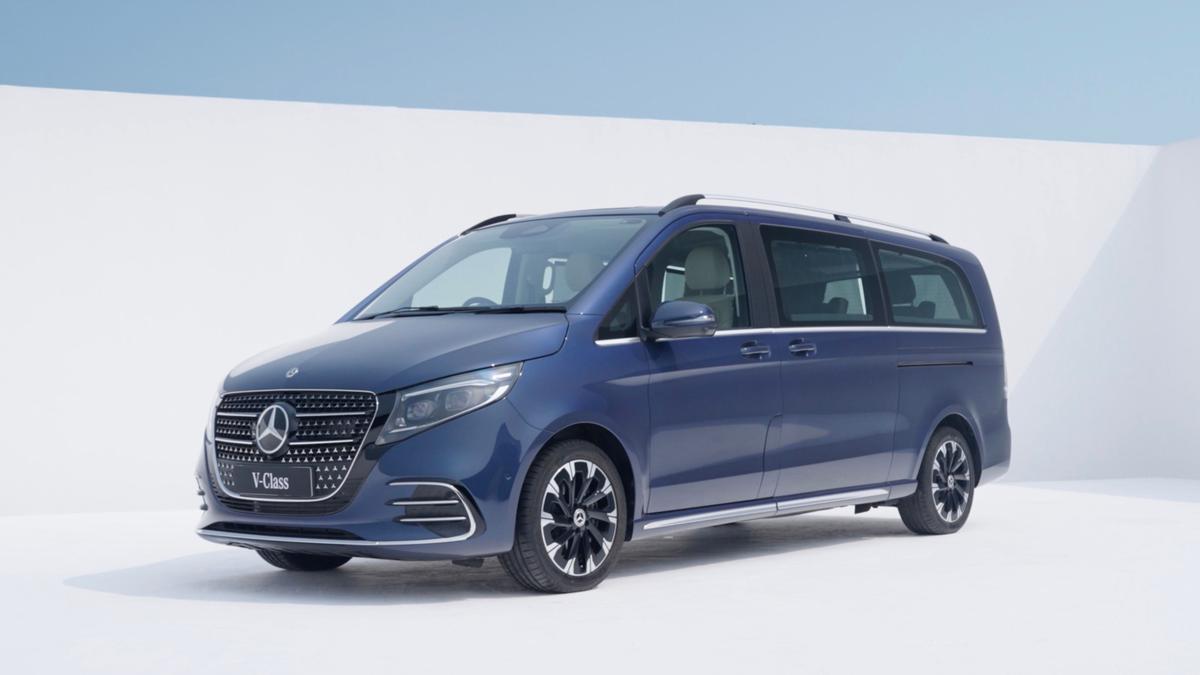
The 2026 Mercedes-Benz V-Class arrives in India with a clear mission: to dominate the high-end MPV space by offering a blend of space, technology, and prestige that its predecessors only hinted at. Offered exclusively in the Extra Long Wheelbase (ELWB) variant, the vehicle measures a staggering 5,370 mm in length with a wheelbase of 3,430 mm. This footprint provides the foundation for an interior volume that defies conventional luxury car standards.
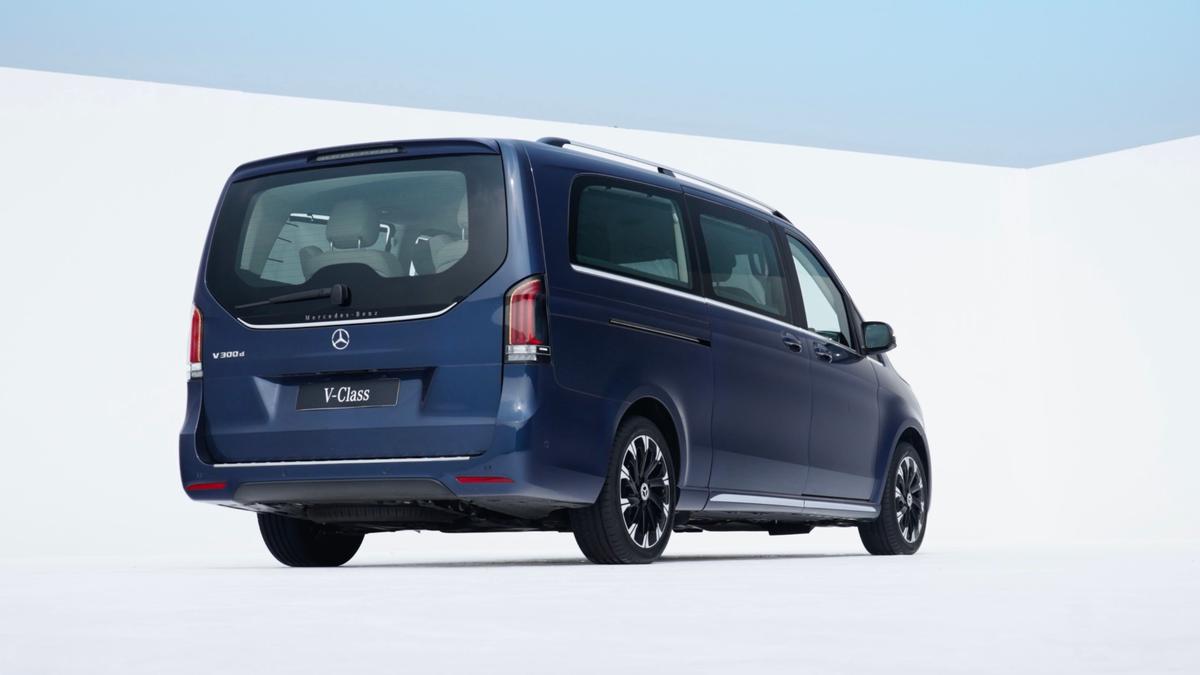
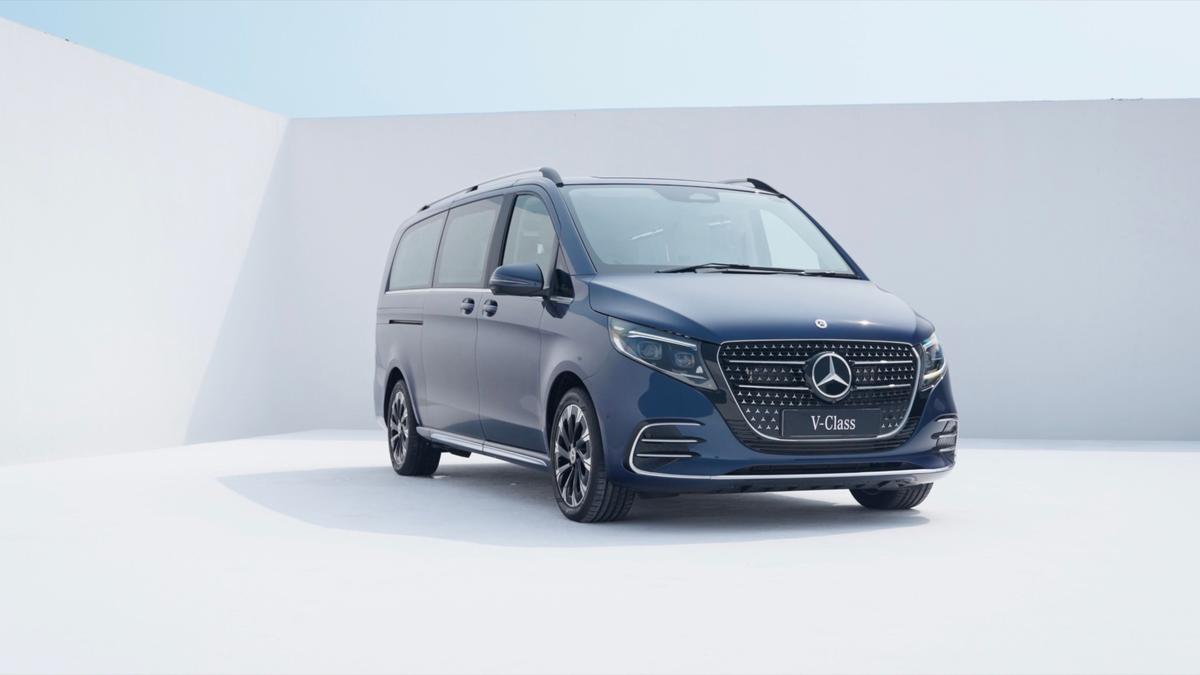
The most significant takeaway from the 2026 launch is the departure from functional design toward emotional appeal. Mercedes-Benz has standardized the AMG Line exterior package for the Indian market, ensuring that the V-Class sheds any commercial connotations. With a star-patterned radiator grille, aggressive bumpers, and 18-inch AMG light-alloy wheels, the V-Class now commands a presence that is both athletic and authoritative.
Key to this new identity is the pricing strategy. By initiating local production, Mercedes-Benz India has positioned the V-Class at an introductory price of INR 1.40 crore. This strategic move places it in a unique competitive vacuum, significantly undercutting rivals like the Lexus LM 350h, which commands nearly double the price, while offering a more prestigious badge and more robust engineering than lower-tier competitors.
Chronology: From Niche Import to Local Powerhouse
The journey of the V-Class in India is a testament to Mercedes-Benz’s ability to read shifting consumer preferences.
- 2019: The Introduction: Mercedes-Benz first launched the V-Class in India, testing the waters of the luxury van segment. At the time, the market was skeptical of a high-end MPV, often associating the body style with commercial use.
- 2020-2022: Market Education: Despite the initial hurdles, the V-Class found favor among celebrities, high-net-worth individuals (HNWIs), and large corporate houses. The realization that an MPV could offer more "lounge room" than a long-wheelbase sedan began to take hold.
- 2024: The Strategic Pivot: Observing the success of competitors like the Toyota Vellfire and the growing interest in the Lexus LM, Mercedes-Benz decided to overhaul the V-Class specifically for the Indian context.
- 2025-2026: The New Era: The 2026 model marks the transition to local assembly and the introduction of "India-first" technical configurations, such as the standard inclusion of AIRMATIC air suspension across all powertrains.
Supporting Data: Engineering and Interior Sophistication
Powertrain and Performance
For the first time in the Indian market, Mercedes-Benz is offering a choice between petrol and diesel powertrains, catering to the diverse fuel preferences of Indian luxury buyers.
- The V300 (Petrol): Powered by a 2.0-liter four-cylinder turbocharged engine, it generates 170 kW (228 bhp). This unit is enhanced by a 48V mild-hybrid system that adds an additional 15 kW (20 bhp) of boost, ensuring smoother start-stop transitions and improved low-end torque.
- The V300d (Diesel): A staple for long-distance cruisers, the 2.0-liter diesel unit delivers 174 kW (233 bhp). Known for its torque-rich delivery, this engine is ideal for maintaining effortless speeds even when the vehicle is fully loaded with six passengers and luggage.
Both engines are mated to the 9G-TRONIC automatic transmission, a gearbox renowned for its ability to keep the engine in its most efficient and quietest power band.
The AIRMATIC Advantage
Perhaps the most critical technical specification for the Indian market is the inclusion of AIRMATIC air suspension. India is the first global market to receive this configuration as a standard feature on these specific powertrains. The system utilizes frequency-selective damping to adjust to road conditions in real-time. On the undulating surfaces and unpredictable potholes of Indian highways, AIRMATIC ensures a "magic carpet" ride. Furthermore, the system automatically lowers the vehicle at high speeds to improve aerodynamics and stability, and it can be manually raised to clear significant obstacles.
The Cabin: A Tri-Level Configuration
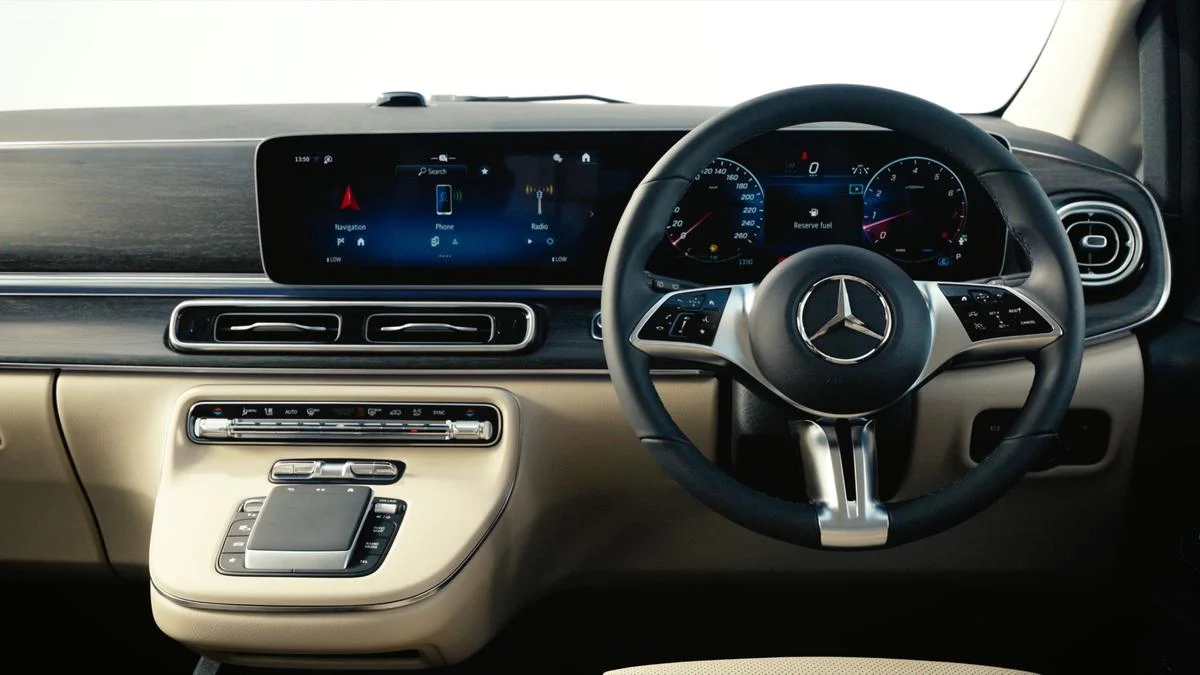
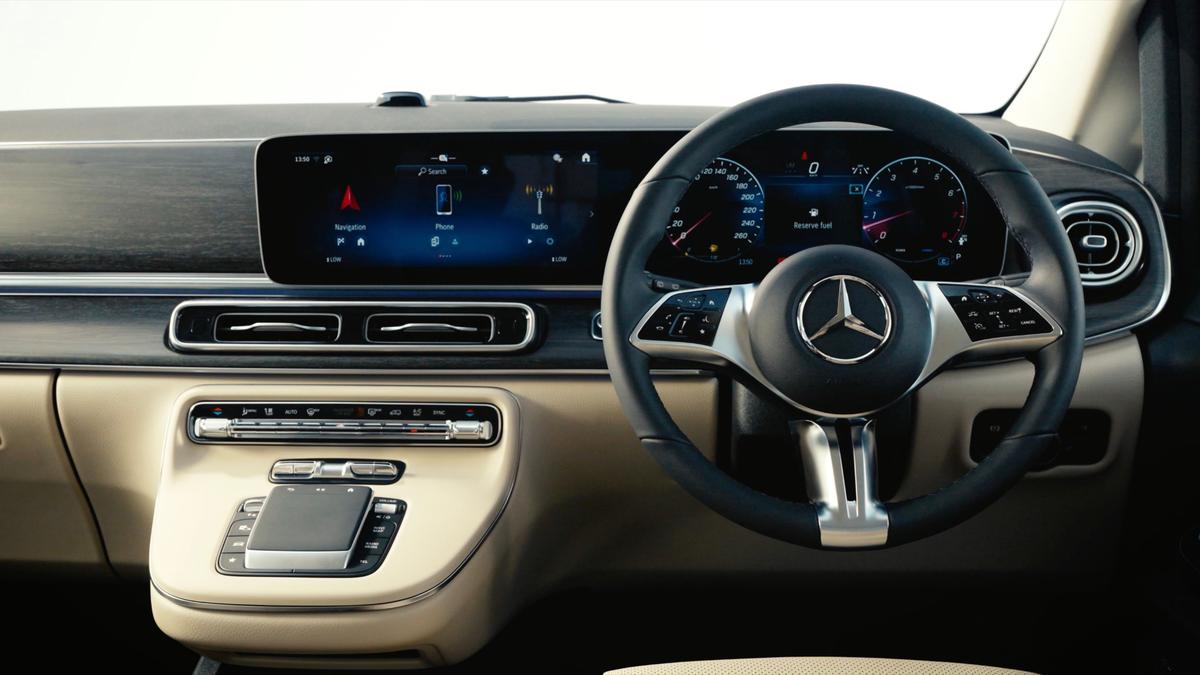
The interior of the V-Class is where the "bespoke luxury" claim is substantiated. The 2026 model offers three distinct seating architectures:
- Standard Three-Row: A traditional layout optimized for large families.
- Executive Lounge: The third row is removed, allowing the second-row captain seats to slide back on floor-mounted rails, creating a cavernous amount of legroom comparable to a private jet.
- Business Lounge: The second-row seats are reversed to face the third row, facilitating face-to-face meetings or family interactions during transit.
The second-row seats themselves are masterpieces of ergonomic design, featuring three-stage ventilation, massage functions, calf support, and integrated wireless charging. In a segment-first, the third-row passengers also enjoy ventilated seats, ensuring that there is no "second-class" seating in the vehicle.
Official Responses: Commitment to Local Excellence
While Mercedes-Benz executives have traditionally focused on the S-Class and G-Wagon as their brand pillars in India, the rhetoric surrounding the 2026 V-Class suggests a new priority. Official communications from Mercedes-Benz India emphasize that the V-Class is no longer a "side project" but a core component of their "Top End Vehicle" (TEV) strategy.
The decision to initiate local production at the Chakan plant in Pune is a significant official statement. It signals a long-term commitment to the Indian market, moving away from the volatility of Completely Built Unit (CBU) import duties. By localizing the assembly of the V-Class, Mercedes-Benz is not only able to offer a more competitive price point but also ensure a more robust supply chain for parts and specialized maintenance, addressing a common concern among luxury MPV owners.
"The 2026 V-Class is a response to the evolving needs of our Indian customers who demand the space of a van with the soul of a Mercedes-Benz," a company spokesperson noted during the unveiling. "By bringing AIRMATIC as standard and introducing the petrol mild-hybrid, we are setting a new benchmark for what a luxury MPV can be in this geography."
Implications: Reshaping the Competitive Landscape
The arrival of the 2026 V-Class has profound implications for the Indian automotive market, affecting competitors, consumers, and the definition of luxury travel.
1. The Value Proposition Disruption
At INR 1.40 crore, the V-Class creates a massive headache for Lexus and Toyota. The Lexus LM 350h, while ultra-luxurious, sits in a price bracket (approx. INR 2.5 crore) that is difficult to justify for many corporate fleets and families when a Mercedes-Benz alternative exists for over a crore less. The V-Class effectively bridges the gap between the premium Toyota Vellfire and the ultra-exclusive Lexus LM, potentially siphoning off customers from both ends.
2. The Decline of the Chauffeur-Driven Sedan?
For decades, the E-Class and S-Class were the default choices for the Indian elite. However, the V-Class offers something a sedan cannot: vertical space and the ability to conduct business meetings in a face-to-face lounge setting. As traffic congestion in Indian metros increases, the "mobile office" utility of the V-Class becomes more attractive. We may see a shift where HNWIs keep a sedan for self-driving or formal arrivals but use the V-Class for daily commutes and family weekend trips.
3. Safety as a Standard, Not an Option
The inclusion of seven airbags, including full-length window airbags from the A to D pillars, sets a high safety bar. With a comprehensive suite of ADAS (Advanced Driver Assistance Systems) including Active Distance Assist and Blind Spot Assist, Mercedes-Benz is challenging the notion that large vehicles are inherently more difficult or dangerous to operate in urban environments. The 360-degree camera and Active Parking Assist are not just "features"—they are necessities for a vehicle of this size, and their inclusion as standard equipment will likely force other manufacturers to follow suit.
4. The "Lifestyle" Vehicle Emergence
Beyond business, the V-Class taps into the growing trend of luxury domestic travel. With the improvement of highway infrastructure like the Delhi-Mumbai Expressway, wealthy families are increasingly opting for road trips. The V-Class, with its massive luggage capacity (even with six seats occupied) and Burmester Dolby Atmos sound system, is perfectly positioned as the ultimate intercity cruiser.
Conclusion
The 2026 Mercedes-Benz V-Class is more than a mid-cycle refresh; it is a fundamental repositioning of what the "Three-Pointed Star" represents in the MPV segment. By combining local production, India-specific engineering like the AIRMATIC suspension, and an aggressive pricing strategy, Mercedes-Benz has transformed a functional people-mover into a legitimate object of desire. As the Indian luxury market continues to mature, the V-Class stands as a compelling argument that true luxury isn’t just about how fast you can go, but about how much space and comfort you can enjoy while getting there.
