

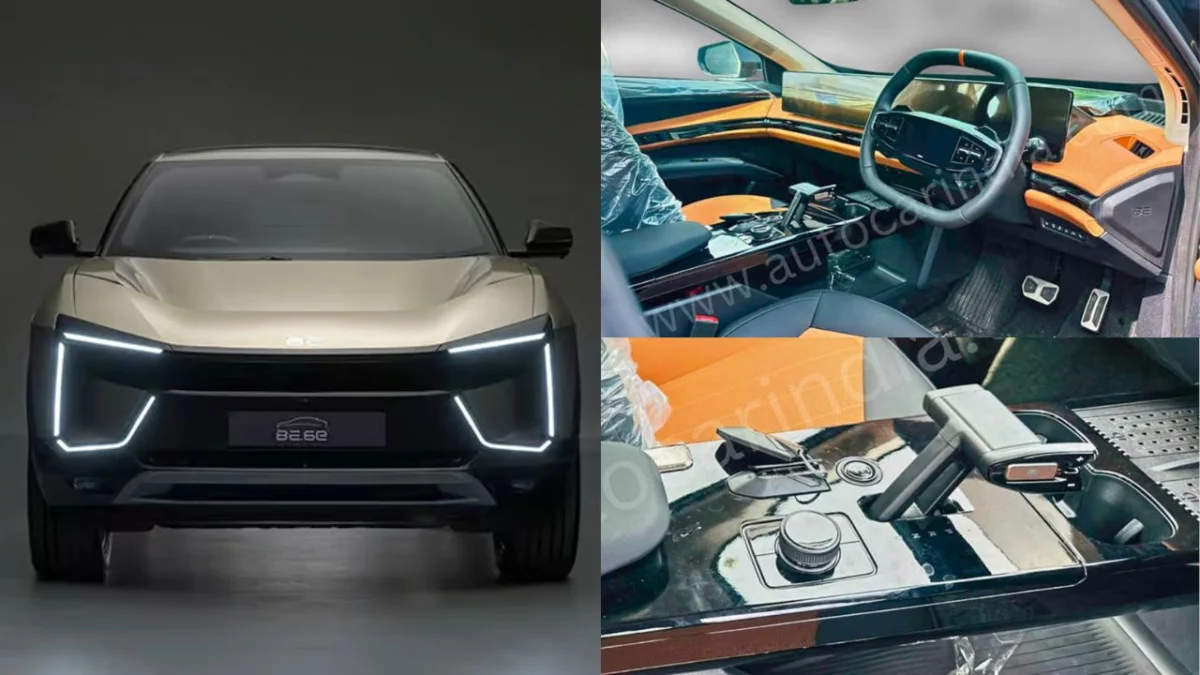
MUMBAI — As the Indian automotive landscape accelerates its transition toward electrification, Mahindra & Mahindra is preparing to deliver a significant blow to its competitors with the upcoming reveal of the Mahindra BE 6 Sporteq. Scheduled for a high-profile unveiling on August 15, 2026—a date that has become synonymous with Mahindra’s most pivotal brand announcements—the BE 6 Sporteq represents a refined, tech-heavy evolution of the company’s "Born Electric" vision.
Recent leaked images of the vehicle’s interior have sent ripples through the industry, revealing a cabin that pivots from avant-garde experimentalism toward a more sophisticated, feature-rich environment designed to satisfy the growing demands of premium EV buyers. The Sporteq variant appears to be Mahindra’s answer to the high-tech offerings from rivals like Tata Motors, specifically targeting the upcoming Tata Sierra EV.
Main Facts: A Digital Sanctuary and Ergonomic Evolution
The leaked images of the Mahindra BE 6 Sporteq interior suggest that the company is moving beyond the "minimalist-rugged" aesthetic of its current ICE (Internal Combustion Engine) lineup, opting instead for a "Digital First" philosophy. The updates are not merely cosmetic; they represent a fundamental shift in how the driver and passengers interact with the vehicle.
The Triple-Screen Command Center
The most striking feature revealed in the leak is the massive triple-screen display setup. While the standard BE 6 was already expected to feature a dual-screen layout, the Sporteq version elevates this to a panoramic triple-display housed under a single, seamless glass panel.
- Driver Display: A 12.3-inch digital instrument cluster providing real-time telemetry, navigation, and ADAS (Advanced Driver Assistance Systems) feedback.
- Central Infotainment: A secondary 12.3-inch touchscreen dedicated to media, vehicle settings, and climate control.
- Co-Driver Screen: The third 12.3-inch screen is specifically for the front passenger, allowing for independent media streaming, gaming, or monitoring trip data without distracting the driver.
Industry analysts suggest that Mahindra will likely implement a privacy filter on the third screen to ensure the driver remains focused on the road, a safety feature becoming standard in high-end European electric vehicles.

The Departure of the ‘Halo Loop’
Perhaps the most significant ergonomic change is the removal of the physical partition, often referred to as the "halo loop," which previously separated the driver’s cockpit from the passenger area in earlier prototypes. While the partition gave the BE 6 a fighter-jet-inspired, driver-centric feel, it was criticized by some for making the cabin feel cramped and isolating the front passenger.
By removing this divider, Mahindra has opened up the center console, creating a more airy and communal atmosphere. This design change has also allowed for practical improvements, such as the addition of a second cup holder and a more accessible wireless charging pad.
Materiality and Color Palette
The Sporteq variant introduces a premium "Black and Tan" dual-tone theme. The dashboard and upper door trims are finished in a deep matte black, while the seats, lower dash, and steering wheel accents feature a rich tan leatherette (likely vegan leather, consistent with EV sustainability trends). This color scheme is intended to bridge the gap between "sporty" and "luxury," justifying the Sporteq moniker.
Chronology: The Journey of the BE 6
The development of the BE 6 Sporteq is a chapter in a much larger story that began in late 2022. Understanding the timeline helps contextualize why the Sporteq’s interior changes are so vital for Mahindra’s market position.
- August 2022 (The Genesis): Mahindra officially unveils its "Born Electric" vision in Oxfordshire, UK. The company showcases five upcoming electric SUVs under two new brands: XUV.e and BE. The BE 05 (later renamed BE 6) is positioned as a "Brave, Bold, and Authentic" electric SUV.
- Early 2024 (Testing Phase): Camouflaged mules of the BE 6 are spotted across India and Europe. Initial feedback from focus groups suggests that while the exterior design is revolutionary, the interior needs to feel more "premium" to compete with Hyundai and Tata.
- Late 2024 (The Tech Pivot): Mahindra realizes the "screen-war" in the Indian market is intensifying. Decisions are made to incorporate the triple-screen setup, originally intended only for the larger BE 07 and BE 09 models, into a special "Sporteq" trim for the BE 6.
- July 2026 (Official Teasers): Mahindra begins a coordinated social media campaign, teasing the "Sporteq" nameplate and hinting at a cabin that "redefines the cockpit."
- August 2026 (The Leak and Impending Launch): Detailed interior photos leak via enthusiast forums and automotive journalists, confirming the removal of the center partition and the inclusion of the co-driver screen just weeks before the official August 15th reveal.
Supporting Data: Performance and Architecture
While the interior is the focus of the recent leaks, the Sporteq variant sits atop the robust INGLO (Indian Global) platform. This modular skateboard architecture is the result of significant R&D investment and a strategic partnership with the Volkswagen Group for certain components.

Technical Specifications at a Glance:
| Feature | Specification (Estimated) |
|---|---|
| Battery Options | 59 kWh and 79 kWh (LFP Chemistry) |
| Drivetrain | Single Motor (RWD) / Dual Motor (AWD Optional) |
| Power Output | 286 bhp (Single Motor) |
| Torque | 380 Nm |
| Range (MIDC) | Up to 682 km (with 79 kWh battery) |
| 0-100 km/h | Under 7 seconds |
| Charging Speed | 175 kW DC Fast Charging (5% to 80% in 20 mins) |
The use of Lithium Iron Phosphate (LFP) cells is a strategic choice for the Indian market, offering better thermal stability and longevity in high-ambient-temperature environments. The INGLO platform also features a semi-active suspension system and a high-performance brake-by-wire system, ensuring that the "Sporteq" name translates to actual driving dynamics rather than just aesthetic upgrades.
Official Responses and Strategic Positioning
While Mahindra & Mahindra’s official spokespeople have declined to comment specifically on the leaked images, the company’s recent marketing communications provide a clear window into their strategy.
A senior executive at Mahindra’s Electric Vehicle Division recently noted, "Our BE (Born Electric) range is not just about changing the powertrain; it’s about reimagining the relationship between the car and the user. Every detail, from the haptics of the buttons to the interface of the screens, is designed to feel like a generation ahead."
Market Positioning
The BE 6 Sporteq is positioned as a "disruptor" in the mid-size electric SUV segment. Mahindra is targeting:
- Tech-Savvy Youth: Buyers who prioritize connectivity, OTA (Over-the-Air) updates, and digital aesthetics.
- Existing Luxury Car Owners: Those looking for a secondary, environmentally friendly vehicle that doesn’t compromise on the premium feel of their European sedans.
- Performance Enthusiasts: Leveraging the 286 bhp output, which significantly outclasses current rivals like the MG ZS EV or the standard Tata Nexon EV.
Implications: The Future of the Indian EV Landscape
The reveal of the BE 6 Sporteq interior has several far-reaching implications for the Indian automotive industry and Mahindra’s future.

1. The Death of "Entry-Level" Compromise
For years, Indian EVs were often seen as compromised versions of their petrol counterparts. The BE 6 Sporteq, built on a dedicated EV platform with a bespoke interior, signals the end of this era. It forces competitors to move away from "conversions" and toward "purpose-built" electric architectures if they wish to remain relevant in the premium segment.
2. The Tata-Mahindra Rivalry 2.0
The rivalry between Tata Motors and Mahindra is entering its most intense phase. Tata has dominated the EV space with the Nexon and Tiago EVs, but Mahindra is launching a focused counter-offensive. The BE 6 Sporteq’s triple-screen setup is a direct "spec-war" response to the Tata Sierra EV’s leaked dashboard designs. This competition is beneficial for consumers, as it accelerates the trickle-down of high-end technology to more accessible price brackets.
3. User Experience (UX) as a Brand Differentiator
By removing the "halo loop" partition, Mahindra has shown a willingness to pivot based on user feedback. In the EV era, mechanical differentiation (engine smoothness, gearbox shifts) is becoming less prominent. Therefore, the "User Experience"—how the screens look, how the software flows, and how the cabin feels—becomes the primary brand differentiator. Mahindra’s investment in the "Adrenox" software suite for these screens will be the true test of the vehicle’s success.
4. Infrastructure Pressure
With vehicles like the BE 6 Sporteq offering 175 kW DC fast charging, the pressure now shifts to India’s charging infrastructure providers. Current public chargers mostly top out at 30 kW or 60 kW. To truly utilize the capabilities of the INGLO platform, a massive upgrade in the national fast-charging grid will be required, potentially led by Mahindra’s own charging partner ecosystem.
Conclusion
The Mahindra BE 6 Sporteq is more than just an SUV; it is a statement of intent. The leaked interior reveals a brand that is no longer content with being a "utility vehicle maker" but is aiming for the mantle of a global tech-auto leader. When the curtains rise on August 15, 2026, the industry will be watching closely to see if the final production model lives up to the high-tech promise of these leaks. If it does, the BE 6 Sporteq may well become the new benchmark for the Indian electric dream.
