

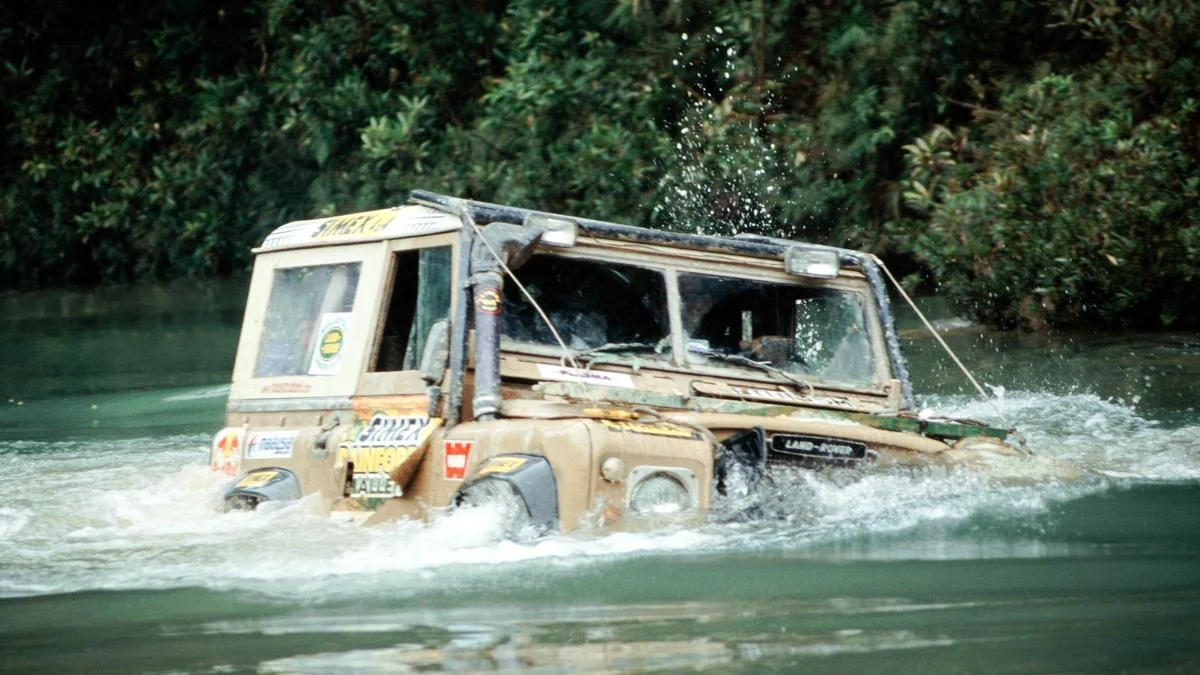
GOA — In the heart of the Goan hinterlands, where the relentless Indian monsoon transforms the landscape into a treacherous labyrinth of mud, rock, and rising water, a new chapter in Indian off-roading history has been written. The 2026 edition of the Rainforest Challenge (RFC) India concluded on August 1, marking a significant milestone for Kerala’s burgeoning motorsports community. Athul Thomas and Binil Babu, representing "Team Killerbull," emerged as the undisputed champions of the 4X4 Stock class, navigating their Maruti Jimny through 14 grueling stages to claim a victory that resonates far beyond the podium.
The victory is particularly noteworthy as it marks the first time a team from Kerala has secured the top spot in the Stock category of this internationally acclaimed event. While Kerala has historically seen success in the Modified and Extreme categories, the Stock class—which emphasizes the raw capability of factory-spec vehicles and the sheer skill of the driver-navigator duo—had remained elusive until now.
The Main Facts: A Triumph of Skill Over Modification
The Rainforest Challenge India is the local iteration of the global RFC franchise, headquartered in Malaysia. Rated among the top ten toughest motor races in the world and one of the top five most grueling off-road events on the planet, the Indian edition has become the "Holy Grail" for off-roaders across the subcontinent. Supported by the State Government of Goa, the event attracts the most disciplined and daring drivers who are willing to pit their machines against the most unforgiving elements of nature.
Athul Thomas and Binil Babu’s victory in the 4X4 Stock class was a masterclass in consistency and technical precision. Competing against 24 other specialized teams in their category, the duo amassed a staggering 1,247 points out of a possible 1,400. This high scoring reflects not just speed, but the ability to complete "Special Stages" (SS) with minimal penalties—a feat that requires a symbiotic relationship between the man behind the wheel and the man guiding from the outside.
The choice of vehicle, the Maruti Jimny, proved to be a strategic asset. Despite being in the "Stock" class—where modifications are strictly limited to maintain the vehicle’s original engineering integrity—the Jimny’s lightweight frame and agile wheelbase allowed Thomas and Babu to navigate tight forest paths and steep inclines that often stymied larger, heavier competitors.
Chronology of the Challenge: Four Days in the Trenches
The 2026 RFC India was structured as a four-day intensive competition, characterized by "Special Stages" that tested every facet of off-road driving, from winching techniques to lateral stability.
The Early Stages: Establishing Momentum
The event began with the opening stages set in controlled but difficult environments. For Binil Babu, a manager at Ducati Kochi and a veteran of motorbike racing, this was a baptism by fire. Although he had years of experience on two wheels, this was his competitive debut in a four-wheeled vehicle. Acting as the co-driver (navigator), Babu had to quickly adapt his understanding of traction and momentum from the perspective of a 1.2-ton vehicle rather than a racing bike.
The Mid-Event Grind: The Forest Deepens
By the second and third days, the competition moved deeper into the natural forests of Goa. Here, the "roads" ceased to exist, replaced by tracks demarcated only by cones and tape. The terrain was a chaotic mix of deep slush, sharp rocky outcrops, and river crossings swollen by the monsoon rains.

"The terrain is tough; you are literally driving through forests with uneven paths," Binil Babu noted following the win. "There are no roads really. It is grueling and intense."
During these middle stages, the team’s strategy focused on "clean runs." In RFC, hitting a marker cone or failing to follow the prescribed path results in heavy point deductions. Thomas’s decade of experience—having competed in over 300 motorsports events—allowed him to maintain a calm composure, while Babu’s racing instincts provided the rapid-fire communication necessary to navigate the Jimny through blind crests and deep trenches.
The Final Push: Securing the Title
By the final day on August 1, the physical and mental fatigue of the participants was at its peak. Equipment failure is common in the final stages of RFC, but Team Killerbull’s meticulous preparation ensured their vehicle held together. They finished the 14th stage with a commanding lead, securing their place in the history books as the first Kerala team to conquer the Stock class.
Supporting Data: The Logistics of Extreme Off-Roading
The success of Athul Thomas and Binil Babu is underpinned by significant personal investment and technical rigor. To understand the scale of their achievement, one must look at the data behind the participation:
- Scoring Efficiency: 1,247/1,400 points (89% efficiency rating).
- Competitive Density: 25 teams in the 4X4 Stock category alone, part of a larger field including Extreme and Modified classes.
- Financial Investment: The duo spent approximately ₹6 lakh (INR 600,000) on race preparation, vehicle tuning, logistics, and entry fees.
- Experience Profile: Athul Thomas brought 10 years of veteran expertise to the cockpit, providing a stabilizing force for the team’s debut performance in this specific vehicle class.
The "Stock Class" regulations are particularly stringent. Vehicles must retain their original engine, gearbox, and chassis configurations. This means that unlike the "Extreme" category, where custom-built "monsters" with massive tires and hydraulic steering dominate, the Stock class winners must rely on superior line choice and throttle control to overcome obstacles that the vehicle was theoretically never designed to handle.
Official Responses and the Need for Institutional Support
While the State Government of Goa has been a stalwart supporter of RFC India, recognizing its potential for sports tourism, the winners have highlighted a disparity in how motorsports are supported across different Indian states.
Upon their return, the duo expressed a mixture of pride and a call for better infrastructure. Binil Babu pointed out that teams from other regions, such as Arunachal Pradesh—whose drivers won the 4X4 Extreme class—received "hero’s treatments" and significant state recognition.
"We are not looking at that kind of support, but something from local sponsors would be helpful," Babu stated. He emphasized that Kerala possesses a deep well of talent in both two-wheel and four-wheel racing, but the financial barrier remains the primary hurdle. "Preparing for the race cost us close to ₹6 lakh. We dipped into our savings to make this happen. If we get sponsors, it lightens the financial burden considerably."

The call for corporate and local government sponsorship is not merely about funding a hobby; it is about professionalizing a sport that requires immense technical discipline and physical fitness.
Implications: Safety, Discipline, and the Future of Indian Motorsports
The victory of Team Killerbull carries broader implications for the culture of driving and motorsports in India. Beyond the trophies and the mud-splattered glory, RFC India serves as a platform for promoting "responsible speed."
Shifting the Paradigm for Youth
Binil Babu highlighted the psychological impact of competitive motorsports on younger generations. In an era where illegal street racing and "stunting" on public roads pose significant safety risks, structured events like RFC provide a vital outlet.
"This is a great outlet for youngsters who love speed; it changes your perspective on it," Babu explained. "Your entire attitude towards speed becomes healthy."
By moving the pursuit of adrenaline from the streets to the controlled, high-stakes environment of the forest stages, participants learn that true "speed" is nothing without control, preparation, and respect for the machine and the environment.
The "Jimny Effect" and the Market
The win also serves as a testament to the capabilities of modern compact off-roaders in India. The Maruti Jimny’s success in the Stock class is likely to bolster its reputation among off-road enthusiasts, proving that one does not need a heavily modified "monster truck" to compete at the highest levels of international sport.
Looking Ahead
As Athul Thomas and Binil Babu return to Kerala, their victory stands as a beacon for other aspiring off-roaders in the state. Their journey from personal savings and private passion to the top of the podium in Goa illustrates the potential of Indian motorsports. However, for India to consistently produce world-class drivers who can compete in the global RFC finals in Malaysia, the transition from "self-funded passion" to "sponsored professional" must be bridged by corporate India and local sporting bodies.
For now, Team Killerbull has proven that with a decade of experience, a fresh perspective from the world of bike racing, and a well-prepared Maruti Jimny, even the most formidable monsoon forests of Goa can be conquered. The 2026 Rainforest Challenge India may have concluded, but for the off-roading community in Kerala, the journey is just beginning.
