

Introduction: A Strategic Evolution in the Commuter Segment
India Yamaha Motor (IYM) Pvt. Ltd. has officially announced the launch of its updated 2026 scooter lineup, centering on its two pillars in the 125cc segment: the Fascino 125 Fi Hybrid and the RayZR 125 Fi Hybrid. In an increasingly competitive Indian two-wheeler market, where the 125cc category has become the new battleground for balancing fuel economy with premium features, Yamaha’s latest move signals a clear intent to capture the tech-savvy urban youth.
The 2026 updates are not merely cosmetic. While new color palettes and aesthetic refinements are present, the headline feature is the integration of advanced Thin-Film Transistor (TFT) display technology and enhanced connectivity suites. This move aligns with Yamaha’s global "The Call of the Blue" brand strategy, which seeks to elevate the riding experience from basic commuting to a more lifestyle-oriented engagement.
Main Facts: Pricing, Variants, and Feature Sets
The 2026 refresh sees a slight realignment in pricing to accommodate the new hardware. Yamaha has maintained a multi-tier variant structure to ensure they cater to both budget-conscious buyers and those seeking "top-of-the-line" gadgetry.
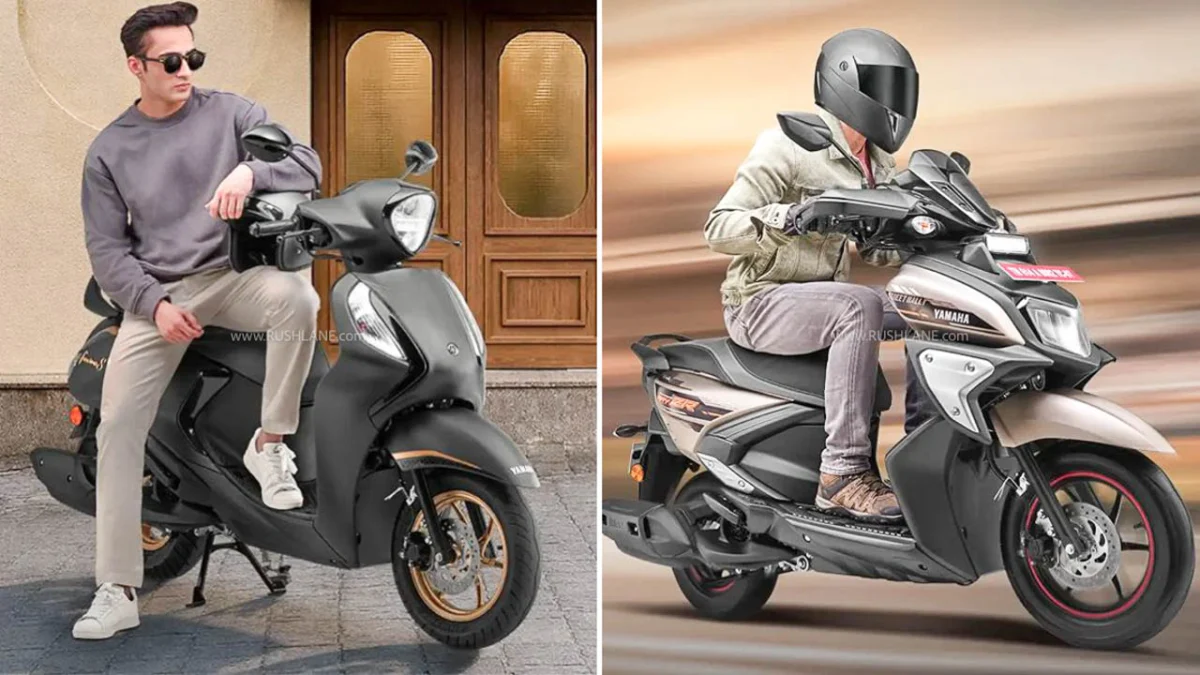
The 2026 Yamaha Fascino 125 Fi Hybrid
The Fascino, known for its "Classic European" styling, continues to target riders who prefer a neo-retro aesthetic.
- Pricing: The range starts at Rs. 78,980 for the base Drum variant and climbs to Rs. 99,030 (Ex-showroom, Delhi) for the high-end S variant.
- Variants: Drum, Disc, and the flagship ‘S’ variant.
- The TFT Revolution: For the first time, the Fascino S is equipped with a multi-function TFT instrument cluster. This screen supports turn-by-turn navigation via the Y-Connect app, a feature previously reserved for higher-displacement motorcycles.
The 2026 Yamaha RayZR 125 Fi Hybrid
The RayZR, with its "Armored Energy" design language, is positioned as a sporty, aggressive alternative to the Fascino.
- Pricing: Prices are structured between Rs. 79,880 and Rs. 1,00,440 (Ex-showroom, Delhi).
- Variants: Standard RayZR (Drum and Disc) and the RayZR Street Rally (LCD and TFT versions).
- Street Rally Dominance: The Street Rally variant continues to feature brush guards and block-pattern tires, but the 2026 update adds a dedicated TFT variant to sit atop the hierarchy, mirroring the tech upgrades of the Fascino.
Chronology: From Mechanical Reliability to Digital Sophistication
To understand the 2026 launch, one must look at Yamaha’s trajectory in the Indian scooter market over the last decade.

- The 113cc Era (2012–2019): Yamaha entered the Indian scooter market with the Ray and later the Fascino using a 113cc engine. The focus was purely on lightweight construction and design.
- The BS6 Pivot (2020): With the implementation of Bharat Stage VI (BS6) norms, Yamaha made a bold move by exiting the 110cc segment entirely, upgrading its entire fleet to 125cc fuel-injected engines.
- The Hybrid Introduction (2021): Yamaha introduced the "Hybrid" system—a Smart Motor Generator (SMG) that provides a power assist during acceleration. This was a segment-first and set the stage for the current models.
- The Digital Leap (2024–2026): Recognizing that hardware (engine/chassis) had reached a point of maturity, Yamaha shifted focus to the "User Interface." The 2026 models represent the culmination of this digital shift, moving from basic digital meters to full-color TFT screens with ecosystem connectivity.
Supporting Data: Technical Specifications and Engineering
Despite the digital overhaul, the mechanical heart of these scooters remains one of the most efficient in the industry. Yamaha’s "Blue Core" philosophy remains the foundation of the 2026 models.
Engine and Performance
Both scooters share the same 125cc, air-cooled, 4-stroke, SOHC, 2-valve engine.
- Maximum Power: 8.2 PS (8 bhp) at 6,500 rpm.
- Maximum Torque: 10.3 Nm at 5,000 rpm.
- Transmission: V-belt automatic (CVT).
- Hybrid System: The SMG acts as an electric motor to provide a "Power Assist" when the rider accelerates from a stop, reducing the lag usually associated with small-displacement engines and improving fuel efficiency during stop-and-go city traffic.
Chassis and Dimensions
One of Yamaha’s strongest selling points in the 125cc segment is the weight.
- Kerb Weight: Both the Fascino and RayZR weigh in at 99 kg (for the disc variants). This makes them the lightest 125cc scooters in the Indian market, offering a superior power-to-weight ratio and making them exceptionally easy to maneuver for a wide demographic.
- Storage: A 21-liter under-seat storage compartment remains standard, though it remains optimized for half-face helmets.
- Braking: The Unified Braking System (UBS) is standard across all variants, with the option of a 190mm front disc brake.
New Color Palette for 2026
Yamaha has introduced several high-contrast and metallic finishes to keep the visual appeal fresh:
- Fascino Drum: Yellow Cocktail.
- Fascino Disc: Metallic Light Green, Cool Blue Metallic, and Matte Black.
- Fascino S: Metallic Orangish Gray SPL (Exclusive to the TFT variant).
- RayZR Disc: Dark Matte Blue, Ice Fluo Vermillion.
- RayZR Street Rally: Matte Titan (TFT exclusive).
Official Responses and Strategic Positioning
While official press statements from Yamaha executives emphasize "innovation" and "customer-centricity," the strategic positioning of the 2026 models reveals a deeper corporate philosophy. Yamaha has consciously avoided the "budget" end of the market, which is dominated by the Honda Activa. Instead, they are positioning the Fascino and RayZR as "Premium Commuters."
A spokesperson for India Yamaha Motor noted during the announcement that the inclusion of TFT screens was a direct response to consumer feedback. Younger buyers in India—Gen Z and Millennials—now view their vehicles as extensions of their digital lives. By providing turn-by-turn navigation and phone notifications on the dashboard, Yamaha is attempting to reduce the need for aftermarket mobile phone mounts, which can be a safety hazard and a theft risk.
Furthermore, Yamaha’s focus on "Hybrid" branding serves as a crucial bridge. While the industry is slowly moving toward full electrification, Yamaha is using the Hybrid SMG tech to offer a "best of both worlds" scenario: the reliability and range of an Internal Combustion Engine (ICE) with the high-tech, eco-friendly aura of an electric assist.

Implications: The Competitive Landscape and Market Impact
The launch of the 2026 Yamaha 125cc duo has significant implications for the Indian two-wheeler landscape.
Pressure on the "Big Three"
Yamaha’s move puts immediate pressure on Honda, Suzuki, and TVS.
- Honda: The Activa 125 and Dio 125 remain the sales leaders but are often criticized for being conservative in their tech offerings. Honda’s lack of a full TFT display in this segment now stands out as a glaring omission compared to Yamaha.
- Suzuki: The Access 125 is the gold standard for refinement, and the Avenis targets the same sporty demographic as the RayZR. Suzuki has recently updated its colors, but Yamaha’s TFT integration gives the RayZR a technological edge in showroom comparisons.
- TVS: The TVS Ntorq 125 has long been the "tech king" of the segment with its SmartXonnect system. However, the Ntorq’s aging platform and heavier weight (approx. 116 kg) contrast sharply with Yamaha’s 99 kg lightweight agility. Yamaha is now directly challenging TVS’s dominance in the "connected scooter" sub-segment.
The Shift Toward Premiumization
The fact that a 125cc scooter is now approaching the Rs. 1,00,000 (Ex-showroom) mark—which translates to nearly Rs. 1.20 lakh on-road in many cities—highlights the rapid premiumization of the Indian market. Consumers are no longer just looking for "mileage"; they are willing to pay a premium for safety (disc brakes), convenience (navigation), and status (LED lighting and TFT screens).
Future Outlook
As Yamaha continues to refine its 125cc platform, the next logical step remains a subject of speculation. With the hardware now featuring hybrid assists and full digital connectivity, industry analysts suggest that the next major update for the 2027-2028 cycle could involve more substantial safety features, such as single-channel ABS, which is currently rare in the 125cc scooter segment but increasingly demanded by safety advocates.
In conclusion, the 2026 Yamaha Fascino and RayZR 125 Fi Hybrid updates represent a calculated move to solidify Yamaha’s niche. By doubling down on lightweight engineering and high-end digital features, Yamaha isn’t just selling a scooter; they are selling a tech-integrated mobility solution tailored for the modern Indian city. For the consumer, the choice is now clearer than ever: if weight and technology are the priorities, Yamaha has set a new benchmark that the rest of the industry must now scramble to meet.
