

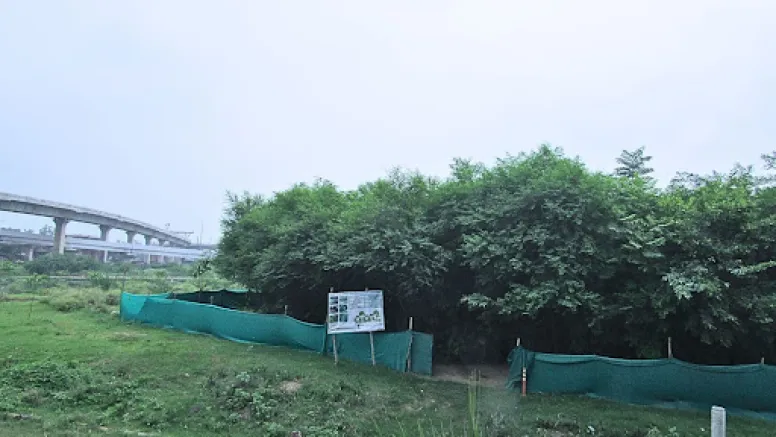
GANDHINAGAR — For decades, the global blueprint for mitigating the "Urban Heat Island" (UHI) effect has been deceptively simple: plant more trees. In the collective imagination of urban planners and environmentalists, a "green city" is synonymous with a "cool city." However, groundbreaking research emerging from a collaboration between the Indian Institute of Technology (IIT) Gandhinagar and Northeastern University, USA, is challenging this long-held dogma.
A comprehensive study of 138 Indian cities has revealed a startling "Urban Greening Paradox." While vegetation is a potent cooling agent in arid and semi-arid regions, it can actually exacerbate thermal discomfort in humid tropical environments. In these moisture-rich settings, dense leaf canopies can act as a "humid-heat liability," trapping moisture and stifling airflow, ultimately driving the perceived temperature—the Heat Index—to dangerous levels for human inhabitants.
Main Facts: Challenging the "More is Better" Narrative
The study, which analyzed nearly two decades of data (2003–2020), identifies a critical tipping point where the biological processes of trees begin to work against the comfort of city dwellers. The research team, led by experts in climate science and machine learning, moved beyond traditional metrics to look at how humans actually experience heat.
The Two Faces of Urban Vegetation
To understand why trees can sometimes make things worse, one must first understand how they cool. Vegetation typically moderates temperature through two primary mechanisms:
- Shading: Leaves physically block solar radiation from reaching the pavement and building facades. This prevents "thermal mass" from soaking up heat during the day and radiating it back at night.
- Evapotranspiration: Often described as a plant’s version of sweating, this is the process where liquid water is transferred from the soil through the plant and released as water vapor into the atmosphere. This process consumes latent heat, effectively cooling the surrounding air.
The Humidity Factor
The paradox arises when evapotranspiration meets high ambient humidity. In dry cities like Jaipur or Ahmedabad, the air is "thirsty" for moisture. When trees release water vapor, the air absorbs it easily, and the resulting cooling effect is significant.

However, in humid coastal or tropical cities like Mumbai, Kolkata, or Chennai, the air is already near its saturation point. When dense clusters of trees add more moisture to this already heavy air, the humidity spikes. If the city’s "urban canyon" (the space between tall buildings) prevents wind from clearing this moisture, the result is a suffocating "steam room" effect.
The Perceived Heat Reality
The study found that in certain humid Indian urban cores, dense greening was associated with an increase in the Heat Index (HI) of up to 2 degrees Celsius. While the Land Surface Temperature (what a satellite sees on the ground) might show a decrease due to shade, the perceived temperature for a person walking on the street actually increases because their own sweat cannot evaporate in the saturated air.
Chronology: Two Decades of Climate Mapping
The research was not a localized snapshot but a massive longitudinal study that tracked the evolution of 138 Indian cities over 17 years.
2003–2010: The Baseline Period
During the first decade of the study, researchers established baseline climate patterns across India’s diverse geographical zones. They categorized cities into various climatic regions: the arid Northwest, the semi-arid Deccan Plateau, and the humid tropical South and East. This period allowed the team to observe how urbanization began to alter local microclimates as concrete replaced natural landscapes.
2011–2018: The Rise of Machine Learning in Ecology
As satellite technology improved, the researchers began employing high-resolution data and machine learning algorithms to identify subtle correlations. They utilized the Fraction of Photosynthetically Active Radiation (fPAR)—a metric that measures the productivity and density of vegetation—to see how "green" a city actually was. This was paired with atmospheric data to calculate the Heat Index rather than just raw air temperature.

2019–2024: Identifying the Paradox
The final phase of the research involved synthesizing this data to find the "threshold." The team discovered that once vegetation density (fPAR) exceeded a specific limit in humid environments, the cooling benefits of shade were overwhelmed by the warming effects of trapped humidity. This led to the publication of their findings, signaling a need for a radical shift in tropical urban forestry.
Supporting Data: By the Numbers
The strength of this study lies in its scale. By analyzing 138 cities, the researchers were able to prove that the "greening paradox" was not an anomaly but a consistent trend in specific climates.
The Metrics of Discomfort
- 138 Cities: The study covered nearly every major urban center in India, providing a representative sample of global tropical and subtropical urban environments.
- 2°C Increase: In high-density humid urban areas, the Heat Index was found to be up to 2 degrees Celsius higher than in moderately green areas.
- The LST vs. HI Gap: The researchers highlighted a dangerous discrepancy. Land Surface Temperature (LST) often showed a 3–5°C decrease in green areas, leading planners to believe the strategy was working. However, the Heat Index (HI) showed an increase, proving that satellite-based surface cooling does not always equal human-centric cooling.
The fPAR Threshold
Using machine learning, the team identified a "Greening Threshold." In arid cities, the cooling benefit of trees continues to rise as more trees are planted. However, in humid cities, the curve is bell-shaped: cooling benefits increase up to a certain point of leaf density, after which the Heat Index begins to climb sharply as ventilation is cut off and humidity builds up.
Official Perspectives and Expert Analysis
The findings have sent ripples through the urban planning and scientific communities, prompting experts to call for a more nuanced approach to "Nature-Based Solutions" (NbS).
The Lead Researchers’ View:
The team from IIT Gandhinagar emphasizes that their work is not an argument against trees, but an argument for smarter planting. They suggest that the "one-size-fits-all" approach to urban forestry is outdated. In humid climates, the focus must shift from "maximum greening" to "optimized greening."

Urban Planning Response:
City planners have traditionally used "Green Cover Percentage" as a Key Performance Indicator (KPI) for sustainability. Experts now suggest that this KPI must be replaced with "Climate-Responsive Design." This includes:
- Ventilation Corridors: Ensuring that tree placement does not block prevailing winds that are essential for flushing out humid air.
- Species Selection: Choosing tree species with lower transpiration rates for humid areas to reduce the amount of moisture added to the air.
- Strategic Shading: Using architectural solutions or sparse, high-canopy trees that provide shade without creating a "wall" of vegetation at the street level.
Public Health Implications:
Health officials are particularly concerned about the findings. Heat stress is a leading cause of weather-related mortality in India. If urban greening projects are inadvertently raising the Heat Index, they could be contributing to higher rates of heatstroke and cardiovascular stress during pre-monsoon months.
Implications: Redefining the Green City of the Future
As climate change makes heatwaves more frequent, intense, and longer-lasting, the stakes for urban design have never been higher. This research provides a roadmap for the next generation of "climate-smart" cities.
Moving Beyond "Greenery for Greenery’s Sake"
The study suggests that in the humid tropics, the "Green City" of the future might look different than the dense urban forests of Europe or North America. It might feature:
- Pocket Parks: Small, disconnected green spaces that allow for air circulation between them.
- Vertical Greening with Caution: Using green walls that provide shade to buildings without trapping air at the pedestrian level.
- Hybrid Solutions: Combining sparse vegetation with reflective "cool pavements" and "cool roofs" to reduce surface temperature without adding moisture to the air.
Policy Shifts
For government bodies like India’s Ministry of Housing and Urban Affairs, the research suggests a need to update the "Smart Cities Mission" guidelines. Future funding for urban greening should likely require a "Micro-Climate Impact Assessment" to ensure that proposed forests won’t turn into humid heat traps.

A Global Lesson
While the study focused on India, its implications are global. From the humid expanses of Southeast Asia to the tropical regions of Brazil and West Africa, cities are rapidly expanding. As these regions urbanize, they must heed the lesson of the Indian paradox: nature is a powerful tool, but it must be wielded with an understanding of the local atmospheric physics.
In conclusion, the IIT Gandhinagar and Northeastern University study serves as a vital correction to modern environmental strategy. For the millions of people living in the world’s warming tropical hubs, the difference between a city that is a sanctuary of cool shade and one that is a suffocating trap of humid heat may depend on our ability to look past the green and understand the air we breathe.
