

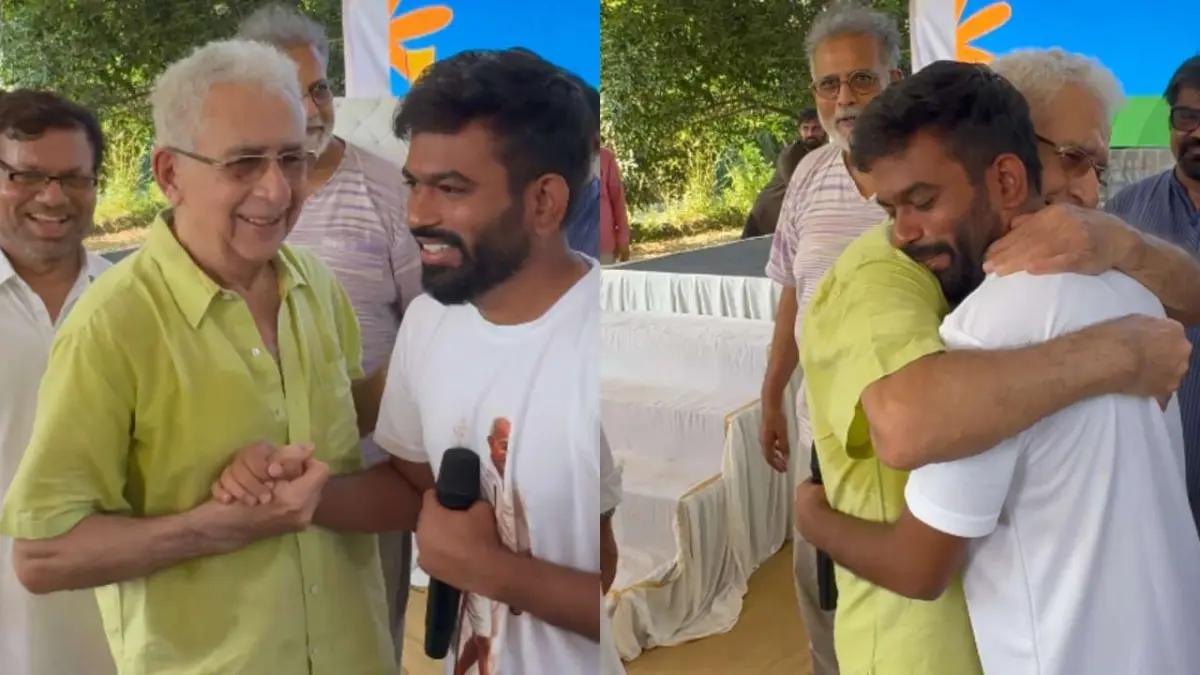
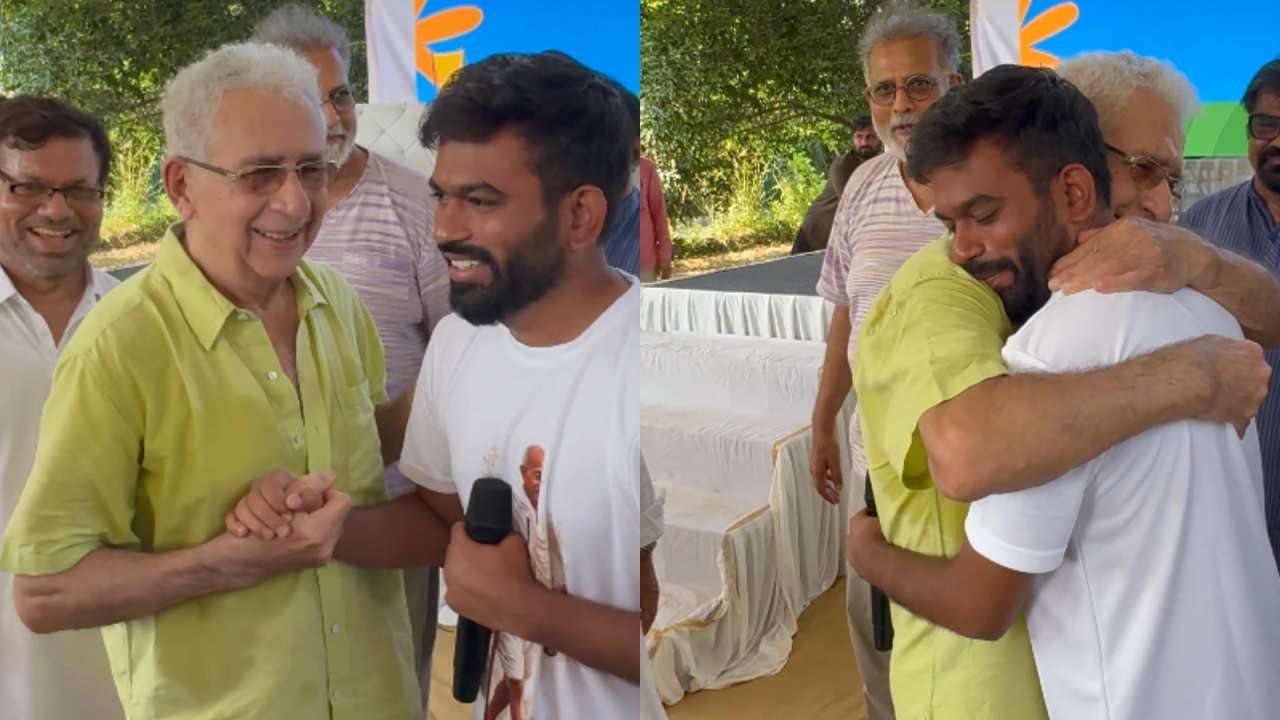
Mumbai, India – October 2, 2026 – Shivaji Park, the iconic public space in Mumbai, became the focal point of a significant protest today as the Cockroach Janta Party (CJP) staged an agitation demanding the resignation of Chief Election Commissioner Gyanesh Kumar. The demonstration, which saw the participation of prominent figures from the entertainment industry including veteran actor Naseeruddin Shah, composer and singer Vishal Dadlani, and acclaimed filmmaker Vishal Bharadwaj, was met with a heightened security presence by the Mumbai Police.
The CJP’s "Jail Bharo Andolan" (Fill the Jails Movement), initiated by CJP founder Abhijeet Dipke, commenced at 4 pm, centering on allegations of irregularities in the Special Intensive Revision (SIR) of electoral rolls. Organizers claimed that their request for permission to hold the protest at Shivaji Park was initially denied by the Mumbai Police, a stance the police later clarified was due to a 2013 Bombay High Court order restricting gatherings at the venue, alongside its designation as a silence zone.
The Core of the Controversy: Allegations of Electoral Roll Irregularities
The protest stems from the CJP’s deep-seated concerns regarding the integrity of the electoral process, specifically focusing on the Special Intensive Revision (SIR) of electoral rolls. The CJP and its supporters allege that this revision process has been marred by irregularities, raising questions about the fairness and accuracy of the voter list. While the exact nature of these alleged irregularities has not been detailed in the provided information, the CJP’s demand for the Chief Election Commissioner’s resignation indicates a belief that the highest levels of the Election Commission of India (ECI) are complicit or responsible for these perceived flaws.
The Special Intensive Revision (SIR) is a crucial exercise undertaken by the Election Commission to update and verify electoral rolls, ensuring that the voter database is accurate and reflects the current demographic landscape. This process typically involves enumerators visiting households, verifying voter details, and adding or deleting names as per established rules. However, any perceived mishandling or manipulation during such a sensitive process can significantly erode public trust in the electoral system. The CJP’s agitation suggests a belief that the current SIR exercise has fallen short of expected standards, potentially impacting the electoral outcomes.
)
Chronology of the Protest and its Lead-up
The CJP had been vocal in its demands for weeks leading up to the Shivaji Park demonstration. The "Jail Bharo Andolan" was the culmination of these efforts, aiming to exert maximum public pressure on the Election Commission. The decision to protest at Shivaji Park, a historically significant venue for public gatherings and political rallies in Mumbai, underscored the CJP’s intent to command attention.
Key events leading up to and during the protest:

- Pre-Protest Declarations: The CJP had been publicly articulating its grievances against the Election Commission and specifically targeting Chief Election Commissioner Gyanesh Kumar. The party had indicated its intention to organize a significant protest to press its demands.
- Permission Denial and Clarification: The CJP claimed Mumbai Police denied permission for the protest at Shivaji Park. The police, in turn, cited a Bombay High Court order from 2013 and the venue’s status as a silence zone as reasons for not authorizing such a gathering. This exchange highlights the procedural hurdles faced by protest organizers and the regulatory framework governing public assembly in Mumbai.
- Commencement of "Jail Bharo Andolan": At 4 pm, CJP founder Abhijeet Dipke officially launched the "Jail Bharo Andolan" at Shivaji Park. The term "Jail Bharo Andolan" suggests a strategy of mass civil disobedience, where participants are prepared to court arrest to draw attention to their cause.
- High-Profile Attendee Mobilization: The presence of Naseeruddin Shah, Vishal Dadlani, and Vishal Bharadwaj lent significant weight and visibility to the protest. Their involvement signals a broader concern within the creative and intellectual fraternity about the issues raised by the CJP.
- Heightened Security: In anticipation of the demonstration and the potential for a large turnout, the Mumbai Police significantly increased security measures around Shivaji Park. This included deploying additional personnel and establishing a perimeter to manage the crowd and maintain order.
- Broader National Context: The CJP’s threat to expand its protests to other parts of the country indicates a strategy to build national momentum and apply pressure on a wider scale.
Voices of Support and Dissent
The protest at Shivaji Park was not an isolated event, as indicated by the participation of individuals from outside Mumbai and the extension of support from various quarters.
Supporters from afar:
)
- Sachin Sawant (Satara): Hailing from Satara, Sawant voiced a common sentiment among protesters, questioning the Bharatiya Janata Party’s (BJP) perceived defense of the Election Commission. He articulated that it is the Election Commission’s duty to clarify concerns raised by opposition parties, and the BJP’s role in defending the EC was seen as unusual.
- Aishwarya Yadav (Satara): Another participant from Satara, Yadav, drew a parallel between the SIR controversy and alleged mismanagement in competitive examinations like NEET. This linkage suggests a broader disillusionment with perceived systemic failures and a growing sense of public frustration.
Celebrity Endorsements:
- Prakash Raj: Acclaimed actor Prakash Raj lent his voice to the CJP’s cause through a video message shared on X (formerly Twitter). He urged public support for the campaign, making a strong statement by alleging that "goons who celebrate Godse" are now attempting to undermine "citizenship and democracy through SIR." This statement frames the electoral process as a fundamental pillar of democracy and positions the alleged irregularities as an existential threat.
National Reach of the Agitation:
)
The protest movement extended beyond Mumbai, with social activists and student groups organizing a parallel gathering at Jantar Mantar in Delhi. This indicates a coordinated effort to amplify the message and create a national narrative around the CJP’s demands. Notable figures supporting the Delhi demonstration included:
- AISA (All India Students’ Association)
- Rajya Sabha MP Manoj Jha
- Supreme Court lawyer Prashant Bhushan
- Aam Aadmi Party (AAP) leaders Atishi, Sanjay Singh, and Manish Sisodia, who appealed to the public to participate.
The protesters in Delhi echoed the demands for Commissioner Kumar’s resignation and raised similar allegations concerning electoral rolls and election conduct.
)
Counter-Protest:
Interestingly, the CJP’s protest was met with a counter-demonstration at Oval Maidan in South Mumbai. A group of individuals gathered to voice their opposition to the CJP and its founder, Abhijeet Dipke, carrying placards and raising slogans against the organization. This indicates a divided public opinion or a counter-narrative being put forth by those who do not agree with the CJP’s allegations or methods.
)
Medical Support:
Adding another dimension to the protest, a team of doctors arrived at the Shivaji Park site to offer medical assistance to participants. This proactive measure suggests an awareness of the potential physical demands of a prolonged demonstration and a commitment to the well-being of the protesters.
)
Official Responses and Evolving Narratives
The Election Commission of India has consistently maintained its stance on the Special Intensive Revision (SIR) exercise. According to official statements, decisions pertaining to the SIR have been taken unanimously by the three-member panel of the Election Commission. This assertion aims to counter allegations of unilateral or biased decision-making.
The Election Commission has emphasized the transparency and due process involved in updating electoral rolls. However, the persistent allegations from opposition parties, civil society groups like the CJP, and now prominent public figures, suggest that the Commission’s explanations have not entirely assuaged the concerns of its critics.
)
The narrative from the CJP and its supporters is that the SIR process is not merely a technical exercise but a matter of fundamental democratic integrity. They view any perceived flaws as a direct attack on the sanctity of the vote and, by extension, the democratic fabric of the nation. The involvement of celebrities and activists amplifies this narrative, bringing it to a wider audience and potentially influencing public perception.
Implications and Future Outlook
The protest at Shivaji Park, with its high-profile attendees and broader national resonance, signifies a growing public scrutiny of the Election Commission’s functioning. The allegations, if substantiated, could have profound implications for democratic processes in India.
)
Key implications:
- Erosion of Public Trust: Persistent allegations of irregularities, even if denied by the ECI, can gradually erode public trust in the fairness and impartiality of elections. This is detrimental to the health of any democracy.
- Political Ramifications: The protest could become a rallying point for opposition parties, further intensifying political discourse and potentially influencing electoral strategies. The BJP’s perceived defense of the EC, as highlighted by protesters, could become a point of contention.
- Judicial Scrutiny: If the allegations are serious enough, they could lead to further legal challenges and judicial intervention, potentially leading to court-mandated investigations or reforms.
- Strengthening of Civil Society Advocacy: The CJP’s sustained campaign and the involvement of various civil society groups underscore the role of advocacy in holding institutions accountable.
- Impact on Future Elections: The debate surrounding electoral roll integrity could impact voter confidence and participation in upcoming elections.
The Election Commission faces the challenge of not only conducting fair elections but also convincing the public of its impartiality and the robustness of its processes. The CJP’s "Jail Bharo Andolan" is a clear signal that the debate over electoral integrity is far from over, and the pressure on the Election Commission to address these concerns transparently and effectively is likely to continue. The coming days and weeks will reveal how this issue evolves and whether the CJP’s demands will gain further traction or be adequately addressed by the relevant authorities. The visibility garnered by this protest, amplified by the participation of figures like Naseeruddin Shah, suggests that the conversation around electoral fairness is poised to remain a significant one in India’s political landscape.
