

Introduction: A Paradigm Shift in the Entry-Level Market
For decades, the Indian hatchback segment was defined by a singular, uncompromising focus: affordability. Design, safety, and technological sophistication were often relegated to the background in favor of fuel efficiency and low sticker prices. However, the latest iteration of the Tata Tiago signals a definitive end to that era. By blending a mature design language with segment-first technologies and a multi-powertrain strategy, Tata Motors is asserting that "small" no longer means "basic."
The new Tiago range—encompassing Petrol, CNG, and Electric variants—represents more than just a mid-cycle refresh; it is a calculated effort to "premiumize" the entry-level experience. As the Indian consumer evolves, seeking more than just a utilitarian tool for commuting, the Tiago has transformed into a sophisticated urban companion that punches significantly above its weight class.
Main Facts: The Triple-Threat Strategy
The core of the Tiago’s renewed appeal lies in its "one car, three personalities" approach. Unlike competitors who often force buyers to choose between performance, economy, or sustainability, Tata has democratized these choices within a single brand umbrella.

- The Petrol Variant: Powered by the 1.2-litre Revotron engine (86PS/113Nm), it remains the bedrock of the range, offering a balance of refinement and spirited urban driving.
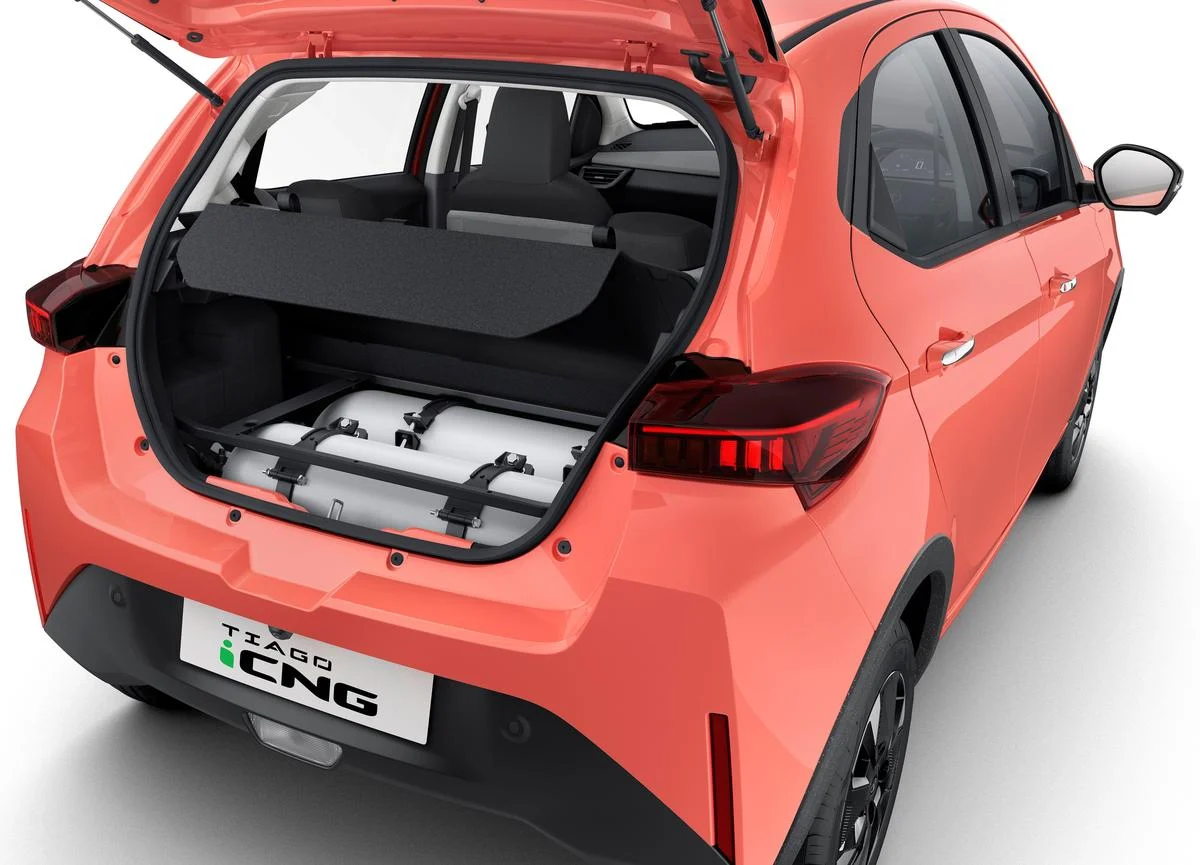
- The iCNG Variant: Utilizing Tata’s patented twin-cylinder technology, this version eliminates the primary drawback of CNG vehicles—the loss of boot space—while offering the convenience of an Automated Manual Transmission (AMT).
- The Tiago.ev: As the most accessible entry point into the brand’s electric ecosystem, the EV variant offers two battery sizes (19.2kWh and 24kWh) and brings high-end features like regenerative braking and connected car tech to the masses.
With a price bracket ranging from INR 4.69 lakh to INR 8.55 lakh (ex-showroom), the Tiago positions itself as a versatile solution for a wide demographic, from first-time buyers to eco-conscious urbanites.
Chronology: From ‘Zica’ to Market Leader
To understand the significance of the new Tiago, one must look at its journey. Launched in 2016, the car was originally intended to be called the "Zica" (a portmanteau of "Zippy Car") but was renamed following the outbreak of the Zika virus. At its debut, it represented a radical departure from the aging Indica platform, ushering in the "Impact" design philosophy.
- 2016-2018: The Tiago established Tata Motors as a serious player in the passenger vehicle segment, praised for its build quality and Harman-sourced audio systems.
- 2020: The Tiago underwent its first major BS6 transition, receiving a four-star Global NCAP safety rating—a milestone that changed the narrative surrounding Indian hatchbacks.
- 2022: The introduction of the Tiago.ev marked a turning point for the Indian EV market, proving that electric mobility could be both practical and affordable.
- 2024-Present: The latest update focuses on "Lux" elements—LED lighting, high-definition displays, and advanced safety suites—aligning the Tiago with the expectations of a digitally-native generation.
Design and Aesthetics: A Mature Presence
The new Tiago avoids the trap of over-styling, opting instead for a "cohesive and substantial" look. The most striking update is the "Lux Beam" LED headlamps, which provide a sharper, more focused "face." This is complemented by the "Halo Lightbar" tail lamps at the rear, a design element usually reserved for luxury sedans and SUVs.
The inclusion of textured wheel-arch cladding and new alloy wheel designs serves a dual purpose: it protects the bodywork from the rigors of Indian traffic while giving the car a wider, more confident stance. Inside, the "Fabricia Luxe" dashboard uses layered textures and premium materials to move away from the "plastic-heavy" feel common in this segment.
Supporting Data: Engineering and Performance Metrics
The Tiago’s appeal is backed by rigorous engineering data. The 1.2L Revotron engine is optimized for low-end torque, essential for the stop-and-go nature of Indian metros.

Powertrain Comparison:
| Feature | Petrol (1.2L) | iCNG (1.2L) | Tiago.ev (Long Range) |
|---|---|---|---|
| Max Power | 86 PS | 73.5 PS (CNG Mode) | 75 PS (55 kW) |
| Max Torque | 113 Nm | 95 Nm (CNG Mode) | 114 Nm |
| 0-60 km/h | ~6.5 seconds | ~7.2 seconds | 5.7 seconds |
| Boot Space | 242 Liters | Usable (Twin Cylinder) | 240 Liters |
| Safety Rating | 4-Star GNCAP (Older) | 4-Star GNCAP (Older) | IP67 Rated Battery |
The Tiago.ev, in particular, showcases impressive efficiency. The 24kWh battery offers a real-world range of approximately 210 km, which covers nearly a week of average urban commuting (30km/day) on a single charge. Furthermore, the ability to gain 100 km of range in just 18 minutes via DC fast charging addresses the "range anxiety" that has historically hindered EV adoption.
Technology and Connectivity: The ‘Digital Island’
The centerpiece of the new interior is the 26.03 cm (10.25-inch) HD touchscreen. In a segment where screens are often laggy or low-resolution, Tata has opted for a high-definition unit that supports wireless Android Auto and Apple CarPlay.
This is paired with the "Digital Island" instrument cluster, providing the driver with a clean, futuristic interface. For the EV variant, the iRA.ev connected suite allows for remote diagnostics, geo-fencing, and "pre-cooling"—a feature that allows owners to turn on the air conditioning via their smartphone before entering the vehicle, a luxury in India’s sweltering summers.
Safety: The Non-Negotiable Core
Tata Motors has built its modern reputation on safety, and the new Tiago range doubles down on this commitment. Six airbags are now standard across the lineup, a move that anticipates future Indian safety regulations.

However, the real surprise is the inclusion of a 360-degree HD Surround View Camera and a Blind View Monitor. These are "segment-first" features. In crowded urban environments like Bengaluru or Mumbai, where motorcyclists and pedestrians often occupy blind spots, these cameras are not just luxuries; they are essential safety tools. Combined with Electronic Stability Program (ESP) and Hill Hold Control, the Tiago offers a safety net that was once exclusive to cars costing twice as much.
Official Context and Market Strategy
While Tata Motors has not released a formal statement for this specific update, the company’s broader strategy—as articulated by leadership in recent quarterly calls—focuses on "Multi-Powertrain Synergy." By using a single platform for Petrol, CNG, and EV, Tata achieves economies of scale that allow them to pack more features into the car without exponential price hikes.
Industry analysts note that Tata’s "Twin-Cylinder" CNG technology is a direct response to consumer feedback regarding the lack of luggage space in traditional CNG cars. By splitting a large tank into two smaller ones and tucking them under the load floor, Tata has effectively neutralized the biggest argument against CNG adoption.
Implications: The Future of the Small Car in India
The enrichment of the Tiago range has significant implications for the Indian automotive landscape:
- The Death of the "Cheap" Car: The success of the Tiago suggests that Indian buyers are moving away from the "lowest price" mindset. They are willing to pay a premium for safety, design, and tech.
- EV Normalization: By making the Tiago.ev look and feel almost identical to the petrol version, Tata is "normalizing" electric cars. It treats the EV as just another engine option, reducing the psychological barrier to entry for conservative buyers.
- Pressure on Competitors: The inclusion of 6 airbags and 360-degree cameras as standard or available features puts immense pressure on market leaders to upgrade their own entry-level offerings, ultimately benefiting the consumer through better-equipped vehicles across the board.
Verdict: A New Benchmark for Maturity
The new Tata Tiago range is a testament to how much the Indian hatchback has evolved in less than a decade. It is no longer just a "budget" choice; it is a "smart" choice. Whether it is the mechanical honesty of the Revotron petrol, the ingenious packaging of the iCNG, or the zippy, silent efficiency of the Tiago.ev, the range offers a level of sophistication that was previously unthinkable in this segment.

The ride quality remains the Tiago’s "secret sauce"—a suspension setup that glides over broken Indian roads with a composure that larger sedans might envy. When you combine that mechanical hardware with a software-rich interior and a robust safety package, the conclusion is clear: the Tiago has grown up, and in doing so, it has forced the entire segment to mature along with it.
Price Range: INR 4.69 lakh – 8.55 lakh (Ex-showroom)
Data and insights provided in association with Motorscribes and The Hindu.
