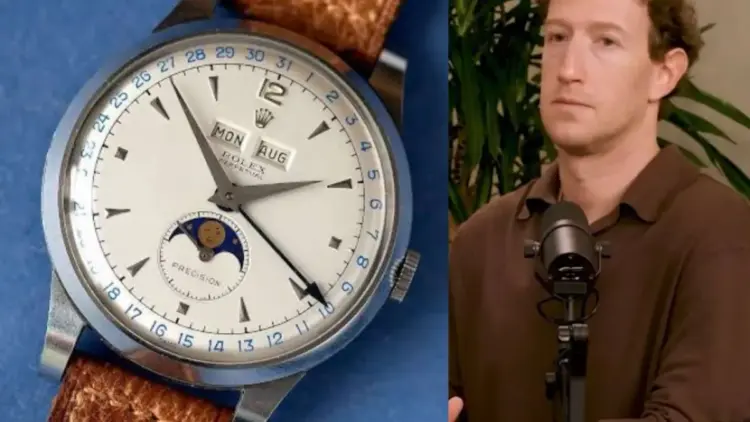
San Francisco, CA – In a rare public appearance that blended cutting-edge artificial intelligence discussions with an unexpected horological revelation, Meta CEO Mark Zuckerberg recently graced the "No Priors" podcast, not only for his insights into the future of biomedical research but also for the striking vintage Rolex adorning his wrist. The timepiece, a Rolex Ref. 6062 "Stelline," a model renowned for its intricate moonphase complication and exceptional rarity, is valued at an estimated $2 million. This unexpected display of horological appreciation from a titan of the digital age has ignited a flurry of interest, drawing parallels between the enduring craftsmanship of a bygone era and the relentless march of technological innovation.
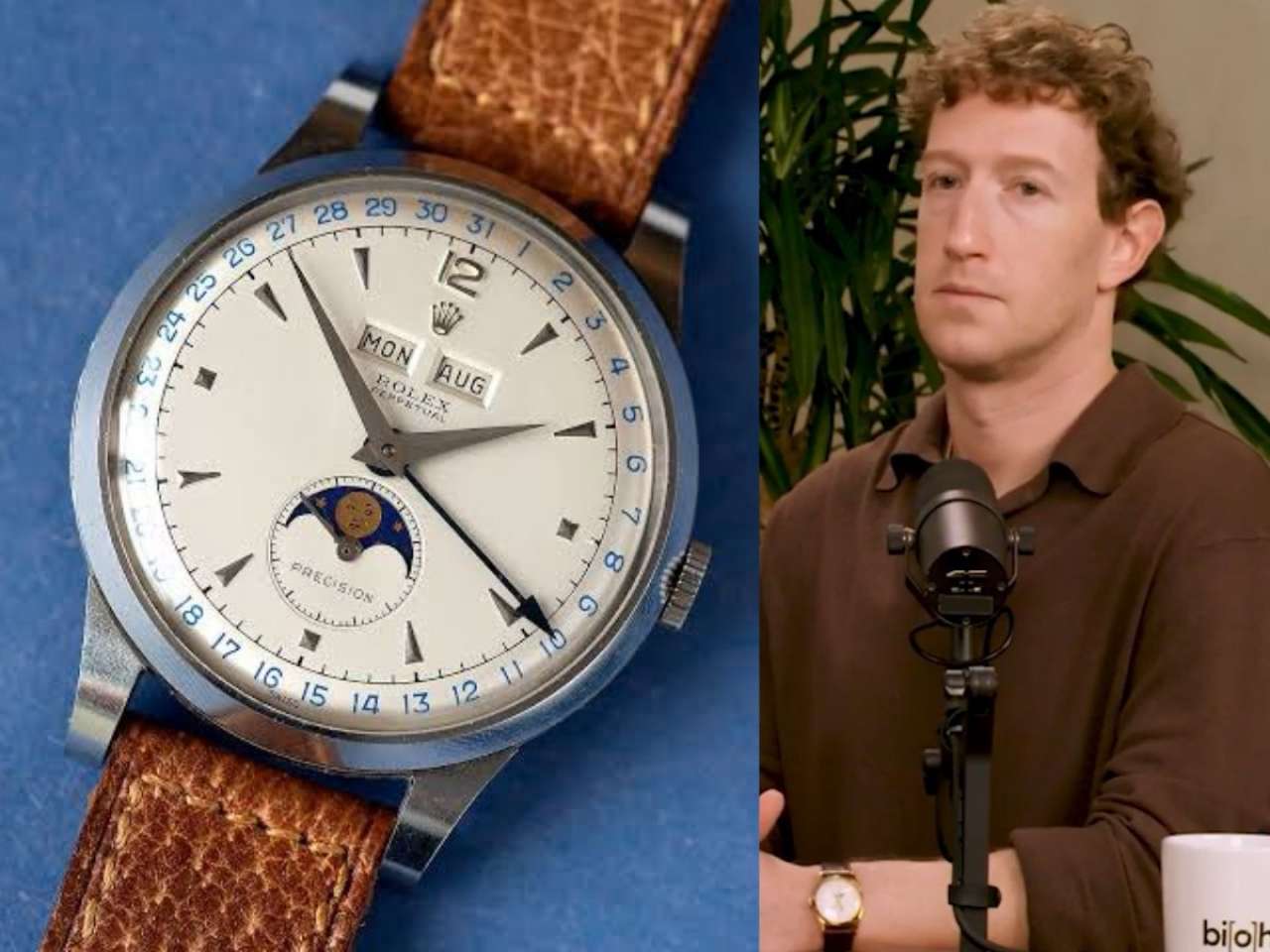
Zuckerberg, accompanied by his wife Priscilla Chan, engaged in a deep dive into the ambitious goals of the Chan Zuckerberg Initiative’s Biohub. Their discussion centered on leveraging advanced AI and computational modeling to revolutionize the identification, treatment, and eventual eradication of human diseases. The Biohub’s mission, as articulated by the couple, is to harness the power of data and artificial intelligence to unlock groundbreaking medical solutions, a testament to their commitment to improving global health outcomes.

However, amidst the discourse on neural networks and genetic sequencing, the spotlight inevitably shifted to the exquisite mechanical marvel on Zuckerberg’s left wrist. The Rolex Ref. 6062 "Stelline" is not merely a watch; it is a piece of horological history, a testament to Rolex’s early foray into complex complications before its dominance in the realm of robust, tool-focused timepieces. The "Stelline," meaning "little stars" in Italian, earned its nickname from the charming star-shaped markers that often adorn its dial, a distinctive design element that sets it apart.

The Allure of the Stelline: A Moonphase Masterpiece
The Rolex Ref. 6062, first introduced in the early 1950s, holds a significant place in the annals of watchmaking. It was one of Rolex’s first self-winding waterproof wristwatches to feature a triple calendar complication, displaying the day, date, and month, alongside a highly accurate moonphase indicator. This intricate mechanism, entirely mechanical, showcases the pinnacle of watchmaking artistry from an era when precision and complexity were paramount, even before Rolex became synonymous with professional dive watches like the Submariner or the adventurous Explorer.

The "Stelline" variant of the Ref. 6062 is particularly coveted by collectors due to its relative rarity and distinctive aesthetic. Production of the Ref. 6062 was limited, and the "Stelline" variations, often featuring charming star-shaped hour markers and sometimes an "Astro" dial with applied stars, are among the most sought-after. The value of these timepieces is significantly influenced by their condition, originality, and provenance. A watch that has retained its original dial, case, and movement, and has been meticulously preserved, can command prices well into the seven figures at international auctions. The specific piece worn by Mark Zuckerberg, estimated to be worth $2 million, likely represents an exceptionally well-preserved example, possibly with desirable dial configurations or case materials, such as gold or two-tone configurations.

The rarity of such pristine examples cannot be overstated. Many vintage watches from this period have undergone extensive polishing, dial refinishing, or component replacements over the decades. The wear and tear of time, coupled with the desire to "restore" watches to a perceived original state, often diminishes their intrinsic value and historical integrity. Therefore, a "Stelline" that has resisted these common alterations and maintains its factory-fresh appeal is indeed a rare find, a true "grail watch" for many enthusiasts.

A Stark Contrast: Analog Craftsmanship Meets Digital Frontier
The visual juxtaposition of Mark Zuckerberg, a figure inextricably linked with the digital revolution and the ubiquitous presence of screens and algorithms, wearing a purely mechanical, analog instrument from the 1950s, is striking. His immense wealth, estimated to be in the hundreds of billions of dollars, could easily afford him any number of contemporary luxury timepieces. Yet, his choice of the Rolex Ref. 6062 "Stelline" speaks volumes. It suggests a deep appreciation for heritage, craftsmanship, and the enduring appeal of mechanical artistry.

This choice also serves as a potent reminder that even in an era dominated by digital advancements, there remains a profound respect for objects that embody meticulous engineering, timeless design, and a tangible connection to the past. The "Stelline," with its intricate gears and springs working in harmony to track the celestial dance of the moon, represents a different kind of complexity than the algorithms that power Meta’s vast empire. It is a complexity rooted in physics, craftsmanship, and a dedication to precision that transcends the ephemeral nature of digital information.

The Chronology of Coveted Timepieces
The Rolex Ref. 6062 emerged during a pivotal period for the Swiss watchmaker. In the 1950s, Rolex was diligently building its reputation, moving beyond its initial focus on robust, everyday watches to explore more sophisticated complications. The Oyster Perpetual Chronometer became a hallmark of reliability, but models like the Ref. 6062 demonstrated Rolex’s ambition to compete in the high-horology space.

The Ref. 6062 was produced in relatively limited numbers between approximately 1950 and 1957. Its introduction marked a significant step for Rolex, offering a dressier, more complicated timepiece that appealed to a discerning clientele. The moonphase complication, in particular, was a symbol of luxury and technical prowess. The "Stelline" variants, with their distinctive star hour markers, were a stylistic departure and have since become exceptionally desirable.

Over the decades, the appreciation for these vintage Rolexes has grown exponentially. The market for pre-owned luxury watches has boomed, driven by collectors, investors, and a general resurgence of interest in mechanical timepieces. Auction houses like Phillips, Christie’s, and Sotheby’s have consistently witnessed record-breaking sales for rare Rolex models, with the Ref. 6062 frequently featuring among the top lots. The estimated $2 million valuation for Zuckerberg’s "Stelline" places it firmly in the upper echelons of this market, reflecting its rarity, condition, and the enduring allure of the Rolex brand.

Supporting Data: The Booming Vintage Watch Market
The vintage watch market has experienced unprecedented growth in recent years. Data from various industry reports and auction results consistently highlight this trend. For instance, reports from industry analysts have indicated double-digit growth in the pre-owned watch market annually. Auction houses regularly report sales of millions of dollars for single timepieces, with vintage Rolexes often leading the charge.

The value of specific Rolex models, particularly those with limited production runs, unique complications, or significant historical provenance, has surged. The Ref. 6062, as a rare triple calendar with a moonphase, falls squarely into this category. Its value is not solely determined by its intrinsic materials but by a complex interplay of rarity, demand, condition, and the historical context of its production. The "Stelline" variant, with its distinctive design cues, further amplifies this desirability. The fact that Zuckerberg’s watch is estimated at $2 million underscores the exceptional nature of its preservation and potentially its specific configuration.

Implications and The Future of Appreciation
Mark Zuckerberg’s public display of his Rolex Ref. 6062 "Stelline" has several implications. Firstly, it draws attention to the enduring value of tangible, well-crafted objects in an increasingly digitized world. While his work is at the forefront of AI and the metaverse, his personal choices hint at a broader appreciation for timeless quality. This could inspire a new generation of tech leaders and entrepreneurs to look beyond the latest gadgets and appreciate the artistry and history embedded in traditional luxury goods.

Secondly, it reinforces the idea that true luxury is often found in rarity, craftsmanship, and historical significance, rather than mere brand recognition or ostentatious displays of wealth. The "Stelline" is a subtle yet powerful statement piece, appreciated by those who understand its horological significance.

Finally, it highlights the fascinating intersection of different worlds. The world of high finance and technology, where fortunes are made and lost on algorithms and innovation, now finds itself captivated by a mechanical device from a bygone era. This convergence suggests that the appreciation for fine watchmaking is not confined to traditional circles but is increasingly crossing over into new demographics and spheres of influence.

As the Chan Zuckerberg Initiative continues its ambitious pursuit of eradicating diseases through AI, the presence of the $2 million Rolex on Mark Zuckerberg’s wrist serves as a compelling counterpoint. It is a reminder that while we strive to conquer the future with advanced technology, the elegance, precision, and enduring legacy of the past continue to hold an undeniable and profound appeal. The "Stelline," with its mechanical ballet of gears tracking the moon’s journey, stands as a timeless testament to human ingenuity, a beacon of horological mastery that continues to captivate, even in the age of artificial intelligence.