

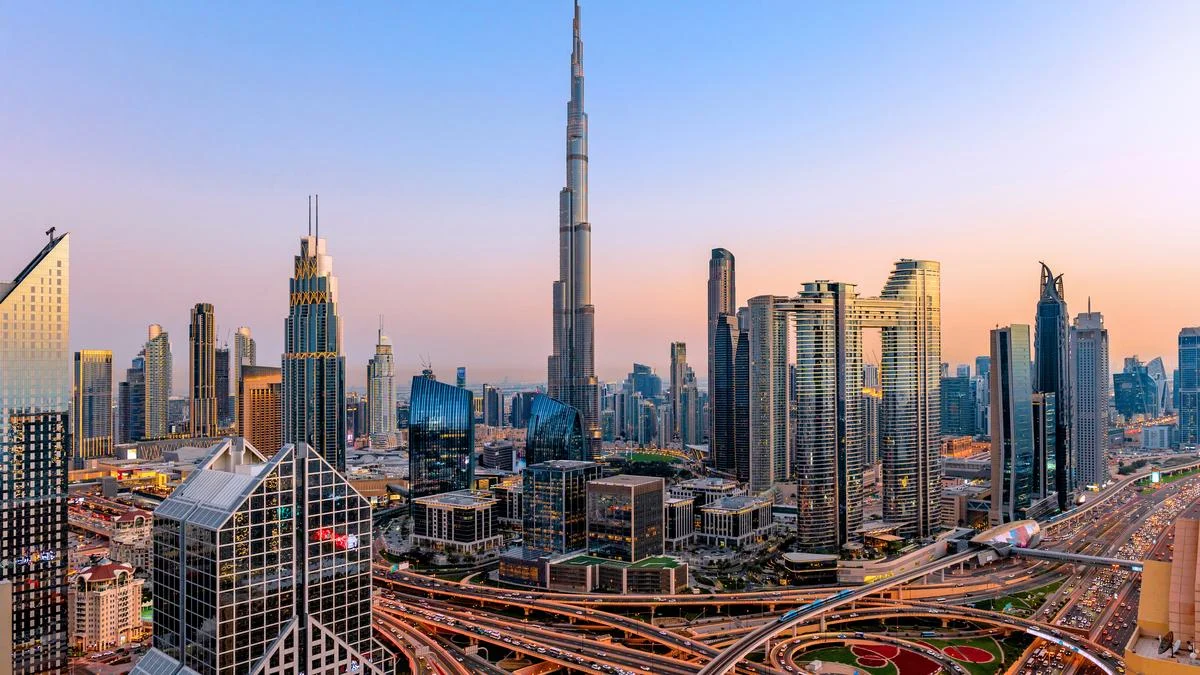
Dubai, UAE – In the face of regional geopolitical anxieties that sent ripples of concern across global financial markets, Dubai’s property sector has demonstrated a remarkable resilience, underpinned by sustained demand and a deep-rooted connection with international investors, particularly from India. Contrary to narratives of capital flight and market downturns, recent data reveals a robust performance, with Indian buyers playing a pivotal role in its continued strength.
The Indian Connection: A Cornerstone of Dubai’s Success
Last year, the significance of Indian homebuyers in Dubai’s real estate landscape became starkly evident. Approximately one in five homes sold in the emirate were acquired by Indian nationals, constituting a substantial 22% of all homebuyers. This figure eclipses that of British buyers (17%) and significantly surpasses Chinese investors (14%). This deep engagement is not a recent phenomenon; Indian traders, families, and corporations have been integral to Dubai’s commercial fabric for generations, contributing significantly to its economic dynamism and success. The emirate, in turn, has consistently delivered value and opportunities to this key demographic.
The resilience of this relationship was put to the test in late March, a period marked by heightened media speculation regarding capital exodus from the Middle East. During this time, Dubai homebuyers, a considerable proportion of whom are Indian, collectively invested an impressive $2.7 billion (approximately ₹26,058 crore) into the property market. Analysis of the Dubai property market for that period reveals this to have been the strongest week of the quarter, a testament to the enduring confidence in the emirate’s economic prospects.
The Off-Plan Surge: A Four-Year Bet on Dubai’s Future
What adds another layer of intrigue to this robust investment activity is the nature of these transactions. A surprising three-quarters of these homes were purchased off-plan, meaning buyers committed to properties that were yet to be constructed. This implies a projected waiting period of approximately four years, with keys likely to be handed over around 2029. This substantial commitment to future developments, even amidst prevailing concerns about the city’s stability, raises a pertinent question: why would investors make such a significant, long-term wager on a city many believed to be in peril?
The answer, as many astute investors understand, lies in the ability to distinguish between transient market panic and fundamental economic realities. The metaphor of stirring a glass of water from a river aptly illustrates this point. While panic can temporarily cloud judgment and obscure underlying strengths, allowing the situation to stabilize reveals that the core elements remain unchanged. For shrewd investors, the ability to see through such periods of gloom and identify enduring value is paramount.
Hysteria vs. Hard Facts: A Disconnect in Market Perception
The disparity between media-driven hysteria and concrete market data this spring was particularly pronounced. While shares in Dubai-listed developers experienced a notable decline of 34%, suggesting widespread investor apprehension, actual home prices, according to research, only saw a modest correction of between 4% and 7%. This indicates that the market’s fundamentals remained largely intact, with price adjustments being far more measured than the stock market’s reaction might have implied.
Following the escalation of regional tensions, buyer inquiries saw a temporary dip of 40% in the immediate aftermath. However, the market demonstrated its capacity to absorb this shock. The period from January to March witnessed total sales reaching approximately $37 billion (₹3.5 lakh crore), representing a significant 19% increase compared to the same period in the previous year. Looking at the full year, transactions up to June are tracking slightly behind the record-breaking performance of 2025, but comfortably maintain a 15% lead over 2024 figures.
Understanding Dubai’s Enduring Appeal: A Diversified and Resilient Market
Knowledge of the City: Beyond the Skyline
Those who predicted a downturn in Dubai’s property market often exhibit a fundamental misunderstanding of the city’s evolution. They persist in viewing it as a nascent boomtown characterized by a dramatic skyline, rather than recognizing it as a sophisticated, diversified, and remarkably resilient market. A key factor contributing to this resilience is the financing structure of property acquisitions. Around 80% of homes in Dubai are purchased without the reliance on mortgages. This means that a considerable majority of buyers are insulated from the immediate pressures of margin calls or forced sales that can exacerbate downturns in more leveraged markets.
Furthermore, Dubai’s appeal extends across a global spectrum of buyers, with individuals hailing from over 150 countries. In the past year alone, an impressive 129,600 individuals made their first property purchase in the emirate, marking a 23% increase. This broad and diverse buyer base acts as a significant buffer, capable of absorbing market fluctuations and mitigating the impact of sentiment shifts among any single nationality.
The Indian Advantage: Currency Hedging and Attractive Returns
The symbiotic relationship between India and Dubai is no secret, with an estimated 2 million Indians residing and working in the emirate, forming its largest expatriate community by a considerable margin. The reasons for this strong Indian presence are multifaceted. Primarily, the UAE Dirham’s peg to the US Dollar provides a stable currency environment. As the Indian Rupee experiences fluctuations, investing in Dubai property effectively serves as a currency hedge, offering a degree of financial stability.
Beyond currency considerations, Dubai’s property market offers attractive financial returns. Gross rental yields currently stand at approximately 6.8% per annum, before accounting for service charges. Adding to this allure is the absence of income tax, capital gains tax, and property tax, creating an exceptionally favorable environment for investors seeking both capital appreciation and steady income.
New Avenues for Growth: Entrepreneurship and Residency
New Hope for Entrepreneurs and Investors
The appeal of Dubai for Indian entrepreneurs transcends mere real estate investment. The Dubai International Financial Centre (DIFC), a leading global financial hub, has recently surpassed the milestone of 10,000 active registered firms, a testament to its growing prominence. This achievement follows a substantial 30% surge in registrations over the past year. Notably, even during the first quarter of the year, coinciding with the peak of regional geopolitical tensions, DIFC welcomed 775 new firms. Of these, approximately one-third established their regional presence in March, underscoring Dubai’s continued attractiveness as a strategic base for regional operations.
Dubai is no longer solely viewed as a destination for parking capital; it is increasingly recognized as a vibrant ecosystem for building businesses, raising capital, and serving the broader Middle Eastern and African markets. The free zones, such as DIFC, offer a compelling proposition with 100% foreign ownership, allowing founders to maintain full control of their ventures without the necessity of relinquishing equity to local partners.
Widening the Door: Golden Visa and Enhanced Accessibility
A significant development in February further enhanced Dubai’s appeal to Indian investors. The UAE’s coveted 10-year Golden Visa, a long-term residency program, traditionally required a property investment of AED 2 million (approximately ₹5.2 crore) to qualify. Under the updated regulations, a mortgaged home now also meets this threshold. This adjustment is estimated to bring between 40% and 50% more potential buyers within reach of obtaining residency, making the Dubai dream more attainable for a broader segment of Indian business owners who may have previously found the investment requirements prohibitive.
Navigating the Market: Realistic Expectations and Future Outlook
While the overall picture is one of robust growth and resilience, it is crucial to acknowledge that investing in any large market carries inherent risks and nuances. Dubai, like any dynamic global city, is not a monolithic entity. Certain areas, while heavily marketed to Indian buyers, may experience localized price corrections. Jumeirah Village Circle (JVC) and Jumeirah Village Triangle (JVT) are two such areas where a significant volume of new properties is under development, and prices have yet to fully adjust to this increased supply. Consequently, these areas are forecast to see a modest price decrease of around 3% this year.
However, these localized adjustments do not detract from the broader positive outlook. The central forecast for residential property price growth in Dubai for 2026 remains robust, projected at 4% to 7%. This sustained and measured growth indicates a market that is not experiencing speculative inflation but rather maturing into a stable and predictable investment landscape.
The Enduring Legacy: Dubai’s Foundation Remains Strong
For a few weeks this spring, the prevailing media narrative created a fog of uncertainty, making it difficult to discern the true state of the Dubai property market. However, the underlying fundamentals of the city’s economy and its property sector have remained steadfast. Indians have a long and established history of building and investing in Dubai, contributing significantly to its development. The emirate continues to endure as an exceptional destination for building businesses, making sound investments, and raising families, a testament to its enduring appeal and inherent strength.
By [Author Name/Title – e.g., A Senior Analyst at ANAROCK Middle East]
