

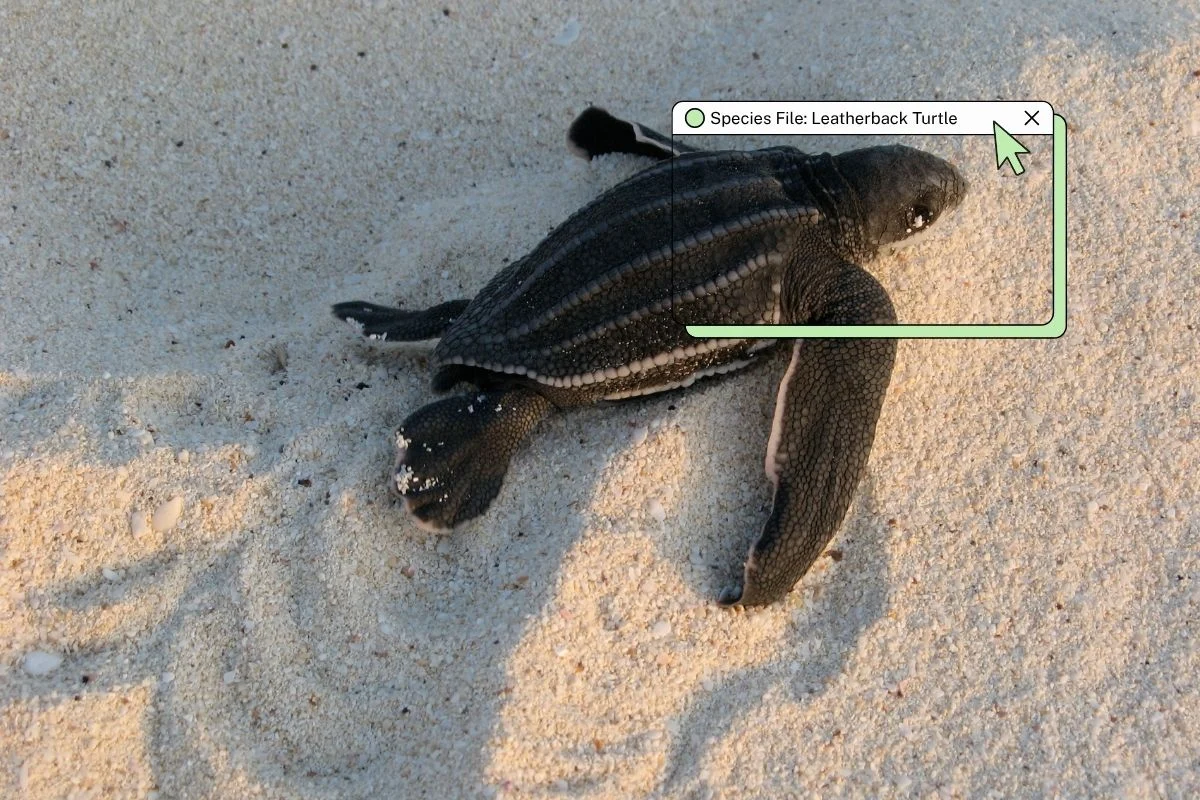
Every winter, a silent and ancient ritual unfolds on the pristine shores of Galathea Bay, located at the southernmost tip of Great Nicobar Island. Under the veil of darkness, hundreds of colossal, leathery-shelled reptiles emerge from the surf. These are leatherback turtles, the largest of all living sea turtles, returning to the very beaches where they were born decades earlier. With rhythmic, heavy movements, they dig deep trenches in the sand, deposit their eggs, and meticulously cover them before vanishing back into the Indian Ocean.
For millions of years, this cycle has remained unbroken. However, this ancient lineage now faces a modern existential threat. The Government of India’s ambitious Great Nicobar Island project—a ₹81,000 crore (approximately $9.8 billion) "holistic development" plan—proposes to transform this quiet sanctuary into a massive international trans-shipment port. As the gears of industrialization begin to turn, the survival of the leatherback turtle in the northern Indian Ocean hangs in a delicate balance.
Main Facts: The Biology of a Living Dinosaur
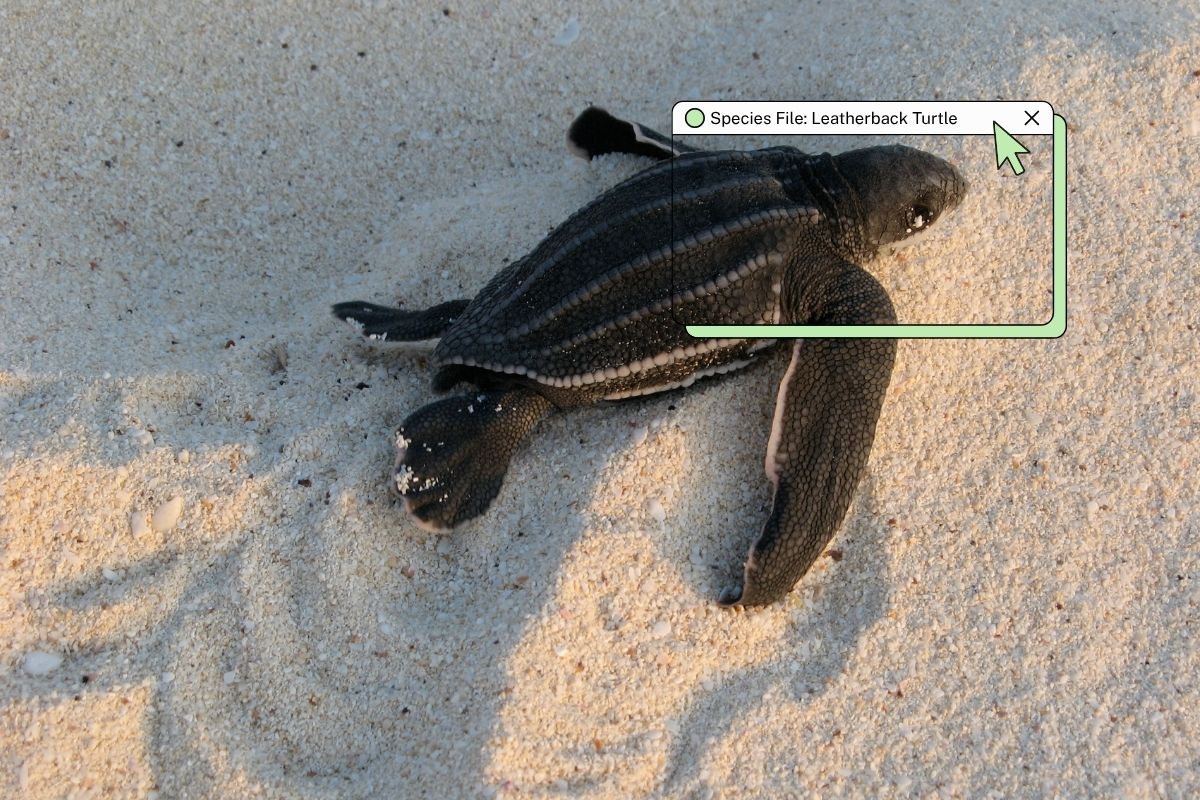
The leatherback turtle (Dermochelys coriacea) is a biological marvel. Unlike other sea turtles, such as the Green or Olive Ridley, the leatherback lacks a hard, bony shell. Instead, its carapace is composed of a thick, leathery skin embedded with thousands of tiny bone plates, creating a flexible, longitudinal-ridged surface. This unique anatomy is not merely aesthetic; it is an evolutionary adaptation that allows the turtle to withstand the immense pressure of the deep ocean.
Physical Characteristics and Habitat
Adult leatherbacks are giants of the reptile world. They can grow up to two meters in length and weigh as much as 1,000 kilograms—roughly the size of a compact car. Their streamlined bodies and powerful front flippers make them incredible long-distance swimmers, capable of migrating thousands of kilometers between foraging grounds and nesting sites.
While they are found in nearly every ocean except the Arctic and Antarctic, their nesting requirements are highly specific. They seek out expansive, deep-water-access sandy beaches. In the Indian context, the Andaman and Nicobar Islands serve as the only significant nesting sites for the species, with Galathea Bay on Great Nicobar Island being the largest and most critical nesting ground in the entire northern Indian Ocean.
Ecological Role
Leatherbacks play a vital role in maintaining marine ecosystem health. Their diet consists almost exclusively of jellyfish. By consuming massive quantities of these gelatinous creatures, leatherbacks help keep jellyfish populations in check. Without this natural predation, overpopulated jellyfish swarms can decimate fish larvae populations, leading to the collapse of local fisheries and disrupting the delicate balance of the marine food web.
Chronology: From the Tsunami to the Trans-shipment Port
The history of the leatherback in the Nicobar archipelago is one of resilience. To understand the current crisis, one must look at the timeline of the last two decades:
- 2004: The Great Tsunami: The Indian Ocean tsunami caused catastrophic damage to the Andaman and Nicobar Islands. Nesting beaches were washed away or permanently altered. For several years, researchers feared the leatherbacks might abandon the site. However, within a decade, the turtles showed remarkable site fidelity, returning to the newly formed shorelines of Galathea Bay.
- 2021: The NITI Aayog Proposal: The policy think-tank NITI Aayog released a vision document for the "Holistic Development of Great Nicobar Island." This plan identified Galathea Bay—previously a protected Wildlife Sanctuary—as the primary site for an international trans-shipment port due to its strategic location near the Malacca Strait.
- January 2021: Denotification of the Sanctuary: In a controversial move, the National Board for Wildlife (NBWL) denotified the Galathea Bay Wildlife Sanctuary to pave the way for the port project. This effectively stripped the area of its highest level of environmental protection.
- 2022-2023: Environmental Clearances: Despite vocal opposition from marine biologists and indigenous rights groups, the Ministry of Environment, Forest and Climate Change (MoEFCC) granted environmental and forest clearances for the project.
- 2024: Legal Challenges and the NGT: The National Green Tribunal (NGT) reviewed petitions against the project. While the NGT acknowledged the ecological sensitivity of the site, it ultimately ruled in favor of the project, citing "strategic importance" and "adequate safeguards" proposed by the government.
Supporting Data: The Cost of Development
The scale of the Great Nicobar Island project is unprecedented for the region. The ₹81,000 crore investment is not limited to a port; it is a total transformation of the island’s southern tip.
Infrastructure Components:
- International Container Trans-shipment Port (ICTP): Designed to handle millions of containers annually, located directly on the leatherback nesting beaches.
- Greenfield International Airport: Planned to support both military and civilian traffic.
- Power Plant: A dual gas and solar power plant to fuel the new city.
- Township: A planned urban center expected to house hundreds of thousands of people on an island currently home to only a few thousand residents and indigenous tribes.
Environmental Impact by the Numbers:
- Deforestation: The project will necessitate the felling of approximately one million trees within a primary rainforest.
- Land Diversion: Roughly 130 square kilometers of forest land will be diverted for industrial and residential use.
- Nesting Loss: Galathea Bay accounts for nearly 80% of leatherback nesting activity in the Nicobar group. The construction of breakwaters and berths will physically eliminate the specific beach profile required by these turtles.
- Legal Status: The leatherback is listed as Globally Vulnerable by the IUCN. In India, it is a Schedule I species under the Wildlife (Protection) Act, 1972, which theoretically grants it the same level of protection as the Tiger or the Asian Elephant.
Official Responses: Balancing Strategy and Conservation
The Indian government’s stance has remained consistent: the project is a matter of national security and economic necessity.
The Government’s Justification:
Officials argue that the port is essential for India to compete with regional hubs like Colombo and Singapore. Strategically, the island’s proximity to the Great Channel (the "Six Degree Channel") is vital for monitoring maritime traffic in a region of increasing geopolitical tension.
Mitigation Claims:
To address environmental concerns, the government has proposed several mitigation strategies:
- Compensatory Afforestation: Planting trees in the northern state of Haryana to "offset" the loss of tropical rainforests in Nicobar—a move heavily criticized by ecologists who point out that a desert-adjacent forest in Haryana cannot replace a million-year-old tropical ecosystem.
- Nesting Site Relocation: The government has suggested that turtles can be encouraged to nest on other beaches. However, marine biologists argue that leatherbacks exhibit high site fidelity and cannot simply be "moved" to a different beach that may lack the necessary depth or current profiles.
- The NGT Ruling: In early 2024, the National Green Tribunal stated that while the project must proceed, a High-Powered Committee would oversee the implementation of safeguards to ensure that the "development does not come at the cost of the island’s unique biodiversity."
Implications: A Point of No Return
The transformation of Galathea Bay carries implications that extend far beyond the borders of India.
The Threat of Light and Noise Pollution
Sea turtles are highly sensitive to light. Hatchlings use the natural light of the horizon to find the ocean. Artificial lighting from a 24-hour port and township will disorient baby turtles, leading them away from the sea and toward certain death from exhaustion or predators. Furthermore, the noise from dredging and massive container ships can disrupt the acoustic environment of the bay, potentially affecting the turtles’ navigation.
The Loss of Evolutionary Heritage
The leatherback turtle is a "relict" species—the last remaining member of a family of turtles (Dermochelyidae) that dates back over 100 million years. To destroy one of its primary nesting grounds is to gamble with the survival of an entire evolutionary branch.
The Indigenous Factor
While the turtles are the focus of ecological concern, the project also encroaches on the ancestral lands of the Shompen and Nicobarese tribes. The influx of a massive migrant population and the destruction of the forest threaten the food security and cultural survival of these isolated communities, who have lived in harmony with the leatherbacks for millennia.
Conclusion
The Great Nicobar Island project represents a classic developmental paradox. On one hand, it offers economic growth and maritime security; on the other, it threatens to erase a biological treasure that has survived since the age of the dinosaurs. As construction looms, Galathea Bay stands as a testament to what we are willing to sacrifice in the name of progress. Whether the leatherback turtle will continue to return to these shores, or whether the 2020s will mark the end of their million-year journey, remains one of the most pressing environmental questions of our time.
