

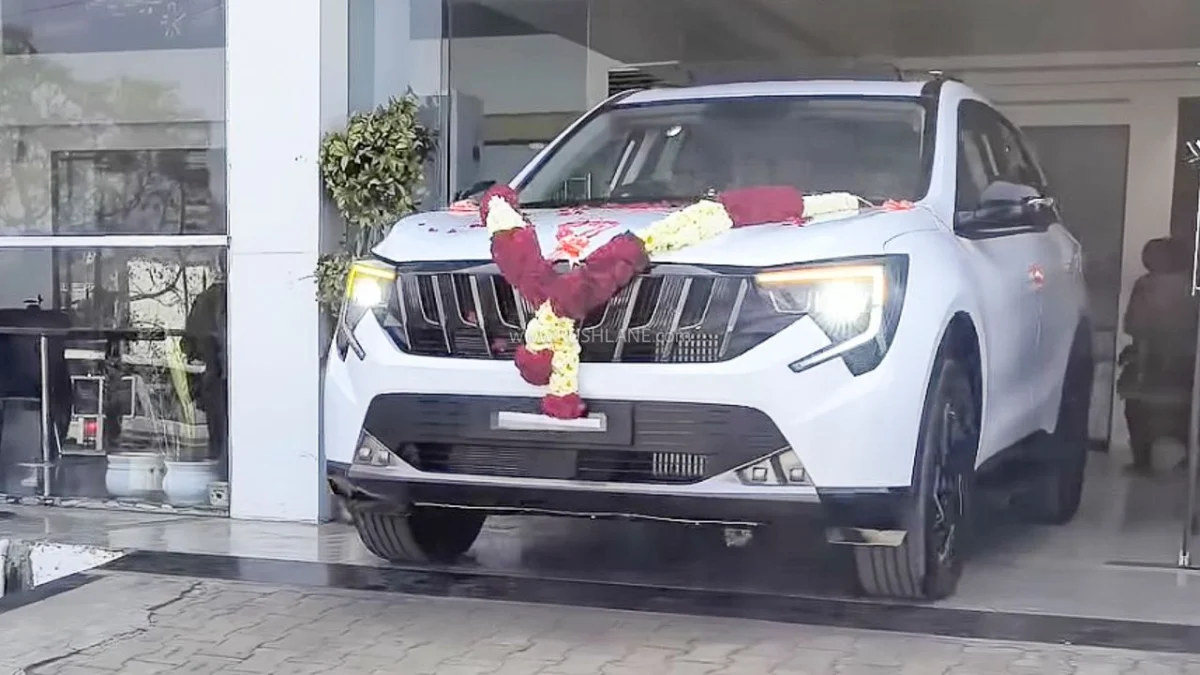
The Indian automotive landscape has witnessed a seismic shift in the premium SUV segment over the last several years, but few narratives are as compelling as the meteoric rise of the Mahindra XUV 7XO. Mahindra & Mahindra (M&M), a stalwart of the Indian SUV market, has officially announced that its latest flagship, the XUV 7XO, has crossed the significant sales milestone of 70,000 units within just seven months of its commercial launch.
Introduced in January 2026 as the comprehensively updated successor to the iconic XUV7OO, the XUV 7XO has not only maintained the momentum of its predecessor but has accelerated past it, setting new records for monthly averages and market share. This achievement underscores a growing trend in the Indian market: a decisive shift toward high-tech, feature-rich premium SUVs that offer a blend of performance, safety, and "sophisticated toughness."
Main Facts: A New Sales Titan Emerges
The headline figure—70,000 units in seven months—represents more than just a successful product launch; it signifies a dominant market position. Launched with a starting price of Rs 13.66 lakh, the XUV 7XO was positioned to bridge the gap between mid-size SUVs and luxury offerings.
Key highlights of this sales performance include:
- Cumulative Sales: Over 70,000 units between January 2026 and July 2026.
- Monthly Average: The vehicle is currently averaging approximately 9,285 units per month.
- Launch Momentum: The vehicle debuted with five-figure sales in its very first month (10,133 units in January 2026).
- Segment Leadership: In the 4.5m to 4.8m SUV category, the XUV 7XO has consistently outperformed direct rivals from Tata Motors and MG Motor India.
The XUV 7XO’s success is attributed to a "comprehensive update" strategy. While it retains the robust DNA of the XUV7OO, the 7XO introduced upgraded Level 2+ ADAS (Advanced Driver Assistance Systems), a more refined cabin experience with higher-quality materials, and a revised exterior design language that aligns with Mahindra’s modern "Twin Peaks" branding.
Chronology: From the XUV7OO Legacy to the 7XO Era
To understand the magnitude of the XUV 7XO’s success, one must look at the chronological evolution of the nameplate. The lineage began with the XUV7OO in 2021, a vehicle that famously garnered over 50,000 bookings within two days of opening.
The 2021–2024 Foundation
When the XUV7OO was launched in late 2021, it recorded 11,964 sales in its partial first year, averaging 2,991 units per month. As production capacity ramped up to meet unprecedented demand, annual sales climbed to 65,371 units in 2022 and 74,434 units in 2023. The year 2024 marked the zenith for the XUV7OO, with sales reaching 90,727 units and a monthly average of 7,561 units.

The 2025 Transition
By 2025, the XUV7OO had begun to see a natural moderation in demand as the product lifecycle matured and competitors refreshed their lineups. Sales for 2025 stood at 81,675 units, with the monthly average dipping to 6,806 units. Industry analysts noted that consumers were beginning to anticipate a mid-life refresh, leading to a slight cooling of the "XUV fever."
January 2026: The Birth of the XUV 7XO
Mahindra responded by not just refreshing the car, but rebranding and significantly upgrading it. The XUV 7XO was launched in January 2026. The impact was immediate:
- January 2026: 10,133 units (The strongest start for the nameplate since its inception).
- February 2026: 9,112 units.
- March 2026: 9,210 units.
- Q2 2026 (April–June): Sales remained robust, consistently staying above the 8,500-unit mark. May 2026 saw a peak for the quarter with 9,338 units.
- July 2026: 8,233 units.
This trajectory indicates that the XUV 7XO is on track to shatter the previous annual sales record of 90,727 units set by the XUV7OO in 2024. At the current pace, the 7XO could potentially cross the 1,10,000-unit mark by the end of the calendar year.
Supporting Data: Market Analysis and Competitor Comparison
The performance of the XUV 7XO is most impressive when viewed through the lens of its competitive environment. In the premium SUV space (roughly 4.5m to 4.8m in length), Mahindra currently holds a commanding lead.
July 2026 Segment Snapshot
The following data highlights the sales distribution in this specific segment for July 2026:
- Mahindra Scorpio (Classic + N): 16,009 units
- Mahindra XUV 7XO: 8,233 units
- Tata Harrier (including Harrier EV): 3,301 units
- Tata Safari: 1,453 units
- MG Hector / Hector Plus: 713 units
Analyzing the "Internal" Competition
While the Scorpio range leads the segment, it is important to note that Scorpio’s numbers are a combined total of the Scorpio Classic and the Scorpio N. These two models cover a vastly wider price spectrum and cater to both rural/utility markets and urban/premium buyers. In contrast, the XUV 7XO is a singular, premium-focused range. Despite this narrower focus, it has secured the second spot in the segment with ease.
The Tata and MG Gap
The gap between the XUV 7XO and its most direct rivals—the Tata Harrier and Safari—has widened significantly. Even when combining the sales of the Harrier and the Safari (4,754 units total), the XUV 7XO outsells them by nearly 75%. This is particularly notable given that Tata Motors has introduced electric versions of its SUVs to bolster volumes.

MG Motor India’s Hector range, once a formidable challenger in the "internet car" space, has seen its volumes shrink to three digits (713 units), suggesting that the market has moved toward the mechanical sophistication and brand prestige offered by Mahindra.
Official Responses and Corporate Strategy
While Mahindra & Mahindra typically maintains a quiet dignity regarding monthly fluctuations, the company’s recent investor presentations and press releases highlight a clear strategic shift that enabled the 7XO’s success.
Capacity Expansion
A recurring criticism of the original XUV7OO was the excruciatingly long waiting periods, which sometimes stretched beyond 18 months. Mahindra officials have noted that for the XUV 7XO, the company "proactively expanded production capacity at the Chakan plant" before the launch. By streamlining the supply chain for critical semiconductors and high-tech components like ADAS sensors, Mahindra has managed to keep waiting periods for the 7XO within a more reasonable 2-to-4-month window for most variants.
The "Tech-First" Philosophy
Official statements from Mahindra’s design and engineering wings suggest that the 7XO was developed with a "tech-first" mindset. "The XUV 7XO is not just an update; it is a statement of our technological prowess," a senior executive noted during the January launch. The inclusion of more advanced AI-driven telematics and a seamless twin-screen infotainment setup was a direct response to customer feedback requesting a more "European" feel to the interior interface.
Pricing Strategy
By keeping the entry-level pricing competitive at Rs 13.66 lakh while offering high-end luxury features in the top-tier "AX7" and "AX7L" trims, Mahindra has successfully captured both the "upgraders" (moving from sub-compact SUVs) and "luxury seekers" (who might otherwise consider entry-level luxury sedans).
Implications: What This Means for the Future
The success of the XUV 7XO has several far-reaching implications for the Indian automotive industry and Mahindra’s future roadmap.
1. The Premiumization of the Indian Market
The fact that a vehicle priced predominantly between Rs 18 lakh and Rs 28 lakh (on-road) is selling nearly 10,000 units a month is a testament to the "premiumization" of the Indian car buyer. Consumers are no longer just looking for value-for-money; they are willing to pay a premium for safety ratings (the XUV series consistently secures 5-star GNCAP ratings) and cutting-edge technology.

2. Pressure on Competitors
The XUV 7XO’s dominance puts immense pressure on Tata Motors and MG. Tata’s reliance on the Harrier/Safari duo to anchor its premium ICE (Internal Combustion Engine) portfolio is being tested. To counter Mahindra’s momentum, industry experts predict that Tata may need to accelerate the next generation of its premium SUVs or introduce more aggressive feature updates beyond just "Dark Editions" or software tweaks.
3. Paving the Way for the XEV Range
The XUV 7XO serves as a bridge to Mahindra’s upcoming "Born Electric" (BE) and XEV range. By habituating customers to the "7XO" nomenclature and its high-tech cabin, Mahindra is preparing its customer base for the eventual transition to the XEV 9S and other electric flagships. The success of the 7XO proves that the brand has the equity to sell high-value vehicles, a prerequisite for the success of premium EVs.
4. Secondary Market Stability
The strong sales of the 7XO are also buoying the resale value of the older XUV7OO. As the 7XO becomes the new "must-have," the 7OO is becoming a highly sought-after model in the used car market, further strengthening Mahindra’s brand ecosystem.
Conclusion
The Mahindra XUV 7XO’s achievement of 70,000 sales in seven months is a landmark moment in the Indian automotive story. It represents the perfect alignment of product, production, and positioning. By taking the strengths of the XUV7OO and addressing its weaknesses—specifically in design refinement and delivery timelines—Mahindra has created a product that currently appears untouchable in its segment. As the company looks toward the final quarter of 2026, the XUV 7XO is not just a sales leader; it is the definitive benchmark for what an Indian premium SUV can and should be.
