

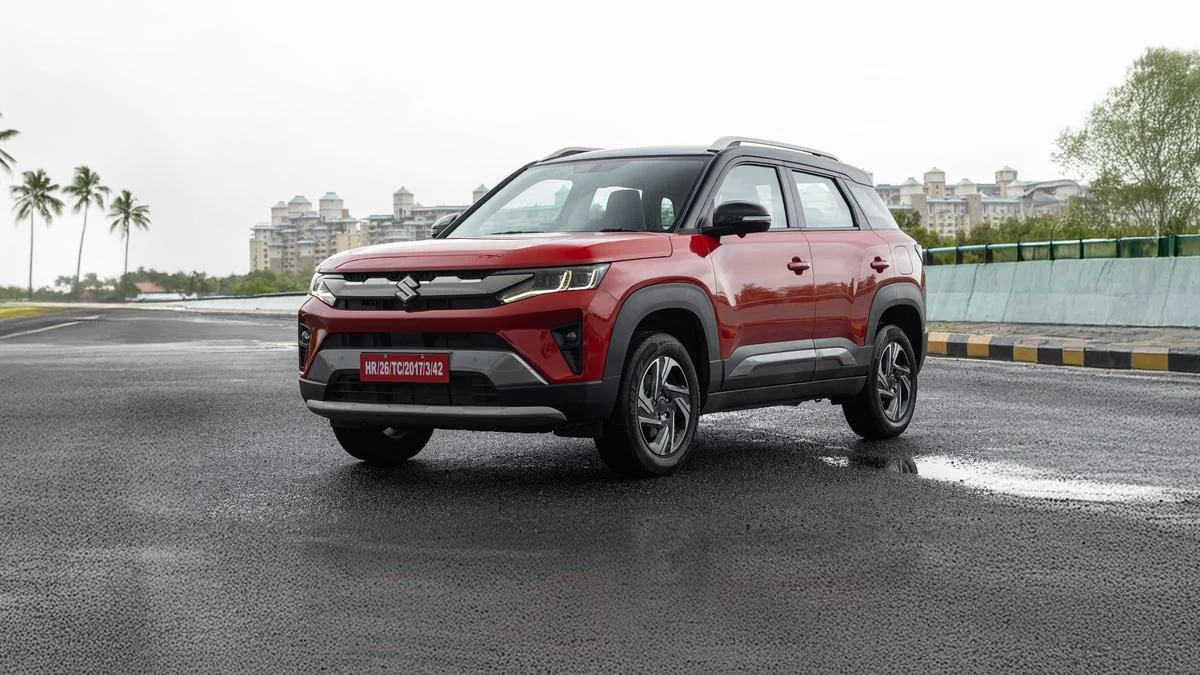
The Indian automotive market, particularly the sub-four-meter compact SUV segment, has witnessed a seismic shift in consumer preferences over the last five years. Once a category defined solely by fuel efficiency and price sensitivity, it has transformed into a battleground for performance, premium features, and high-level safety ratings. In response to this shifting paradigm, Maruti Suzuki has introduced a significant update to one of its most reliable workhorses: the Brezza. By integrating the 1.0-litre Boosterjet turbo-petrol engine, Maruti Suzuki is not just adding a new variant; it is recalibrating the Brezza’s identity to meet the demands of a more discerning, performance-oriented generation of car buyers.
Main Facts: The Boosterjet Intervention
The headline of this update is the return of the 1.0-litre, three-cylinder Boosterjet turbo-petrol engine. This powerplant produces 110.12 PS of peak power and 170 Nm of torque. While these figures may not claim the absolute top spot in the segment’s spec sheets, they represent a monumental leap over the existing 1.5-litre naturally aspirated K-series engine in terms of character and delivery.
The new Brezza Turbo is currently offered with a five-speed manual transmission (often refined as a six-speed in high-output configurations, though the manual remains the enthusiast’s choice here), designed to harness the engine’s broader torque spread. The vehicle retains its signature upright stance, but the inclusion of the turbocharger addresses the "performance gap" that critics often cited against the previous iterations.
Key highlights of the new offering include:
- Engine: 1.0L Boosterjet Turbo-Petrol.
- Output: 110.12 PS / 170 Nm.
- Safety: 5-Star Bharat NCAP rating.
- Interior Tech: 10.1-inch SmartPlay Pro+ touchscreen.
- Pricing: Competitive entry at ₹7.40 lakh (ex-showroom).
Chronology: From Diesel Dominance to the Turbo Era
The journey of the Brezza is a mirror to the evolution of the Indian SUV market. Understanding where the Brezza stands today requires a look back at its decade-long trajectory.

2016–2020: The Diesel Foundation
Launched originally as the Vitara Brezza, the SUV was initially a diesel-only offering. Powered by the venerable 1.3-litre DDiS engine sourced from Fiat, it became an overnight sensation. Its success established Maruti Suzuki as a serious player in the SUV space, moving away from its image as purely a hatchback manufacturer.
2020–2022: The Petrol Transition
With the onset of BS6 emission norms, Maruti Suzuki made the bold decision to exit the diesel segment entirely. The Brezza transitioned to a 1.5-litre K15B naturally aspirated petrol engine. While smooth and reliable, this engine lacked the "punch" of the old diesel turbo, making the Brezza feel more like a sensible commuter than an aspirational SUV.
2022–2024: The Premium Makeover
In 2022, the "Vitara" prefix was dropped, and the second-generation Brezza was launched. It brought a more sophisticated design, a sunroof (a first for Maruti), and a 6-speed automatic gearbox. However, the segment was simultaneously being flooded by turbocharged rivals from Hyundai, Kia, and Tata.
2025: The Turbo Resurrection
The current introduction of the 1.0-litre Boosterjet marks the fourth major phase of the Brezza’s life. It signifies Maruti’s admission that while naturally aspirated engines are excellent for city life, the modern highway-driving Indian consumer craves the mid-range surge that only a turbocharger can provide.
Supporting Data: Performance, Safety, and Cabin Refinement
The Brezza 1.0 Turbo is a data-driven response to market feedback. Maruti Suzuki has focused on three specific pillars: mechanical urgency, occupant safety, and technological parity.

Mechanical Dynamics
The 1.0L Boosterjet’s 170 Nm of torque is available much lower in the rev range compared to the 1.5L naturally aspirated engine. This "muscle" is particularly evident during:
- Rolling Starts: Quicker off-the-line acceleration in urban stop-and-go traffic.
- Highway Overtaking: The ability to move from 80 km/h to 120 km/h without needing frequent downshifts.
- Gradient Climbing: Better performance when fully loaded on mountain passes.
The 1.5-litre petrol remains in the lineup, paired with a six-speed torque converter automatic, serving the "convenience-first" buyer. The 1.0L Turbo, meanwhile, targets the "driver-first" demographic.
Safety Certification
Perhaps the most significant data point for the new Brezza is its 5-star Bharat NCAP safety rating. In previous years, Maruti Suzuki faced criticism regarding the structural integrity of some of its lighter models. By achieving a top-tier rating with the Brezza, the company has neutralized one of the primary selling points of its rivals, such as the Tata Nexon and Mahindra XUV 3XO. The rating applies across the variant lineup, ensuring that safety is not a luxury reserved for the most expensive trim.
Interior and Ergonomics
The cabin has undergone a technological overhaul. The center stage is taken by a 10.1-inch touchscreen infotainment system that supports wireless Android Auto and Apple CarPlay. Higher variants now include:
- Ventilated Front Seats: A necessity in India’s tropical climate.
- Wireless Charging: Reducing cable clutter in the cockpit.
- 360-Degree Camera: Enhancing parkability in tight urban spots.
- Heads-Up Display (HUD): Allowing the driver to keep eyes on the road.
Official Responses and Strategic Direction
While Maruti Suzuki typically maintains a conservative public stance, the launch of the Brezza 1.0 Turbo reflects a broader corporate strategy often discussed by the leadership at Maruti Suzuki India Limited (MSIL).

The company’s shift toward "Boosterjet" technology is an acknowledgement that the "one-size-fits-all" approach of the K-series engine is no longer sufficient for a market divided into distinct niches. Official marketing materials emphasize that the Brezza is no longer just a "sensible" choice but a "spirited" one.
Industry analysts suggest that Maruti’s move is also a defensive play to protect its market share from the "European threat." With the entry of the Skoda Kylaq and the continued dominance of the Hyundai-Kia duo, Maruti Suzuki had to prove that it could offer more than just low maintenance and high resale value. By matching the performance specs of its rivals, Maruti is effectively telling the market that "The King of the Road" is ready to fight on new terms.
Implications: Can the Brezza Reclaim Its Throne?
The introduction of the Turbo engine has far-reaching implications for the compact SUV segment and for Maruti Suzuki’s future.
The Competition Landscape
The compact SUV segment is arguably the most crowded in the Indian industry. The Brezza faces formidable opponents:
- Tata Nexon: The segment leader in safety and feature innovation.
- Hyundai Venue & Kia Sonet: The leaders in powertrain diversity (DCT, iMT, Diesel, Turbo-Petrol).
- Mahindra XUV 3XO: The performance powerhouse with the largest-in-class panoramic sunroof.
- Skoda Kylaq: The newcomer focusing on European driving dynamics.
The Brezza’s advantage lies in its balance. It may not have the fastest 0-100 km/h time (the XUV 3XO likely holds that), nor the most futuristic interior (the Sonet might take that crown), but it offers a "Goldilocks" solution. It provides enough performance, enough features, and superior peace of mind.

The Ownership Proposition
The most significant implication of any Maruti launch is the "Network Effect." Maruti Suzuki’s service footprint is unparalleled. For a buyer in a Tier-3 city or a rural district, the ability to get a turbocharged engine serviced with the same ease as a basic hatchback is a massive draw. The availability of spare parts and the familiarity of local technicians with the Maruti platform ensure that the "total cost of ownership" remains the lowest in the class, even with more complex turbo technology.
Price as a Catalyst
With the LXi Turbo variant starting at ₹7.40 lakh, Maruti Suzuki has positioned the Brezza Turbo as an accessible performance vehicle. By undercutting several key rivals in the mid-spec trims, Maruti is leveraging its economies of scale to offer "more car for less money." This pricing strategy is likely to attract young professionals who want a "cool" car but are still budget-conscious.
Conclusion: A Course Correction for the Future
The Maruti Suzuki Brezza 1.0 Turbo is not a reinvention of the wheel; it is a meticulous refinement of a proven formula. By adding the Boosterjet engine, Maruti has addressed the only major chink in the Brezza’s armor: its perceived lack of excitement.
The SUV now stands as a multi-dimensional product. It appeals to the head with its 5-star safety rating and Maruti’s legendary service backing, and it finally appeals to the heart with a punchy, turbocharged driving experience. As the competition continues to raise the bar, the Brezza 1.0 Turbo ensures that Maruti Suzuki remains not just a participant in the segment, but a benchmark.
For the Indian consumer, the message is clear: the most sensible choice in the market has just become one of the most interesting ones to drive. Whether this "course correction" will be enough to dominate the charts for the next five years remains to be seen, but the Brezza 1.0 Turbo has undoubtedly given Maruti Suzuki a powerful new aura in the fight for SUV supremacy.
