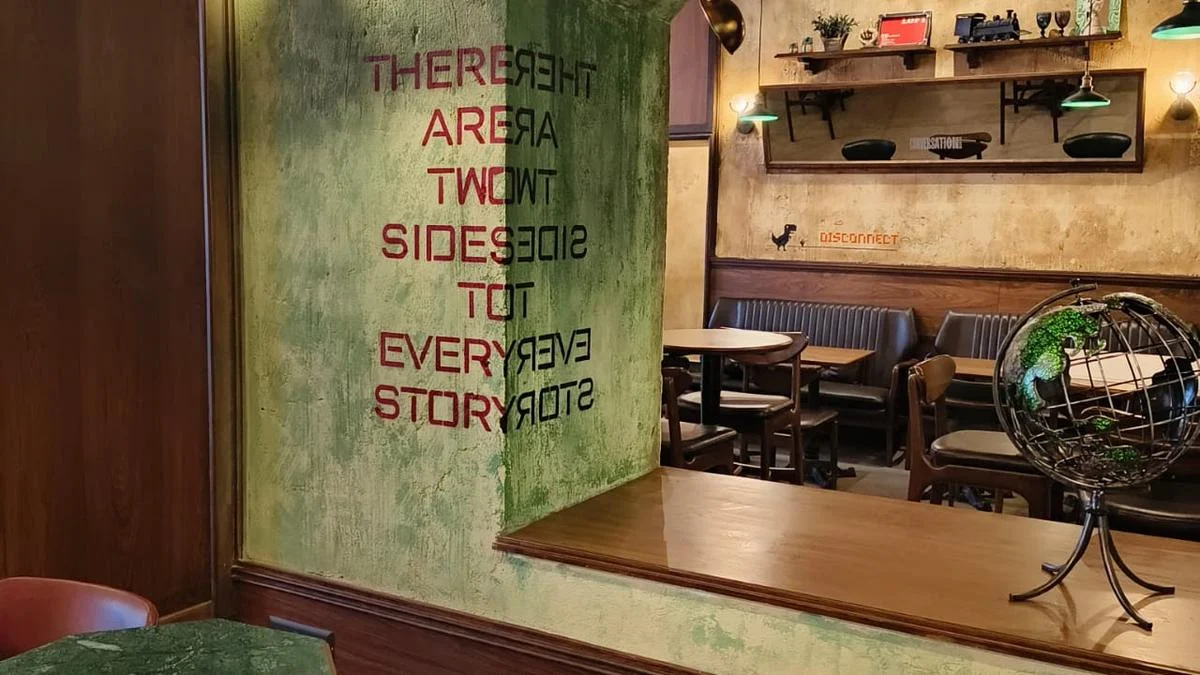
The traditional concept of a bar is often rooted in the familiar: a counter, a row of spirits, and the rhythmic shaking of ice. However, in the heart of Delhi’s Vasant Vihar, a venue named AABBCC is challenging these conventions by operating less like a traditional watering hole and more like a work of speculative fiction. Recently catapulted into the international spotlight after being named among Asia’s 50 Best Bars 2026, AABBCC is now preparing to export its unique brand of "retro-futurism" to the "City of Joy."
On July 17, Kolkata’s Conversation Room will host a high-profile takeover by the AABBCC team. This collaboration represents more than a mere guest shift; it is a convergence of two distinct culinary philosophies and a celebration of India’s growing footprint on the global mixology map.
Main Facts: A Landmark Recognition and a Cross-City Collaboration
The inclusion of AABBCC in the Asia’s 50 Best Bars 2026 list marks a significant milestone for the Indian hospitality sector. In a list traditionally dominated by established hubs like Singapore, Hong Kong, and Tokyo, the presence of a Delhi-based establishment—one that has been operational for less than a year—is a testament to the rapid evolution of the domestic beverage scene.
The Kolkata Takeover
Led by founders Abhimanyu Maheshwari and Ramesh Agarwal, the Conversation Room in Kolkata will serve as the canvas for AABBCC’s experimental universe for one night. The event aims to replicate the multi-sensory experience of the Delhi flagship, bringing ingredient-led cocktails and globally inspired food to a new audience. The collaboration comes at a time when Kolkata is undergoing a "cocktail renaissance," with consumers increasingly seeking complex, narrative-driven drinking experiences over standard pours.
The Asia’s 50 Best Distinction
AABBCC stands as one of only two Indian bars to make the prestigious cut for 2026, the other being Bar Outrigger in Goa. This scarcity highlights the rigorous standards of the "50 Best" organization, which utilizes an anonymous academy of industry experts, journalists, and seasoned travelers to rank venues based on service, innovation, and atmosphere.
Chronology: From Concept to International Acclaim
The journey of AABBCC is characterized by a deliberate, tiered progression, reflected even in its alphabetic name.
Phase 1: The Founding Vision
The bar was conceived by Aditi Singh and her team as a departure from the "speakeasy" trend that has dominated the last decade. Instead of looking backward to the Prohibition era, the founders looked toward a "retro-futurist" aesthetic—a design philosophy that imagines the future through the lens of mid-20th-century optimism.
Phase 2: Opening and Structural Logic
Upon opening in Vasant Vihar, the bar introduced a three-story layout designed to function like chapters in a novella:
The Laboratory (First Floor): A space dedicated to the deconstruction of ingredients, where guests can observe the scientific processes behind the flavors.
The Experience (Second Floor): The primary cocktail bar where the deconstructed elements are assembled into final products, accompanied by a curated food menu.
The Underground (Third Floor): A rooftop space reserved for niche artists and underground music, designed to align with the brand’s avant-garde identity.
Phase 3: The Rapid Ascent
Within months of its launch, the bar’s commitment to "making everything from scratch"—including their own liqueurs and chocolates—caught the attention of international critics. This culminated in the 2026 ranking, barely a year into its operation, setting the stage for the current expansion and collaboration efforts in cities like Kolkata.
Supporting Data: The Mechanics of Retro-Futurist Mixology
AABBCC’s success is built on a foundation of technical rigor and an "ingredient-first" philosophy. Unlike many high-end bars that rely on commercially available modifiers, the AABBCC laboratory functions as a production house.
The "Yesterday, Today, Tomorrow" Menu
The cocktail program is divided into three thematic eras, providing a chronological journey through the palate:
Yesterday: This section focuses on the "archaeology of the classic." It features drinks like the Godfather and the Long Island Iced Tea, but with a radical twist: every component is house-made. By eschewing commercial Amaretto or cola in favor of proprietary distillations and syrups, the bar reclaims the integrity of often-maligned classics.
Today: This segment reflects contemporary global trends, utilizing modern techniques such as milk washing, clarification, and sous-vide infusions to create clean, balanced, and sophisticated profiles.
Tomorrow: The most experimental tier, where the bar pushes the boundaries of what constitutes a "drink." This is where the speculative fiction element is most prominent, featuring ingredients and combinations that challenge the guest’s perception of taste.
Signature Creations
The data from their menu reveals a high level of culinary integration:
Where’s My Rice: A cocktail inspired by the aromatic profile of Thai curry.
Charred Aubergine: A smoky, savory drink famously served with edible ants to provide a formic acid "zing" and a tactile, futuristic edge.
Miyazaki: A bourbon-based dessert cocktail that utilizes house-made chocolate, bridging the gap between the bar and the pastry kitchen.
Economic and Operational Context
A table for two at the Delhi flagship typically ranges between ₹3,500 and ₹4,000, while the Kolkata venue offers a slightly more accessible entry point at ₹2,000 to ₹3,000. These price points reflect the high labor costs associated with "from-scratch" production and the premium nature of the ingredients sourced globally.
Official Responses: Voices from the Vanguard
The leadership behind both AABBCC and Conversation Room emphasizes that their success is rooted in human capital and a willingness to take creative risks.
Aditi Singh, Co-founder of AABBCC, addressed the recent international recognition with a focus on collective effort:
"What has gotten us here is believing in an idea so unique, and secondly our team. This win is for everyone. You work hard every single day… to bring something new to India. The idea was to elevate the cocktail culture and not just cocktails. We want a futuristic product that leaves a mark in your memory."
Regarding the competitive landscape of Asia’s 50 Best, Singh expressed a desire for a larger Indian presence:
"We were hoping that there would be two, three more Indian bars in the top 50 list. But again, out of eight lakh bars, it is a very big feat. The idea is to take India forward to the world."
Abhimanyu Maheshwari, Co-founder of Conversation Room, highlighted the importance of the collaboration for the Kolkata market:
"It’s one of the most interesting bars to emerge from India in a long time. It’s remarkable that a bar which opened less than a year ago has already found a place among Asia’s finest. When we host bars, we don’t simply pour their cocktails. We try to recreate their world."
Implications: The Future of the Indian Bar Scene
The rise of AABBCC and its expansion into Kolkata signals several shifts in the Indian F&B landscape.
1. The Death of the "Standard Bar"
The success of AABBCC suggests that Indian consumers are moving away from generic luxury. The demand is shifting toward "storytelling" and "experiential dining." A bar is no longer just a place to consume alcohol; it is a destination for cultural and sensory engagement.
2. Scientific Mixology as a Standard
The "Laboratory" concept at AABBCC indicates that the line between the kitchen and the bar has permanently blurred. The use of rotary evaporators, centrifuges, and fermentation tanks—once the sole province of Michelin-starred kitchens—is becoming the new standard for elite bars in India.
3. De-centering the Metros
While Delhi and Mumbai have traditionally been the hubs of Indian nightlife, the collaboration with Kolkata suggests a "de-centering" of the scene. Kolkata’s reputation as a "City of Taste" is being leveraged to introduce high-concept mixology to a discerning, culturally rich audience that may have been underserved by the previous "club-heavy" iterations of nightlife.
4. Global Competitiveness
With AABBCC and Bar Outrigger representing India on the Asian stage, the pressure is on for other domestic bars to innovate. The implication is clear: to compete globally, Indian bars must move beyond importing international trends and start exporting indigenous innovation. Whether it is using local ingredients like charred aubergine or recreating a "Godfather" from scratch, the path to the "50 Best" list lies in authenticity and technical mastery.
As Kolkata prepares to step into AABBCC’s retro-futurist story on July 17, the event serves as a reminder that the future of Indian hospitality is not just about what is in the glass, but the narrative that surrounds it. For one night, the boundaries between Delhi and Kolkata—and between the present and the future—will dissolve into a single, well-crafted cocktail.