

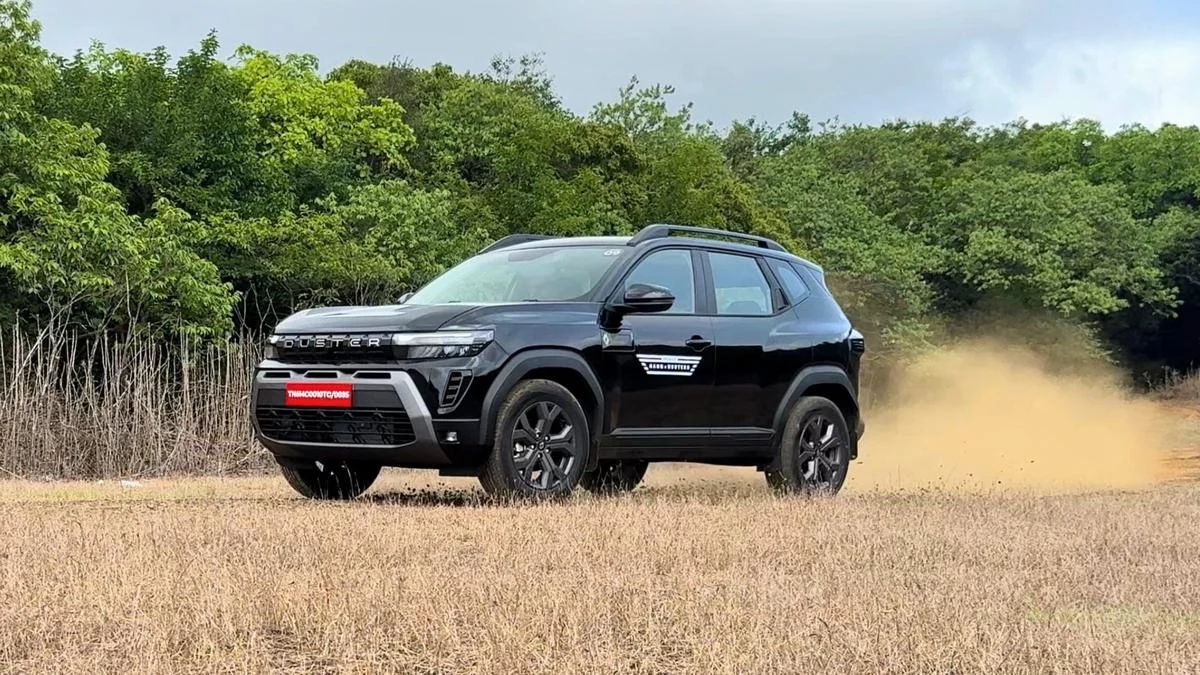
In the high-stakes arena of the Indian automotive market, a persistent skepticism often plagues small-capacity engines. The prevailing wisdom among SUV buyers has long been that "there is no substitute for cubic inches"—an assumption that a larger engine is the only way to achieve the effortless cruising and rugged capability required of a modern SUV. However, the Renault Duster TCe 100 has arrived to systematically dismantle this prejudice. By prioritizing torque delivery, gear calibration, and chassis dynamics over raw displacement, Renault has crafted a vehicle that punches significantly above its weight class.
Main Facts: The TCe 100 at a Glance
The Renault Duster TCe 100 represents a strategic pivot for the French automaker. Positioned as a high-value, high-efficiency alternative in the compact SUV segment, it seeks to balance the legacy of the Duster brand with the demands of modern emissions standards and fuel economy.
Key Specifications
- Engine: 999cc, three-cylinder, turbocharged petrol (TCe 100).
- Performance: 100 PS of maximum power and 160 Nm of peak torque.
- Transmission: Six-speed manual gearbox, specifically calibrated for the TCe unit.
- Price Range: ₹10.49 lakh to ₹13.49 lakh (Ex-showroom).
- Target Competitors: Volkswagen Taigun 1.0 TSI, Skoda Kushaq 1.0 TSI, and the Hyundai Creta/Kia Seltos entry-level variants.
While the 999cc figure might seem modest on paper, the vehicle’s identity is defined by its 160 Nm of torque, which is available from as low as 2,000 rpm. This broad torque spread is the cornerstone of the Duster’s drivability, ensuring that the engine never feels "strangled" by the vehicle’s substantial SUV proportions.
Chronology: The Driving Experience from City to Summit
To truly understand the Duster TCe 100, one must move beyond the spec sheet and into the driver’s seat. The vehicle’s performance reveals itself in stages, evolving as the terrain shifts from urban sprawl to demanding mountain passes.
Phase 1: The Urban Commute
In city traffic, the Duster exhibits a surprising level of "eagerness." Unlike many small-displacement turbocharged engines that suffer from a lethargic "dead zone" before the turbo kicks in, the TCe 100 is remarkably responsive. The throttle mapping is crisp, allowing for quick maneuvers and easy merging. The six-speed manual gearbox plays a vital role here; the ratios are short enough to keep the engine in its power band without requiring constant rowing of the gear lever.

Phase 2: Highway Cruising
Once the city limits are left behind, the Duster settles into a mature rhythm. It maintains three-digit speeds with a level of refinement that challenges the "noisy three-cylinder" stereotype. At 100 km/h, the engine remains within its torque sweet spot, allowing for clean overtaking maneuvers with just a modest squeeze of the accelerator. The stability at high speeds remains a hallmark of the Duster platform, providing a "planted" feel that inspires confidence during long-distance touring.
Phase 3: The Mountain Ascent
The ultimate litmus test for any 1.0-litre engine is a steep incline. On winding mountain roads, where gravity and thin air conspire against performance, the Duster TCe 100 proves its mettle. The engine’s ability to pull through gradients without the driver needing to "chase the redline" is a testament to its mid-range flexibility. While aggressive climbing naturally requires more frequent gear changes, the vehicle never feels out of its depth or breathless, tackling hairpins and steep rises with composure.
Supporting Data: Engineering and Refinement
The success of the TCe 100 is not a matter of luck but a result of meticulous mechanical re-engineering. While Renault shares the basic engine block with the smaller Kiger, the Duster’s powertrain has been significantly overhauled to suit its larger footprint and higher payload capacity.
Powertrain Calibration
The integration of a six-speed manual gearbox (as opposed to a five-speed) allows for better optimization of engine speeds. The first three gears are tuned for tractability—allowing the car to pull from 25 km/h in third gear without protest—while the sixth gear acts as a dedicated overdrive for fuel-efficient highway cruising.
NVH (Noise, Vibration, and Harshness)
Renault’s engineers have invested heavily in insulation and dampening. Three-cylinder engines are inherently unbalanced, often leading to a "thrum" at idle. While a faint vibration is detectable when stationary, it disappears almost entirely once the vehicle is in motion. The cabin remains remarkably quiet, with wind and road noise well-suppressed, placing the Duster on par with more expensive European rivals in terms of perceived quality.

Chassis and Suspension
The Duster’s "Rough Road" DNA remains its greatest asset. The suspension setup is slightly firm, which prevents the "floaty" feeling common in some SUVs. This firmness translates into excellent body control; the vehicle absorbs potholes and ruts with a muted "thud" rather than a jarring bounce. Over dirt tracks and broken surfaces, the Duster maintains its composure, reminding the driver why this model originally became a cult classic.
Official Positioning and Market Strategy
Renault’s decision to push the 1.0-litre TCe as the "sweet spot" of the range reflects a broader industry shift toward downsizing. By offering a European-engineered driving experience at a price point starting at ₹10.49 lakh, Renault is positioning the Duster as the "sensible enthusiast’s" choice.
Competitive Landscape
Traditionally, the "driving enthusiast" in the compact SUV segment looked toward the Volkswagen-Skoda duo (the Taigun and Kushaq). Renault is now making a play for this same demographic. The Duster offers a similar level of communicative steering and chassis balance but adds the advantage of a more rugged suspension and a slightly more spacious interior.
Feature Integration
Renault has also addressed the "feature-war" prevalent in the Indian market. The Techno variant includes:
- Safety: All-wheel disc brakes (a rarity in this class) and a robust safety suite.
- Connectivity: A responsive touchscreen with wireless Android Auto and Apple CarPlay.
- Convenience: A powered tailgate, wireless charging, and a sunroof.
However, the brand has been strategic (and perhaps a bit conservative) in its omissions. The lack of ventilated seats or electric seat adjustment is a notable absence in a market where such features are increasingly seen as standard. Renault appears to have prioritized mechanical excellence and build quality over "gadgetry."

Implications: The Future of the SUV Segment
The Renault Duster TCe 100 carries significant implications for the future of the automotive industry in developing markets.
1. The Normalization of Downsizing
As emissions regulations tighten globally, the "displacement tax" will only increase. The Duster proves that a 1.0-litre engine is not a "compromise" but a viable, high-performance solution when paired with the right turbocharging technology and gearbox. This may pave the way for other manufacturers to move away from larger, naturally aspirated engines.
2. The Return of the Driver’s SUV
For several years, the SUV segment has trended toward "appliance-like" vehicles—cars that are easy to drive but offer zero feedback. The Duster’s communicative steering and engaging manual shift action serve as a reminder that family-oriented practicality and driving pleasure are not mutually exclusive.
3. Value-Driven Sophistication
With a top-end price of ₹13.49 lakh, the Duster TCe 100 offers a sophisticated, "upmarket" interior—featuring dual-tone finishes and premium fabric trims—without the premium price tag of its German or Korean competitors. This "value-premium" positioning is likely to resonate with middle-class buyers who want a vehicle that feels special but remains within a realistic budget.
Conclusion: A Question of Perspective
Ultimately, the Renault Duster TCe 100 is a vehicle that rewards the open-minded. It challenges the buyer to look past the numbers on the brochure and focus on the sensation behind the wheel. It is a car that feels mature, well-engineered, and surprisingly capable, regardless of the terrain.

While the 1.3-litre turbo variant remains the choice for those seeking raw speed, the TCe 100 emerges as the more balanced, rational choice for the majority of Indian families. It delivers the ruggedness of a traditional SUV, the refinement of a European sedan, and the efficiency of a modern compact. In doing so, it proves that the most impressive cars aren’t always the ones with the biggest engines—they are the ones that make you forget about the engine size entirely.
Renault Duster TCe 100 Price Range: ₹10.49 lakh – ₹13.49 lakh.
In association with Motorscribes and The Hindu. For more updates on the latest automotive trends, follow @motorscribes on Instagram.
