

Mumbai, a city that pulsates with an insatiable appetite for the new, witnesses a relentless influx of restaurants each week. Yet, beneath this veneer of novelty lies a stark reality: the vast majority of these establishments struggle to survive beyond their nascent years. Industry estimates, as highlighted by the restaurant technology platform Petpooja, paint a sobering picture, suggesting that a staggering 70-80% of new restaurants in India shutter within their first few years. The confluence of exorbitant rents, the capricious tastes of diners, escalating food costs, and a city perpetually chasing the next culinary sensation creates a formidable gauntlet for nascent businesses. Many fade into obscurity before they can even etch their name into the city’s collective memory.
However, amidst this high attrition rate, a select few Mumbai institutions stand as testaments to resilience and enduring appeal. These are the establishments that have not only survived but thrived, weathering economic downturns, global pandemics, and the relentless churn of the city’s dynamic dining scene. Gulmurg, nestled within The Shalimar Hotel at Kemps Corner, has been a beacon of North Indian cuisine since 1962. Gaylord, a storied name in Churchgate, once a haunt for luminaries like Raj Kapoor and George Harrison, continues to charm patrons nearly seven decades on. And Gallops, overlooking the picturesque Mahalaxmi Racecourse, has been a favored dining destination for generations since the 1980s. Their longevity offers a compelling case study for understanding what it takes to cultivate enduring success in the fiercely competitive restaurant industry.

The Pillars of Longevity: Beyond Nostalgia
The question that naturally arises is: what propels a restaurant to transcend the fleeting allure of nostalgia and achieve lasting significance? The answer, as evidenced by these venerable establishments, lies not in radical reinvention, but in a strategic and meticulous process of refinement. These restaurants have mastered the art of evolving without losing their soul, adapting to contemporary tastes while remaining steadfast in their commitment to core principles.
Gulmurg: A Legacy Reimagined
Gulmurg, under the stewardship of third-generation owner Yash Advani, recently underwent an extensive 18-month restoration. This significant undertaking was not about a complete overhaul, but rather an enhancement designed to breathe new life into a cherished institution. The revamp introduced a sophisticated contemporary bar, complementing it with an elevated cocktail program. Signature drinks like the Nimbubani highball and a fat-washed Old Fashioned signal a nod to modern mixology, but the restaurant’s culinary heart remains firmly rooted in its North Indian heritage.

"We are still a North Indian-focussed restaurant, not going the whole fusion route at all," states Yash Advani. This unwavering commitment to its culinary identity is a cornerstone of Gulmurg’s enduring appeal. Approximately half of the menu continues to feature the classic dishes that forged Gulmurg’s reputation: paneer makhanwala, murg makhanwala, tikka masala, and the biryanis that have been a staple for loyal patrons for decades. The subtle changes are evident in the introduction of a chaat trolley, offering small, tapas-style plates for those seeking lighter options, and a more polished, contemporary presentation of classic dishes.
Advani attributes Gulmurg’s sustained success to a blend of astute business acumen and deep culinary understanding. The establishment has cultivated long-standing relationships with its vendors, a strategy that has proven invaluable in mitigating the impact of rising ingredient costs. Furthermore, the Advani family has proactively diversified beyond traditional dine-in services. During the renovation, significant emphasis was placed on strengthening delivery, takeaway, and outdoor catering operations, ensuring a robust revenue stream independent of dine-in patronage. The strategic engagement of a consulting chef was instrumental in developing contemporary menu additions without compromising the integrity of the legacy dishes.

However, the detail that Yash Advani emphasizes most is the profound value placed on his staff. The loyalty and dedication of his team are palpable, with several members having been an integral part of Gulmurg for nearly three decades. "People are the most valuable thing in this industry," he asserts. "If our own people are happy, our guests will be looked after. And there’s a comfort in returning to staff who know your name and remember your order." This emphasis on human connection and continuity fosters an environment where both staff and patrons feel valued and recognized, contributing significantly to the restaurant’s warm and inviting atmosphere.
Gaylord: A Timeless Elegance Refreshed
Gaylord’s narrative of enduring success echoes that of Gulmurg. After decades under the astute leadership of Sunil Lamba, the restaurant is now helmed by his sons, Dhruv and Divij. In 2024, they spearheaded an ambitious 11-month renovation that revitalized the iconic establishment. The time-worn interiors have been artfully transformed, now featuring opulent crystal chandeliers, a faux skylight ceiling, and plush, softly lit booths. Sepia-toned photographs adorning the walls, depicting Mumbai landmarks and celebrated past patrons like George Harrison and Sir Edmund Hillary, serve as a poignant reminder of Gaylord’s rich history. Live piano and saxophone performances now grace the dinner service, adding an element of sophisticated entertainment.

The menu at Gaylord has also seen a thoughtful evolution. While retaining beloved classics such as chicken à la Kyiev, prawn cocktail, and the iconic Kwality chana bhatura, approximately 15 new dishes have been introduced, catering to contemporary palates while respecting the restaurant’s culinary heritage. This balanced approach to menu development ensures that both long-standing patrons and new visitors find something to delight their taste buds. The renovation also extended to the ambiance, with a new Art Deco entrance that subtly hints at the elegance within.
Gallops: A Sporting Legacy and Culinary Evolution
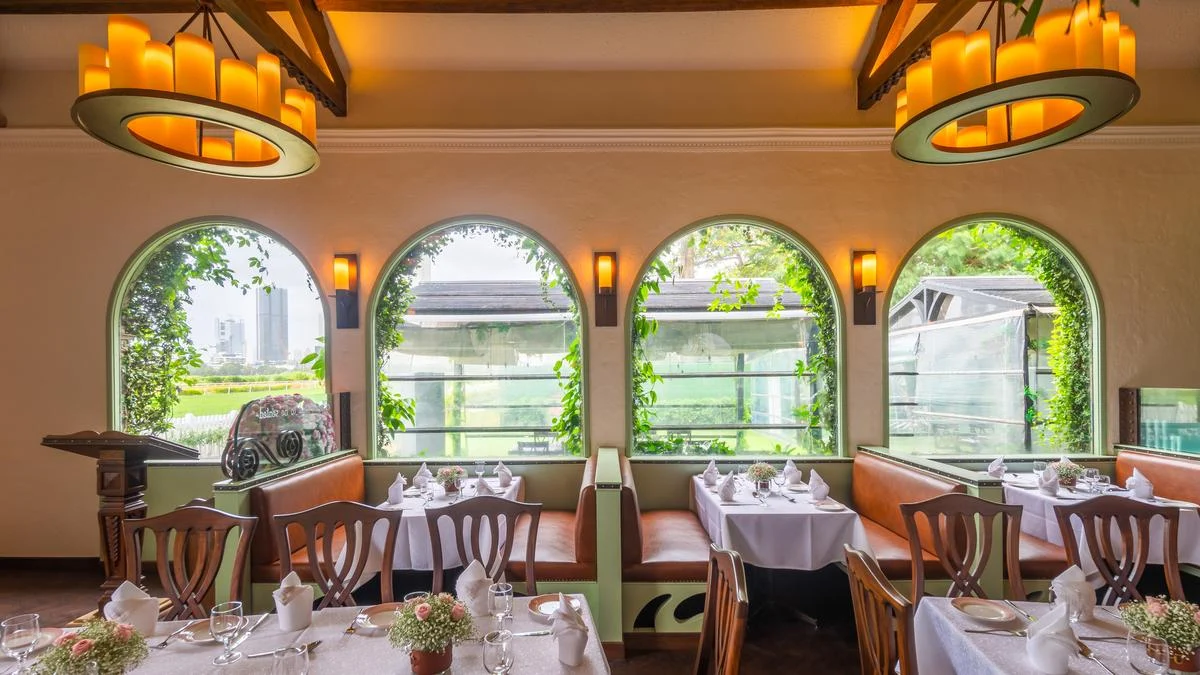
Gallops, a cherished institution overlooking the Mahalaxmi Racecourse, has followed a similar playbook of considered evolution. In 2024, the restaurant underwent a significant facelift, meticulously executed by Vistasp Kharas of Vistasp Kharas Studio, the very architect who originally designed the space 26 years prior. The dining room now boasts elegant arched glass windows that offer captivating views of the racecourse. The walls are adorned with equestrian memorabilia, including original racecourse drawings from the private collection of architect Minocher Mistri, further enhancing the venue’s unique character. A striking new bar, featuring an intricate paper installation by Dutch artist Peter Gentenaar, now serves as a captivating focal point of the room.

The culinary landscape at Gallops has also expanded significantly. Around 40 new dishes have been incorporated into the menu, offering a broader spectrum of flavors and influences. Signatures such as chicken à la Kyiev, chicken Cecilia, prawn thermidor, and vegetable au gratin remain sacrosanct, preserving the dishes that have cemented Gallops’ reputation. Newer additions, including chicken liver pâté, chargrilled cauliflower with harissa tahini, and the exquisite daab chingri, are now presented alongside these time-honored favorites. The cocktail program, thoughtfully curated by partner Mikhail Singh, mirrors this philosophy, offering beverages that artfully complement both the food and the restaurant’s sophisticated ambiance.
For chef and co-owner Yajush Malik, representing the second generation at the helm of Gallops, the daily task of balancing legacy with innovation is a continuous endeavor. He acknowledges that certain dishes, like the restaurant’s chicken in red wine pepper sauce, represent a significant food cost. Economically, retaining such an item might seem imprudent. However, its enduring popularity among regulars dictates its continued presence on the menu, a testament to the importance of patron preference in culinary decision-making.

Yajush has also diligently expanded the menu beyond the Punjabi repertoire that once defined fine dining in Mumbai. Regional delicacies from Kashmir, Bengal, and Kerala, which might have been considered too niche for mainstream diners in the past, have emerged as some of the restaurant’s strongest performers. This strategic diversification showcases a keen understanding of evolving culinary trends and a willingness to explore the rich tapestry of Indian cuisine.
The Unwavering Commitment to Quality and Consistency
At the core of Gallops’ enduring success, according to Yajush Malik, lies an unwavering commitment to consistency. "It essentially boils down to something very simple: quality," he states. "Food and service quality can’t be erratic. When someone has an incredible meal, they’re likely to come back. But if the second visit isn’t as good as the first, you have a high chance of losing that customer." This philosophy underscores a crucial lesson that, he believes, many new restaurants overlook in their pursuit of opening-week buzz, often neglecting the sustained experience that truly builds loyalty.

The challenges faced by long-standing establishments are often unique, rarely encountered by newer ventures. In the early 2000s, Gallops narrowly averted a crisis when its signature galawat kebab faced extinction. The Lucknow supplier responsible for its proprietary spice blend passed away, leaving the restaurant without its crucial ingredient. Undeterred by the inability to find a suitable replacement, Yajush’s father, Rahul Malik, embarked on a painstaking process to reverse-engineer the masala in-house, ensuring that the restaurant would never again be solely dependent on an external supplier for such a critical element.
When Yajush and Mikhail took over the restaurant in 2013, they inherited more than just a business; they inherited a wealth of institutional memory. "Our parents were very clear that we couldn’t walk in as the new bosses," recalls Yajush. "The habits and preferences of our regulars live with our staff, not in a manual. That’s knowledge that has to be inherited." This profound understanding of the importance of human capital and the transmission of knowledge from seasoned staff to new leadership is a vital, albeit intangible, asset that underpins the continued success of these enduring culinary landmarks.

In an industry perpetually captivated by the allure of the next trend, Mumbai’s oldest restaurants have demonstrated that true longevity is achieved not by chasing fleeting fads, but by perfecting the art of what they already do exceptionally well. Their stories are not just about serving food; they are about cultivating experiences, building relationships, and preserving a legacy of quality that resonates across generations.
