

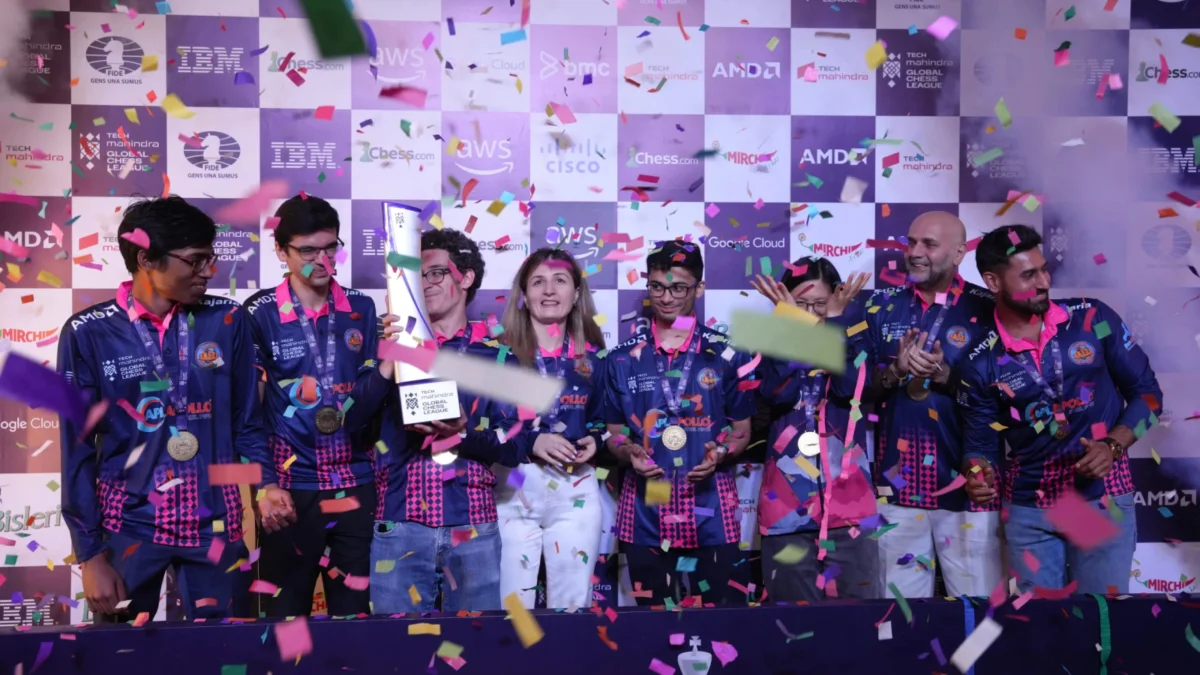
Bengaluru, India – September 3, 2026 – The vibrant tech hub of Bengaluru is poised to host the fourth season of the Tech Mahindra Global Chess League (GCL), commencing on September 5, 2026. This highly anticipated nine-day rapid chess spectacle will unite six formidable franchises, all vying for supremacy and a share of the impressive $1 million prize pool. Set against the backdrop of The Lalit Ashok, the tournament promises a thrilling display of strategic brilliance, featuring an unparalleled assembly of chess titans and rising stars from across the globe.
The return of reigning champion Magnus Carlsen, who skipped the previous season, to defend Alpine APL Pipers’ title, adds an extra layer of excitement. Carlsen’s presence alone elevates the competitive intensity, positioning his team as formidable contenders. Meanwhile, World Championship challenger Javokhir Sindarov is set to lead Fyers American Gambits on the pivotal Icon board, signaling a fierce battle for individual and team honors. The absence of Indian prodigies D Gukesh and R Praggnanandhaa, who will be representing their nation at the Chess Olympiad shortly after the GCL final, also marks a significant talking point, highlighting the demanding schedule of top-tier chess professionals.
An Overview: The Global Chess League Season 4
The Tech Mahindra Global Chess League has firmly established itself as a premier event in the international chess calendar, blending the traditional appeal of chess with a dynamic, team-based rapid format. Season 4, running from September 5 to September 13, 2026, represents a significant milestone in the league’s commitment to innovation and global outreach.
Key Highlights:
- Dates: September 5 – September 13, 2026
- Venue: The Lalit Ashok, Bengaluru, India
- Prize Pool: $1,000,000
- Format: Double Round-Robin League Stage followed by a Best-of-Two Final
- Teams: Six international franchises
- Star Power: Featuring world champions, top-10 players, leading female grandmasters, and promising prodigies.
- Return of a King: Magnus Carlsen’s highly anticipated comeback to defend his previous title.
- Strategic Absences: The notable absence of D Gukesh and R Praggnanandhaa due to national duties at the Chess Olympiad.
- Enhanced Fan Experience: Introduction of Hindi-language commentary for Indian audiences, alongside global streaming options.
The GCL’s unique team structure, which balances experienced male and female grandmasters with young prodigies, ensures a diverse and compelling competitive environment. Each match is a microcosm of strategic warfare, where individual brilliance must coalesce with team cohesion to secure victory.
A Brief History and Evolution of the GCL
The Global Chess League, a joint venture between FIDE (International Chess Federation) and Tech Mahindra, was conceived with a vision to revolutionize the sport of chess. Launched with ambitious goals, it aimed to create a commercially viable, fan-friendly league that would elevate chess to new heights of popularity and professionalism. Its inception marked a pivotal moment, shifting the focus from individual tournaments to a dynamic, franchise-based team competition akin to popular sports leagues.
The league’s journey has seen continuous evolution. From its inaugural season, which tested the waters of this novel format, to subsequent editions that refined rules and enhanced player participation, the GCL has steadily grown in stature. Tech Mahindra, as the title sponsor and a key driving force, has leveraged its technological expertise to ensure high-quality broadcasts, engaging digital content, and seamless operational logistics. The choice of India, a nation with a rich chess heritage and a burgeoning tech industry, as a recurring host for the league, underscores its strategic importance for the league’s global aspirations.
Previous seasons have seen thrilling finishes and the emergence of new rivalries, demonstrating the league’s capacity to captivate audiences. The format, prioritizing rapid chess, appeals to modern sports consumers who seek fast-paced, decisive action. This evolution is not just about entertainment; it’s about making chess more accessible, relatable, and exciting for a broader demographic, particularly the youth. The inclusion of prodigy boards from the outset has been a testament to this forward-looking approach, ensuring that the league acts as a platform for nurturing the next generation of chess superstars.
The Teams and Star-Studded Lineup: Supporting Data
The core of the GCL’s appeal lies in its meticulously crafted team rosters, which bring together a diverse array of talent. Each of the six franchises—Alpine APL Pipers, Triveni Continental Kings, Fyers American Gambits, Ganges Grandmasters, PBG Alaskan Knights, and CheQ Mumba Masters—boasts a carefully balanced squad comprising an Icon player, two Male Superstars, two Female Superstars, and a Prodigy. This structure ensures that every match is a multi-faceted contest, showcasing different strengths and styles.
Alpine APL Pipers
- Icon: Magnus Carlsen (Norway) – The undisputed king of chess, returning to defend his title. His strategic depth and rapid chess prowess are unmatched.
- Male Superstars: Anish Giri (Netherlands) and Vidit Gujrathi (India) – Two of the world’s top-tier grandmasters known for their solid play and tactical acumen.
- Female Superstars: Divya Deshmukh (India) and Koneru Humpy (India) – Powerhouses of Indian women’s chess, bringing vast experience and fighting spirit.
- Prodigy: Volodar Murzin (FIDE) – A promising young talent eager to make his mark on the global stage.
- Coach: Pravin Thipsay (India)
Triveni Continental Kings
- Icon: Alireza Firouzja (France) – The dynamic and aggressive young grandmaster, known for his fearless play and creative attacks.
- Male Superstars: Wei Yi (China) and Aravindh Chithambaram (India) – A blend of Chinese tactical brilliance and Indian strategic depth.
- Female Superstars: Zhu Jiner (China) and Alexandra Kosteniuk (FIDE) – A former Women’s World Champion and a rising Chinese star.
- Prodigy: Pranav V (India) – Another bright Indian prodigy, benefiting from exposure to top-level competition.
- Coach: Loek van Wely (Netherlands)
Fyers American Gambits
- Icon: Javokhir Sindarov (Uzbekistan) – The World Championship challenger, a rising force with immense potential and fierce determination.
- Male Superstars: Daniil Dubov (FIDE) and Nihal Sarin (India) – Known for their innovative and often unconventional approaches to the game.
- Female Superstars: Bibisara Assaubayeva (Kazakhstan) and Sarasadat Khademalsharieh (FIDE) – Young, strong, and highly competitive female players.
- Prodigy: Marc Andria Maurizzi (France) – A French sensation, representing the future of European chess.
- Coach: Srinath Narayanan (India)
Ganges Grandmasters
- Icon: Ian Nepomniachtchi (FIDE) – A two-time World Championship challenger, celebrated for his aggressive style and sharp tactical vision.
- Male Superstars: Levon Aronian (USA) and Leinier Dominguez (USA) – Seasoned veterans with vast experience and consistent performance.
- Female Superstars: Polina Shuvalova (FIDE) and Stavroula Tsolakidou (Greece) – Strong European female grandmasters.
- Prodigy: Leon Mendonca (India) – An Indian prodigy, part of the nation’s rich talent pool.
- Coach: Baskaran Adhiban (India)
PBG Alaskan Knights
- Icon: Vishy Anand (India) – The legendary "Tiger of Madras," a former undisputed World Champion whose wisdom and experience are invaluable.
- Male Superstars: Arjun Erigaisi (India) and Yagiz Kaan Erdogmus (Turkey) – Erigaisi is one of India’s brightest young talents, complemented by a strong Turkish player.
- Female Superstars: Kateryna Lagno (FIDE) and Nino Batsiashvili (Georgia) – Experienced and highly competitive players.
- Prodigy: Abhimanyu Mishra (USA) – The youngest Grandmaster in history, his participation is always a draw.
- Coach: Swayams Mishra (India)
CheQ Mumba Masters
- Icon: Maxime Vachier Lagrave (France) – The French grandmaster renowned for his exceptional rapid play and mastery of complex positions.
- Male Superstars: Shakhriyar Mamedyarov (Azerbaijan) and Vladimir Fedoseev (FIDE) – Two aggressive and unpredictable players, capable of game-changing performances.
- Female Superstars: Carissa Yip (USA) and Dronavalli Harika (India) – A promising American talent and an established Indian veteran.
- Prodigy: Daneshvar Bardiya (Iran) – A young Iranian talent, highlighting the league’s global reach for prodigies.
- Coach: Pentala Harikrishna (India)
The depth of talent across these teams ensures that every match is a potential classic. The "Prodigy" board, in particular, is a fascinating aspect, offering young talents like Abhimanyu Mishra and Volodar Murzin an unparalleled platform to compete alongside and learn from the world’s best.
Tournament Format and Schedule
The Global Chess League Season 4 adopts a rigorous and engaging format designed to maximize competitive action and strategic depth.
Format Details:
The league stage features a double round-robin format, where all six franchises will play each other twice. This translates to a total of 30 preliminary matches spread across the first eight days of the tournament (September 5-12). This extensive league phase ensures that teams have ample opportunities to demonstrate their strength and adapt their strategies.
Each match comprises six boards:
- Icon Player: The designated leader and highest-rated player.
- Two Male Superstars: Top male grandmasters.
- Two Female Superstars: Leading female grandmasters.
- One Prodigy: A promising young talent.
Crucially, every board carries equal weight in the team score, emphasizing the importance of a balanced squad and contributions from all members. Teams earn points for winning matches, creating a clear pathway to the knockout stage.
Following the intense league stage, the top two teams in the standings will advance to the grand final on September 13. The final will be a best-of-two showdown, adding a layer of tension and requiring consistent performance under pressure. There will also be a 3rd place match on the final day, offering additional competitive play.
Time Control:
The rapid format is central to the GCL’s identity, promoting dynamic and decisive games. The time control for all matches is 20 minutes per player, with a 2-second increment added from move 41. This specific time control balances speed with sufficient time for complex calculations, ensuring high-quality, exciting chess.
Detailed Schedule (All times are IST):
| Date | Match | Time (IST) |
|---|---|---|
| September 5 | PBG Alaskan Knights vs. FYERS American Gambits | 3:30 PM |
| September 5 | Triveni Continental Kings vs. Ganges Grandmasters | 5:00 PM |
| September 5 | CheQ Mumba Masters vs. Alpine APL Pipers | 6:30 PM |
| September 5 | FYERS American Gambits vs. Triveni Continental Kings | 8:00 PM |
| September 6 | Alpine APL Pipers vs. Ganges Grandmasters | 3:30 PM |
| September 6 | CheQ Mumba Masters vs. PBG Alaskan Knights | 5:00 PM |
| September 6 | Ganges Grandmasters vs. FYERS American Gambits | 6:30 PM |
| September 6 | Triveni Continental Kings vs. CheQ Mumba Masters | 8:00 PM |
| September 7 | PBG Alaskan Knights vs. Alpine APL Pipers | 3:30 PM |
| September 7 | CheQ Mumba Masters vs. Ganges Grandmasters | 5:00 PM |
| September 7 | Alpine APL Pipers vs. FYERS American Gambits | 6:30 PM |
| September 7 | PBG Alaskan Knights vs. Triveni Continental Kings | 8:00 PM |
| September 8 | Ganges Grandmasters vs. PBG Alaskan Knights | 3:30 PM |
| September 8 | FYERS American Gambits vs. CheQ Mumba Masters | 5:00 PM |
| September 8 | Triveni Continental Kings vs. Alpine APL Pipers | 6:30 PM |
| September 8 | FYERS American Gambits vs. PBG Alaskan Knights | 8:00 PM |
| September 9 | CheQ Mumba Masters vs. Alpine APL Pipers | 3:30 PM |
| September 9 | Ganges Grandmasters vs. Triveni Continental Kings | 5:00 PM |
| September 9 | PBG Alaskan Knights vs. CheQ Mumba Masters | 6:30 PM |
| September 9 | Triveni Continental Kings vs. FYERS American Gambits | 8:00 PM |
| September 10 | Alpine APL Pipers vs. Ganges Grandmasters | 3:30 PM |
| September 10 | CheQ Mumba Masters vs. Triveni Continental Kings | 5:00 PM |
| September 10 | Alpine APL Pipers vs. PBG Alaskan Knights | 6:30 PM |
| September 10 | Ganges Grandmasters vs. FYERS American Gambits | 8:00 PM |
| September 11 | Triveni Continental Kings vs. PBG Alaskan Knights | 5:00 PM |
| September 11 | Alpine APL Pipers vs. FYERS American Gambits | 6:30 PM |
| September 11 | Ganges Grandmasters vs. CheQ Mumba Masters | 8:00 PM |
| September 12 | Triveni Continental Kings vs. Alpine APL Pipers | 5:00 PM |
| September 12 | PBG Alaskan Knights vs. Ganges Grandmasters | 6:30 PM |
| September 12 | FYERS American Gambits vs. CheQ Mumba Masters | 8:00 PM |
| September 13 | 3rd Place Match | 3:30 PM |
| September 13 | Final | 6:30 PM |
This demanding schedule, with multiple matches per day, tests the endurance and adaptability of the players and their strategic teams.
The Prize Pool and Stakes
The $1 million prize pool underscores the GCL’s commitment to rewarding excellence and attracting the world’s best talent. While the exact distribution details are often kept under wraps until closer to the event, a significant portion is typically allocated to the winning team, with substantial amounts for runners-up and other top performers. This financial incentive not only motivates players but also reinforces the professional stature of the league. Beyond the monetary rewards, players compete for prestige, team glory, and the opportunity to solidify their reputation on a global stage. For the prodigies, the stakes are particularly high, as strong performances can significantly boost their careers and attract further sponsorship and opportunities.
Voices from the Chess World: Official Responses and Expectations
The GCL has consistently generated buzz within the chess community, and Season 4 is no exception. While specific official statements for this particular season are not yet widely released, the general sentiment from organizers, players, and stakeholders highlights key aspects of the league.
Representatives from Tech Mahindra and FIDE are expected to emphasize the league’s role in popularizing chess and fostering innovation. A spokesperson from Tech Mahindra might comment: "The Global Chess League is more than just a tournament; it’s a platform where technology meets tradition to redefine the future of chess. We are thrilled to bring Season 4 to Bengaluru, a city that embodies innovation, and we look forward to a spectacular showcase of talent and strategy." FIDE officials often reiterate their commitment to promoting chess globally and see the GCL as a vital component in this mission, perhaps stating: "FIDE’s partnership with Tech Mahindra for the GCL exemplifies our vision for dynamic, engaging chess events. This league provides an invaluable stage for our top players and emerging talents, inspiring millions worldwide."
Players themselves often express enthusiasm for the unique team format. Magnus Carlsen, upon his return, might share his excitement: "It’s great to be back in the GCL. The team format brings a different kind of pressure and camaraderie, which I really enjoy. We’re here to defend our title, and the competition looks incredibly strong this season." Vishy Anand, a perennial favorite and a mentor figure, often highlights the league’s importance for Indian chess: "Playing in front of our home crowd in Bengaluru is always special. The GCL provides a fantastic platform for our Indian talents, both established and new, to compete at the highest level and for fans to witness world-class chess."
The absence of D Gukesh and R Praggnanandhaa has prompted discussions. While regrettable for fans, it underscores the intense schedule faced by top players. A representative from the All India Chess Federation might comment: "We fully support Gukesh and Praggnanandhaa’s decision to prioritize the Chess Olympiad, which is a crucial national duty. While we will miss their presence in the GCL, their commitment to representing India is paramount. The GCL, however, still features an incredible lineup, including many other Indian stars, ensuring a thrilling tournament for our fans."
The introduction of Hindi-language commentary is a significant development aimed at deepening engagement with the vast Indian audience. Organizers would likely point to this as a move to make chess more accessible and culturally resonant, saying: "We understand the diverse linguistic landscape of India, and introducing Hindi commentary for the first time is a step towards making the GCL truly inclusive. We want to ensure that every chess enthusiast in India can enjoy and understand the intricacies of the game in their native language."
Strategic Implications and the Future of Chess
The Global Chess League holds profound implications for the sport of chess, both in India and globally.
Impact on the Global Chess Landscape:
The GCL contributes significantly to the professionalization and commercialization of chess. By adopting a franchise model, it injects new capital and business acumen into the sport, creating stable career paths for players beyond traditional tournament play. The league’s focus on rapid chess also influences strategic thinking, promoting aggressive and decisive play, which appeals to a broader, more dynamic audience. It pushes the boundaries of how chess is presented, moving towards a more digestible, televised sports product.
Significance for Indian Chess:
Hosting the GCL in Bengaluru reinforces India’s position as a global chess powerhouse and a burgeoning market for the sport. The participation of numerous Indian grandmasters and prodigies provides invaluable exposure and experience. It serves as a powerful inspiration for young aspiring chess players across the country, showcasing role models and demonstrating viable career paths in chess. The increased media attention and local engagement generated by the GCL are crucial for further developing the chess ecosystem in India.
Future of Team-Based Chess Leagues:
The GCL is a pioneer in the team-based rapid chess format, and its success influences the potential for similar leagues in other regions or formats. It demonstrates that chess can thrive as a team sport, fostering camaraderie and collective strategy alongside individual brilliance. This model could be replicated and adapted, potentially leading to a more diversified and globally interconnected chess circuit.
Role of Rapid Chess:
Rapid chess, with its faster pace, reduces draws and amplifies dramatic moments, making it ideal for broadcast and live spectator events. The GCL champions this format, proving its viability as a competitive and entertaining variant of chess. Its popularity in the league could further solidify rapid chess as a mainstream professional format alongside classical and blitz.
Influence on Young Players (Prodigy Board):
The "Prodigy" board is perhaps one of the most impactful innovations. It provides a unique opportunity for young talents, often still in their early teens, to compete directly against or alongside world champions. This accelerates their learning, exposes them to high-pressure situations, and offers unparalleled visibility. It’s a vital investment in the future of chess, ensuring a continuous pipeline of talent.
Commercialization of Chess:
The GCL exemplifies the growing commercial potential of chess. With significant prize money, corporate sponsorships (Tech Mahindra), and sophisticated broadcasting, it showcases how chess can attract substantial investment and become a commercially successful global sport. This commercialization is critical for the sport’s long-term growth and sustainability.
Impact of Olympiad Conflict:
The scheduling conflict with the Chess Olympiad highlights a challenge for the expanding professional chess calendar. While regrettable for GCL, it underscores the increasing demands on top players. Future seasons might need to consider international event calendars more meticulously to ensure maximum player participation, though such conflicts are often inevitable in a packed global sports schedule.
Accessibility for Fans: Live Streaming and Commentary
Ensuring widespread accessibility is a cornerstone of the GCL’s strategy to grow its global fanbase. All GCL Season 4 matches will be available for free live streaming, catering to a diverse international audience.
Streaming Platforms:
- Official Tech Mahindra Global Chess League YouTube channel: The primary hub for all official broadcasts, offering high-quality streams and comprehensive coverage.
- Chess24 YouTube and Twitch channels: Leveraging established chess streaming platforms to reach dedicated chess enthusiasts.
- Chess.com India: A popular platform for Indian chess players and fans, ensuring local digital reach.
Commentary:
For the first time this season, the GCL will offer Hindi-language commentary specifically for the Indian audience. This initiative is expected to significantly enhance the viewing experience for millions of Hindi speakers, making the complex strategies and thrilling moments of chess more understandable and enjoyable. Alongside this, English commentary will continue to serve the global audience, featuring renowned chess commentators and experts providing insightful analysis. The multi-language commentary strategy is a testament to the league’s commitment to global outreach and local engagement.
The combination of readily available streaming platforms and multi-language commentary ensures that the GCL Season 4 is accessible to virtually anyone with an internet connection, further cementing its role in popularizing chess worldwide.
Conclusion
As the countdown to September 5 begins, Bengaluru is buzzing with anticipation for the Tech Mahindra Global Chess League Season 4. With Magnus Carlsen’s highly anticipated return, the strategic brilliance of Vishy Anand, the fiery play of Alireza Firouzja, and the emergence of new talents, the stage is set for an unforgettable nine days of rapid chess. The unique team format, significant prize money, and enhanced fan engagement initiatives underscore the GCL’s commitment to revolutionizing the sport. While the absence of Gukesh and Praggnanandhaa presents a slight void, the sheer depth of talent ensures that this season will be a captivating spectacle, further cementing the Global Chess League’s position as a landmark event in the world of professional chess. Fans globally, and particularly in India, are ready to witness history unfold, move by strategic move.
