

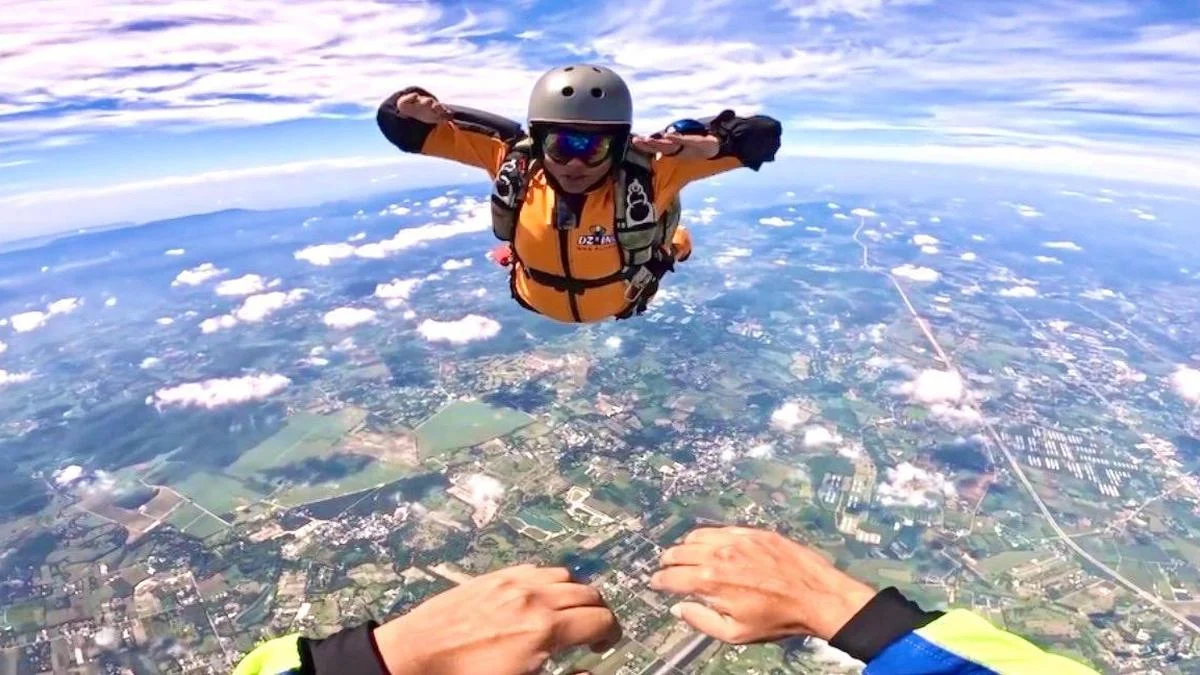
In a nation where the concept of civilian skydiving is still nascent, 37-year-old Divya Surepalli has etched her name in the annals of Indian adventure sports. In 2024, she achieved a groundbreaking milestone, becoming the first licensed civilian woman skydiver from Andhra Pradesh. This remarkable feat places her in an elite and exceptionally small cohort of fewer than 20 women across India who have ventured beyond a one-time tandem jump to pursue skydiving with formal certification. The sheer scarcity of numbers underscores the arduous and unchartered path that lies before aspiring skydivers in the country.
Surepalli, who hails from the coastal city of Visakhapatnam, brings an impressive academic background to her aerial pursuits, holding a postgraduate degree in Environmental Engineering from Germany. Yet, the allure of skydiving had been a persistent whisper in her ear for years, a dream that gradually coalesced into a tangible ambition. Her initial brush with the sport occurred during a visit to the United States, where she intended to experience a tandem jump – a guided parachute jump with an instructor. Fate, however, intervened in the form of unfavorable weather conditions, thwarting her attempt. The disappointment, however, proved to be a catalyst, igniting a more profound aspiration: to undertake skydiving with proper training and certification.
The Journey from Dream to Reality: A Global Pursuit
The pivotal moment in Divya Surepalli’s skydiving journey arrived when she joined Shweta Parmar, a pioneering figure among India’s civilian women skydivers, on a trip to Moscow. Their destination was Drop Zone Krutitcy, a renowned skydiving center located on the outskirts of the Russian capital, where Surepalli aimed to complete her Accelerated Freefall (AFF) course – a comprehensive training program designed to teach individuals to skydive solo.
The AFF course is meticulously structured, involving a series of jumps with an instructor, gradually increasing the jumper’s autonomy and skill. Surepalli embarked on this intensive training with enthusiasm, but once again, the unpredictable nature of weather played a significant role. After completing the initial stages of her AFF course, worsening meteorological conditions at Drop Zone Krutitcy forced an interruption to her training.
"I finished my AFF there, but the conditions deteriorated soon after," Surepalli recounts, her voice tinged with the memory of that challenging period. "To complete the remaining jumps required for my license, I had to relocate." This unforeseen setback necessitated a strategic shift in her training itinerary, leading her to Thailand, which became her second "classroom" for mastering the intricacies of skydiving.
Earning the A Licence: A Testament to Dedication
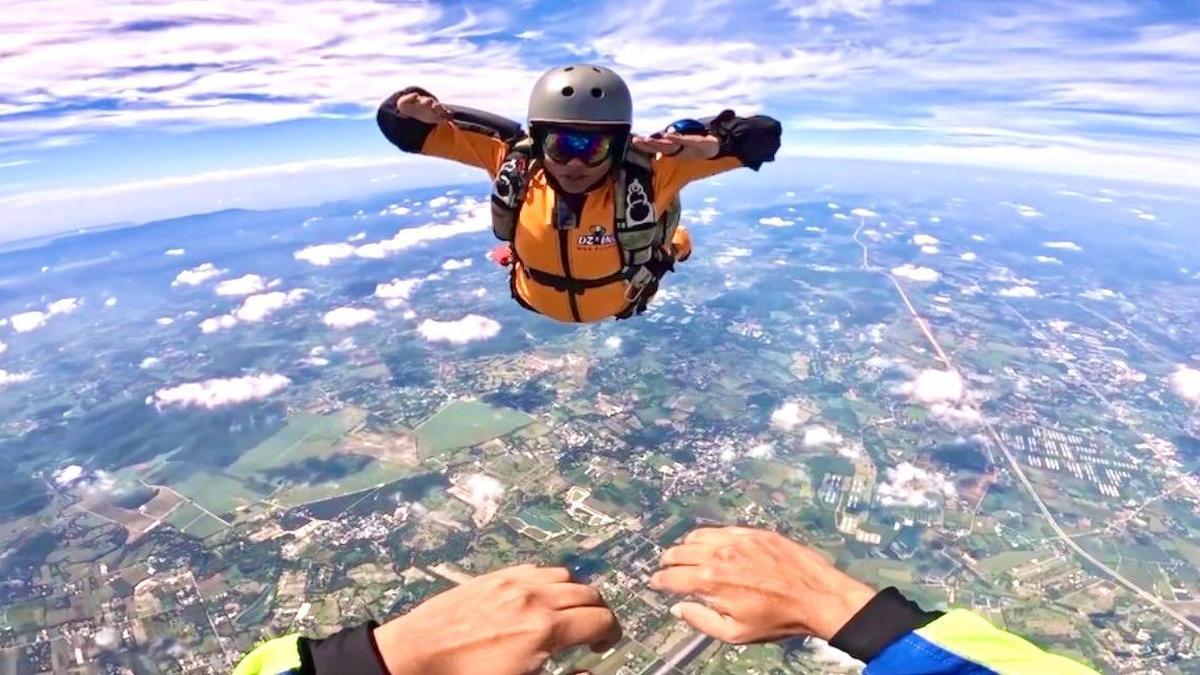
The pursuit of a skydiving license is a structured process, demanding a combination of theoretical knowledge, practical skills, and a significant number of jumps. To achieve an A licence, the foundational certification for solo skydivers, individuals must successfully complete a minimum of 25 jumps. Beyond the sheer volume of jumps, stringent assessments are in place, encompassing written or oral examinations to gauge theoretical understanding, and practical evaluations to demonstrate proficiency in freefall maneuvers and canopy control – the art of steering the parachute to a safe landing. Furthermore, skydivers must exhibit the ability to perform group jumps, showcasing coordination and communication with other jumpers, and crucially, master the skill of packing their own parachute, a vital safety procedure.
With a total of 29 jumps logged, Divya Surepalli successfully met all the stringent criteria for her A licence. This certification is more than just a piece of paper; it is a global passport, permitting a licensed skydiver to jump at affiliated drop zones worldwide without the need for direct, constant supervision. It signifies a level of competence and confidence that allows for independent participation in the sport.
Navigating the Turbulence: Overcoming Setbacks and Building Resilience
The path to achieving this milestone was far from a smooth descent. Surepalli’s journey was punctuated by moments of profound challenge, testing not only her physical prowess but also her mental fortitude. Midway through her AFF course, a particularly unsettling incident occurred: a severe spin during freefall that significantly impacted her confidence.
"That incident shook my confidence more than I expected," she admits, her voice reflecting the vulnerability of that experience. The fear was not a primal terror of the sky itself, but rather a disquieting doubt about her own judgment and ability to handle unexpected situations. It was in this moment of self-doubt that the importance of strong mentorship came to the fore. Her instructor and mentor, Alex Troshyn, played a crucial role in helping her navigate this difficult phase.
"I had withdrawn and was staying in my hostel," she recalls, painting a picture of isolation and introspection. "He came to speak with me and reminded me that setbacks are part of training, not signs of failure. That conversation helped me return to the process." Troshyn’s words served as a vital anchor, reminding her that challenges are inherent to the learning curve of such an extreme sport, and that perseverance is the key to overcoming them.

Thailand, while offering a new environment for her training, presented its own unique set of challenges, further honing Surepalli’s skills and decision-making under pressure. During one particular jump, a sudden shift in wind conditions altered her intended landing trajectory when she was approximately 1,000 feet above ground level. The situation rapidly escalated, leaving her with a stark choice between landing on an asbestos roof, which carried a high probability of serious injury, or descending into a swamp – an option strictly advised against during training due to the risks associated with water landings.
"It came down to landing on an asbestos roof or entering a swamp," she recounts, the gravity of the moment palpable in her tone. The roof presented a near certainty of broken bones. However, a cluster of trees offered a third, albeit precarious, possibility. With remarkable presence of mind, Surepalli opted for the trees, prioritizing impact over the higher risk of injury. While the landing itself was unexpectedly controlled, the moments preceding it were anything but calm, demanding an immediate and decisive reaction.
Another instance saw her needing to make a last-minute correction to avoid a cluster of electric poles situated near the designated landing zone. Surepalli explains that crosswinds are a common feature in Thailand, particularly at drop zones that often operate at lower altitudes compared to those in colder climates like Moscow. "At 12,000 feet, you have less freefall time than you would at 14,000 feet, as in Moscow," she elaborates. "That reduces the margin available for adjustments." Each of these challenging scenarios served as potent lessons, reinforcing the critical discipline required to maintain clarity of thought and execute precise actions even under immense duress.
The Human Element: Support Systems and Family Acceptance
Beyond the technical demands of skydiving, Divya Surepalli emphasizes the profound importance of mentorship and robust support systems. The journey of a civilian skydiver in India often involves navigating not only the physical and mental challenges of the sport but also the societal perceptions and family concerns that can accompany such an unconventional pursuit.
Surepalli’s family acceptance was not an immediate or effortless process. Convincing her mother, in particular, required time, patience, and a demonstration of her commitment and safety consciousness. The eventual agreement came with a specific, heartfelt condition. "She asked me to video call her before and after every jump," Divya reveals. "She wanted to see that I was safe. That reassurance mattered to both of us." This simple yet deeply meaningful request highlights the emotional investment and underlying anxiety that family members experience when a loved one engages in an activity perceived as high-risk. The shared ritual of video calls provided a tangible bridge between the soaring heights and the grounded concerns of her family.
The Barriers to Entry: Cost and Access in India
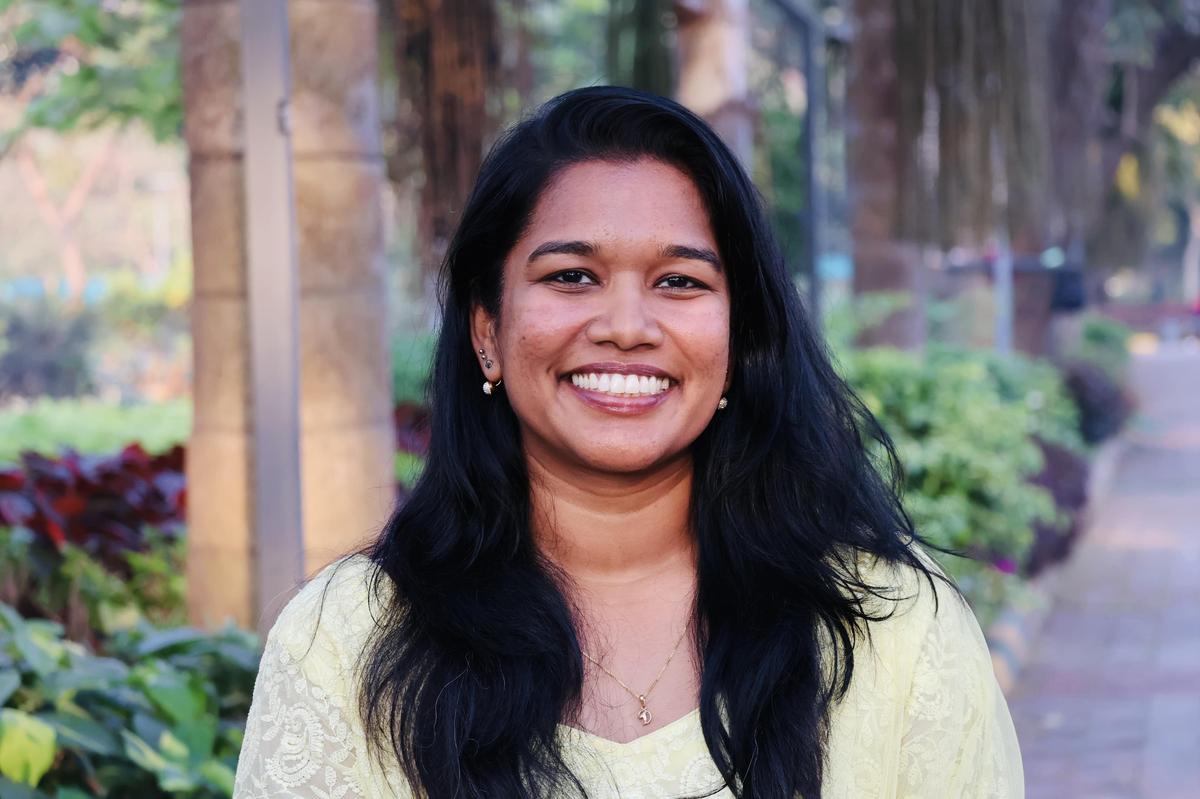
One of the most significant impediments to the growth of civilian skydiving in India is the severe lack of accessible infrastructure and prohibitive costs. Currently, India has only one drop zone that facilitates tandem jumps, and crucially, none that issue civilian licenses. This absence of domestic licensing facilities compels aspiring skydivers to travel abroad for their certification, a necessity that dramatically escalates the overall expense.
Surepalli estimates that the cost of obtaining her initial A licence, including travel, accommodation, and training fees in Russia and Thailand, amounted to approximately ₹5 lakh. While subsequent licensing levels tend to be less expensive, the initial investment alone places the sport well beyond the financial reach of a vast majority of the Indian population. This economic barrier effectively curtails the potential for a wider and more diverse participation in skydiving within the country.
Breaking Stereotypes: Gender and the Skydiving Arena
Surepalli acknowledges that gender adds another layer of complexity to her chosen pursuit. "It is a male-dominated space and stereotypes are very real," she states candidly. "There were moments when I felt dismissed. At the same time, I also encountered men who were supportive and professional. Both experiences exist." The skydiving community, like many adventure sports, has historically been perceived as a domain primarily occupied by men. While this perception is gradually evolving, the presence of ingrained stereotypes can create an environment where women may face subtle biases or feel the need to prove themselves more rigorously.
However, Surepalli’s experience also underscores the existence of a supportive and professional contingent within the male-dominated sphere. These allies, through their encouragement and respect, made a tangible difference during periods of self-doubt, reinforcing her resolve to continue.
Transformation Beyond the Jump: Personal Growth and a New Perspective
Divya Surepalli describes herself as inherently shy, quiet, and ambiverted – personality traits that might seem at odds with the adrenaline-fueled image commonly associated with skydivers. Yet, her foray into skydiving has profoundly altered not only external perceptions but also her own self-perception.
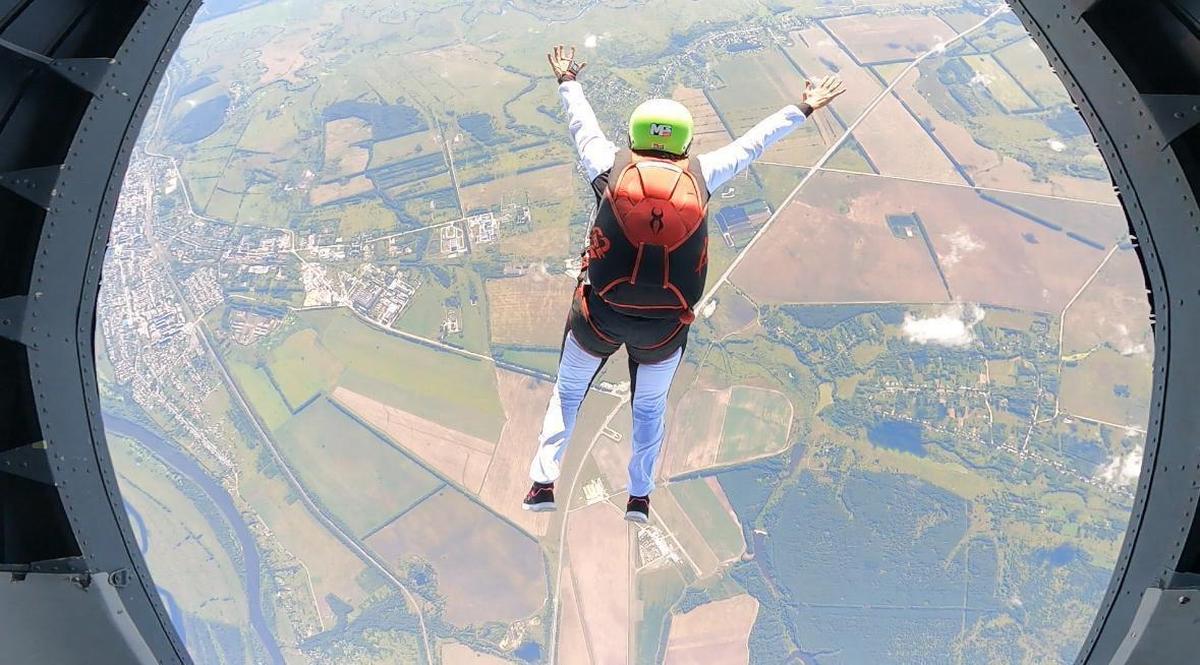
"It changed how I respond to situations," she explains, articulating a significant personal transformation. "There is a heightened awareness that carries into everyday life. It has helped me become clear about what deserves attention and what does not." The intense focus, quick decision-making, and the need for calm under pressure required in skydiving have translated into a more grounded and discerning approach to daily challenges. This newfound clarity and enhanced situational awareness are invaluable byproducts of her aerial adventures.
She is now actively involved in an informal network of civilian women skydivers in India. This nascent community serves as a vital platform for sharing advice, exchanging training experiences, and offering mutual encouragement. The camaraderie and shared understanding within this group provide a crucial support system, fostering a sense of belonging and collective progress.
Maintaining physical fitness remains a cornerstone of her skydiving regimen. Daily runs form a steady and grounding counterbalance to the exhilarating intensity of her jumps, ensuring she remains physically prepared for the demands of the sport.
For Divya Surepalli, her achievement is not defined by a quest for conquest or a pursuit of extreme thrills. Instead, it is a profound testament to the power of persistence, the value of dedicated training, and the quiet, unwavering resolve to see through a dream that was once postponed by the whims of weather. Her journey is an inspiration, demonstrating that with courage, determination, and a willingness to embrace challenges, even the most seemingly inaccessible heights can be conquered.
