

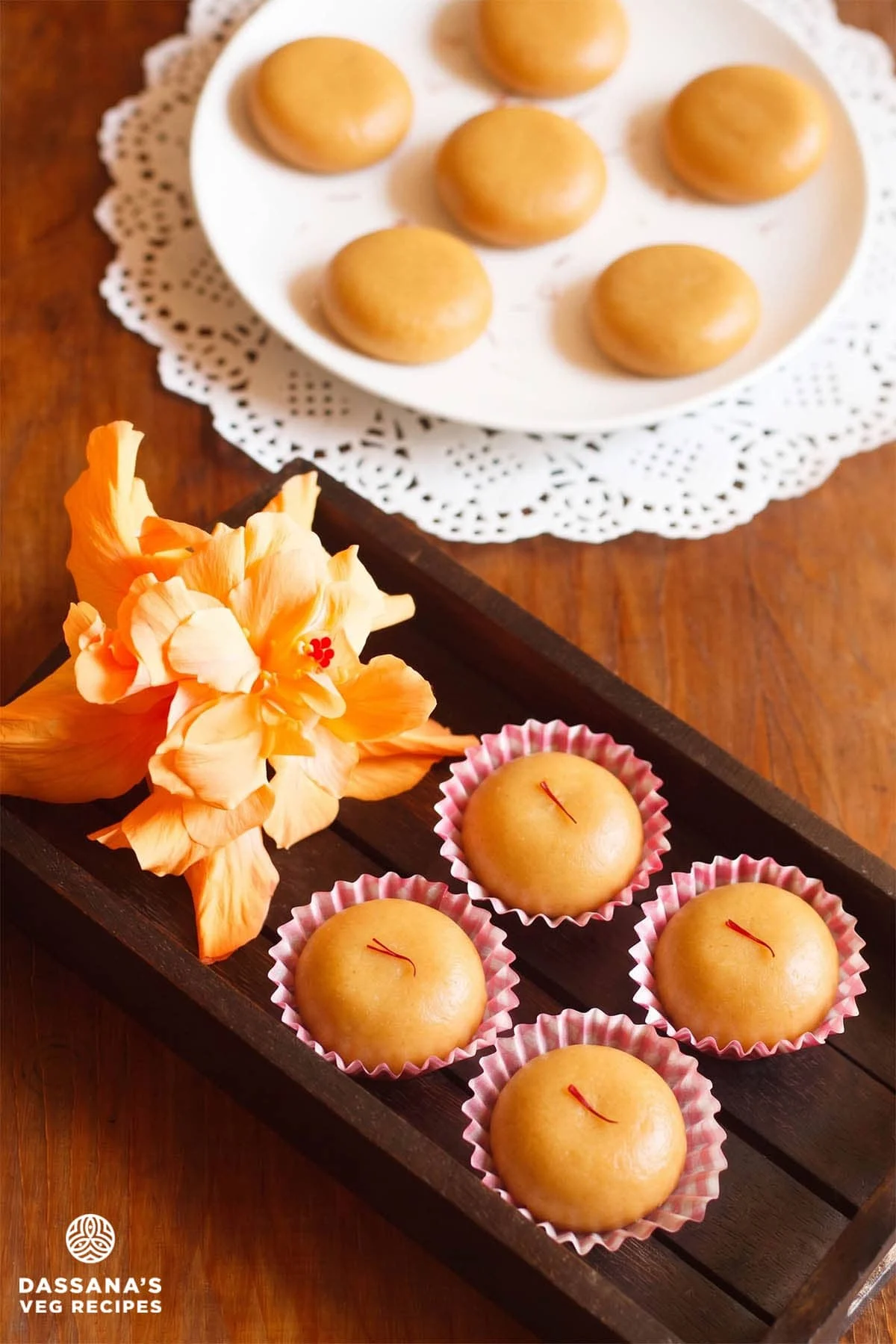
In the sprawling landscape of Indian gastronomy, few items hold as much sentimental and cultural weight as Mithai (traditional sweets). Among the pantheon of milk-based delicacies, the Mawa Peda—also known as Khoya Peda—stands as a testament to the sophisticated simplicity of ancient culinary techniques. As the festive seasons of Diwali and Raksha Bandhan approach, a renewed interest in artisanal, homemade versions of these sweets is sweeping across urban and rural India alike, signaling a shift away from mass-produced alternatives toward high-quality, traditional preparations.
Main Facts: The Essence of the Mawa Peda
The Mawa Peda is a dense, fudge-like confection crafted from four primary pillars of Indian cooking: mawa (evaporated milk solids), whole milk, sugar, and ghee (clarified butter). Unlike its more rugged cousin, the dark-brown Mathura Peda, the Mawa Peda is celebrated for its soft, moist texture and a delicate, pale golden hue.

The profile of the dish is defined by the quality of its "Mawa." Created by slowly simmering milk in a large open iron pan (kadai) until the water content evaporates, leaving behind only the rich proteins and fats, mawa serves as the soul of many North Indian sweets. When combined with additional whole milk and sugar, the mixture undergoes a gentle Maillard reaction—a chemical interaction between amino acids and reducing sugars—that imparts a characteristic caramelized milk flavor without the bitterness of over-cooking.
Modern culinary trends emphasize the inclusion of aromatic enhancers such as green cardamom (elaichi) and saffron (kesar). Saffron, the world’s most expensive spice, not only provides a floral undertone but also lends a regal yellow tint to the final product. Garnished with slivered pistachios, the Mawa Peda remains a staple for prasad (religious offerings) and a centerpiece for celebratory gift-giving.

Chronology: The Evolution of a Culinary Icon
The history of the Peda is inextricably linked to the dairy-rich regions of Uttar Pradesh, specifically the city of Mathura. However, the evolution of the "soft" Mawa Peda follows a distinct timeline that mirrors India’s socio-economic changes.
The Ancient Foundations (Pre-19th Century)
For centuries, milk-based sweets were the province of the Halwai (traditional confectioner) community. These artisans perfected the art of "milk reduction," a process born out of the necessity to preserve milk in a tropical climate. By converting perishable milk into stable mawa, they created a base that could be flavored and shaped into various forms.

The Rise of Regional Varieties (20th Century)
As transportation improved, regional variations of the Peda began to emerge. While Mathura focused on a heavily roasted, long-lasting version, the "Mawa Peda" gained popularity in households and urban sweet shops. This version prioritized a "melt-in-the-mouth" experience, requiring the addition of extra milk during the cooking process to ensure the solids remained hydrated and soft.
The Homemade Revival (21st Century)
In the last decade, particularly following global health crises, there has been a documented "Return to Roots" movement. Consumers, increasingly wary of food adulteration in commercial sweets—such as the use of starch or synthetic fats in mawa—have turned back to home kitchens. This era marks the transition of Mawa Peda from a store-bought commodity to a handcrafted labor of love, where the quality of every gram of sugar and strand of saffron is meticulously controlled.

Supporting Data: The Science and Nutrition of Reduction
To understand why the Mawa Peda is so highly regarded, one must look at the technical data surrounding its preparation and nutritional makeup.
The Reduction Ratio
A standard recipe for Mawa Peda, such as the one gaining traction in culinary circles, utilizes approximately 250 grams of mawa to 1 cup (250ml) of whole milk. This high liquid-to-solid ratio is what distinguishes the "soft" variety. The cooking process requires approximately 30 to 40 minutes of continuous stirring over low heat. This ensures that the moisture is integrated rather than evaporated too quickly, preventing the texture from becoming grainy or "rubbery."

Nutritional Breakdown
Based on a standard serving size of one Peda (approx. 25-30g), the nutritional profile is as follows:
- Calories: 146 kcal
- Total Fat: 8g (predominantly saturated fats from ghee and milk)
- Protein: 5g (high-quality milk protein)
- Carbohydrates: 14g (inclusive of 9g of sugar)
- Calcium: 169mg (contributing significantly to daily recommended intake)
While often categorized as an indulgence, the Mawa Peda provides more protein and calcium than many Western flour-based desserts, making it a "functional" sweet when consumed in moderation.

The Trail Test
Culinary experts use the "spatula trail" as a metric for readiness. When the mixture reaches a point where a spatula leaves a clear, visible path on the bottom of the pan and the mass begins to "fold" away from the sides, the moisture content is approximately 15-20%, the ideal threshold for a soft set.
Official Responses: Insights from Culinary Experts
Prominent chefs and food historians have weighed in on the cultural resurgence of the Mawa Peda. Dassana Amit, a well-known authority on Indian vegetarian cuisine, emphasizes the importance of the "low and slow" method.

"The secret to a perfect Mawa Peda lies in the patience of the cook," says Amit. "By sautéing the mawa in ghee before adding milk, you lock in a certain richness. The milk acts as a hydrating agent, ensuring that even after the Peda sets, it remains moist for days."
Health officials and food safety advocates have also commented on the trend of making these sweets at home. During peak festival seasons, the Food Safety and Standards Authority of India (FSSAI) often issues warnings regarding "fake" mawa in markets. Culinary experts argue that the "official" best practice for modern families is to either make mawa from scratch by reducing milk or to source it from certified organic dairies. This shift is seen as a grassroots response to industrial food quality concerns.

Furthermore, the "Dassana style" of preparation—which suggests greasing the tray and palms with ghee to manage the sticky, sugar-laden mixture—has become a standardized recommendation for home cooks seeking professional-grade results.
Implications: Cultural Preservation and the Future of Mithai
The continued popularity and refinement of the Mawa Peda have several long-term implications for the culinary industry and Indian society.

1. The De-Industrialization of Flavor
As more individuals master the art of making Mawa Peda at home, there is a growing demand for "clean label" ingredients. This puts pressure on commercial manufacturers to eliminate preservatives and artificial flavorings to compete with the superior taste of homemade versions. We are witnessing a "premiumization" of the Mithai industry, where small-batch, artisanal shops are outperforming large chains.
2. Preservation of Intangible Heritage
Cooking a Mawa Peda is not merely about food; it is a ritual. The process of stirring the milk, the aroma of cardamom filling the house, and the act of hand-shaping each disc are part of India’s intangible cultural heritage. By passing these recipes down, the younger generation maintains a link to their ancestral traditions in an increasingly digital world.

3. Global Gastronomic Influence
With the Indian diaspora spanning the globe, the Mawa Peda is finding its way into international food markets. It is no longer just a "local sweet" but a global contender in the luxury confectionery space, often compared to French ganache or Italian fudge. The inclusion of saffron and pistachios aligns with global trends toward "exotic" and "superfood" ingredients.
4. Economic Impact on Dairy Farmers
The demand for high-quality mawa directly benefits the rural dairy economy. Since the best pedas require full-fat milk with high solid content, there is a renewed economic incentive for farmers to maintain high standards in cattle care and milk production.

Conclusion
The Mawa Peda is more than a simple mixture of milk and sugar; it is a sophisticated culinary artifact that bridges the gap between ancient necessity and modern luxury. As it continues to evolve through the hands of home cooks and professional chefs alike, it remains a resilient symbol of Indian hospitality and festive joy. Whether offered as prasad in a temple or served as an after-dinner treat in a modern apartment, the Mawa Peda carries with it the flavor of a civilization that has, for millennia, known how to turn the simplest of ingredients into the most divine of experiences.
