

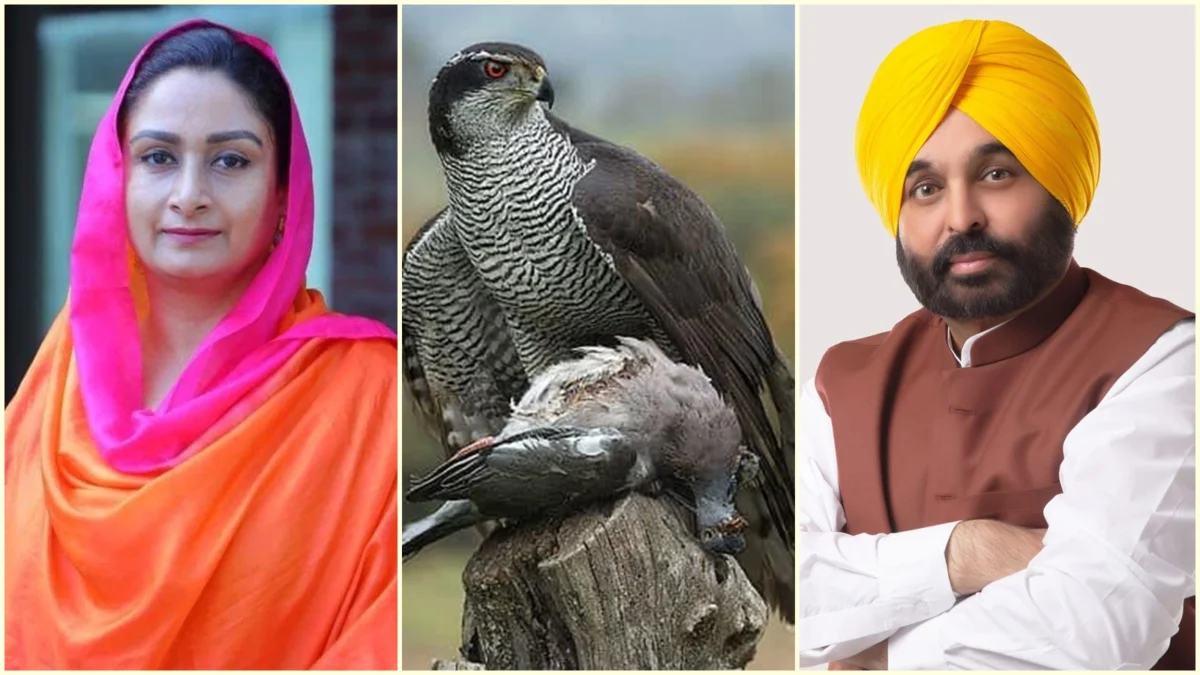
Chandigarh, Punjab – In a political landscape already charged with anticipation for the upcoming Punjab Assembly elections, an unlikely protagonist has taken center stage: the Northern Goshawk. This majestic raptor, revered as the state bird and deeply entwined with Sikh history and identity, has become the subject of an intense rhetorical battle between the Shiromani Akali Dal (SAD) and the ruling Aam Aadmi Party (AAP). The irony is stark: despite its profound symbolic importance, the Northern Goshawk (locally known as "Baaz") has proven so elusive that Punjab has launched two separate, unsuccessful expeditions – seven years apart in 2018 and 2025 – to locate it within its own borders. Yet, in the tumultuous world of electioneering, the bird has suddenly been "spotted," not in the wild, but hovering metaphorically over the political fortunes of prominent leaders.
The current controversy erupted following an incident involving Shiromani Akali Dal leader Sukhbir Singh Badal and has since escalated into a full-blown war of words, with Chief Minister Bhagwant Mann of the AAP leading the charge against the Akalis. What began as a claim of divine protection has quickly devolved into sharp accusations of corruption and sacrilege, highlighting the volatile mix of faith and politics that often defines Punjab’s electoral narrative. This peculiar episode not only underscores the deep cultural significance of the Baaz but also exposes the lengths to which political parties will go to leverage powerful symbols in their quest for power, even if it means conjuring sightings of a bird that has largely vanished from the state’s skies.
The Elusive State Bird: A Symbol of Deep Reverence
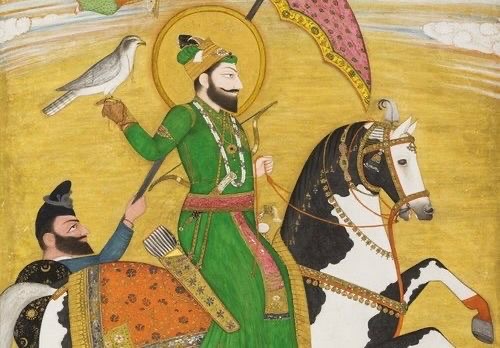
The Northern Goshawk (Accipiter gentilis), a powerful and agile hunter known for its striking white and black plumage, holds a venerable status in Punjab. Its designation as the State Bird is not merely an ecological choice but stems from a profound cultural and religious belief. The Baaz is inextricably linked to Guru Gobind Singh, the Tenth Sikh Guru, who is frequently depicted with a hawk perched on his hand. This imagery has earned him the epithet "Bajanvala," or "Master of the Hawk." For Sikhs, the bird symbolizes royal authority, sovereignty, and, most importantly, the fearless warrior spirit of the Khalsa, the collective body of initiated Sikhs founded by Guru Gobind Singh.
A Symbol Forged in History and Faith
The association of the hawk with Sikhism predates even Guru Gobind Singh, reaching back to the Sixth Sikh Master, Guru Hargobind Singh. Professor Paramvir Singh, from the Department of Encyclopedia of Sikhism at Punjabi University, Patiala, recounts a pivotal historical event from 1634. The first major armed confrontation between the Sikhs and the Mughal Empire arose over the possession of a rare white hawk. This majestic bird, having flown into Guru Hargobind Singh’s "sharan" (protection), was subsequently claimed by the Mughals. The Guru’s refusal to surrender the bird led to a fierce battle, in which the Sikhs emerged victorious. For the Mughals, the hawk was a rigid symbol of imperial status and dominance. By retaining the bird, Guru Hargobind Sahib delivered a powerful message: true sovereignty resided with the people and their spiritual leader, not with a tyrannical empire.
Later, Guru Gobind Singh adopted the Baaz as his constant companion, further cementing its place in Sikh iconography. For him, the bird embodied absolute freedom, the unwavering spirit of the Khalsa, and an unyielding commitment to battling injustice. It became a powerful emblem of resistance, courage, and the pursuit of righteousness, resonating deeply with the martial traditions and spiritual ethos of the Sikh faith. This historical and spiritual lineage makes the Northern Goshawk far more than just a bird in Punjab; it is a living symbol of a rich legacy, a testament to valor, and a touchstone of community identity.
The Northern Goshawk: A Ghost in Its Own Home?
Despite its exalted status, the reality on the ground for the Northern Goshawk in Punjab is grim. Official records paint a stark picture: the state has twice, in 2018 and 2025, launched dedicated efforts to locate its State Bird within its boundaries, both times without success. These failed expeditions underscore a critical conservation challenge – the bird is, by all accounts, exceptionally rare, if not entirely absent, from Punjab’s contemporary landscape.
Vikram Jit Singh, a Member of the Empowered Committee of the Punjab Forest & Wildlife Preservation Department on Determination of State Bird 2011, clarifies the scientific classification and historical missteps. He points out that not every hawk-like bird is a "baaz." Historically, the term "baaz" specifically referred to the female of the Northern Goshawk (Accipiter gentilis), which is notably larger than the male, known as a "jurra." This distinction is crucial, as public perception often conflates various raptors like eagles, black kites, or Shikras with the revered "baaz."
Adding to the complexity, Punjab’s journey to correctly identify its state bird was itself fraught with error. In 1989, the state officially named the "Eastern Goshawk" as its State Bird. It took 26 years, until 2015, for authorities to realize that the "Eastern Goshawk" did not exist in modern ornithological terminology. The closest scientific name, the "Eastern Chanting Goshawk," refers to a species native to Africa, with no connection whatsoever to India or Sikh history. This oversight highlights a broader lack of scientific understanding and conservation focus on the very symbol the state holds dear.
Experts like Vikram Jit Singh confirm the dire situation: "There is no recorded sighting of baaz in present-day Punjab or even Haryana." The closest confirmed sightings are in the Himalayan foothills of Himachal Pradesh and Uttarakhand, and occasionally in Rajasthan. Very rare instances of the goshawk have been reported in Maharashtra, primarily during winter months when these raptors migrate from their Himalayan breeding grounds. This migratory pattern suggests that any goshawk seen in the plains would likely be a transient visitor, not a resident population. The absence of a resident population in Punjab raises serious questions about habitat loss, environmental degradation, and the state’s actual commitment to the conservation of its symbolic bird.
Political Wings Take Flight: The Genesis of the Controversy
The stage for the political skirmish was set on August 13, when Sukhbir Singh Badal was attacked outside a gurdwara in Nanded, Maharashtra. The incident, which resulted in a deep cut on his right hand, quickly became a focal point for the Akali Dal to rally support and invoke religious sentiment.
The Akali Dal’s Divine Intervention Narrative
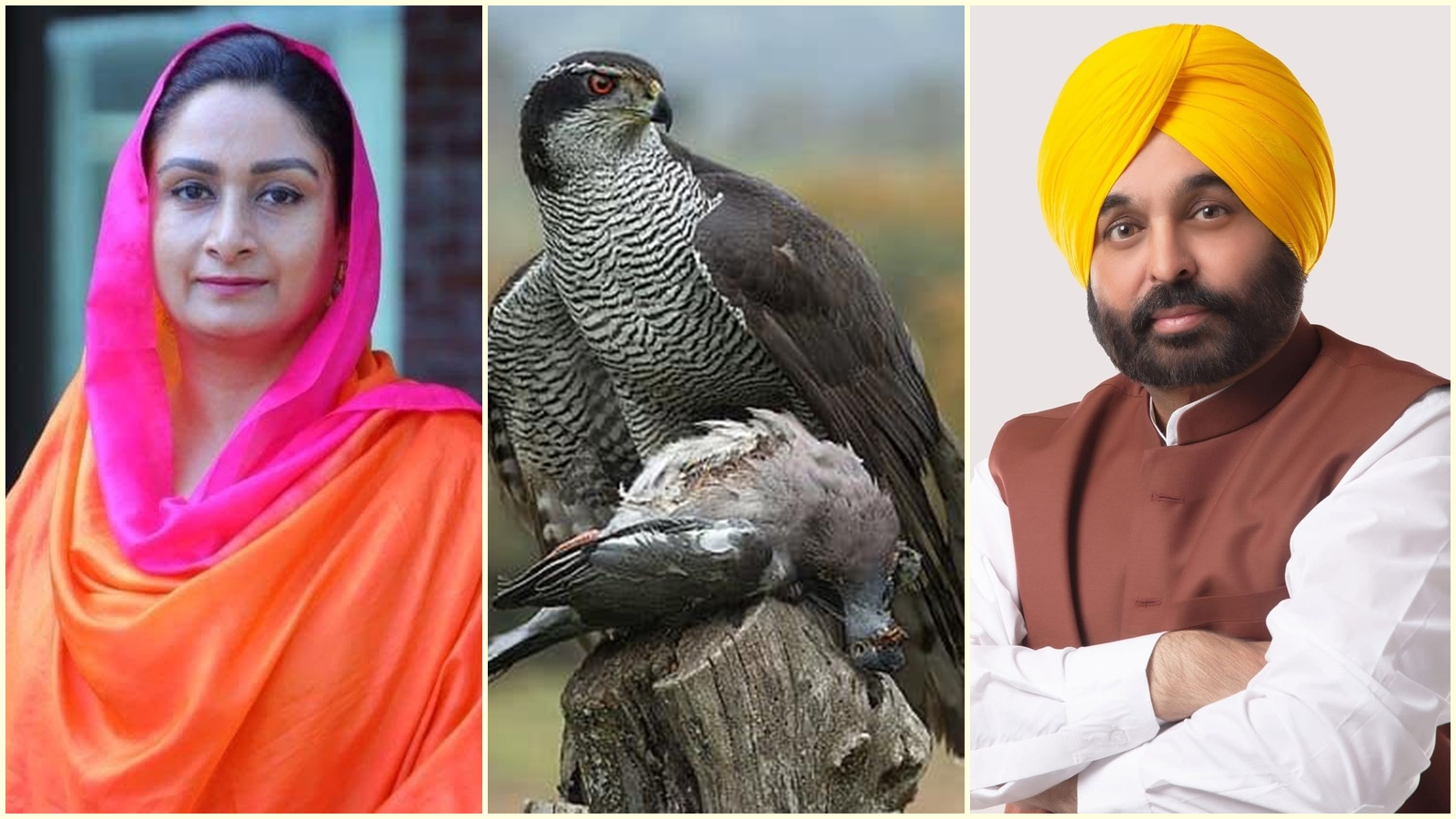
Following the Nanded incident, Harsimrat Kaur Badal, Sukhbir Singh Badal’s wife and a former Union minister, was quick to introduce the Baaz into the narrative. She declared that Guru Gobind Singh had sent his "baaz" to protect her husband. This claim, strategically made ahead of the hotly contested state elections, was designed to tap into the deep reverence Sikhs hold for Guru Gobind Singh and his avian companion.
At a series of rallies across Punjab, Harsimrat Kaur Badal leveraged the incident to full effect. She displayed photographs of what she claimed were "150 stitches" that Sukhbir Singh Badal had received, emphasizing the severity of his injury. The narrative of divine protection was further embellished with a personal anecdote: she stated that their children had seen a falcon circling outside the hospital where the former Deputy Chief Minister was admitted (he received initial treatment in Nanded, then Gurugram, Haryana).
"My children told me a baaz was constantly circling the sky outside the hospital," Harsimrat Kaur Badal proclaimed to cheering crowds. She then dramatically asserted, "So when Bajanvala is here to protect us, why should we fear anyone? We won’t fear, we won’t bend, we will rest only after making them flee Punjab," directly attacking the Aam Aadmi Party government. This impassioned plea sought to portray Sukhbir Singh Badal as divinely favored, a leader under the protection of the Guru himself, and to cast the ruling AAP as an opposing force that needed to be vanquished. The invocation of the Baaz was a clear attempt to consolidate the Akali Dal’s traditional "Panthic vote" – the Sikh religious vote – by associating the party with the revered symbols of Sikhism.
Chief Minister Mann’s Counter-Offensive: A Sky-High Sarcasm
The Akali Dal’s narrative of divine intervention did not go unchallenged. Chief Minister Bhagwant Mann, a seasoned satirist and orator, swiftly launched a scathing counter-offensive, employing his characteristic wit and sarcasm to dismantle the Akali claims. Recognizing the potency of the Baaz symbol, Mann chose to mock the premise rather than directly refute the bird’s existence, cleverly turning the tables on the Badals.
From Divine Protector to Egg Guardian: Mann’s Mockery
In his public speeches and "Lok Milnis" (public interactions) across various districts, CM Mann began to tell a different story about the alleged Baaz sighting. He scoffed at the idea that the bird was there to "protect" Badal. Instead, Mann humorously suggested, the Baaz was likely there to "protect its own eggs from him," implying that the former Deputy CM might have "demanded a business share in the eggs too."
This jibe was a pointed reference to the AAP’s persistent accusations against the Badal family, whom they have repeatedly charged with building vast business empires – spanning transport, sand mining, cable TV, and other sectors – at the expense of Punjab’s development and public welfare. By linking the Baaz’s supposed presence to the Badals’ alleged corruption, Mann aimed to undermine their moral authority and portray them as inherently self-serving, even in the face of a divine symbol.
Mann’s comedic timing and mimicry further amplified his message. During his rallies, he would often use his hands to imitate a bird circling around a building, drawing laughter from the audience as he delivered his punchlines. "She (Harsimrat) says Guru’s baaz was flying around to protect Badal. Oye oye hoye hoye… Is baaj wella (idle) to guard such people who got beadbiyaan (sacrilege) done?" he would exclaim, directly linking the Akali Dal to past controversies.
The Sacrilege Shadow: A Potent Political Weapon
Mann’s most potent weapon in this rhetorical battle was his direct invocation of the 2015 sacrilege incidents, where pages of the Guru Granth Sahib (the holy scripture of Sikhism) were desecrated. These incidents, which occurred during the SAD-BJP government’s tenure, continue to be a deeply sensitive and politically charged issue in Punjab, stirring immense anger and resentment among the Sikh community. By asking why the Guru would send his Baaz to protect the Badals, given their alleged "disrespect of Sri Guru Granth Sahib," Mann skillfully connected the current political drama to a festering wound in Punjab’s collective consciousness. This move aimed to strip the Badals of any claim to religious piety or divine favor, portraying them instead as offenders against the faith they ostensibly represent.
At a recent Lok Milni in Teera village, Mohali district, Mann further embellished his narrative. Pointing to a large bird flying overhead during his speech, he declared, "See, he is here to thank me. He has got to know that whatever I said about him was true. In fact, he must have gone to the hospital to tell Sukhbir that ‘Ehna harkataan ton baaj aaja (Beware such claims)’," leaving the audience in splits. He added, with a twinkle in his eye, "Firstly, it is not even clear if it was actually a baaz. Some say it was a kaan (crow), others say it might be an ill (kite). But even if I believe it was a baaz, it wasn’t there to protect or guard this family. The bird’s wife must have laid eggs nearby. She must have sent him to check that Sukhbir Badal stays away from their nest." This masterful blend of humor, sarcasm, and political accusation effectively turned the Akali Dal’s religious symbol into a tool for public ridicule and political discrediting.
Supporting Data and Expert Perspectives
The political theatrics surrounding the Northern Goshawk have inadvertently highlighted both the deep cultural roots of the symbol and the stark ecological reality of its absence. Experts offer crucial insights that temper the political rhetoric with historical context and ornithological facts.
Unraveling the ‘Baaz’ Identity: More Than Just a Hawk
As Vikram Jit Singh, a key figure in determining the state bird, meticulously explains, the popular understanding of "baaz" often diverges from the precise scientific definition and historical association. "Not every bird from the hawk family is a baaz," he stresses. The revered "baaz" of Sikh history specifically refers to the female Northern Goshawk, a powerful raptor known for its distinctive appearance and hunting prowess. The male, being smaller, is referred to as a "jurra." This distinction is important because many common raptors found in Punjab, such as various species of kites, eagles, or Shikras, are frequently misidentified as the iconic "baaz" by the general public. This confusion allows for opportunistic political claims that can be hard to verify for the untrained eye. The very fact that CM Mann could sarcastically suggest the bird was a "kaan" (crow) or an "ill" (kite) plays on this common misidentification, further eroding the credibility of the Akali Dal’s claim.
The Persistent Mystery of the Missing Goshawk
The scientific consensus regarding the Northern Goshawk’s presence in Punjab is unambiguous: it is extremely rare, if not entirely absent, as a resident breeding species. Vikram Jit Singh reiterates, "There is no recorded sighting of baaz in present-day Punjab or even Haryana." This absence is significant, given the bird’s status as a state symbol. The closest verifiable sightings occur in the more mountainous and forested regions of Himachal Pradesh and Uttarakhand, which offer the dense woodland habitat preferred by goshawks. Some rare sightings have been reported in Maharashtra, but these are typically migratory individuals during winter, rather than established local populations.
The repeated, unsuccessful efforts by the Punjab government in 2018 and 2025 to locate its own state bird within its boundaries serve as compelling official corroboration of its extreme rarity. This suggests that Punjab’s ecosystems may no longer provide suitable habitat for the Northern Goshawk, possibly due to deforestation, urbanization, and agricultural expansion. The political focus on an alleged "sighting" risks diverting attention from the genuine conservation challenges facing the state’s wildlife and the potential loss of biodiversity, including its iconic state bird.
Implications: The Baaz as a Barometer of Punjab’s Political Climate
The episode of the "flying baaz" offers a fascinating, albeit concerning, glimpse into the intricate workings of Punjab’s political landscape. It highlights several key implications for the upcoming elections, the use of religious symbols in public discourse, and the state of conservation efforts.
Electioneering and Religious Iconography
The central implication is the unabashed weaponization of a deeply revered religious symbol for electoral gain. The Akali Dal, which traditionally positions itself as the custodian of Sikh religious interests, sought to invoke divine protection for its leader, thereby appealing to the faith and sentiments of its core Panthic voter base. By presenting Sukhbir Singh Badal as a figure under the Guru’s special care, they aim to solidify their religious legitimacy and paint themselves as true representatives of Sikh values. This strategy, while common in identity-based politics, risks blurring the lines between faith and political opportunism.
Conversely, CM Mann’s response, though satirical, is equally strategic. By ridiculing the Akali claim and linking it to allegations of corruption and past sacrilege incidents, he attempts to neutralize the religious appeal and instead portray the Badals as hypocritical and morally compromised. His approach aims to appeal to a broader electorate, including those disillusioned with traditional religious-political establishments and those concerned about governance and corruption. This dual use of the Baaz – as a symbol of divine favor by one party and a target of mockery and moral condemnation by another – underscores the intensely polarized political environment in Punjab. It demonstrates how deeply ingrained religious symbols are in the political consciousness, making them potent tools for both endorsement and critique.
A Distraction from Real Conservation?
Beyond the political sparring, the controversy inadvertently highlights the alarming state of the Northern Goshawk’s population in Punjab. The fact that the state has twice failed to locate its own state bird within its borders, yet politicians are claiming its presence for political mileage, exposes a disconnect between symbolic reverence and practical conservation. The focus on a dubious "sighting" during election season diverts attention from the pressing need for genuine ecological research, habitat restoration, and conservation initiatives for the species.
If the Northern Goshawk is indeed absent from Punjab, as scientific evidence suggests, then the state faces a significant environmental challenge. Habitat degradation, loss of forests, and human encroachment are likely culprits. Instead of debating the authenticity of a politically convenient "sighting," resources and attention could be better directed towards understanding why the bird is missing and what steps can be taken to reintroduce or protect its potential migratory routes and remaining habitats. The current political discourse, while engaging, risks trivializing a serious conservation issue, reducing a majestic, endangered species to a mere prop in a political drama. This short-term political gain could come at the long-term cost of environmental awareness and action.
Conclusion: A Soaring Narrative, A Grounded Reality
The saga of the Northern Goshawk in Punjab is a compelling illustration of how deeply entwined culture, faith, and politics are in the region. The Baaz, a powerful emblem of Sikh heritage and valor, has transcended its biological reality to become a central character in a pre-election drama. On one side, the Akali Dal seeks to harness its symbolic power for divine endorsement and political legitimacy. On the other, the AAP, led by CM Bhagwant Mann, employs sharp satire and historical grievances to dismantle their opponents’ claims and expose perceived hypocrisy.
While the political narratives soar with claims of divine protection and witty retorts, the grounded reality for the Northern Goshawk remains one of elusive rarity. The bird’s absence from Punjab’s skies, despite its revered status, serves as a stark reminder of environmental challenges and past administrative oversights. As Punjab gears up for its assembly elections, the "flying baaz" will undoubtedly continue to stir debate, provoke laughter, and ignite passions. Yet, beneath the layers of political rhetoric and cultural symbolism, lies a deeper truth: the true measure of Punjab’s reverence for its state bird, and indeed its commitment to its natural heritage, will ultimately be judged not by political claims, but by concrete conservation efforts that ensure the real Northern Goshawk can, once again, majestically soar through the state’s skies. Until then, the Baaz remains a potent, if somewhat ironic, barometer of Punjab’s ever-volatile political climate.
