

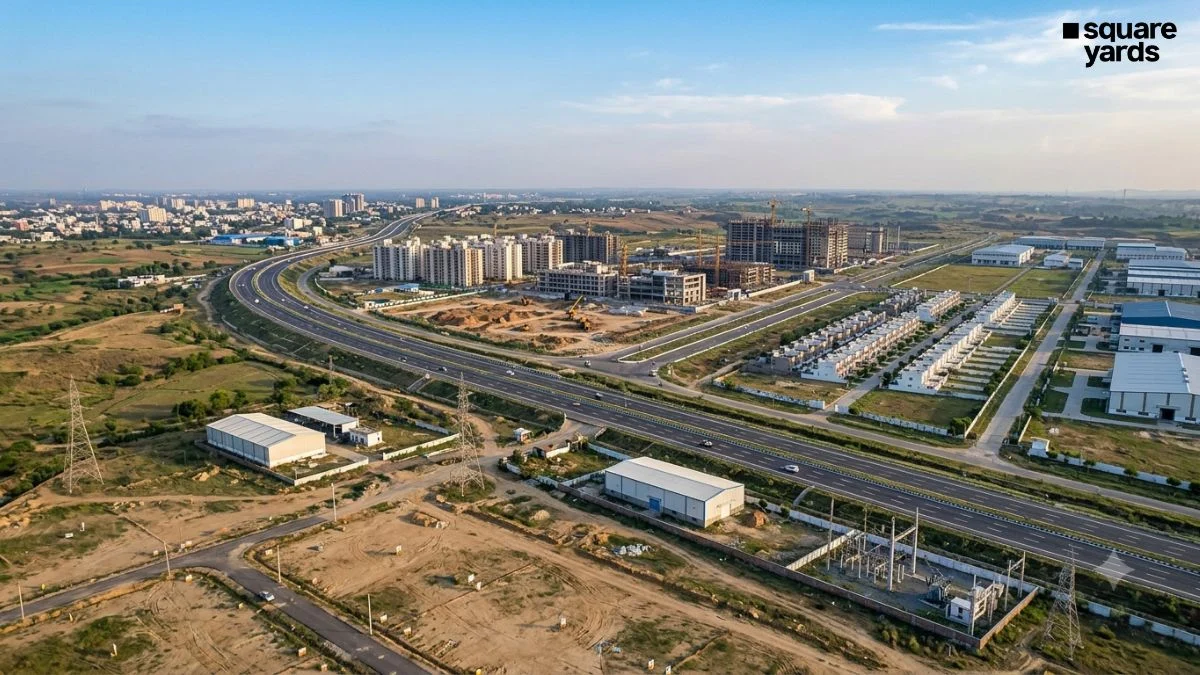
LUCKNOW – In a move that signals a paradigm shift in India’s sub-national infrastructure strategy, the Government of Uttar Pradesh has greenlit a massive Rs 24,000 crore infrastructure package. At the heart of this ambitious rollout are two monumental expressway projects—the Meerut-Haridwar extension of the Ganga Expressway and the Jhansi Link Expressway. With a combined investment of nearly Rs 18,730 crore for these two corridors alone, the state is aggressively positioning itself as the logistics and industrial backbone of North India.
This latest approval is not merely about laying asphalt; it represents a calculated effort to unlock the economic potential of the Western and Bundelkhand regions, areas that have historically sat on the periphery of the National Capital Region’s (NCR) boom. By creating a high-speed nexus of connectivity, the state aims to catalyze a multi-sectoral surge in real estate, manufacturing, and tourism.
I. Main Facts: The Anatomy of a Rs 18,730 Crore Investment
The Uttar Pradesh government’s recent cabinet approvals focus on two strategic lifelines intended to bridge the gap between industrial hubs and transit corridors.
1. The Meerut-Haridwar Extension (Ganga Expressway)
Budgeted at Rs 10,761 crore, this project is an extension of the ambitious Ganga Expressway, which is already touted as one of India’s longest tolled pathways. The extension is designed as a six-lane corridor with the capacity to expand to eight lanes. It aims to provide seamless connectivity between the industrial clusters of Meerut, Muzaffarnagar, and Bijnor, terminating at the spiritual and tourism gateway of Haridwar.
2. The Jhansi Link Expressway
With an allocation of Rs 7,968.30 crore, the 106.3-km Jhansi Link Expressway is set to transform the Bundelkhand region. It will connect the existing Bundelkhand Expressway near Phoolpura in Jalaun to National Highway 44 (NH-44) at Ambabai in Jhansi. This link is vital for the success of the Uttar Pradesh Defense Industrial Corridor, providing the necessary logistics speed for heavy engineering and defense manufacturing units.
3. Funding and Execution
Both projects are notably state-funded, reflecting the Uttar Pradesh government’s fiscal confidence and its commitment to the "Gati Shakti" vision. The Uttar Pradesh Expressways Industrial Development Authority (UPEIDA) has been designated as the nodal agency for land acquisition and construction oversight.
II. Chronology: The Evolution of the "Expressway State"
The journey toward this Rs 24,000 crore push has been a decade in the making, evolving through successive phases of infrastructure development.
- 2012–2017: The Foundation Phase: The inauguration of the Yamuna Expressway and the Agra-Lucknow Expressway established the proof of concept. These projects proved that high-speed corridors could drastically reduce travel time and spark localized real estate interest in cities like Greater Noida and Agra.
- 2018–2021: The Expansion Phase: The Purvanchal Expressway (341 km) and the Bundelkhand Expressway (296 km) were commissioned to bring the eastern and southern parts of the state into the mainstream economic fold.
- 2022–2024: The Integration Phase: Construction began on the main phase of the Ganga Expressway. Simultaneously, the government began shifting focus from "connectivity" to "corridor-led development," introducing the concept of Integrated Manufacturing and Logistics Clusters (IMLCs) alongside the roads.
- September 2026: The Strategic Nexus: The current approval of the Meerut-Haridwar and Jhansi links represents the final "interlocking" of the network. By connecting existing expressways to religious hubs (Haridwar) and defense nodes (Jhansi), the state is completing a circuit that allows goods and people to move from any corner of UP to the NCR or international borders with unprecedented speed.
III. Supporting Data: Real Estate and Economic Indicators
The economic rationale behind these investments is supported by robust market data. According to Square Yards Data Intelligence, infrastructure-heavy zones in Uttar Pradesh have consistently outperformed traditional markets.
The Lucknow Benchmark
Lucknow serves as a primary example of how infrastructure drives value.
- North Lucknow: Currently priced at approximately Rs 6,950 per sq. ft., reflecting a 14.73% year-on-year (YoY) increase.
- West Lucknow: Priced at Rs 6,850 per sq. ft., showing a 14.98% YoY growth.
- The wider apartment market in the capital has seen a steady 6.42% rise, suggesting that residential demand follows the path of improved municipal and transit infrastructure.
The Yamuna Expressway Success Story
The Yamuna Expressway micromarket provides a blueprint for what the new Meerut and Jhansi corridors might experience.
- The average price in this belt stands at Rs 9,700 per sq. ft., up 5.13%.
- Specific pockets like Sector 22A have reached Rs 9,850 per sq. ft., while Sector 25 recorded an 8.9% rise in the most recent period.
Industrial Land Bank
The Jhansi region is particularly significant due to the Defense Industrial Corridor. UPEIDA has identified over 5,125 hectares of land across six nodes (Agra, Aligarh, Chitrakoot, Jhansi, Kanpur, and Lucknow). Jhansi alone is expected to host massive units for missile components and armored vehicles, necessitating the high-capacity Jhansi Link Expressway.
IV. Official Responses and Strategic Vision
UPEIDA and state officials have emphasized that these expressways are not standalone transport projects but "economic engines."
UPEIDA Spokesperson Stance:
The authority has stated that the primary objective is "balanced regional development." By extending the Ganga Expressway to Haridwar, the state is catering to a dual-purpose market: religious tourism and the agro-industrial trade of Western UP. Officials highlight that the Integrated Manufacturing and Logistics Cluster (IMLC) program will be the "soul" of these new roads, offering dedicated zones for:
- Warehousing and Cold Storage
- Food Processing Units
- Educational and Medical "Cities"
- Satellite Townships
Government Perspective:
State leadership has frequently underscored that for Uttar Pradesh to become a $1 trillion economy, the "cost of logistics" must be reduced. By building state-funded expressways, the government is lowering the barrier to entry for private investors who require reliable supply chains to move goods from the hinterlands to the ports and the NCR.
V. Implications: The Future of Real Estate and Industry
The approval of these corridors carries profound implications for the socio-economic landscape of Northern India.
1. The Decentralization of Real Estate
For decades, real estate investment in UP was heavily concentrated in Noida, Greater Noida, and Lucknow. The new expressway links are likely to trigger a "corridor-led" development model. Locations that were once considered peripheral—such as Jalaun, Bijnor, and Muzaffarnagar—are now emerging as viable frontiers for:
- Plotted Developments: Investors are looking for land parcels near expressway interchanges, anticipating future commercial hubs.
- Affordable Housing: As industries set up in the Jhansi Defense Corridor, there will be a surge in demand for worker housing and mid-segment residential projects.
2. Logistics as the New "Gold Mine"
The Sultanpur manufacturing cluster and the proposed clusters along the Jhansi Link suggest that warehousing will become a dominant asset class. With the rise of e-commerce, the Meerut-Haridwar link provides a high-speed route for "last-mile" delivery into the prosperous districts of Western UP and Uttarakhand.
3. Tourism and Hospitality Surge
The Meerut-Haridwar extension is a game-changer for the hospitality sector. Haridwar attracts millions of pilgrims and tourists annually. A six-lane expressway reduces travel time from Delhi and Central UP significantly, encouraging the development of luxury resorts, hotels, and retail outlets along the route.
4. Structural Shift in Employment
Perhaps the most significant implication is the shift from agrarian-dependent economies to industrial and service-oriented ones. The "Integrated Manufacturing" vision ensures that local youth in the Bundelkhand and Western regions have access to jobs in logistics, construction, and manufacturing without having to migrate to the NCR or other states.
Conclusion: A Structural Transformation
The Rs 24,000 crore infrastructure push is a testament to Uttar Pradesh’s evolving identity. By committing nearly Rs 18,730 crore to the Meerut-Haridwar and Jhansi Link expressways, the state is creating a permanent link between its industrial aspirations and its geographical reality. While the immediate impact will be felt in the construction and steel sectors, the long-term legacy will be a robust, interconnected property market and a manufacturing ecosystem that could redefine the economic map of India. As the "Expressway State" matures, the transition from transport corridors to vibrant economic zones appears not just possible, but inevitable.
