

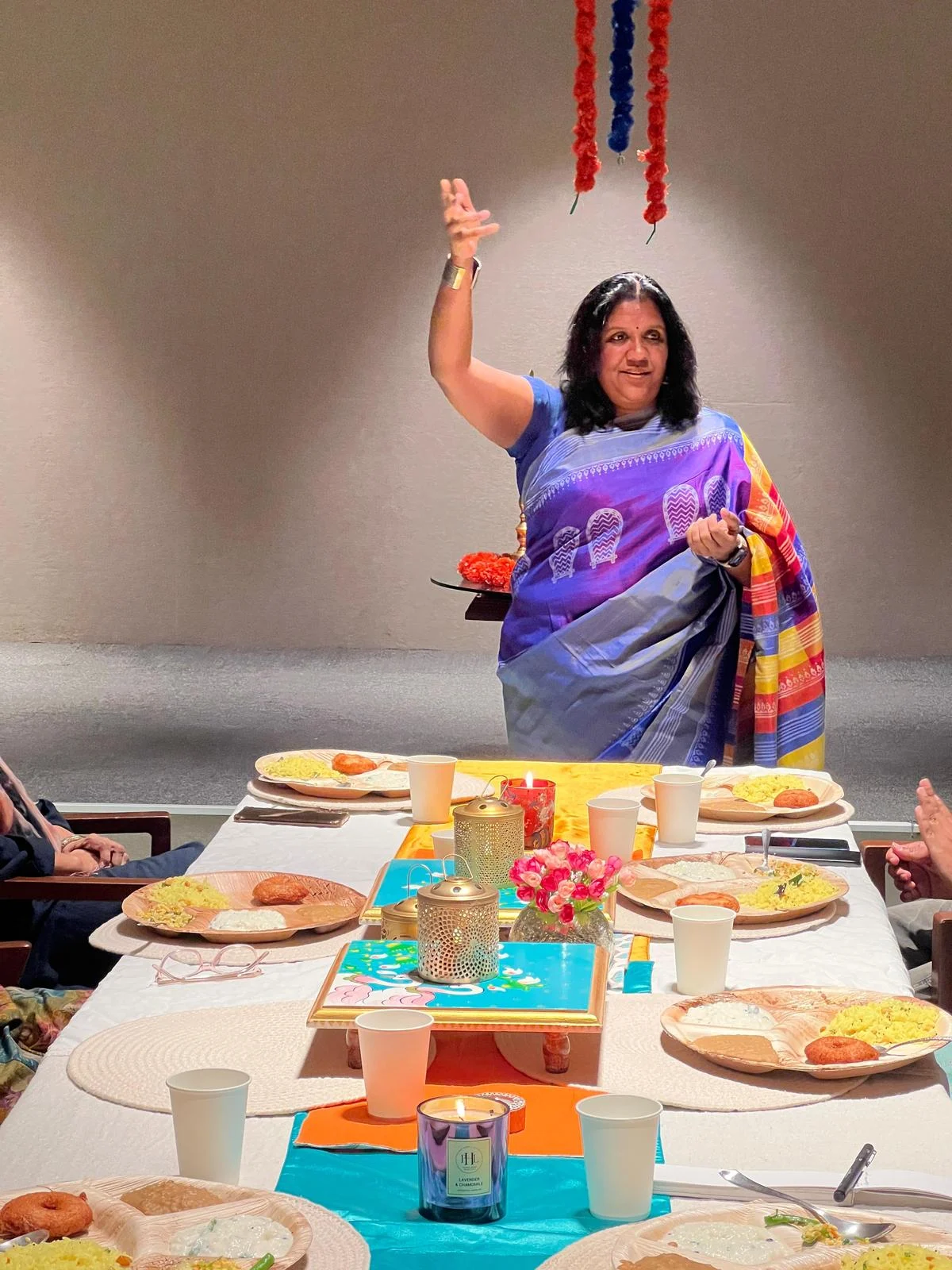
Bengaluru, India – September 5, 2026 – Beyond the immediate sensory delight of festive feasts lies a profound and often overlooked realm: the intricate histories, cultural narratives, and even the political underpinnings that define the dishes gracing our plates. Performance storyteller and educator Aparna Jaishankar is poised to delve into this rich territory with "Divine Delicacies," an upcoming event at Atta Galatta, Bengaluru, on September 6. This unique initiative promises an immersive experience, blending captivating storytelling with a curated menu tasting, offering attendees a deeper appreciation for the heritage embedded within sacred and celebratory foods.
"Every dish on your plate has a story, a history, and politics," states Jaishankar, her voice resonating with the passion of a seasoned orator. For over two years, her performances under the "Divine Delicacies" banner have explored the multifaceted dimensions of Indian mythology, heritage, history, and philosophy. This particular iteration, however, hones in on the evocative connection between food and the divine, a concept that has resonated deeply with both Jaishankar and the co-founders of Atta Galatta, Lakshmi and Subodh Shankar.
The genesis of "Divine Delicacies" can be traced back to conversations between Jaishankar and the Shankars, who envisioned an event that transcended mere culinary appreciation. The core idea blossomed from an exploration of food considered sacred, those offered as prasadam in temples, shared during festivals, dedicated to deities, or even revered as offerings to regional, nature-bound deities. This focus on the spiritual and ceremonial aspects of food provides a unique lens through which to understand India’s diverse cultural landscape.
A Culinary Journey Through Sacred Offerings and Festival Feasts
The upcoming "Divine Delicacies" event, strategically scheduled a week before the auspicious Ganesh Chaturthi, is set to showcase a meticulously curated selection of dishes. The repertoire will span from well-known festival delicacies to lesser-known, yet equally significant, prasadams. This deliberate inclusion aims to provide a comprehensive overview of the varied culinary traditions associated with religious observances and significant cultural moments across India.
"The hall is decorated, as ambience plays a vital role in experiencing the authenticity of our heritage," explains Jaishankar, emphasizing the holistic approach to the event. She further elaborates on the subtle yet profound impact of presentation on the dining experience. "The taste differs between eating off a plate, a banana leaf, or a dona patta (areca or palm leaf). Each serving vessel carries its own historical and cultural significance, influencing not just the aesthetic but also the perceived authenticity of the meal." This attention to detail underscores the event’s commitment to an immersive and authentic cultural experience.
The intimate setting of Atta Galatta, with a capacity for only 15 to 18 attendees, is a deliberate choice. This exclusivity fosters a more personal and engaging interaction between the storyteller, the hosts, and the audience. It allows for a deeper dive into the nuances of each dish and its accompanying narrative, transforming the event into a shared discovery rather than a passive presentation.

A key element that distinguishes "Divine Delicacies" from conventional food events is the origin of the culinary offerings. The food served will not be commercially prepared or sourced from stores. Instead, it will be meticulously prepared in the personal kitchen of Lakshmi and Subodh Shankar. This hands-on approach ensures the highest standards of authenticity and a direct connection to the home-cooked traditions that often form the bedrock of festive fare.
The Art of Storytelling: Weaving Narratives Around Each Bite
The core of "Divine Delicacies" lies in its unique blend of gastronomy and narrative. Over the course of the two-hour session, attendees will not only savor the carefully prepared dishes but also be privy to the heritage and stories behind each one. Jaishankar’s expertise as a performance storyteller will be on full display, as she artfully weaves tales that illuminate the origins, cultural significance, and historical evolution of the featured foods.
The menu itself is a product of extensive research and careful curation. Both the plausibility of preparation and the availability of authentic ingredients have been paramount considerations. This ensures that the dishes presented are not only historically accurate but also practically feasible, allowing for a genuine replication of traditional flavors and preparations.
"Research played a major role in this project," Jaishankar emphasizes, highlighting the intellectual rigor behind the event. "What is the story of the dish? Where can you find it? These are some of the questions that will be answered during the session." This commitment to historical accuracy and cultural context elevates "Divine Delicacies" beyond a mere tasting event, positioning it as an educational and enriching experience.
While the specific dishes may vary from session to session, dictated by narrative requirements and thematic explorations, one element remains a constant: the dessert. "How can one talk about food without the perfect dessert to top it off?" Jaishankar quips, underscoring the universal appeal and celebratory nature of sweet endings. The dessert course will likely serve as a fitting culmination to the culinary and narrative journey, leaving attendees with a lasting impression of both flavor and folklore.
Chronology of the Event and its Precursors
The "Divine Delicacies" initiative has been a gradual evolution, rooted in Aparna Jaishankar’s long-standing engagement with storytelling and heritage.

- Ongoing: Aparna Jaishankar has been actively engaged in performance storytelling and education for several years, with her performances consistently revolving around Indian mythology, heritage, history, and philosophy. This foundational work has equipped her with the narrative skills and deep knowledge base necessary for "Divine Delicacies."
- Over Two Years Ago: Discussions between Aparna Jaishankar and Lakshmi and Subodh Shankar, co-founders of Atta Galatta, begin to take shape. The shared vision of creating an event that connects food with deeper cultural narratives emerges during these initial conversations.
- Over the Past Two Years: Jaishankar has been conducting performances under the "Divine Delicacies" banner, focusing on food as a theme. However, these earlier iterations have likely explored broader aspects of food in culture and history, paving the way for the more specific focus on sacred and festive foods.
- Recent Months: The specific focus on food considered sacred, offered as prasadam, and associated with festivals crystallizes. This refinement is driven by a desire to explore the profound spiritual and cultural significance of these particular culinary traditions. Research intensifies to identify specific dishes, their histories, and preparation methods.
- September 6, 2026: The upcoming "Divine Delicacies" event at Atta Galatta, Bengaluru, marks a significant milestone in this journey. This iteration specifically highlights food from well-known festival feasts and lesser-known prasadams, with a special thematic emphasis leading up to Ganesh Chaturthi.
Supporting Data and Cultural Context
The significance of food in Indian culture, particularly during festivals and religious observances, cannot be overstated. Food is not merely sustenance; it is a medium of expression, a carrier of tradition, and a symbol of community and divinity.
- Religious Significance: In Hinduism, food offerings (bhog or prasadam) are an integral part of worship. These offerings are believed to be first consumed by the deity and then distributed among devotees, symbolizing a divine blessing. The preparation of prasadam often follows strict rituals and recipes passed down through generations.
- Festivals as Culinary Calendars: Indian festivals are intrinsically linked to specific culinary traditions. For instance, Ganesh Chaturthi is associated with modaks, a sweet dumpling. Diwali features a wide array of sweets and savory snacks like ladoos, barfis, and namkeens. Pongal in Tamil Nadu celebrates the harvest with rice-based dishes. These foods are not just celebratory; they often reflect regional agricultural produce and seasonal availability.
- Regional Diversity: India’s vast culinary landscape is a testament to its regional diversity. Each state, and often each community within a state, has its own unique set of festive foods, influenced by local ingredients, historical influences (such as Mughal or colonial), and religious practices. For example, Puran Poli is a popular sweet flatbread in Maharashtra during festivals, while Mysore Pak is a beloved sweet from Karnataka.
- The "Politics" of Food: Jaishankar’s mention of "politics" in relation to food likely refers to the historical evolution of dishes, the influence of trade routes on ingredient availability, and the social stratification that may have dictated who had access to certain ingredients or preparations. It can also refer to the role of food in asserting cultural identity or maintaining traditions in the face of external influences. For instance, the emphasis on vegetarianism during certain religious periods, or the specific offerings made to deities, can be seen as reflecting deeply ingrained cultural and religious norms.
- Symbolism of Ingredients: Many ingredients used in festive foods carry symbolic meanings. For example, rice often symbolizes prosperity and abundance, while turmeric is associated with purity and auspiciousness. Ghee (clarified butter) is considered sacred and is frequently used in offerings and festive preparations.
Official Responses and Expert Endorsements
While there are no direct "official responses" in the traditional sense for an event like "Divine Delicacies," the backing of Atta Galatta, a well-respected literary and cultural hub in Bengaluru, serves as a significant endorsement. The co-founders, Lakshmi and Subodh Shankar, are known for their commitment to promoting Indian arts and literature, and their collaboration with Aparna Jaishankar lends credibility and visibility to the initiative.
Aparna Jaishankar’s background as an educator and performance storyteller further strengthens the event’s academic and cultural value. Her ability to translate complex historical and philosophical concepts into engaging narratives is a crucial asset for an event that aims to educate as much as it entertains.
The very concept of "Divine Delicacies" taps into a growing interest among urban audiences to reconnect with their cultural roots and understand the deeper meanings behind traditional practices. Events that offer such a layered experience – combining sensory pleasure with intellectual engagement – are increasingly sought after.
Implications and Future Prospects
"Divine Delicacies" has the potential to create several significant ripples:
- Enhanced Cultural Appreciation: The event offers a novel way for individuals to engage with their heritage. By understanding the stories and histories behind festive foods, attendees can develop a more profound appreciation for the cultural tapestry of India.
- Preservation of Culinary Traditions: By highlighting lesser-known prasadams and traditional preparation methods, the event contributes to the preservation of culinary heritage that might otherwise be at risk of being forgotten. The emphasis on home-cooked meals further reinforces the value of traditional domestic culinary practices.
- Promoting Interdisciplinary Learning: The event seamlessly blends history, mythology, philosophy, and gastronomy, fostering an interdisciplinary approach to learning that is both engaging and enriching.
- Inspiring Future Initiatives: The success of "Divine Delicacies" could inspire similar events focusing on other aspects of Indian culture, such as traditional crafts, music, or literature, all presented through immersive storytelling and experiential formats.
- Economic Impact for Local Artisans and Businesses: While this specific event emphasizes home-cooked food, the broader concept could potentially lead to collaborations with local artisans for serving ware or regional food producers for ingredients, thereby supporting local economies.
The tickets for "Divine Delicacies" are priced at ₹500 and above, indicating an accessible yet premium offering for those seeking a unique cultural experience. For further details and to secure a spot, interested individuals can visit attagalatta.com. This event, by unearthing the profound narratives embedded within our food, promises to be a truly divine culinary and intellectual journey. As the event unfolds, it is poised to leave attendees with not just satisfied appetites, but also with a richer understanding of the stories that nourish us, both literally and figuratively.
