

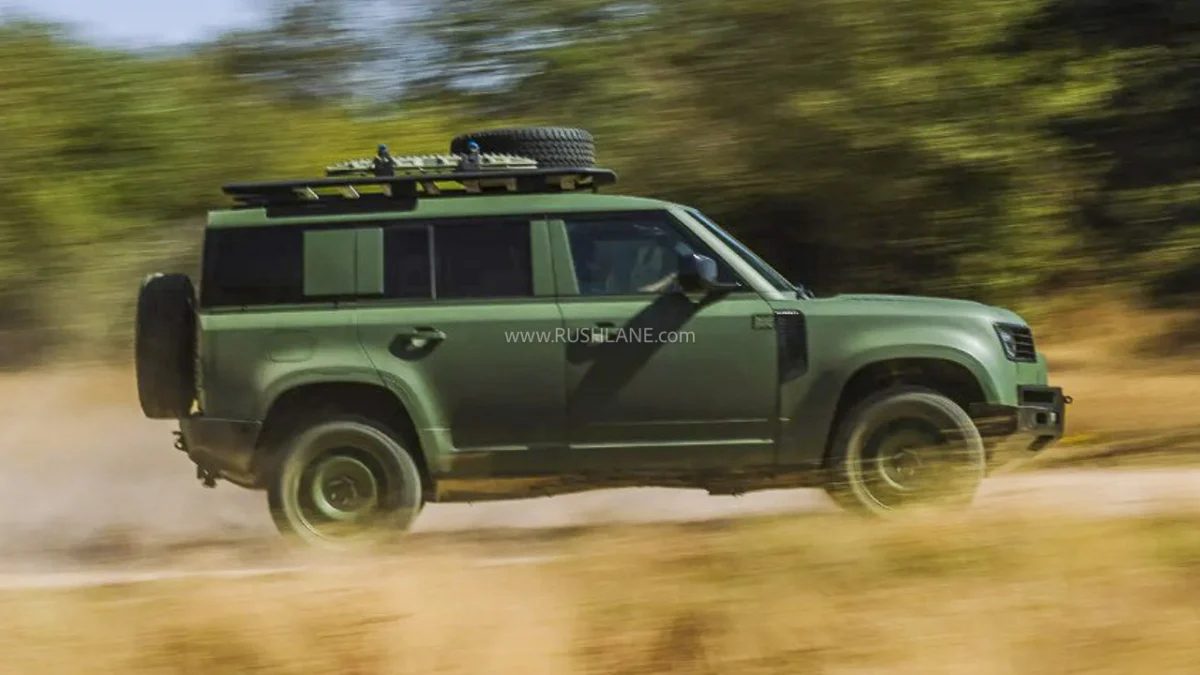
LONDON — In a strategic move that bridges nearly eight decades of military heritage with cutting-edge automotive engineering, Jaguar Land Rover (JLR) has officially unveiled the Defender Wolf Series II. This next-generation military vehicle is the spearhead of Land Rover’s bid for the UK Ministry of Defence’s (MoD) massive Land Mobility Programme (LMP), a procurement initiative aimed at replacing nearly 9,500 legacy vehicles across the British Armed Forces’ fleet.
The stakes for this contract are monumental. Valued in the hundreds of millions, if not billions, of pounds over its lifecycle, the contract seeks a modular Light Mobility Vehicle (LMV) capable of fulfilling diverse roles—from frontline combat support to battlefield medical evacuation. With the debut of the Wolf Series II, Land Rover signals its intent to reclaim its undisputed status as the primary mobility provider for the British soldier.
Main Facts: A New Breed of Military Mobility
The Land Rover Defender Wolf Series II is not merely a ruggedized version of the consumer SUV seen in urban environments. It represents a fundamental re-engineering of the Defender platform, specifically tailored to meet the brutal demands of 21st-century warfare.
The Land Mobility Programme (LMP)
The UK Ministry of Defence is currently undergoing one of its most significant fleet overhauls in decades. The goal is to streamline a fragmented fleet of aging vehicles, including the original Land Rover Wolf and the Pinzgauer, into a more cohesive, modular system. The government’s requirement is for a "Family of Light Mobility Vehicles" (FLMV) that can be adapted into multiple body styles while maintaining commonality in parts and maintenance.
The Defender Defense Division
To ensure the Wolf Series II met the stringent requirements of the MoD, JLR established a dedicated "Defender Defense Division." This specialized unit was tasked with stripping the modern Defender to its core and rebuilding it for the theater of war. The vehicle has already undergone over 62,000 individual tests, ranging from extreme thermal exposure to high-impact structural stress tests.
Key Technical Specifications
Unlike the original 1990s Wolf, which utilized a traditional body-on-frame ladder chassis, the Wolf Series II is built on Land Rover’s D7x monocoque architecture. While some purists questioned the move to monocoque for military use, Land Rover has reinforced the structure to withstand JLR’s "Extreme Event Test" procedure, which simulates the most violent stresses a vehicle can encounter in off-road and combat scenarios.

Chronology: From the 1948 Series I to the Wolf Series II
The relationship between Land Rover and the British military is one of the most enduring partnerships in industrial history. Understanding the Wolf Series II requires a look back at the lineage it inherits.
The Post-War Genesis (1940s – 1950s)
The original Land Rover Series I was born in 1948, partly inspired by the American Willys Jeep. The British Army quickly realized its potential, adopting the Series I for its robustness and simplicity. Throughout the 1950s and 60s, the Series II and IIA became the backbone of British operations in the Middle East, Africa, and Southeast Asia.
The Birth of the "Wolf" (1996)
In the mid-1990s, the Ministry of Defence required a vehicle that was significantly tougher than the standard Defender 90 and 110. The result was the original "Wolf" (officially the Land Rover TUL and TUM—Truck Utility Light and Truck Utility Medium). These vehicles featured a heavily reinforced chassis, 24V electrical systems, and the legendary 300Tdi engine. They became icons of British military presence in the Balkans, Iraq, and Afghanistan.
The Modern Gap (2016 – 2024)
When the classic Defender ceased production in 2016, a vacuum was created. The British Army continued to use the aging Wolf fleet, often extending their service life through expensive remediation programs. The launch of the new L663 Defender in 2020 provided the platform for the Wolf Series II, which has now spent several years in clandestine development to ensure it could meet modern NATO standards.
Supporting Data: Engineering for the Modern Battlefield
The Wolf Series II is designed to be a "Swiss Army Knife" on wheels. The MoD contract stipulates a need for at least nine distinct variants, and Land Rover has engineered the platform to be highly modular to accommodate these requirements.
Modular Variants
According to internal reports and MoD briefings, the Defender Wolf Series II will be capable of transforming into the following configurations:

- General Purpose Vehicle: For troop transport and logistics.
- Tactical Mobility Vehicle: Equipped for reconnaissance and light combat.
- Utility Vehicle: A "workhorse" for base operations.
- Enhanced Protection Vehicle: Featuring modular armor plating.
- Battlefield Ambulance: Optimized for casualty evacuation with medical suites.
- Command and Control: A mobile hub for communications and battlefield management.
- Equipment Support: For field repairs and maintenance crews.
- Mission Systems: For electronic warfare and drone deployment.
- Troop Carrier: Maximizing personnel capacity.
Hardware Enhancements
The Wolf Series II distinguishes itself from the civilian Defender through several high-performance modifications:
- Steel Bumpers and Skid Plates: Integrated heavy-duty front bumpers designed for winching and obstacle clearing.
- Protection Grilles: Specialized shielding for LED headlight units to prevent damage from debris or small arms fire.
- Steel Wheels and All-Terrain Tires: Heavy-duty steel rims paired with high-aspect-ratio tires for maximum puncture resistance and grip in mud, sand, and snow.
- Specialized Intake: A raised air intake (snorkel) is standard, allowing for deep-water wading in depths exceeding 900mm.
- EMP Resistance: While JLR has not released full powertrain specs, it is understood that the military variant includes shielded electrical systems to resist Electromagnetic Pulses (EMP) and reduce the vehicle’s thermal and electromagnetic signatures—critical for avoiding detection by modern sensors.
Official Responses and Market Positioning
While the Ministry of Defence remains in the evaluation phase, early demonstrations have reportedly put Land Rover in a favorable position.
Performance at Millbrook
During recent trials at the MoD’s independent testing ground at Millbrook, the Wolf Series II was reportedly the only vehicle in its class to successfully navigate the entire obstacle course without assistance. This performance is attributed to the Defender’s sophisticated "Terrain Response" system, which has been recalibrated for military-specific terrains.
JLR’s Strategic Commitment
A spokesperson for JLR’s Defense Division emphasized that the Wolf Series II is a product of British engineering excellence. "We have taken the most capable Land Rover ever built and optimized it for the bravest men and women in our Armed Forces. The Wolf Series II is not just a vehicle; it is a mission-critical tool designed to operate in the most hostile environments on Earth."
The "Dakar" Pedigree
Land Rover has also leveraged the Defender’s recent success in the Dakar Rally to prove the durability of the D7x architecture. By showcasing the vehicle’s ability to survive thousands of miles of high-speed desert racing, the company has countered arguments that a monocoque chassis is less durable than a traditional frame.
Implications: Economy, Sovereignty, and Modern Warfare
The selection of the Defender Wolf Series II would have far-reaching implications beyond the battlefield.

Economic Impact
Awarding the contract to Land Rover would be a significant boost for the UK’s automotive manufacturing sector. With production likely to involve JLR’s facilities in the UK, the contract would secure thousands of jobs in engineering, assembly, and the broader supply chain. It also ensures that the intellectual property for the UK’s primary mobility platform remains within a British-headquartered company.
The Shift to "Digital" Warfare
Modern warfare relies heavily on data. The Wolf Series II is designed to interface seamlessly with tactical radios and battlefield management computers. Its electrical architecture can support high-draw equipment like signal jammers and satellite uplinks, making it a "node" in the digital battlefield rather than just a transport vehicle.
Sustainability and Future-Proofing
While the initial units are expected to utilize high-torque diesel engines (preferred for their fuel stability and torque in combat zones), the D7x platform is already "future-proofed" for electrification. As the MoD looks toward its "Sustainable Defence" goals, the Wolf Series II could eventually see hybrid or even fully electric variants for silent covert operations.
Global Export Potential
Winning the UK MoD contract would serve as the ultimate "seal of approval" for international markets. NATO allies and Commonwealth nations that have historically used Land Rovers are likely to follow the UK’s lead, potentially opening up billions in export revenue for JLR.
Conclusion
The Land Rover Defender Wolf Series II arrives at a pivotal moment for the British Armed Forces. As the MoD seeks to modernize its fleet to face evolving global threats, the need for a vehicle that is both technologically advanced and mechanically indestructible has never been greater.
By combining the heritage of the original Wolf with the sophisticated engineering of the modern D7x platform, Land Rover has presented a compelling case for the future of military mobility. Later this month, at the British Army DVD (Defence Vehicle Dynamics) event, JLR will showcase four physical variants—the Utility, Ambulance, Tactical, and General Mobility vehicles. For the Ministry of Defence, the decision will be about more than just a vehicle; it will be about choosing the platform that will carry the British Army through the next half-century of service.
