

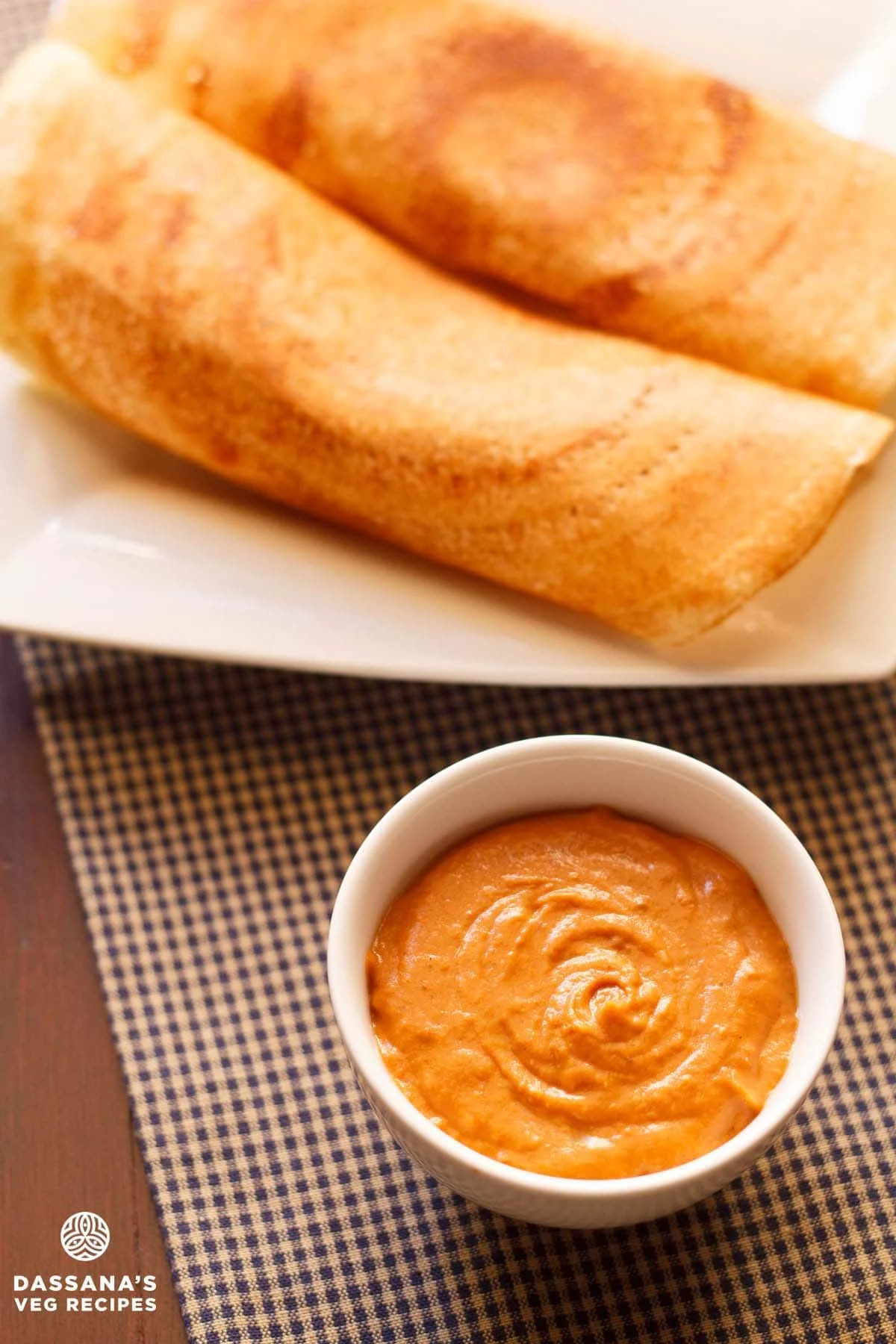
In the diverse landscape of Indian gastronomy, few elements are as ubiquitous yet as varied as the chutney. Often relegated to the status of a "side dish," the South Indian chutney is, in reality, the structural backbone of the region’s breakfast culture, known as "tiffin." Among the pantheon of condiments—ranging from the creamy coconut varieties to the fiery peanut pastes—the Onion Tomato Chutney stands out as a masterclass in flavor balancing. Combining the sweetness of caramelized alliums, the acidity of vine-ripened tomatoes, and the earthy depth of toasted lentils, this specific preparation represents a culinary intersection of simplicity and sophistication.
Main Facts: The Profile of a Tiffin Staple
The Onion Tomato Chutney is a vibrant, reddish-orange condiment primarily associated with the states of Tamil Nadu, Karnataka, Andhra Pradesh, and Kerala. Unlike its singular-ingredient counterparts, this hybrid version leverages the chemical synergy between onions and tomatoes to create a profile that hits all the major taste receptors: sweet, sour, salty, and umami.

Key Ingredients and Their Functions
- Onions (The Base): Providing a foundational sweetness, the onions are typically sautéed until translucent or light golden. This process initiates the Maillard reaction, transforming the sharp, pungent sulfur compounds of raw onion into a mellow, savory base.
- Tomatoes (The Acid): Acting as the primary balancing agent, tomatoes provide the necessary tanginess. When cooked down into a pulp, they also contribute a rich texture that binds the other ingredients together.
- Urad Dal (Split Black Gram): This is a hallmark of South Indian chutney-making. When toasted in oil, the lentils provide a nutty aroma and act as a natural thickener once ground.
- Dried Red Chilies (The Heat): Depending on the variety used (such as the high-heat Guntur or the color-rich Kashmiri), these chilies define the chutney’s spice threshold.
- Tamarind and Asafoetida (The Enhancers): A small orb of tamarind pulp deepens the sour notes, while a pinch of asafoetida (hing) provides a savory, almost garlicky undertone and aids in digestion.
The preparation typically takes approximately 20 minutes, making it an efficient choice for high-volume domestic kitchens and commercial eateries alike.
Chronology: The Transformation from Raw Produce to Refined Paste
The creation of a superior Onion Tomato Chutney is a sequential process where temperature control and timing are paramount. The following chronology outlines the standard professional approach to maximizing flavor extraction.

Phase I: The Toasting of the Aromatics
The process begins with the heating of a neutral oil (traditionally sunflower or peanut oil) over a medium-low flame. The first ingredient to enter the pan is the urad dal. This stage is critical; the lentils must be sautéed until they reach a precise golden-brown hue. If undercooked, they remain hard and gritty; if overcooked, they impart a bitter, burnt aftertaste to the final product. Once the dal begins to change color, dried red chilies are added, allowing their oils to infuse into the base.
Phase II: The Allium Softening
Chopped onions (approximately 100 grams for a standard yield) are introduced to the pan. In this specific recipe, the goal is not a deep brown caramelization, which would make the chutney too heavy, but rather a "light golden" state. This preserves a hint of the onion’s moisture while removing its raw bite.

Phase III: Acidification and Reduction
Once the onions are prepped, chopped tomatoes are added along with salt and asafoetida. The salt serves a dual purpose: seasoning the dish and drawing out the moisture from the tomatoes via osmosis, which speeds up the softening process. The mixture is sautéed until the tomatoes lose their structural integrity and turn into a soft, pulpy mass. This reduction is essential to ensure the "raw smell" of the tomato is entirely eliminated.
Phase IV: Cooling and Emulsification
The mixture is removed from the heat and allowed to cool to room temperature. This is a safety and quality requirement; blending hot ingredients can cause steam pressure build-up in a blender and may alter the vibrant color of the chutney. A small amount of seedless tamarind is added at this stage. The mixture is then ground into a smooth paste. In a professional context, water is added sparingly—only enough to facilitate the movement of the blender blades—to maintain a thick, spreadable consistency.

Supporting Data: Nutritional and Technical Analysis
From a nutritional perspective, the Onion Tomato Chutney is a low-calorie, nutrient-dense addition to a meal. Based on standardized recipe data for a three-serving yield, the nutritional breakdown is as follows:
- Caloric Content: Approximately 67 kcal per serving.
- Macronutrients: 6g of Carbohydrates, 5g of Fat (primarily monounsaturated from the oil), and 1g of Protein.
- Micronutrients: The chutney is particularly rich in Vitamin A (324 IU) and Vitamin C (7 mg) due to the tomato base. It also provides trace amounts of Vitamin K, Iron, and Magnesium.
- Sodium Levels: At roughly 391 mg per serving, it provides the necessary salinity to complement the relatively bland profiles of fermented rice batters (like idli and dosa).
Technically, the chutney relies on the emulsification of vegetable fibers and oils. The inclusion of urad dal introduces a small amount of plant-based protein and starch, which prevents the chutney from separating into solids and water over time—a common issue with purely vegetable-based salsas.

Official Responses: Culinary Perspectives on Customization
Culinary experts and home chefs, such as Dassana, the developer behind the Veg Recipes of India framework, emphasize that while the core recipe is simple, the "tempering" (tadka) is where individual expression lies.
"I usually skip the tempering because the chutney already has plenty of flavor from the sautéed components," states Dassana. However, she notes that for festive occasions or guest service, a secondary infusion of mustard seeds, curry leaves, and additional red chilies in hot oil can be poured over the finished blend. This adds a layer of textural contrast—the "pop" of mustard seeds—and a fresh, herbal aroma from the curry leaves.

Furthermore, culinary tradition dictates a specific pairing logic. While Coconut Chutney provides a cooling effect, the Onion Tomato Chutney is intended to provide "Zing." Experts suggest that in a traditional South Indian "Tiffin" platter, these two chutneys should be served together to provide a complete sensory experience.
Implications: The Evolution of the Global Condiment Market
The rising popularity of South Indian cuisine globally has significant implications for the condiment industry. As "clean eating" and veganism become mainstream in Western markets, the Onion Tomato Chutney is perfectly positioned as a "clean label" product.

- Versatility Beyond Tradition: While traditionally served with idli (steamed rice cakes) and dosa (fermented crepes), modern culinary applications have seen this chutney used as a sophisticated spread for sourdough sandwiches, a dip for crudités, or even a base for fusion wraps. Its profile is remarkably similar to a spicy "tomato jam," making it accessible to palates unfamiliar with Indian spices.
- The Rise of Fermented Breakfasts: As the health benefits of fermented foods like dosa and idli gain recognition, the demand for authentic accompaniments grows. The Onion Tomato Chutney is essential here because it provides the acidity needed to cut through the mild fermentation of the rice and lentil batters.
- Shelf-Life and Preservation: The inclusion of tamarind and the cooking of the vegetables act as natural preservatives. While the fresh version is recommended for consumption within 24 hours (refrigerated), the high acid content allows for potential commercial scaling through pasteurization or the addition of natural acidity regulators.
Conclusion: A Symphony in a Bowl
The Onion Tomato Chutney is more than a mere accompaniment; it is a testament to the efficiency of South Indian cooking. In under 20 minutes, a handful of humble pantry staples—onions, tomatoes, and lentils—are transformed into a complex, multi-layered sauce that elevates any meal it touches.
Whether it is the daily breakfast of a family in Chennai or a trendy brunch item in a London café, this chutney remains a favorite because it adheres to the fundamental laws of great cooking: balance, seasoning, and texture. As culinary boundaries continue to blur, the Onion Tomato Chutney stands as a bridge between ancient tradition and modern versatility, proving that the most enduring flavors are often found in the simplest of preparations.
